ICD-10 Code S42.444P: Medial epicondyle fracture, right humerus
ICD-10 Code S42.444P: full descriptor and code validity ICD-10 Code S42.444P car...

Last Updated: Oct 13, 2026
Billable Code Specific Code
I76 is the billable ICD-10-CM code for septic arterial embolism.
Let Pabau's smart automation suggest the right codes, reduce claim denials, and keep your practice compliant—effortlessly.
Automate repetitive tasks and focus on what matters most—your patients.
Reduce coding errors and ensure compliance with the latest regulations.
Clean claims, fewer denials, and faster reimbursements.
Powerful insights and reporting to help your practice thrive.
HIPAA compliant SOC 2 certified GDPR-compliant Trusted by 4,000+ clinics worldwide

ICD-10 code I76 (Septic arterial embolism) is a billable, specific ICD-10-CM code valid for FY2026 HIPAA-covered claim submissions.
I76 is always an additional code: the underlying infection (endocarditis, bacteremia, sepsis) must be sequenced first as the principal diagnosis.
Documentation must explicitly name the infected embolus, its arterial location, and the causative infection or coding will be unsupported and claims denied.
Pabau’s claims management software helps practices structure ICD-10 coding workflows and reduce claim rejections tied to sequencing errors.
ICD-10 code I76 encodes septic arterial embolism, a serious vascular complication in which infected material travels through the bloodstream and occludes an artery. The condition sits within the I70-I79 block of the ICD-10-CM system maintained by CMS, covering diseases of arteries, arterioles, and capillaries.
For coders managing medical billing compliance, knowing whether a code is billable and currently valid is the first checkpoint before submission.
I76 is a billable and specific ICD-10-CM code. It became effective on October 1, 2025 as part of the FY2026 edition. The code is valid for submission on HIPAA-covered transactions, meaning payers will accept it when the documentation supports the diagnosis. The table below summarizes the key reference data coders need at the point of coding.
Septic arterial embolism occurs when infected material breaks off from a primary infection site and travels through the arterial system until it lodges and obstructs blood flow. Unlike bland emboli, the infected fragment carries bacteria or fungi, which can seed the arterial wall and surrounding tissue.
Coders need enough clinical context to assign I76 correctly and verify that the underlying infection is documented. According to the WHO ICD-10 classification, septic embolism as a vascular complication requires the originating infectious process to be the focus of treatment. Common etiologies include:
The specific underlying infection drives both the clinical and coding workup. A GP practice is often where that infection is first documented, well before any cardiology or infectious disease referral, so capturing it accurately at that visit prevents coding errors downstream.
Physicians and coders use several equivalent terms in clinical notes. Any of the following in the medical record points toward I76 when the arterial involvement is confirmed:
Coders querying a physician should use these terms when clarifying documentation. Searching the AAPC ICD-10-CM code lookup with any of these variants will return I76 as the appropriate code.
Note that septic pulmonary embolism is a distinct and differently coded condition. Pulmonary septic emboli are coded under the pulmonary embolism category (I26), not I76, which is specific to arterial involvement.
Understanding the includes and excludes notes prevents upcoding and claim edits. I76 carries the following notations per the CDC/NCHS ICD-10-CM tabular list:
The Excludes2 note is particularly important for cardiology and critical care coders. If a patient has both arterial and pulmonary septic emboli, both I76 and the appropriate I26 code can appear on the claim. This is not a conflict; it reflects separate anatomical events arising from the same infection.
Sequencing errors are the primary driver of I76-related claim denials. The code carries an explicit “code first” instruction, meaning it functions as an additional code in every encounter. No clinical scenario permits I76 to be the principal diagnosis.
Follow this sequencing framework for every I76 encounter, consistent with ICD-10-CM Official Guidelines Chapter 1 (Infectious and Parasitic Diseases) and Chapter 9 (Circulatory System), as published by the Centers for Medicare and Medicaid Services:
Check whether the attending has documented the arterial embolism as directly caused by the infection, not just coincident with it. Payers increasingly require explicit causal language in the record. If documentation says “patient with endocarditis and arterial embolism” without stating the embolism is septic in origin, query the physician before assigning I76.
A clean claim for I76 depends on four documentation elements. Missing any one of them creates a basis for denial or a clinical validity audit. Coders working with digital intake forms and structured clinical records can flag incomplete documentation before claims are submitted rather than after.

Practices that track HIPAA security rule requirements alongside documentation completeness reduce their audit exposure significantly. Incomplete records are a dual liability: they create coding risk and leave the legal health record incomplete.

Pabau’s claims management and clinical documentation tools help practices capture the documentation needed for complex codes like I76, reducing denials and rework on infectious disease and vascular coding.

Practices with strong coding compliance processes catch these errors at the documentation review stage rather than at the remittance stage. Building a pre-submission checklist that mirrors the five errors above removes most I76 denial risk.
I76 appears on claims alongside several related codes, either as co-diagnoses (coding both conditions when they genuinely coexist) or as the underlying infection code that must be sequenced first. The table below covers the most commonly paired codes, drawn from the ICD-10-CM code reference and standard cardiology coding guidance.
For coding scenarios involving other circulatory system diagnoses. The same sequencing principles covered here apply outside the circulatory system too.
No code reference page replaces a documentation-first workflow. The most common source of I76 denials is not coder error – it is incomplete physician documentation that reaches the coding desk without the causal language needed to justify the code. Pabau’s claims management software is built to solve that problem by keeping documentation and billing in the same structured workflow.
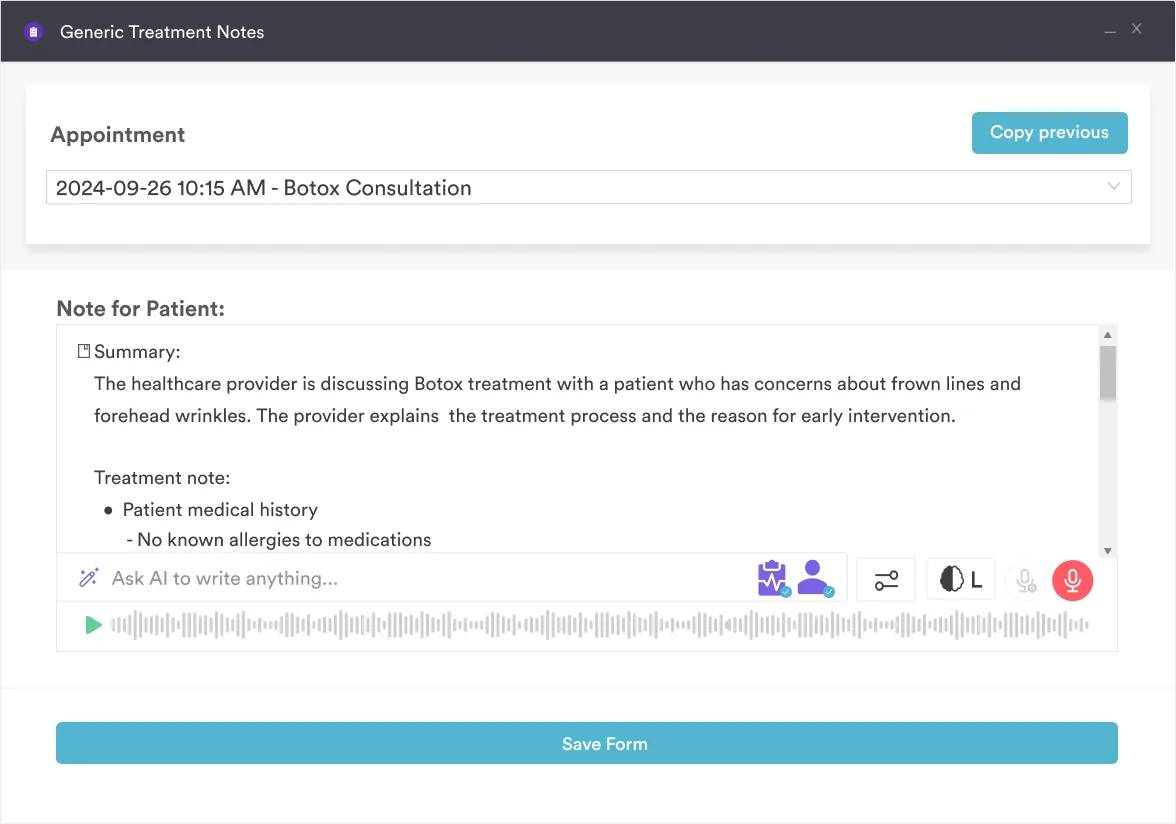
In clinical settings where I76 applies. This reduces the post-encounter query burden on coders.
Practices focused on HIPAA-compliant documentation workflows can configure structured note templates that prompt physicians for the specific causal language I76 requires. The result is a cleaner record before the claim is built, rather than a physician query after the denial.
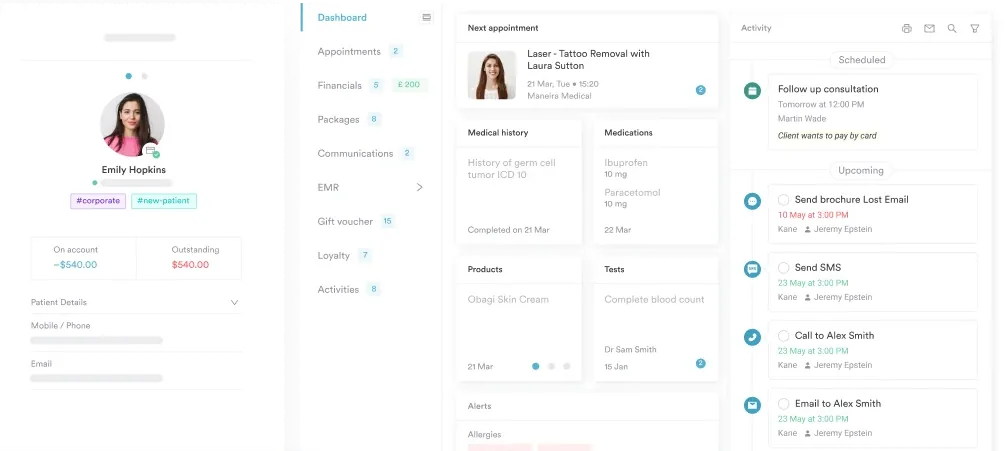
For practices managing complex infectious disease or cardiology coding. Pabau’s EHR integration for billing accuracy connects documentation fields directly to claim generation, so the principal diagnosis and additional codes are populated from the clinical record rather than re-entered manually.
ICD-10 code I76 is a billable, specific FY2026 code for septic arterial embolism. It will only survive payer scrutiny when the underlying infection is named, sequenced first, and the causal relationship between that infection and the arterial embolism is documented explicitly. Sequencing errors and missing documentation are the two failure points that drive the majority of denials on this code. A service billed to Australian Medicare needs the matching schedule item and the documentation the descriptor asks for.
Pabau’s claims management and documentation platform helps practices build the documentation habits that keep complex codes like I76 off the denial queue. To see how Pabau structures ICD-10 workflows for infectious disease and cardiology encounters, book a demo.

Coding a bowel perforation caused by disease, not injury? ICD-10 code K63.1 guide covers nontraumatic intestinal perforation from diverticulitis, Crohn’s disease, malignancy, and ischemic bowel.
Wondering how drug administration codes pair with a primary diagnosis? Pabau’s guide to J0640 walks through billing leucovorin calcium injections alongside the correct diagnosis code.
Need to sequence anesthesia codes correctly alongside a diagnosis? Pabau’s guide to 01991 covers billing anesthesia for diagnostic and therapeutic nerve block procedures.
ICD-10 code I76 is the billable ICD-10-CM diagnosis code for septic arterial embolism, a condition in which infected material travels through the bloodstream and occludes an artery. It is a valid FY2026 code under the I70-I79 block (Diseases of arteries, arterioles and capillaries) and is always assigned as an additional diagnosis alongside the code for the underlying infection.
Yes. I76 is a billable and specific ICD-10-CM code, valid for HIPAA-covered transaction submission in FY2026 (effective October 1, 2025). It can be submitted on claims as an additional diagnosis code when documentation supports the diagnosis.
I76 must always be sequenced as an additional code, never as the principal diagnosis. The underlying infection (such as infective endocarditis I33.0, or sepsis A41.x) is coded first in the principal diagnosis field. I76 then follows in a secondary diagnosis position to report the septic arterial embolism as a complication of that infection.
Septic pulmonary embolism is excluded from I76 via an Excludes2 note, meaning the two codes can coexist on a claim but represent distinct anatomical events. Pulmonary septic emboli are coded under I26.90 or related I26 subcategories. Non-septic arterial embolism is coded I74.x, not I76.
The ICD-10-CM Tabular List’s “code first” note under I76 names two underlying infections: infective endocarditis (I33.0) and lung abscess (J85.-). Infective endocarditis is the most frequent principal diagnosis in practice, because cardiac valve vegetations are the leading source of infected emboli. Sepsis (A41.x) and bacteremia (A49.-) are also common underlying causes clinically, even though they aren’t the codes named in the tabular instruction.
Acute and subacute infective endocarditis is coded I33.0 in ICD-10-CM. This is the most commonly sequenced principal diagnosis when I76 is assigned, because endocarditis-related valve vegetations are the primary source of septic arterial emboli. Additional organism-specific codes (e.g., B95.61 for MSSA) may be added per coding guidelines.