ICD-10 Code Y76.0: Diagnostic obstetric and gynecological devices
ICD-10 Code Y76.0: Definition and billable status ICD-10 Code Y76.0 is a valid, ...

Last Updated: Oct 23, 2026
Billable Code Specific Code
G89.0 is the billable ICD-10-CM code for central pain syndrome.
Let Pabau's smart automation suggest the right codes, reduce claim denials, and keep your practice compliant—effortlessly.
Automate repetitive tasks and focus on what matters most—your patients.
Reduce coding errors and ensure compliance with the latest regulations.
Clean claims, fewer denials, and faster reimbursements.
Powerful insights and reporting to help your practice thrive.
HIPAA compliant SOC 2 certified GDPR-compliant Trusted by 4,000+ clinics worldwide

G89.0 is a billable ICD-10-CM diagnosis code for central pain syndrome, valid for FY 2016 through 2026.
Applicable diagnoses include Dejerine-Roussy syndrome, myelopathic pain syndrome, and thalamic pain syndrome.
G89.0 may only be coded when the provider has specifically documented central pain syndrome; it should not replace a primary neurological diagnosis.
Pabau’s claims management software supports accurate ICD-10-CM documentation workflows, reducing coding errors at submission.
ICD-10 Code G89.0 identifies central pain syndrome, a condition in which damage or dysfunction within the central nervous system generates persistent pain independent of any ongoing tissue injury. The code sits in Chapter 6 of ICD-10-CM (Diseases of the Nervous System), under category G89, “Pain, not elsewhere classified.”
This guide covers G89.0’s billable status, the applicable diagnoses it captures, how to sequence it correctly, its excludes notes, and the documentation a payer expects to see before approving a claim.
ICD-10 Code G89.0 classifies central pain syndrome, a neurological condition caused by damage or dysfunction within the central nervous system. According to the WHO ICD-10 browser, G89.0 falls under the G89 category “Pain, not elsewhere classified,” which groups specific pain syndromes that do not map to anatomically localized site codes.
G89.0 is a billable, specific code. The parent code G89 is non-billable; coders must select a child code with sufficient specificity, and G89.0 is the appropriate selection when the provider documents central pain syndrome. This distinction is important because submitting G89 instead of G89.0 will result in a claim edit or rejection from most payers. Coding names the service; medical billing gets it submitted, adjudicated and paid.
The ICD-10-CM tabular list includes three “Applicable To” entries under G89.0. All three describe the same underlying mechanism: central sensitization or damage to central pain-processing pathways.
These are distinct clinical entities. Coders should not apply G89.0 unless the provider documentation specifically names one of these conditions or uses the phrase “central pain syndrome.” Documenting only “chronic pain,” “neuropathic pain,” or “pain due to CNS injury” is insufficient for G89.0 coding without explicit provider specification. This is consistent with CMS ICD-10-CM Official Guidelines on provider documentation dependency.
Central post-stroke pain, often abbreviated CPSP, describes pain that develops after a stroke damages the brain’s pain-processing pathways. It is not a separate diagnosis code. CPSP is one of the clinical presentations G89.0 already covers, most often documented as Dejerine-Roussy syndrome when the stroke involves the thalamus.
The same applies to central neuropathic pain, a broader clinical term for pain generated by central nervous system damage rather than injury to nerves outside the brain and spinal cord. When a provider uses either term without naming a more specific syndrome, query the chart before coding. G89.0 still requires documentation that ties the pain to central pain syndrome, Dejerine-Roussy syndrome, thalamic pain syndrome, or myelopathic pain syndrome specifically.
Category G89 organizes pain conditions that cannot be classified by anatomical site alone. Understanding the full G89 structure helps coders select the right code and sequence it correctly. The table below shows the complete G89 code set, including billable and non-billable codes.
CMS Official Guidelines specify that G89 codes are generally sequenced as secondary codes, after the primary diagnosis associated with the pain. The exception: when the encounter’s purpose is pain control or pain management rather than treatment of the underlying condition, the G89 code may be sequenced first.
In most clinical scenarios, G89.0 follows the underlying neurological diagnosis. For a patient presenting with thalamic stroke sequelae and documented thalamic pain syndrome, the stroke sequela code comes first, with G89.0 added to capture the central pain component. Meeting clinical compliance requirements in documentation means the provider must explicitly link the pain type to the underlying pathology.
When the encounter is specifically for pain management (for example, a neurology visit where the primary reason is addressing central pain syndrome rather than the stroke itself), G89.0 may be listed as the principal diagnosis. The underlying condition code is still assigned, just sequenced after G89.0. This distinction affects reimbursement categories and DRG assignment for inpatient claims.
Routine or expected postoperative pain is not coded separately. When postoperative pain is not associated with a specific postoperative complication, the relevant G89 code (typically G89.18 for acute postprocedural pain) applies. When postoperative pain results from a specific complication, coders should use the Chapter 19 complication code instead of a G89 code. G89.0 does not apply in postoperative pain scenarios.
Audit your neurology and pain management encounters quarterly for G89.0 specificity. Flag any chart where the provider documented ‘chronic pain’ or ‘neuropathic pain’ without specifying central pain syndrome, thalamic pain syndrome, Dejerine-Roussy syndrome, or myelopathic pain syndrome. These require a query back to the provider before coding G89.0.
The G89 category carries both Excludes1 and Excludes2 notes. Understanding the difference is critical because conflating them is one of the most common coding errors flagged during payer audits. These notes affect whether G89.0 can be used on the same claim as related codes.
An Excludes1 note means the excluded condition is mutually exclusive from the current code. These conditions should never appear alongside G89 codes on the same claim because they are considered the same condition coded elsewhere.
An Excludes2 note means the excluded condition is not part of G89 but the patient may legitimately have both. These codes can appear on the same claim as G89.0 when clinically appropriate and documented. Common Excludes2 conditions relevant to neurological pain coding include anxiety and behavioral syndrome diagnostic codes and:
When a patient has documented central pain syndrome alongside a localized pain condition (for example, thalamic pain syndrome with coexisting back pain), both the G89.0 and the anatomical pain code can be reported if both are separately documented and both are being addressed. The Excludes2 note permits this dual coding.

Pabau's claims management software integrates ICD-10-CM coding workflows directly with your patient records, reducing the manual steps where G89.0 sequencing errors most often occur. See how Pabau streamlines diagnostic coding from encounter to claim.

Correct G89.0 coding depends entirely on what is in the clinical note. Payers will query or deny G89.0 claims when documentation does not meet the specificity standard. The following requirements reflect CMS Official Guidelines and common payer policies.
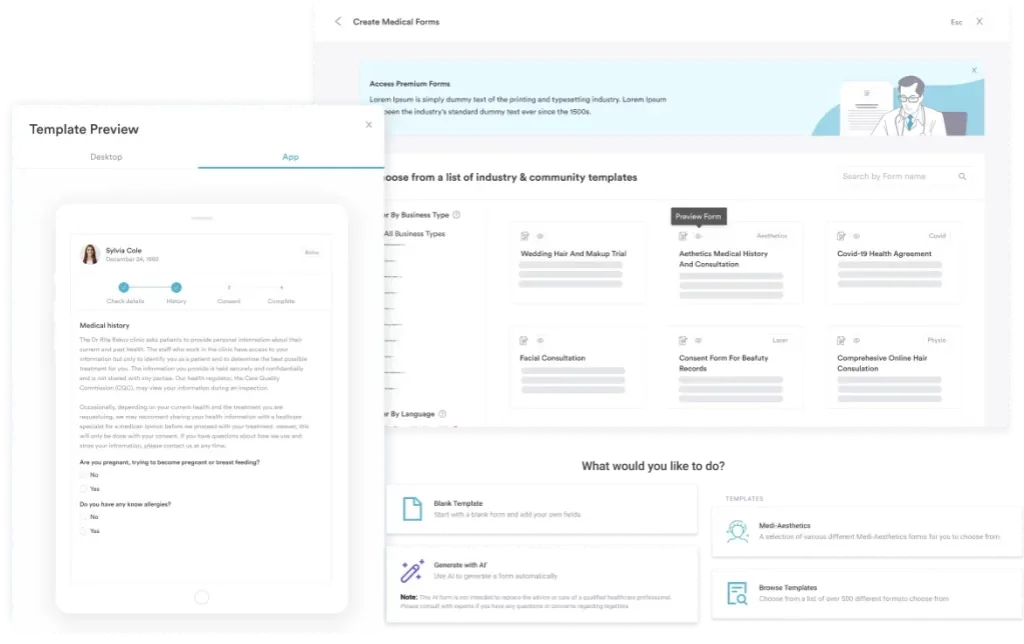
Using digital clinical documentation forms reduces transcription errors and ensures providers capture the exact terminology payers need for G89.0 validation. A PQRST pain assessment form or pain assessment intake form can prompt providers to specify the pain syndrome type before signing off on the encounter record.
Practices managing high volumes of neurology or pain management visits also benefit from patient record management systems that flag incomplete diagnosis fields before claim submission. Practices still filing on paper carry this code on the CMS-1500 form, in the service lines.
For practices referencing older claims or legacy records, G89.0 maps from ICD-9-CM code 338.0 (Central pain syndrome). This crosswalk is consistent across the official CMS transition tables and is confirmed by the CDC ICD-10-CM reference files. The code has been active in ICD-10-CM from FY 2016 through the current FY 2026 release without modification to its clinical description.
Document telehealth encounters for central pain syndrome with the same specificity as in-person visits. CMS telehealth policies do not change ICD-10-CM documentation requirements. The provider must still name the condition explicitly in the telehealth encounter note for G89.0 to be billable.
G89.0 (central pain syndrome) and G89.4 (chronic pain syndrome) are the two diagnosis-specific pain codes in the G89 category. They are frequently confused, and the distinction matters clinically, not just administratively. Coders treating them as interchangeable risk under-documenting a serious neurological condition or upcoding a general chronic pain presentation.
G89.0 describes pain arising from damage to the central nervous system itself. The pain mechanism is neurological: a lesion or dysfunction in the brain or spinal cord generates the pain signal, regardless of whether peripheral tissue is involved.
The National Institute of Neurological Disorders and Stroke (NINDS) defines central pain syndrome as a neurological condition caused by damage to or dysfunction of the pain-sensing system of the central nervous system. It is most commonly associated with stroke, multiple sclerosis, spinal cord injury, brain tumors, and epilepsy.
G89.4 applies when a provider explicitly documents “chronic pain syndrome” as a condition. This is a distinct clinical diagnosis characterized by persistent pain lasting beyond normal healing time, typically accompanied by psychological and functional impairment. It does not require a central nervous system etiology.
G89.4 should never be used as a substitute for “chronic pain” in general; the provider must document the specific diagnosis of chronic pain syndrome.
Practices specializing in mental health and neurology often encounter both diagnoses in overlapping patient populations. A patient with post-stroke thalamic pain syndrome (G89.0) may also develop chronic pain syndrome (G89.4) as a separate evolving condition. When both are documented by the provider and treated in the same encounter, both codes can be reported, provided each is clinically supported.
Coding teams managing ICD-10 documentation for complex neurological and psychiatric diagnoses benefit from reference guides that map provider language to specific G89 codes, reducing the reliance on coder interpretation when provider notes use informal terminology. Review the AAPC Codify ICD-10-CM lookup for cross-references between G89 codes and related Chapter 6 codes.
For practices integrating ICD-10 coding with billing workflows. This is especially valuable for physical therapy practice compliance settings where G89 codes are used alongside musculoskeletal primaries.
A common source of G89.0 claim denials is a documentation mismatch: the provider documented “chronic pain,” but the coder submitted G89.0 for central pain syndrome. The two codes are not interchangeable.
Physical therapy and neurology practices treating thalamic pain syndrome or Dejerine-Roussy syndrome require precise coding to avoid payer scrutiny and claim rejections. Practices may also find a brain health assessment template useful for documenting neurological baselines that support G89.0 coding.
Central pain syndrome is a high-specificity diagnosis. Applying ICD-10 Code G89.0 correctly requires provider documentation that names the condition explicitly, plus accurate sequencing relative to the underlying neurological cause. Conflating G89.0 with general chronic pain or neuropathic pain codes is the most common source of claim edits in neurology and pain management billing.
Pabau’s claims management software integrates ICD-10-CM validation directly into the clinical documentation workflow, catching coding errors before claims are submitted. If your team manages neurology, neurorehabilitation, or chronic pain encounters, see how Pabau handles diagnostic coding from encounter note to clean claim. Book a demo to see it in action.

Managing neurological patient records across multiple visits? Patient record management in Pabau keeps clinical notes, diagnosis codes, and encounter history in one place for neurology and pain management practices.
Need to streamline documentation for pain management encounters? Automated clinical workflows in Pabau prompt providers to complete required fields before finalizing encounter notes.
Running a practice that bills both neurological and musculoskeletal codes? Physical therapy and neurorehabilitation practice management is built for multi-code billing across complex patient populations.
ICD-10 Code G89.0 is a billable diagnosis code for central pain syndrome, a neurological condition caused by damage or dysfunction in the central nervous system. It covers Dejerine-Roussy syndrome, myelopathic pain syndrome, and thalamic pain syndrome, and falls under Chapter 6 (Diseases of the Nervous System) of ICD-10-CM.
Yes. Central post-stroke pain (CPSP) and central sensitization both describe the mechanism behind central pain syndrome: central nervous system damage or dysfunction that generates pain independent of a peripheral injury. Neither is a stand-alone billable code. Coders report G89.0, or the more specific Dejerine-Roussy, thalamic, or myelopathic pain syndrome, once the provider names the underlying syndrome.
Yes, G89.0 is a billable, valid ICD-10-CM diagnosis code for FY 2016 through FY 2026. Its parent code G89 is not billable; G89.0 provides the required specificity for claim submission.
G89.0 (central pain syndrome) applies specifically when pain arises from CNS damage such as stroke, multiple sclerosis, or spinal cord injury. G89.4 (chronic pain syndrome) applies when a provider explicitly documents chronic pain syndrome as a distinct diagnosis. They are not interchangeable and should not be substituted for each other without explicit provider documentation of each condition.
G89 codes are typically sequenced as secondary codes after the primary neurological or underlying diagnosis. G89.0 may be sequenced first only when the encounter’s primary purpose is pain management or pain control, rather than treatment of the underlying condition causing the central pain syndrome.
The ICD-9-CM equivalent of ICD-10-CM G89.0 is code 338.0 (Central pain syndrome). This crosswalk is consistent with official CMS transition tables and applies for any legacy claim review or historical coding reference.