Gene test: Types, how it works, and what results mean
A gene test is a laboratory analysis of your DNA, chromosomes, or proteins that ...

Last Updated: Sep 22, 2026

A brain health assessment is a structured evaluation measuring cognitive, physical, and emotional domains to detect early decline and optimize long-term neurological wellness.
Early detection through screening tools (MoCA, SAGE, Brain Care Score) can identify mild cognitive impairment before it progresses, enabling timely intervention.
Documented assessments become part of the patient record, supporting billing, regulatory compliance, and continuity of care across specialists.
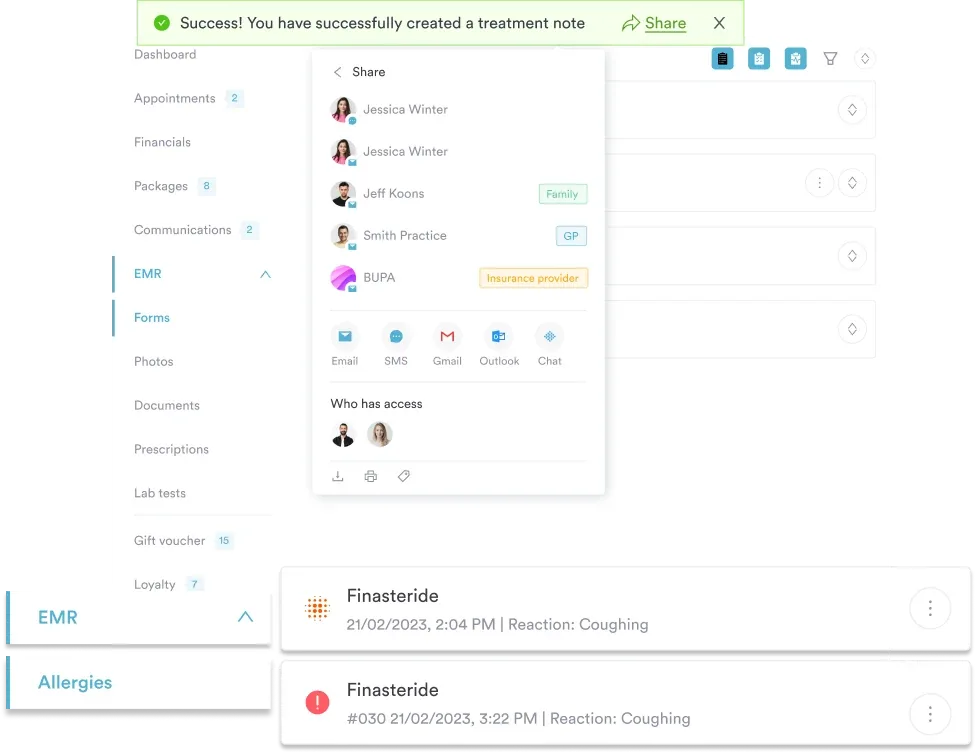
Pabau’s digital forms and clinical records features let you create structured, repeatable brain health assessment workflows that feed directly into treatment planning and automated referral pathways.
A comprehensive evaluation tool measuring cognitive function, mental acuity, and neurological wellness across multiple domains for personalized treatment planning.
Download templateA brain health assessment template gives your team one structured form to administer, score, document, and act on cognitive screening. Instead of ad-hoc questions or memory-based notes, it captures the same domains the same way at every visit, so results stay comparable over time and are ready to hand to a specialist.
A brain health assessment is a systematic evaluation of cognitive abilities, neurological function, and overall mental acuity. It measures domains like memory, attention, executive function, language, visuospatial skills, and emotional regulation. That gives you a baseline for tracking decline, catching early impairment, and personalizing treatment.
In clinical practice, these assessments serve three key roles:
These tools screen rather than diagnose. A concerning result flags whether further specialist evaluation (neuropsychological testing, imaging, blood work) is warranted.
The best practice workflow integrates the assessment into your clinical record from intake onwards, so results inform referral decisions and become part of the patient’s longitudinal health narrative.
Cognitive decline often goes undetected until it significantly impacts daily function, sometimes years into the disease process. The Alzheimer’s Association reports that early detection enables interventions that may slow progression, improve medication management, and support patient autonomy longer.
Standardized assessments also reduce clinician bias. A written template covering memory, attention, language, and mood documents which domains are intact and which are declining, which guides referrals and ensures nothing is overlooked. For practices serving older adults, those with a neurological history, or patients on medications affecting cognition, routine screening is a reasonable part of preventive care.
From a regulatory perspective, documented assessments provide evidence of thoughtful evaluation should a patient experience adverse events or legal questions arise. They also facilitate communication with specialists: when a patient is referred to neurology or psychiatry, a completed brain health assessment from primary care accelerates diagnosis and avoids redundant testing.
Most brain health assessments follow a consistent five-step workflow. In practice management software like Pabau, you can build that workflow into automated clinical workflows for faster administration and scoring:
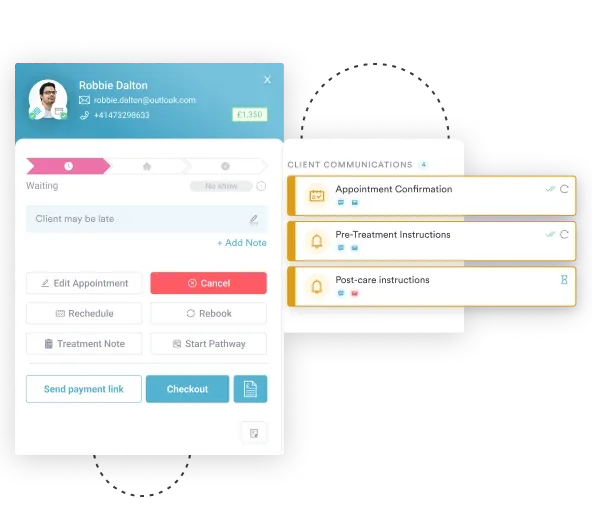
Integrating the assessment into your EHR ensures results feed into problem lists, automated reminders trigger follow-up visits, and referral letters can be generated directly from the completed form.
A comprehensive brain health assessment evaluates multiple cognitive systems, each localized to different brain regions and vulnerable to different disease processes:
No single domain confirms a diagnosis on its own. The pattern of strengths and deficits is what helps classify the likely type of cognitive disorder and guide specialist referral.
Book a demo to see how Pabau’s structured digital assessment forms capture these domains consistently and generate templated summary reports for your records and referral letters.
Several validated cognitive assessment tools are widely used in primary and specialty care. Each has a different administration time, literacy demand, and sensitivity to specific domains:
Most of these tools are freely available or inexpensive to administer. Your practice management system should store completed assessments alongside clinical notes, allowing easy retrieval at follow-up visits and comparison of scores over time.
Proper documentation serves three purposes:
Cognitive assessment is also a required element of Medicare’s Annual Wellness Visit, so a structured template helps you capture and evidence that component. For assessments performed during home visits.
Record the following in the patient’s chart:
Structured documentation also supports HIPAA compliance and secure record-keeping, as standardized templates reduce ambiguity and are easier to audit than free-text notes.
A positive brain health assessment (indicating impairment) does not automatically trigger a referral. It guides decision-making based on severity, functional impact, and available interventions:
Document the referral decision clearly, both to protect your practice and to ensure the specialist knows why the patient was sent.
Leading practices integrate brain health assessments into standard protocols, not ad-hoc evaluations. For example, functional medicine and longevity practices often screen all patients over 65 or those with specific risk factors (family history, metabolic syndrome, head injury history) at baseline and annually.
Practices supporting transitions of care can pair this screening with an assisted living assessment when patients need a higher level of support.
Consider setting up rules in your practice management system: flag patient charts for assessment if they are 65+, have a new diagnosis of hypertension or diabetes, or report memory concerns. Train staff to administer screening at the appropriate visit.
Use patient feedback tools to gather self-reported cognitive concerns before the assessment, which can sharpen focus during evaluation. Automated reminders ensure patients return for reassessment at planned intervals.
A brain health assessment template is an essential tool for any practice screening patients at risk of cognitive impairment. Standardized assessment, clear documentation, and timely referral can detect reversible causes early and support patients through cognitive decline with confidence and clarity. Download the template above and integrate it into your clinical workflows today.

Also managing a patient’s elimination diet? elimination diet reintroduction chart tracks phased food reintroduction over 3-day intervals, with symptom monitoring built in.
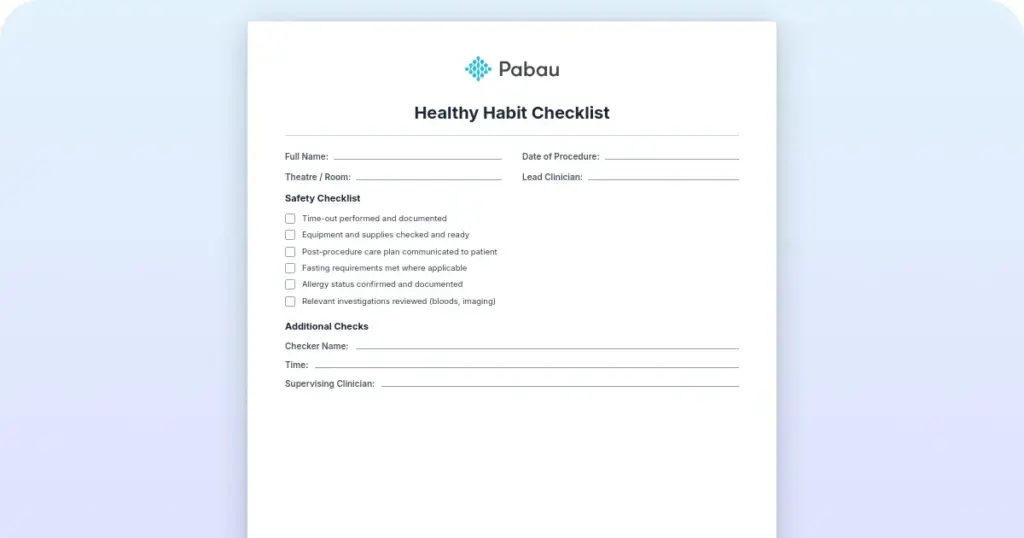
Want to track lifestyle habits alongside cognition? healthy habit checklist tracks nutrition, exercise, sleep, hydration, mental health, and preventive care habits.
Assessing a patient considering medical cannabis? medical cannabis intake template structures patient assessment to support safe, informed decisions before treatment begins.
A brain health assessment is a brief screening (10-30 minutes) that measures cognitive domains and identifies impairment, guiding decisions about referral or follow-up. A full neuropsychological evaluation is a comprehensive (4-8 hour) battery administered by a specialist to diagnose the specific type and cause of cognitive disorder. Screening comes first; full evaluation is reserved for diagnostic confirmation.
No. A brain health assessment detects cognitive impairment and flags the need for specialist evaluation, but diagnosis requires clinical correlation (medical history, imaging, blood work, neuropsychological testing). Many conditions cause cognitive impairment (depression, medication side effects, vitamin deficiency, sleep apnea, vascular disease). The assessment points toward the next step, not a final diagnosis.
Screening intervals depend on initial results and risk factors. A common approach: reassess annually for a normal baseline in patients 65+ or with risk factors; every 6-12 months for borderline or mild impairment; every 3-6 months for documented decline. Routine screening of adults without symptoms is not universally recommended, so use clinical judgment. The National Institute on Aging notes that cognitive health can change with age and that catching changes early widens the options for treatment.
Many assessments (MoCA, MMSE, SAGE) are brief cognitive screening and may be billable under CPT codes 96116 (neurobehavioral status exam) or 96125 (standardized cognitive performance testing); see our related test administration billing guide. Cognitive assessment is also a required element of Medicare’s Annual Wellness Visit. Check your payer’s guidelines and ensure your EHR captures the assessment.
First, repeat the assessment to confirm the finding (fatigue, distraction. Then order basic labs (B12, thyroid, metabolic panel) and consider neuroimaging if history suggests acute change. If impairment is confirmed, discuss findings, explain the referral plan, and initiate preventive strategies while awaiting specialist evaluation.