



Key Takeaways
An assisted living assessment tool evaluates functional capacity, medical needs, cognitive status, and behavioral considerations to determine resident care requirements.
The assessment covers ADLs (Activities of Daily Living) and IADLs (Instrumental Activities of Daily Living) using standardized scoring that guides level of care placement.
State regulations vary widely — use this template as a foundation and adapt per your jurisdiction’s specific regulatory requirements (e.g., Maryland COMAR 10.07.14, Minnesota Statutes 144G).
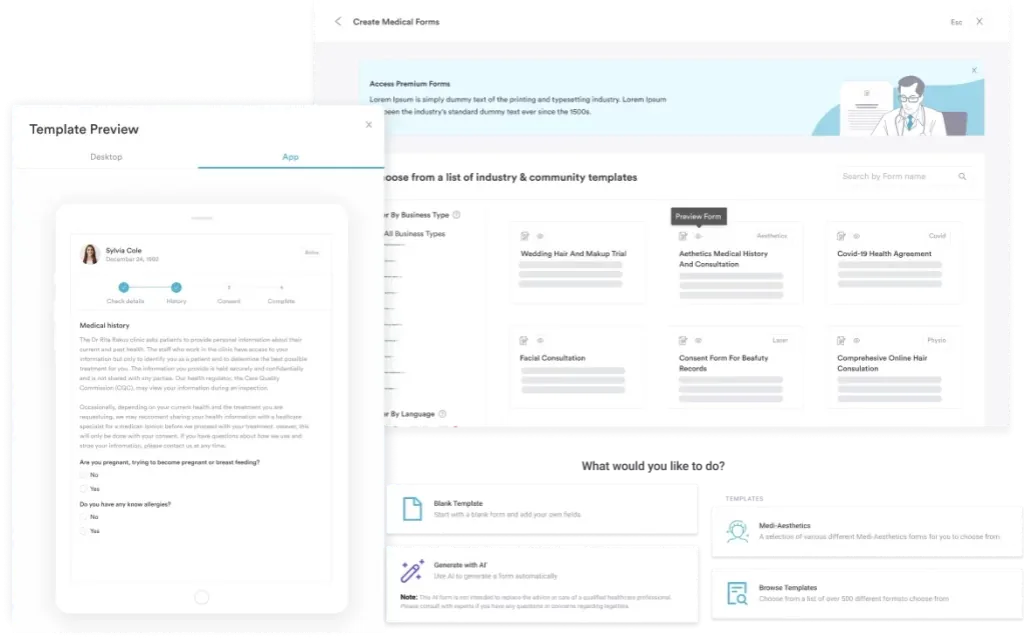
Pabau’s digital forms and client record features streamline assessment workflows, enabling care coordinators to complete evaluations, store results securely, and link findings directly to individual care plans.
Download your free assisted living assessment tool template
A standardized evaluation form covering Activities of Daily Living (ADLs), Instrumental Activities of Daily Living (IADLs), medical and nursing care needs, cognitive and behavioral assessment, and level of care scoring for admission and ongoing resident evaluation.
Download templateAn assisted living assessment tool is a structured evaluation form that determines whether a prospective or current resident requires assisted living support and what level of care is appropriate. Care coordinators, nurses, and assisted living managers use it to document functional abilities, medical complexity, cognitive status, and behavioral considerations — producing the clinical record needed for individualized care planning and regulatory compliance. Residents with complex needs such as tracheostomies require a nursing care plan that documents safe, evidence-based care alongside this broader assessment.
This guide explains what the assessment covers, how to use it within your care workflow, how to translate scores into a level of care. For related clinical evaluation tools.
What is an assisted living assessment tool?
An assisted living assessment tool is a structured evaluation form that documents how residents manage daily activities, their medical and nursing requirements, cognitive abilities, behavioral health status, and any special needs. It gives care teams the objective data needed to guide admission decisions and ongoing care planning.
The tool serves three primary purposes. First, it establishes a baseline of functional and medical status at admission so care coordinators can set realistic expectations and determine support needs. Second, it generates the clinical justification for your facility’s level of care classification — critical for state licensing and Medicaid long-term services and supports compliance.
Third.
At its core, the assessment works as a structured checklist covering eight key domains:
- Activities of Daily Living (ADLs): bathing, dressing, toileting, continence, transferring, and eating.
- Instrumental Activities of Daily Living (IADLs): medication management, meal preparation, housekeeping, laundry, shopping, and managing finances.
- Medical and nursing care needs: chronic conditions, medications, and treatments requiring professional oversight.
- Cognitive assessment: memory, orientation, and decision-making capacity. For screening co-occurring conditions, consider the AC-OK screen for co-occurring disorders.
- Behavioral and communication evaluation: mood changes, behavioral risks, or communication barriers.
- Nutritional and swallowing assessment: diet modifications or feeding support needs.
- Fall risk evaluation: mobility limitations and environmental hazards. The Agility T-Test template can supplement mobility screening for higher-functioning residents.
- Assistive devices and equipment needs: mobility aids, adaptive equipment, and safety modifications.
How to use an assisted living assessment tool
Using an assessment tool effectively requires a structured five-step workflow. Begin by scheduling a quiet, unrushed interview in the resident’s preferred environment — typically the prospective resident’s home or current care setting. Allow 45-60 minutes and gather relevant medical records, current medication lists, and any prior assessments beforehand.
- Conduct the ADL and IADL assessment: Directly observe or ask the resident to demonstrate core self-care tasks. Record both the resident’s report (“I can shower with a grab bar”) and your clinical observation (“resident demonstrates stable balance during standing transfer”). Score each item on the standardized scale — typically a 1-5 scale where 1 = dependent (requires total assistance) and 5 = independent (no assistance needed).
- Document medical and nursing care needs: Review the resident’s active diagnoses, current medications (dosages and frequencies), and any treatments requiring licensed nursing oversight (e.g., wound care, catheter management, medication administration). Note any allergies, adverse drug reactions, and recent hospitalizations or emergency visits.
- Complete cognitive and behavioral screening: Use a standardized tool if available (e.g., Mini-Mental State Examination for dementia screening). Record orientation to person, place, and time; memory function; judgment and problem-solving ability; and any signs of depression, anxiety, or behavioral concern.
- Assess fall risk and environmental factors: Document mobility limitations, balance/gait abnormalities, prior falls, environmental hazards, and mobility aids in current use. Record any vision or hearing impairment that affects safety or engagement.
- Calculate the level of care score: Sum the ADL/IADL scores and cross-reference the total against your facility’s or state’s level of care matrix. This determines whether the resident requires independent living, assisted living with minimal support, or enhanced assisted living (24-hour nursing availability). Document this determination clearly, as it justifies staffing and care planning intensity.
Once the assessment is complete, share results with the resident and family, incorporate findings into the Individual Service Plan (ISP). Schedule reassessment every 6-12 months or when significant functional changes occur.
State-specific guidance: Regulatory requirements vary widely. Maryland’s Resident Assessment and Level of Care Scoring Tool, published under COMAR 10.07.14, provides a validated methodology that scores residents into three levels of care. Massachusetts publishes official assisted living residency regulatory guidance.
Minnesota Statutes Section 144G and the state health department provide guidance and self-audit tools. Always consult your state’s assisted living licensure regulations before finalizing your template — adapt this tool to match your jurisdiction’s specific requirements.
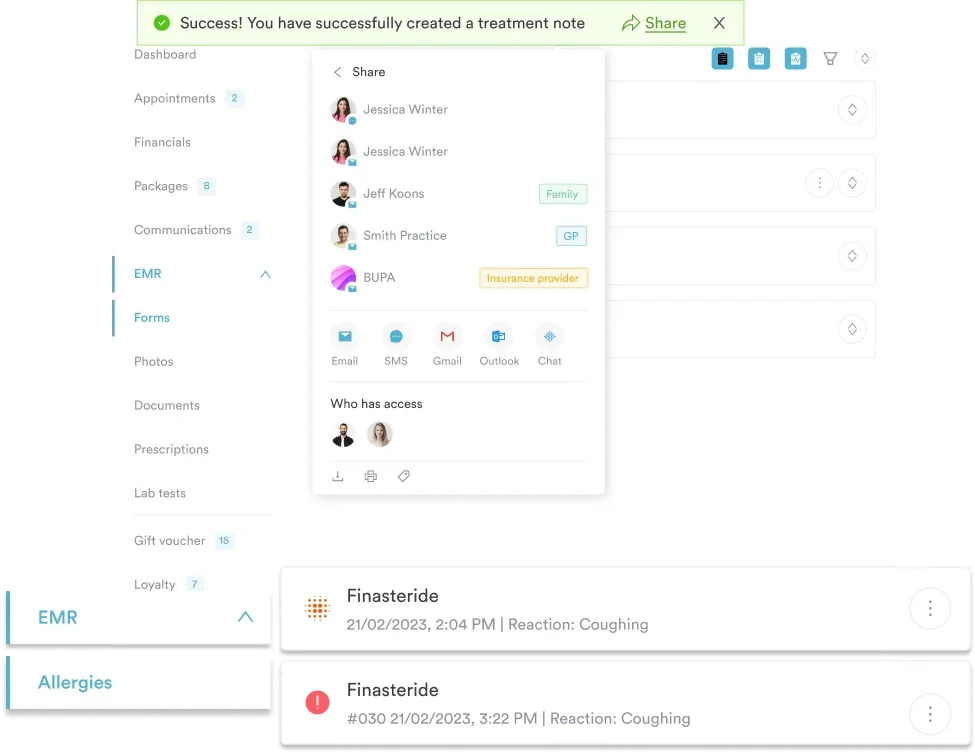
A good patient management system files each completed scale under the right patient automatically.
Related templates
- Alberta Infant Motor Scale Template
- AST Blood Test Template
- At-home cholesterol test
- AUDIT alcohol screening test

Streamline assessments with digital forms
Pabau’s digital forms let care coordinators complete assessments on mobile or desktop, auto-save progress, and link results directly to resident records for seamless care planning.

Assisted living levels of care
An assessment score is only useful once it maps to a level of care. Assisted living isn’t regulated federally, so there’s no single national scale — each state, and often each facility, defines its own tiers. Most use a three-level model, some communities publish five, and memory care is treated as a distinct specialty rather than a number on the scale.
A common three-tier structure, used as the backbone of this assisted living level of care assessment tool, works like this:
- Level 1, minimal assistance: the resident is largely independent and scores high across most ADLs, needing only occasional prompts such as medication reminders or standby help with bathing.
- Level 2, moderate assistance: the resident needs hands-on help with one or more ADLs (dressing, transferring, toileting) plus some IADL support, with intermittent supervision through the day.
- Level 3, extensive assistance: the resident depends on staff for most ADLs, has higher medical complexity, and needs supervision at almost all times, sometimes with 24-hour nursing availability.
Here’s a worked example. A resident who scores independent on eating and continence but needs hands-on help with bathing and dressing, plus daily medication management, typically lands in Level 2 — enough support to stay safe without the round-the-clock oversight of Level 3. Record the score, the level it maps to, and the reasoning behind it, so the determination holds up in a licensing survey.
Because level names vary between communities, always cross-reference your total against your own state’s or facility’s level of care matrix. A “Level 2” in one community may not mean the same thing in another.
Who benefits from an assisted living assessment tool
The assisted living assessment tool is used across multiple care settings and professional roles.
- Assisted living facilities and memory care communities use this tool for all admission evaluations and ongoing resident monitoring, ensuring appropriate staffing match and care plan alignment.
- Care coordinators and social workers completing pre-admission assessments for families exploring senior living options rely on objective evaluation data to guide recommendations.
- Home health agencies use adapted versions to determine when a client requires transition to a higher level of care (assisted living or skilled nursing), often coordinating home visits billed under CPT Code 99347 during that transition.
- Primary care physicians and geriatricians reference assessment findings when counseling patients on care transitions or medical decision-making capacity.
- Occupational therapists and physical therapists use ADL/IADL scores to design targeted rehabilitation or adaptive strategies within assisted living settings.
- Nursing homes and rehabilitation facilities complete assessments on admission to establish baseline function and guide discharge planning back to assisted living or community settings.
- Long-term care insurance companies may require assessment documentation to approve benefit claims for assisted living care.
Benefits of using a standardized assessment tool
Objective clinical documentation: A standardized form ensures every resident is evaluated on the same criteria, reducing bias and enabling meaningful comparison over time. Consistent documentation also protects your facility during regulatory surveys and liability claims.
Accurate level of care determination: Systematically evaluating functional abilities and medical complexity guides appropriate staffing models and care intensity, protecting residents and your facility from mismatches that could compromise safety or escalate costs.
Evidence-based care planning: Assessment data forms the clinical foundation for the Individual Service Plan, allowing staff to tailor interventions to each resident’s specific functional profile and medical needs.
Regulatory compliance and defensibility: Standardized assessments align with state licensure requirements. Billing for related caregiver evaluations may involve CPT code 96161 (caregiver health risk assessment) or CPT code 96160 (patient-focused health risk assessment). Documentation demonstrates due diligence during licensing inspections and quality audits, reducing regulatory risk.
Family communication and informed consent: Clear assessment results help families understand why a recommended level of care is appropriate and set realistic expectations for services and outcomes. When residents or families struggle to understand a diagnosis, a knowledge deficit nursing care plan template can structure that education.
Pro tip: Track assessment changes over time
Conduct reassessments at regular intervals (every 6-12 months) and after significant events (hospitalization, falls, medication changes, family concerns). Compare current scores to baseline to identify functional decline, stability, or improvement, allowing care teams to adjust support proactively rather than reactively. A resident hospitalized with pneumonia may benefit from a pneumonia nursing care plan built around initial assessment through recovery.
Relevant diagnostic codes for cognitive or behavioral findings include ICD-10 Code F02.80 (dementia in other diseases classified elsewhere), ICD-10 Code F06.31 (mood disorder due to known physiological condition). Before any dementia code is applied, MoCA score interpretation for cognitive screening shows what a screening score can support.
Integrating assessments into your workflow
Many assisted living facilities complete assessments on paper and file them in a cabinet, losing the connection between findings and ongoing care planning.
Automated care workflows can then trigger follow-up tasks — e.g., “Fall risk score >3: schedule PT evaluation within 7 days.” A transfer score showing total dependence can trigger skin checks, and a pressure ulcer care plan then records repositioning intervals and wound staging.
Digital storage also enables rapid access during family meetings, clinician consultations, or regulatory reviews. For broader context on digital tools in care settings.
State regulatory context and adaptations
Assisted living regulations are state-specific. Maryland, Minnesota, and Rhode Island each have published standardized assessment tools and scoring methodologies. Some states mandate specific assessment instruments; others allow facilities to design custom tools provided they evaluate core domains (ADLs, IADLs, cognitive status, medical needs, behavior, fall risk).
Before deploying this template, check your state health department website for: required assessment forms, mandated scoring methods, minimum assessment frequency, who is authorized to conduct assessments (RN vs. social worker vs. care coordinator), and how results must be documented and retained.
The HCPCS Code H2015 (comprehensive community support services) billing guide may also be relevant for facilities billing community-based care. Adapt the template to match your state’s specific language, item definitions, and scoring protocols.
If your state mandates a specific assessment tool, use it as your primary document. If your state allows facility-designed tools, use this template as your foundation and customize domains or scoring per your facility’s care model and state guidance.
Turn assessments into better resident care
An assisted living assessment tool converts subjective impressions into objective, defensible clinical data. Systematically evaluating ADLs, IADLs, medical complexity, cognitive status, and behavioral factors lets care coordinators and facility managers match residents with appropriate care levels, build evidence-based care plans, and satisfy regulatory requirements.
Download this free template, adapt it to your state’s requirements.

Continue your research
Seen HSP written on a referral? HSP meaning in healthcare clears up whether it means Henoch-Schönlein Purpura needing renal monitoring or a personality trait.
Checking for signs of meningitis? Kernig’s sign walks through the hip-flexion, knee-extension bedside test used to check for meningeal irritation.
Considering independent practice as an NP? Nurse practitioner private practice guide walks NPs through leaving traditional settings for more autonomy and work-life balance.
Frequently asked questions
What is an assisted living assessment tool?
An assisted living assessment tool is a standardized evaluation form that documents an individual’s functional abilities (ADLs and IADLs), medical and nursing care needs, cognitive status, and behavioral health to determine the appropriate level of care and guide care planning.
Who should complete an assisted living assessment?
Licensed nurses (RNs), care coordinators, social workers, or facility intake staff complete assessments. Some states mandate an RN complete the assessment; others allow trained care coordinators under clinical supervision.
How often should assessments be updated?
Conduct full reassessments every 6-12 months or immediately after significant events (hospitalization, falls, medication changes, family concerns, or notable functional decline).
Is this template compliant with my state’s regulations?
This template covers core domains (ADLs, IADLs, medical needs, cognitive and behavioral assessment, fall risk). Check your state health department for required forms, scoring methods, or regulatory adaptations before deployment.
Can I use this assessment tool for current residents or only admissions?
Use this tool for both admission evaluations and ongoing resident reassessment. Regular reassessment (every 6-12 months) detects functional changes and supports proactive care plan adjustments.
What does an assisted living assessment consist of?
It examines the resident’s activities of daily living (ADLs) like bathing, dressing, and transferring; instrumental activities such as medication and meal management; cognitive and behavioral status; medical and nursing needs; nutrition; and fall risk. Together, these determine the appropriate level of care.
What are the levels of care in assisted living?
Most communities use three levels — minimal, moderate, and extensive assistance — while some publish up to five, with memory care as a separate specialty. Each state and facility defines its own tiers, so the same label can mean different things between communities. A resident’s assessment score maps to the level that matches their support needs.