

ICD-10 code S61.201A: Open wound of left index finger without nail damage
ICD-10 code S61.201A covers a left index finger wound of unstated type ICD-10 co...

Last Updated: Oct 16, 2026
Billable Code Specific Code
S14.103D is the billable ICD-10-CM code for unspecified injury at C3 level of cervical spinal cord, subsequent encounter.
Let Pabau's smart automation suggest the right codes, reduce claim denials, and keep your practice compliant—effortlessly.
Automate repetitive tasks and focus on what matters most—your patients.
Reduce coding errors and ensure compliance with the latest regulations.
Clean claims, fewer denials, and faster reimbursements.
Powerful insights and reporting to help your practice thrive.
HIPAA compliant SOC 2 certified GDPR-compliant Trusted by 4,000+ clinics worldwide

ICD-10 code S14.103D describes an unspecified injury at the C3 level of the cervical spinal cord, subsequent encounter.
S14.103D is a billable/specific ICD-10-CM code valid for claim submission under the 2026 edition (effective October 1, 2025).
The 7th character D indicates subsequent encounter; use S14.103A for initial encounter and S14.103S for sequela.
Pabau’s claims management software supports accurate diagnosis code documentation and submission for spinal cord injury encounters.
S14.103D is a billable/specific ICD-10-CM code valid for reimbursement purposes. The 2026 edition became effective on October 1, 2025, and the code remains valid for claim submission in the current fiscal year.
It falls under the injury, poisoning, and certain other consequences of external causes chapter (S00-T88). Within that, it sits in the injuries-to-the-neck block (S10-S19), under category S14 (injury of nerves and spinal cord at neck level).
The base code S14.103 is non-billable on its own. A 7th character extension is required to make it valid for claim submission. According to the CMS ICD-10-CM Official Guidelines, the 7th character communicates the phase of care, not the severity of injury. Getting this distinction right is where most claim errors originate.
The “subsequent encounter” designation (7th character D) applies once the patient has moved out of the acute active-treatment phase. This includes rehabilitation visits, outpatient follow-up appointments, physical or occupational therapy sessions tied to the original injury, and routine monitoring during recovery. It does not require a specific number of visits or a set time after injury.
A common audit trigger is flipping A and D when a patient is readmitted to hospital during recovery. If the readmission involves active treatment of the original injury, A may be appropriate again. Document clearly in the clinical note whether the encounter is for active treatment or routine recovery care.
The C3 vertebral level sits in the upper cervical spine. Injuries at this level can affect respiratory function, upper extremity movement, and trunk stability, depending on completeness of the injury. For coding purposes, the “unspecified” qualifier in S14.103D means the clinical documentation does not specify the injury type as complete or incomplete per ASIA classification. This is not a documentation failure in all cases. Acute trauma records may legitimately defer classification pending neurological stabilization. Out-of-network practices hand reimbursement to the patient, and the superbill format is what makes that possible. A quick reference sheet cuts lookup time on codes a practice bills every week.
Clinicians working in physical therapy and rehabilitation settings will encounter this code frequently during follow-up care for acute traumatic cervical injuries. The “unspecified” status may resolve over time as the injury is reclassified, moving documentation toward more specific codes in the S14.1 subcategory.
Understanding the code tree helps coders identify parent codes, validate structure, and select the most precise code. S14.103D sits within a layered hierarchy under the injury and trauma chapter. According to the CDC/NCHS official ICD-10-CM tool, the complete path is as follows.
S14.103 without a 7th character is explicitly non-billable and will be rejected on submission. Always ensure the appropriate extension is appended. The same 7th-character logic applies one level up at C4, covered separately under S14.154D.
S14.103D belongs to a family of C3-level codes and sits alongside codes covering different injury types and adjacent cervical levels. Selecting the right sibling code depends entirely on what the clinical documentation specifies. The AAPC ICD-10-CM lookup provides a searchable reference for the full S14 code set. Coders managing a coexisting cervical fracture may also reference S12.150K.
Use S14.103D specifically when documentation confirms C3 level involvement but does not characterize the injury as complete or incomplete. If the record specifies a complete lesion, S14.113D is the more precise option and should be used instead.
Claim denials for subsequent-encounter spinal cord injury codes often trace back to missing documentation rather than incorrect code selection. Auditors look for specific clinical evidence that the encounter qualifies as a follow-up or recovery-phase visit, not a new acute event. Degenerative spine claims hit the same documentation problem, since M42.9 applies only when the note names neither the vertebral level nor the age group.
Lumbar cord injury codes face the same documentation review. S34.105S covers an L5 sequela, and its claims are sequenced with the residual condition first and the injury code second.
Using clinical documentation tools that capture structured encounter data helps ensure the right elements appear in every note. Alongside that.
Maintaining HIPAA-compliant documentation practices across all encounter types protects both billing accuracy and patient data integrity.
Flag S14.103D encounters where documentation does not explicitly reference the original injury event or hospitalization. Auditors frequently request prior records to validate subsequent encounter status. A short cross-reference note in the clinical record (e.g., ‘Patient continues recovery following C3 SCI sustained [date], initially treated at [facility]’) can prevent a retroactive denial.
S14.103D is a valid billable code for both Medicare and commercial payer claims. Coverage for subsequent-encounter spinal cord injury visits typically falls under rehabilitation and follow-up care policies. Specific Local Coverage Determinations (LCDs) may still apply, depending on the treating specialty and setting. Always verify payer-specific policies before submitting.
Practices using claims management software can reduce submission errors by linking diagnosis codes to the correct encounter type at the point of billing. For coders managing spinal cord injury claims.
According to the WHO ICD-10 classification framework, the injury coding chapter places significant emphasis on accurate phase-of-care designation. Payers audit this category closely given the high cost and long duration of spinal cord injury recovery programs. The same scrutiny applies to related trauma diagnoses.
Check your payer’s LCD for cervical spinal cord injury rehabilitation before submitting S14.103D claims. Some commercial insurers require a rehabilitation plan of care in the record, not just a diagnosis code. Attach the plan as a supporting document on first submission to reduce the risk of a medical necessity denial.
Many practices track follow-up and rehabilitation visits separately from the original injury record, in a spreadsheet or a scheduling note rather than the chart itself. That disconnect is exactly where the 7th character gets guessed instead of confirmed. It’s the first thing auditors check when they review a spinal cord injury claim.
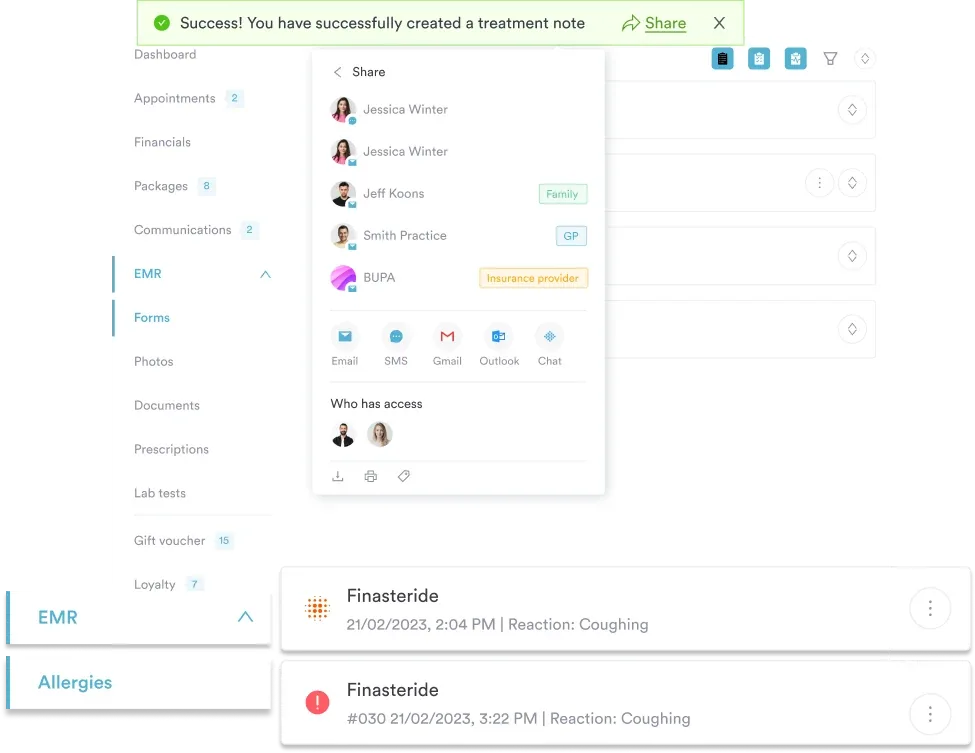
Pabau’s EMR keeps encounter-type detail, physician orders, and progress notes attached to the same patient record used for billing. When a coder assigns S14.103D, the note confirming subsequent-encounter status sits right next to the diagnosis code instead of in a separate file. That link between clinical documentation and claims software is what reduces the back-and-forth with payers over 7th-character accuracy.

Pabau helps practices managing spinal cord injury follow-up care document encounter types accurately. It links diagnosis codes to the right billing records and reduces claim denials at submission.

Getting S14.103D right comes down to confirming the phase of care, not the severity of injury. If a patient is in the recovery or rehabilitation stage, the encounter needs the D extension and a note that says so in plain terms.
Coders who default to A out of habit, or who leave the base code S14.103 unextended, are the ones who see the claim bounce back. The trade-off is a few extra seconds per note confirming which phase of care applies, against a resubmission cycle that can run weeks.
Pabau’s claims management software ties that confirmation to the diagnosis code automatically. The note and the bill agree before the claim ever leaves the practice. Book a demo to see how Pabau keeps documentation and billing aligned for injury and rehabilitation encounters.

Billing a heart procedure without bypass? Anesthesia for intrathoracic heart procedures covers billing for heart and great vessel procedures performed without cardiopulmonary bypass.
Billing an open-heart procedure with bypass? Anesthesia with cardiopulmonary bypass covers billing for open-heart procedures performed with a pump oxygenator, such as valve repair.
Coding a related cervical spine fracture? S12.430B covers a C5 fracture commonly documented alongside cervical spinal cord injuries.
ICD-10 code S14.103D is a billable ICD-10-CM diagnosis code describing an unspecified injury at the C3 level of the cervical spinal cord during a subsequent encounter. The “D” 7th character specifies the patient is in the healing or recovery phase of care, not the initial acute treatment episode. It is valid for claim submission under the 2026 ICD-10-CM edition.
Yes, S14.103D is a billable/specific ICD-10-CM code valid for reimbursement purposes. The parent code S14.103 (without a 7th character) is not billable and cannot be submitted on a claim. Always append the appropriate 7th character (A, D, or S) to make the code valid for submission.
S14.103A (initial encounter) is used when the patient receives active treatment for the C3 cervical spinal cord injury. S14.103D (subsequent encounter) applies once the patient enters the recovery or rehabilitation phase. S14.103S (sequela) is used when the encounter is for a late effect or complication that developed as a consequence of the original injury.
Use the 7th character D when the patient is receiving routine follow-up, rehabilitation, or recovery-phase care for an injury that was previously treated in the acute phase. This applies to physical therapy visits, outpatient neurology follow-ups, and inpatient rehabilitation admissions tied to the original C3 spinal cord injury.
The most closely related codes are S14.113D (complete lesion at C3 level, subsequent encounter), S14.123D (central cord syndrome at C3, subsequent encounter), and S14.153D (other incomplete lesion at C3, subsequent encounter). Codes for adjacent levels include S14.102D (C2) and S14.104D (C4). Use the more specific code when clinical documentation supports a defined injury type.
Identify the correct cervical level from clinical documentation (C1 through C7), confirm the injury type if specified, then append 7th character D to the appropriate S14 code. For an unspecified C3 injury in a recovery-phase visit, the correct code is S14.103D. Ensure the clinical note documents that this is a follow-up or rehabilitation encounter, not a new acute injury event.



