ICD-10 code S61.201A: Open wound of left index finger without nail damage
ICD-10 code S61.201A covers a left index finger wound of unstated type ICD-10 co...

Last Updated: Oct 16, 2026
Billable Code Specific Code
F24 is the billable ICD-10-CM code for shared psychotic disorder.
Let Pabau's smart automation suggest the right codes, reduce claim denials, and keep your practice compliant—effortlessly.
Automate repetitive tasks and focus on what matters most—your patients.
Reduce coding errors and ensure compliance with the latest regulations.
Clean claims, fewer denials, and faster reimbursements.
Powerful insights and reporting to help your practice thrive.
HIPAA compliant SOC 2 certified GDPR-compliant Trusted by 4,000+ clinics worldwide

ICD-10 Code F24 is the billable diagnosis code for shared psychotic disorder, covering folie à deux, induced paranoid disorder, and induced psychotic disorder.
F24 is a terminal (leaf) code with no subcodes – use it as-is with no further specification.
DSM-5 no longer lists shared psychotic disorder as a standalone diagnosis; clinicians should document clinical rationale for choosing F24 over related codes such as F22 or F23.
Pabau’s psychiatry EMR supports structured F24 documentation, with digital intake forms and claims management to reduce coding errors at billing.
ICD-10 Code F24 identifies shared psychotic disorder in the CMS ICD-10-CM code set. It belongs to the F20-F29 block, which covers schizophrenia, schizotypal, delusional, and other non-mood psychotic disorders under Chapter 5 (Mental, Behavioral and Neurodevelopmental disorders, F01-F99).
The official code description is “Shared psychotic disorder.” The condition occurs when one person develops delusions as a direct result of a close, sustained relationship with another individual who already has an established psychotic disorder. The secondary person has typically no independent psychotic history before the relationship intensified.
F24 is also referred to as “induced delusional disorder” in the WHO’s international ICD-10 classification. The WHO ICD-10 browser lists F24 under this label, reflecting the induction mechanism at the heart of the diagnosis. Both terms describe the same clinical entity; the terminological difference is a US ICD-10-CM vs. WHO ICD-10 convention, not a clinical distinction.
F24 is a fully billable ICD-10-CM diagnosis code for 2026. It is confirmed as a terminal (leaf) code, meaning no subcodes exist beneath it. Submit F24 exactly as written; there is no further specification required or available.
The CDC/NCHS ICD-10-CM web tool confirms F24 as valid for the current fiscal year with no excludes notes attached directly to the code. Payers may have individual coverage policies, so verify with the specific insurer before submitting a claim under F24 for the first time.
The ICD-10-CM official tabular list includes an “Applicable To” note for F24 that lists three accepted synonyms. These are not separate codes; they are alternative clinical terms that all map to the same F24 code.
When a referral letter or prior clinical note uses any of these terms, map it to psychiatry EMR software workflows as F24 without modification. The synonyms carry no additional coding weight and do not require modifier codes.
F24 sits in a block alongside several closely related codes. Choosing the right code requires understanding the clinical distinctions that separate them, because they affect both reimbursement and continuity of care documentation.
Much of mental health care now happens remotely, and telehealth software keeps those sessions secure and documented.
Shared psychotic disorder develops when a person in a close, often isolated relationship with a psychotic individual begins to share that person’s delusional beliefs. The relationship is typically familial: spouses, parent-child dyads, or siblings living together with limited outside social contact are the most common presentations.
The secondary individual (the person coded with F24) usually does not exhibit psychotic symptoms before the relationship intensified. Their delusions mirror those of the primary person rather than arising from an independent psychotic process. When the two individuals are separated, the secondary person’s delusions often resolve without antipsychotic treatment.
Key clinical features to document when assigning F24:
Clinicians treating both individuals in a shared psychotic disorder case should document each separately. The primary person’s diagnosis may be F20 (Schizophrenia) or another relevant code; the secondary person receives F24. Using a structured psychiatric evaluation template ensures the induction relationship and the timeline of symptom onset are captured clearly for each record.
Document the timeline explicitly: note when the secondary person first entered the close relationship, when their symptoms emerged, and whether those symptoms predate the relationship. This supports F24 over F22 or F28 and reduces the likelihood of a payer audit questioning the specificity of the diagnosis.
The DSM-5 removed shared psychotic disorder as a standalone diagnosis. The American Psychiatric Association’s 5th edition and its Text Revision (DSM-5-TR) subsumed the condition under Delusional Disorder and Other Specified Schizophrenia Spectrum and Other Psychotic Disorder.
Clinicians in the US who use DSM-5-TR for diagnosis but ICD-10-CM for billing must still apply the appropriate ICD-10-CM code. F24 remains valid for claims purposes regardless of the DSM change.
When mapping from DSM-5-TR to ICD-10-CM for a patient who meets the historical shared psychotic disorder criteria, consider these options:
The shift in DSM-5 classification does not affect the ICD-10-CM code’s validity. F24 remains in the official CMS code set and is recognized by payers for billing. For practices managing mental health records within a therapy practice management platform, the DSM-to-ICD mapping should be built into intake and assessment workflows to avoid default coding to unspecified codes.
F24 is billable in both inpatient and outpatient settings. Unlike some psychotic disorder codes, it carries no excludes-1 or excludes-2 notes in the 2026 ICD-10-CM tabular, so it can in principle be sequenced alongside mood disorder codes or substance use codes when clinically appropriate.
Before submitting F24, confirm the clinical record includes:
Payer policies on F24 vary. Medicare and Medicaid will generally reimburse F24 under standard mental health coverage rules, but private insurers may request medical necessity documentation for a code this specific.
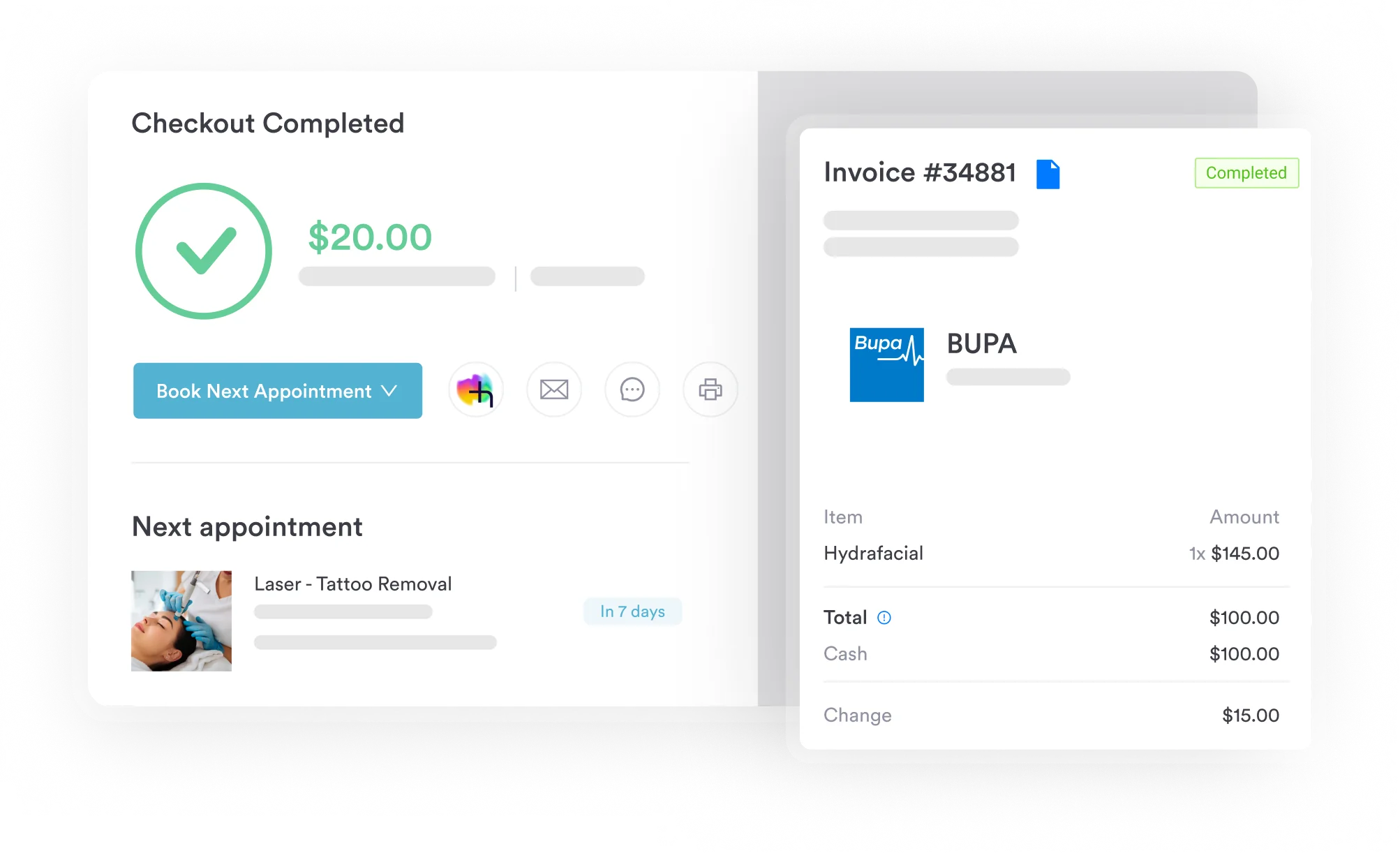
Using claims management software that flags incomplete documentation before submission reduces the risk of initial denials on low-frequency codes. For practices subject to HIPAA compliance for medical offices, ensuring the diagnosis is accurately coded also matters for audit trail integrity.
Structured digital intake forms that capture relationship history, symptom onset timeline, and prior psychiatric history reduce the back-and-forth between billing staff and clinicians when a payer queries F24 specificity.
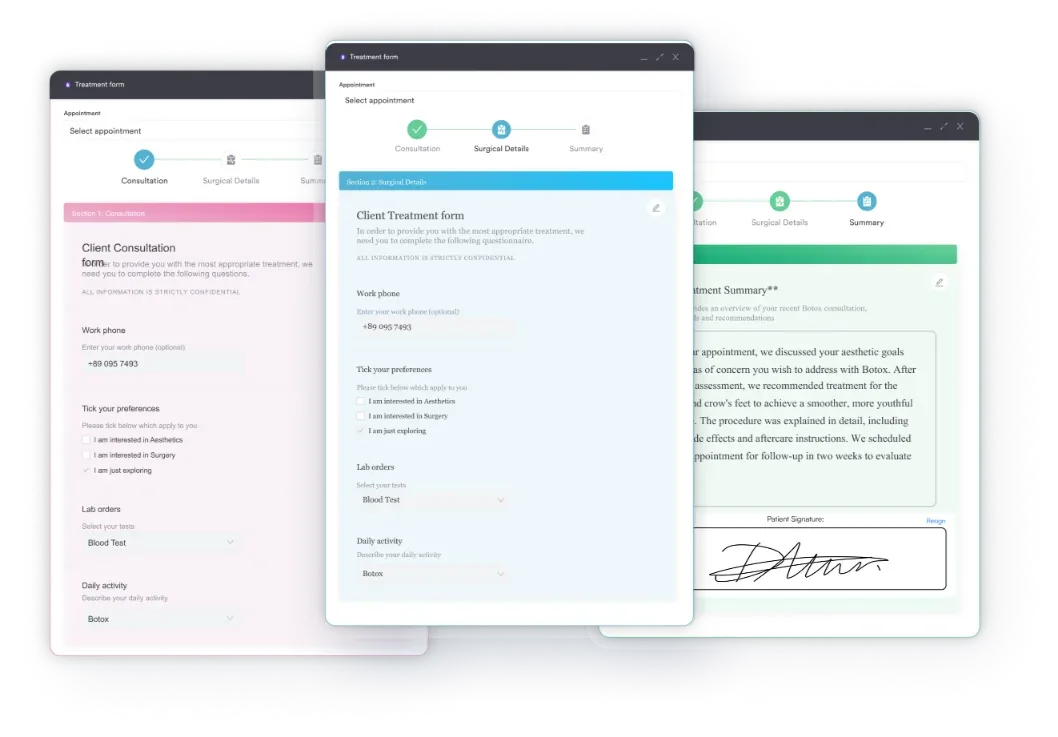

Pabau helps mental health practices document complex diagnoses like shared psychotic disorder accurately and submit clean claims every time. From structured intake forms to claims management, everything connects in one place.

A few practical points that frequently arise in clinical settings when applying ICD-10 Code F24:
ICD-11 reclassifies shared psychotic disorder. Under ICD-11, the condition does not appear as a standalone entity equivalent to F24; the ICD-11 framework aligns more closely with DSM-5 in placing induced psychosis within the broader spectrum of primary psychotic disorders. Where a depressive episode is documented alongside the induced psychosis, ICD-11 6A70 covers single episode depressive disorder.
For practices planning ahead for ICD-11 adoption in the US (which has not yet been mandated by CMS), be aware that the current F24 concept may need to be mapped to different ICD-11 categories. Until CMS issues a formal transition date, continue using ICD-10-CM F24 for all US claims.
If your practice treats both the primary psychotic individual and the secondary (F24) individual, code each patient’s record independently. The primary person is coded with their appropriate psychosis code (commonly F20.x or F22). The secondary person receives F24. Do not use F24 for the primary person; it applies only to the individual whose psychosis was induced by the relationship. Coding names the service; medical billing gets it submitted, adjudicated and paid. A shared coding reference also standardizes how two coders handle the same borderline case.
F24 sits within the “not due to a substance or known physiological condition” block. If there is any evidence that the secondary person’s psychotic symptoms stem from substance use or an organic medical cause, F24 is not appropriate.
Use F1x.x series (substance-related psychoses) or a general medical condition code instead. The ICD List tool is useful for quickly checking excludes notes and related codes when this distinction is unclear at the point of coding.
Z codes are not required with F24 but are strongly recommended for documentation completeness. Common pairings include Z63.0 (Problems in relationship with spouse or partner), Z63.8 (Other specified problems related to primary support group), and Z60.4 (Social exclusion and rejection).
These add clinical context that supports medical necessity and can reduce payer queries about why a less common psychosis code was selected.
Run a pre-submission check on every F24 claim: confirm that the patient’s record notes the induction relationship, documents symptom onset relative to the relationship timeline, and includes a differential diagnosis note. This single step catches most denial triggers before the claim leaves the practice.
Coding shared psychotic disorder accurately means understanding both the clinical nuance of induced delusions and the practical differences between F24, F22, and F28. Because DSM-5 no longer carries shared psychotic disorder as a standalone category, many clinicians default to unspecified codes, which weakens the clinical record and risks unnecessary payer scrutiny.
Pabau’s client records system supports the structured documentation that makes F24 defensible at audit, capturing relationship history, symptom onset timelines, and differential diagnosis notes in a single clinical record.
Pair that with the AI-powered clinical documentation in Pabau Scribe, our AI scribe, to reduce note-writing time on complex psychiatric presentations. To see how Pabau handles mental health documentation end to end, book a demo with the team.

Looking for another F-block diagnosis code? ICD-10 Code F32.9 covers major depressive disorder, single episode, unspecified, including billable status, criteria, and documentation tips.
Coding a presenting symptom rather than a disorder? ICD-10 Code R41.82 explains how to code altered mental status and when a symptom code is appropriate.
Billing a paired diabetic foot code? Routine foot care billing G0247 covers routine foot care for diabetic patients with LOPS, accepted only when billed alongside G0245 or G0246 that day.
ICD-10 Code F24 is the billable diagnosis code for shared psychotic disorder, a condition in which a person develops delusions as a direct result of a close relationship with another individual who already has an established psychotic disorder. It sits in the F20-F29 block under Chapter 5 of ICD-10-CM and is also known by its synonyms: folie à deux, induced paranoid disorder, and induced psychotic disorder.
Yes, F24 is a billable ICD-10-CM diagnosis code and is valid for fiscal year 2026. It is a terminal (leaf) code with no subcodes, so it is submitted exactly as F24 with no further character specification needed.
F22 (Delusional disorders) is used when a patient’s delusions arise independently, without an identifiable induction relationship. F24 requires documented evidence that the patient’s delusional beliefs were acquired through close, sustained contact with a person who has an established psychotic disorder. If the patient’s delusions persist and function independently after separation from the primary individual, F22 may be more appropriate than F24.
DSM-5 and DSM-5-TR no longer list shared psychotic disorder as a standalone diagnosis. The condition was subsumed under Delusional Disorder and Other Specified Schizophrenia Spectrum and Other Psychotic Disorder in DSM-5. However, ICD-10 Code F24 remains valid for US insurance billing purposes, so clinicians who work in DSM-5-TR clinical frameworks should still apply F24 when the induction criteria are met and an ICD-10-CM code is needed for the claim.
Common Z-code additions with F24 include Z63.0 (Problems in relationship with spouse or partner), Z63.8 (Other specified problems related to primary support group), and Z60.4 (Social exclusion and rejection). These are not mandatory but support medical necessity documentation by adding clinical context about the social dynamic underlying the induced psychosis.