7 Best Fresha alternatives for salons and med spas (2026)
Fresha alternatives fall into two camps, and the split decides your monthly bill...

Last Updated: Oct 6, 2026

Best medical software varies by clinic type: EHR-heavy practices need different tools than aesthetic or wellness clinics focused on scheduling and patient engagement.
All-in-one platforms (scheduling + billing + clinical documentation + marketing) reduce the cost and friction of managing multiple disconnected tools.
HIPAA compliance, cloud access, and onboarding quality are the three most overlooked evaluation criteria when comparing platforms.
Pabau combines scheduling, clinical notes, digital forms, billing, and automated marketing in a single platform purpose-built for aesthetic and wellness clinics.
Most clinic owners search for the best medical software only after a problem has already cost them: a billing error that took weeks to resolve, a scheduling system that can’t handle multi-location bookings, or a clinical documentation tool that requires a separate login.
Top EMR platforms differ more than most comparison guides acknowledge, and choosing the wrong one for your practice model creates operational drag that compounds over time. This guide evaluates the best medical software by use case, so you can match the tool to your actual workflows rather than a generic feature checklist.
The category “best medical software” covers at least seven distinct product types. A hospital system choosing an enterprise EHR has almost nothing in common with an aesthetic clinic evaluating scheduling and billing tools. Before comparing platforms, you need to know which category your practice actually needs.
| Software Type | Primary Use | Best For |
|---|---|---|
| EHR / EMR | Clinical documentation, patient records | Physician practices, hospitals, multi-specialty groups |
| Practice Management Software | Scheduling, billing, staff, reporting | Private clinics, group practices, wellness centers |
| Medical Billing Software | Claims, RCM, insurance processing | Billing companies, high-volume insurance practices |
| Patient Scheduling Software | Appointments, reminders, waitlists | Any patient-facing practice |
| Telehealth Software | Remote consultations | Behavioral health, primary care, follow-up care |
| All-in-One Platforms | Combines EHR + scheduling + billing + marketing | Aesthetic, wellness, and private clinics |
Understanding the what practice management software does vs. what an EHR does is the first step. These are often sold as interchangeable but serve different functions. An EMR lives in one provider’s environment; a true EHR is built to share data across care settings. When you compare EHR vendors, most of the real differences show up in interoperability and reporting, not the note-taking screen itself. Most private clinics need neither a full hospital EHR nor a standalone billing tool: they need an integrated platform that handles both.
Below is an honest breakdown of where different platforms excel, organized by what clinic operators actually care about: scheduling depth, clinical documentation quality, billing capability, and ease of implementation.
Pabau is purpose-built for aesthetic, wellness, and private medical clinics. As the best med spa software, it combines scheduling, digital intake forms, clinical notes, billing, patient communications, and marketing automation in a single platform. For practices specifically comparing the best medical spa software, that combination of clinical tools and marketing automation under one login is the main draw. Clinics running multiple treatment rooms or locations can manage the full patient journey without switching tools.
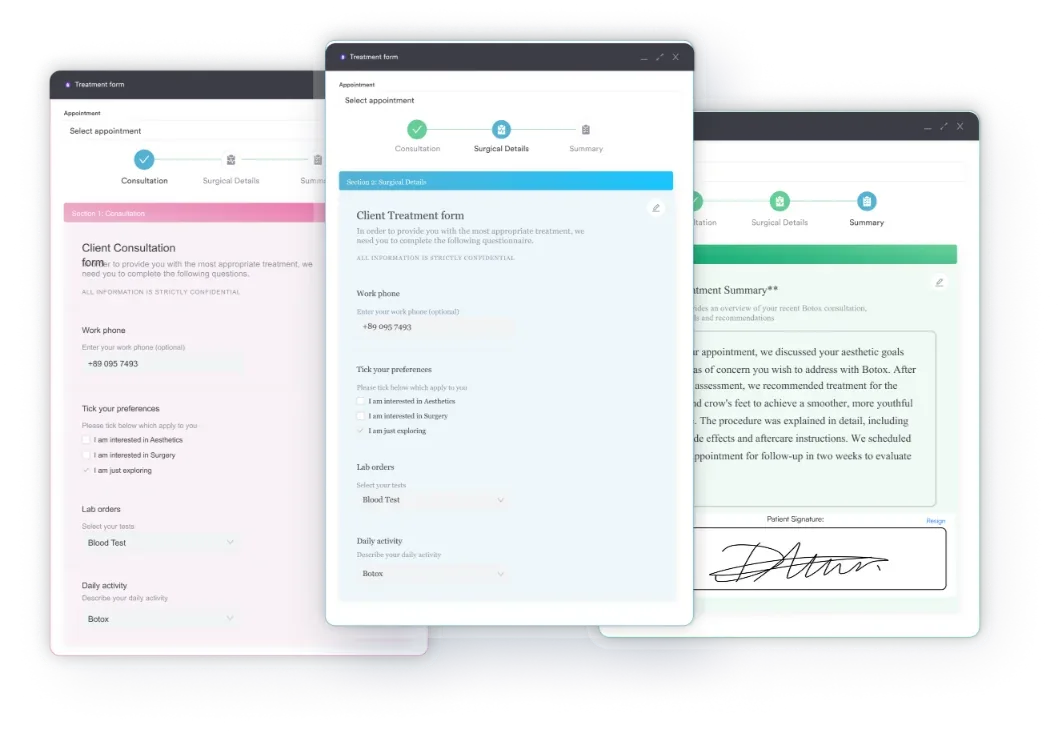
Key capabilities include: customizable treatment notes, before-and-after photo management, consent form workflows, online booking with deposit collection, and automated appointment reminders. The EHR integration workflows Pabau supports are designed for specialty and aesthetic clinic environments rather than primary care or hospital systems. Pricing starts from $65/month, and setup is structured onboarding rather than self-serve, which matters for teams that need configuration support from day one.
Best for: Aesthetic clinics, medical spas, wellness centers, private practices, and multi-location specialty clinics that need scheduling, documentation, and patient communications in one place.
Epic is one of the best EHR systems for hospitals and large health system environments. It handles complex multi-specialty documentation, insurance billing, lab integrations, and interoperability across large provider networks. Implementation typically takes six to twelve months and requires dedicated IT resources.
Best for: Hospitals, large multi-specialty group practices, and academic medical centers where deep interoperability and complex billing are non-negotiable.
SimplePractice serves over 250,000 healthcare professionals, according to their website, with a focus on solo therapists, counselors, and group behavioral health practices. The platform handles scheduling, telehealth, insurance billing, and SOAP notes through a clean client-facing portal. It is optimized for solo and small-group practitioners rather than multi-specialty or high-volume clinical environments.
Best for: Therapists, counselors, social workers, and small behavioral health group practices.
AdvancedMD is medical billing software built for mid-to-large physician practices that process high volumes of insurance claims. Its revenue cycle management tools, clearinghouse integrations, and reporting dashboards are built for practices where insurance billing is the operational center of gravity. The platform’s complexity reflects that scope: onboarding takes longer and the learning curve is steeper than lighter-weight tools.
Best for: Multi-specialty physician practices, billing companies, and practices processing significant insurance claim volumes. The healthcare CRM tools available in this segment vary widely, and AdvancedMD sits at the more complex end of the spectrum.
athenahealth provides EHR, practice management, and patient engagement tools through a network model, where practices benefit from shared claims data and prior authorization intelligence. Its clearinghouse handles high insurance complexity well. Like AdvancedMD, it targets practices where insurance billing volume justifies a more involved implementation.
Best for: Ambulatory care groups, primary care networks, and multi-specialty practices processing significant payer volume.
eClinicalWorks is widely deployed across outpatient physician practices, federally qualified health centers, and multi-specialty groups. The platform covers EHR, practice management, and population health tools. According to content referenced in research, it supports a large number of medical professionals across thousands of facilities, though exact figures should be verified against eClinicalWorks’ current documentation.
Best for: High-volume outpatient practices, community health centers, and multi-specialty ambulatory groups.
Feature lists in vendor marketing tend to look similar. The meaningful differences show up in implementation, workflow depth, and what you actually have to configure yourself. When comparing platforms, evaluate these five areas rather than raw feature counts.

Scheduling, clinical documentation, billing, and patient communications in one platform. Built for aesthetic, wellness, and private medical clinics.

Scheduling is the most used part of any clinic software. Look for multi-room or multi-location calendar views, online booking with deposit collection, automated appointment reminders, and waitlist management. The strongest patient management software handles all of this from the same calendar view, rather than syncing bookings in from a separate tool that doesn’t talk to clinical records.
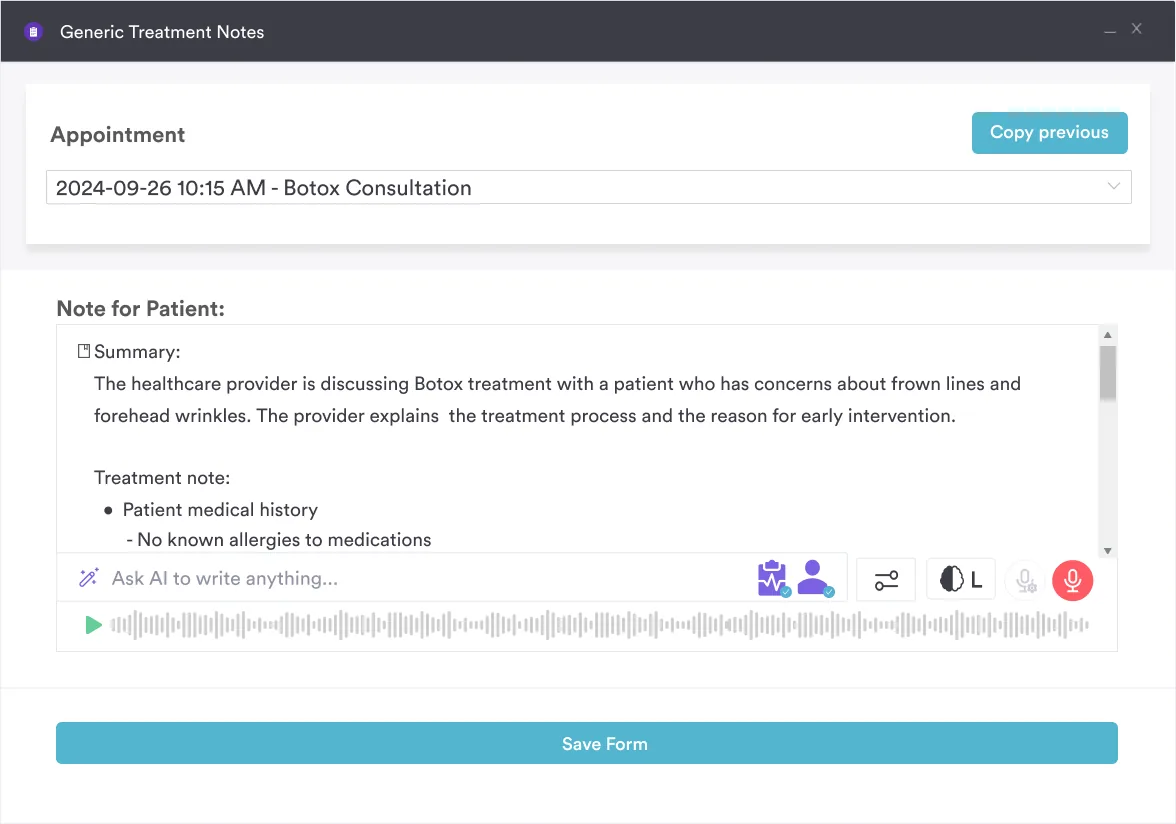
The gap between platforms widens most at clinical documentation. Generic EHRs built for primary care force aesthetic or wellness practitioners into templates that don’t match their workflows. Look for: customizable note templates, treatment-specific fields, photo documentation, consent form management, and AI-assisted note generation.
Pabau’s AI clinical documentation tool helps practitioners generate structured notes faster without sacrificing clinical accuracy. This matters most in high-volume clinic environments where documentation time is the biggest operational bottleneck.
Manual exams like the Thompson test for Achilles tendon rupture still need structured documentation fields, not just free-text notes.
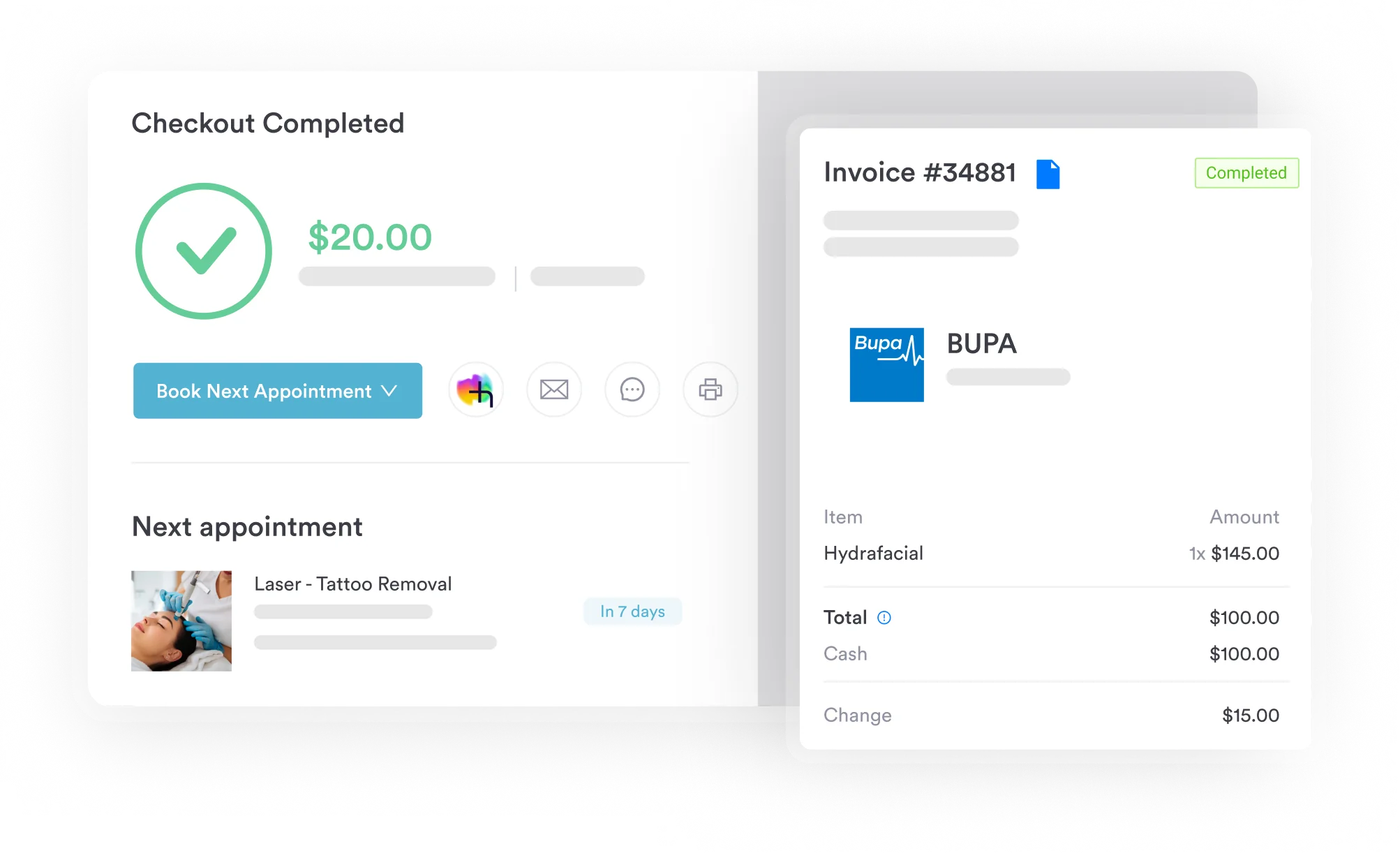
Private-pay clinics need streamlined invoicing, online payment collection, and deposit handling. Insurance-heavy practices need clearinghouse integrations, claims scrubbing, and denial management. These are different capabilities: a platform optimized for one often underserves the other. Medical billing software for small practices usually prioritizes the first set, since most solo and small-group clinics are private-pay rather than insurance-heavy. Evaluate claims management depth before committing to any platform.
The U.S. Department of Health and Human Services sets the compliance baseline every U.S. healthcare software platform must meet under HIPAA. For UK-based practices, the equivalent is GDPR. Before signing any contract, confirm: where patient data is stored (data residency), how access is logged, and what breach notification timelines the vendor commits to. “HIPAA-compliant” on a marketing page is not the same as a signed Business Associate Agreement. Look for HIPAA compliance for clinic software guidance if you’re evaluating platforms for the first time.
Enterprise EHRs like Epic take six to twelve months to implement. Lighter platforms claim “setup in a day,” which often means the configuration work falls on the clinic team. The meaningful question is: what does the vendor actually do during onboarding, and what do you own? Clinics that underinvest here end up using 30% of the platform’s capability for years.
Before requesting demos, document your clinic’s three highest-friction workflows: the tasks that take the longest, generate the most errors, or cause the most staff frustration. Use those as your evaluation criteria in every vendor demo. A platform that solves your actual problems beats a platform with the longest feature list every time.
The right platform depends almost entirely on your clinical model. Three questions narrow the field faster than any feature comparison.
Reviewing practice management software features against these three questions helps eliminate 80% of the shortlist before you reach the demo stage. The medical practice management software landscape has expanded significantly, and the volume of options makes structured evaluation criteria essential.
For aesthetic and wellness clinics specifically, the evaluation criteria differ from primary care. These practices need: treatment-specific clinical forms, consent workflow management, before-and-after photo storage, package and membership billing, and patient recall automation. Most generic EHRs were not designed with these workflows in mind.
The Office of the National Coordinator for Health IT (ONC) publishes guidance on EHR selection criteria and interoperability standards that applies primarily to practices working within U.S. insurance and Medicare billing workflows. For private clinics outside that system, ONC certification is less critical than finding a platform built for your actual clinical model.
No single platform is best for every practice. Below are direct recommendations by clinic model.
Our companion roundup groups these same platforms differently. See the side-by-side medical software comparison for another cut of the data.
For a deeper look at the medical spa context specifically, the medical spa software evaluation criteria differ meaningfully from general clinic software because of the mix of regulated clinical treatments and hospitality-oriented client experience goals.
The biggest mistake in medical software selection is choosing a platform that solves a generic use case rather than your clinic’s specific operational model. Enterprise EHRs over-engineer the problem for most private clinics. Standalone scheduling tools under-serve practices that also need clinical documentation and billing in one place.
For aesthetic, wellness, and private medical clinics that want scheduling, clinical notes, patient communications, and billing without managing four separate tools, Pabau is built for exactly that. Book a demo to see how it handles your specific clinic workflows.

Comparing clinic management software options? Top clinic management software picks ranks five tools by their impact on practice revenue.
Curious where your patient flow breaks down? Improving patient flow covers the five metrics, like wait time and no-show rate, that reveal where flow breaks down.
Looking for practical apps to run your practice? Best apps for your practice rounds up tools like Canva that simplify marketing, scheduling, and daily practice tasks.
Medical software is any digital tool that helps a practice manage patient care, scheduling, billing, or compliance, ranging from full electronic health record (EHR) systems to standalone scheduling or billing tools. Most private clinics end up needing an integrated platform rather than several disconnected tools, which is why all-in-one options like Pabau exist alongside specialized EHR and billing software.
The best medical software for small practices is one that combines scheduling, clinical documentation, and billing without requiring a large IT investment. Pabau fits this model for aesthetic, wellness, and private practices. SimplePractice works well for solo behavioral health practitioners. The right choice depends on whether your practice bills insurance or operates on a private-pay model.
Medical software includes EHR and EMR platforms for clinical documentation, practice management software for scheduling and billing, medical billing and RCM tools for insurance claims, telehealth platforms for remote consultations, and all-in-one solutions that combine several of these functions. The right type depends on your clinical model, billing complexity, and practice size.
Epic Systems is the most widely deployed EHR in U.S. hospitals and large health systems. For ambulatory and outpatient settings, eClinicalWorks and athenahealth have significant market share. Among private clinics and aesthetic practices, purpose-built platforms like Pabau are preferred because enterprise EHRs are over-engineered for those workflows.
Yes, any software that stores or transmits protected health information (PHI) in the U.S. must comply with HIPAA. This includes requiring the vendor to sign a Business Associate Agreement (BAA). UK and EU practices must comply with GDPR instead. Always confirm compliance documentation before signing a contract, not after implementation.
Implementation time varies significantly by platform type. Enterprise EHRs like Epic typically take six to twelve months. Mid-market platforms like athenahealth or AdvancedMD often take one to three months. Purpose-built platforms for smaller clinics, such as Pabau, use structured onboarding programs that typically run four to eight weeks, depending on configuration complexity.