CPT code 93503: Swan-Ganz catheter billing and modifiers
CPT code 93503: Official descriptor and procedure overview In the AMA CPT code s...

Last Updated: Oct 23, 2026

CPT code 12006 covers simple repair of superficial wounds measuring 20.1 cm to 30.0 cm. The sites are the scalp, neck, axillae, external genitalia, trunk, and extremities.
Wounds of 12.6 to 20.0 cm belong to CPT 12005, and wounds longer than 30.0 cm belong to CPT 12007. Check the tier against the measured length.
Only wounds of the same repair type and anatomical classification may be added together. Adding across repair types is a common audit trigger.
CPT 12006 has a 0-day global period. CMS moved the whole 12001 to 12018 series off the 10-day global in 2011, so follow-up visits are separately billable.
Practice management software like Pabau links diagnosis codes to documented procedures and flags incomplete claims before submission, which cuts denials on repair billing.
CPT code 12006 covers simple repair of superficial wounds measuring 20.1 cm to 30.0 cm. It applies to the scalp, neck, axillae, external genitalia, trunk, and extremities.
A single laceration that long is rare outside major trauma. Most 12006 claims are built by adding several smaller repairs together, and the arithmetic behind that total is where the code usually goes wrong.
Two details decide whether the claim pays. The first is the length band, since 12005 sits just below at 12.6 cm to 20.0 cm and 12007 takes over above 30.0 cm. The second is the global period.
CMS put this series at zero postoperative days back in 2011, yet plenty of billing cheat sheets still print 10.
CPT code 12006, as maintained by the American Medical Association (AMA), describes the simple repair of superficial wounds measuring 20.1 cm to 30.0 cm.
It covers the scalp, neck, axillae, external genitalia, trunk, and extremities, including hands and feet. The code sits in the integumentary system section of the CPT code set and is classified as a minor surgical procedure.
What “simple repair” means clinically: simple repair closes the epidermis, dermis, or subcutaneous tissue without significant involvement of deeper structures.
The wound edges are brought together with sutures, staples, or tissue adhesive. There is no layered closure and no work on fascia, muscle, or tendons. A repair that needs any of those escalates to intermediate or complex. Some injuries never reach a repair code at all, and S60.426S is one of them.
The simple repair codes are organized by two things: the anatomical grouping and the wound length. CPT code 12006 sits at the long end of the scalp, neck, trunk, and extremity group, one tier below 12007.
Almost every error in this family comes from the same place. A coder measures or totals the length loosely, then lands on the tier next door.
The face, ears, eyelids, nose, lips, and mucous membranes use their own series, 12011 through 12018, with its own length tiers. So a 22 cm laceration across the back is 12006, while the same closure on the lip belongs in the face series.
Confirm the site before you pick a tier. Watch the numbering too, because there is no CPT 12003 and no CPT 12012. At the ends of this group sit 12001 for 2.5 cm or less and 12007 for anything above 30.0 cm.
A wound measured at exactly 20.0 cm is CPT 12005. The 12006 band starts one millimeter higher, at 20.1 cm, and runs to 30.0 cm.
Because the numbering already skips 12003, 12005 is the tier most often dropped when someone codes from memory. Check the tier against the centimeter figure in the note every time, even when the total looks obvious.
Measure the wound at its greatest length, in centimeters, before a single stitch goes in. That figure picks the code, so four rules govern it. Break any one of them and the claim carries an audit flag.
Document each wound’s measured length individually before you add anything up. A note with no centimeter figure gives the payer two easy options, denial or a downcode to a shorter tier. The diagnosis side is just as literal, since S60.312D names the thumb, the side and the visit. Neither is worth arguing about after the fact.
Here is how the additive rule plays out on a claim you might see this week.
A patient arrives after falling from a ladder onto a metal fence. The clinician documents three simple lacerations, all closed with sutures under local anesthetic:
All three sit in the same anatomical group and all three are simple repairs, so the lengths add up. 14.0 + 6.5 + 3.0 = 23.5 cm, which lands in the 20.1 to 30.0 cm band.
The encounter is reported once, with CPT 12006. Coded individually.
Change one detail and the answer changes with it. Had the forearm wound needed a layered closure, it would be an intermediate repair, totaled and coded on its own. Had one wound landed on the lip, it would move to the face series and could not join this total. A bite recorded as S60.461D also brings its own contamination history to the note.
Each wound still needs its own ICD-10 diagnosis code, and the note has to show every individual length alongside the total. A hand abrasion in that group codes to S60.519A only when the site is genuinely unrecorded. An auditor who can see 14.0 + 6.5 + 3.0 in the record has nothing to dispute about the code selection.
After wound length, modifier selection is the second most common source of denials on these claims. The table below covers the modifiers that matter for wound repair, including four that never apply to 12006.
Modifier 59 is a common audit target. Apply it only when the record supports a genuinely distinct service, which means a different site, a different session, or a different circumstance. A separate finger injury coded S59.811D can establish that site, provided the note says so.
Under the National Correct Coding Initiative (NCCI), a 59 with nothing behind it is unbundling. Debridement is where this bites hardest on repair claims. Cleaning and irrigating the wound is part of 12006 already.
A separate debridement code such as 11042 belongs on the claim only when the note describes removing devitalized tissue at depth.
Medicare publishes the rate every year in the Medicare Physician Fee Schedule (MPFS). Facility and non-facility rates differ, because the overhead assumptions behind them differ.
Pull your own figure from the CMS fee schedule lookup rather than a printed sheet, since it is the only source that reflects your locality.
Check your local fee schedule using the CMS MPFS lookup before billing CPT 12006. Rates vary by geographic practice cost index (GPCI), which adjusts for regional overhead differences. A facility-setting claim submitted with non-facility RVU assumptions will result in overpayment recoupment.
The RVU breakdown reflects a minor procedure with a substantial closure. Work RVUs sit above the shorter simple repairs, because the longer wound means more closure time and a larger anesthesia field.
A free RVU lookup will confirm the current work, practice expense, and malpractice values before you submit.
CPT code 12006 carries a 0-day global period. CMS assigns it global indicator 000 in the Medicare Physician Fee Schedule. The global package covers the day of the procedure and nothing beyond it.
That has been the position since the 2011 Medicare Physician Fee Schedule. CMS moved the entire simple repair series, CPT 12001 through 12018, from a 10-day global period to zero days. Plenty of billing references and internal cheat sheets still print 10 days. Practices that follow them write off follow-up visits they are entitled to bill. Those visits often carry a sequela code such as S59.231S rather than the original injury. Australian MBS billing changes descriptors and fees periodically, so last year printout is not a safe reference. Risk of complications carries more weight than volume of notes when the visit level is questioned.
What a 0-day global period means in practice: a wound check, suture removal, or dressing change on any later date is a separately billable encounter. Report it with the office visit code the work supports. No postoperative window exists to work around, so that visit needs no modifier 24.
What is still included on the day of service: the local anesthesia, the closure itself, and the immediate postoperative care given during that same encounter. A separately identifiable E/M service on the day of the repair still needs modifier 25 on the E/M code.
Confirm the global indicator yourself in the CMS Physician Fee Schedule lookup before you set a follow-up billing policy. Commercial payers are not bound by the Medicare figure, and some contracts still apply their own postoperative window to minor procedures.
Every 12006 claim needs at least one ICD-10-CM diagnosis code that explains why the repair happened. The diagnosis has to match the wound site, the laterality, and the mechanism of injury in the note.
A sutured wound low on the back, for instance. The table below groups the codes that come up most often with this repair.
A wound long enough to reach 12006 usually sits on the trunk, the scalp, or a full limb segment. Where the billable total came from several wounds, report a diagnosis code for each one rather than for the longest wound alone.
Read the descriptor closely as well, because most of these codes specify “without foreign body”. A fragment that stays in the soft tissue is coded separately.
Then get the seventh character right. “A” marks the initial encounter and active treatment, “D” a subsequent encounter during routine healing, and “S” a sequela. The character has to match the visit in front of you.
A wound check during healing moves to the “D” form of the code. Sending an initial-encounter code out on a follow-up visit is a common error, and those follow-ups are worth billing correctly here.
Incomplete documentation is the leading cause of failed 12006 claims at audit. Every element below belongs in the procedure note, and one missing item is enough to expose the claim to denial or recoupment.
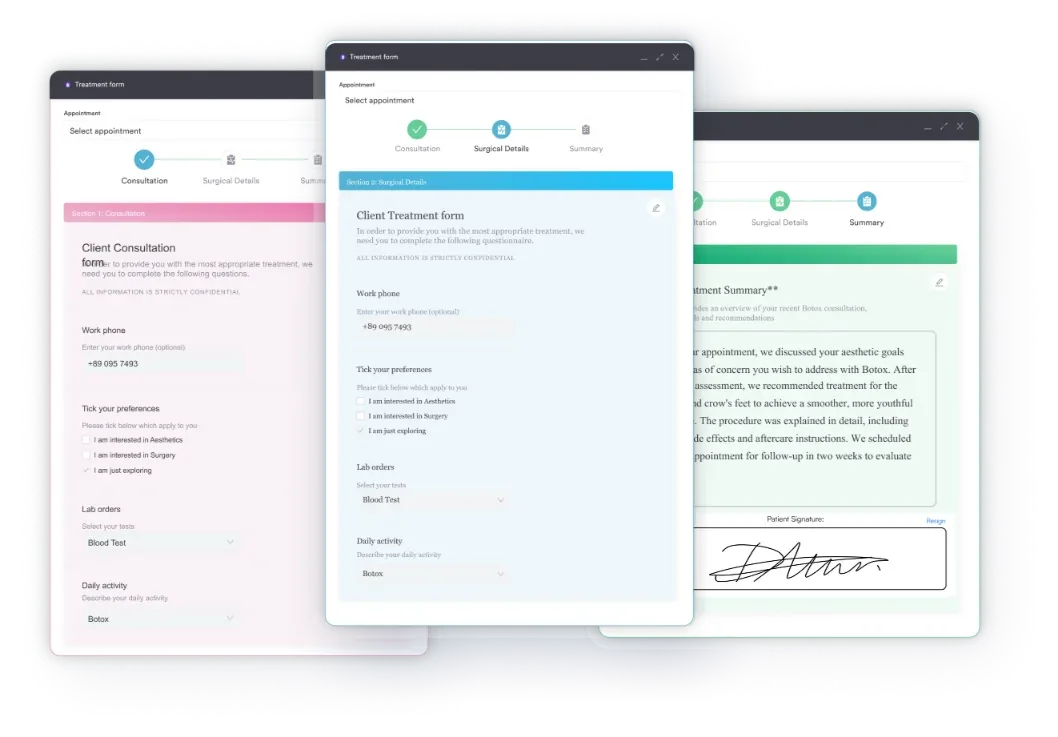
Structured medical documentation workflows and digital intake forms help here, because they capture the wound details while the clinician is still with the patient.
Nearly every denial and audit finding on this code fits one of five patterns. Learn to spot them and the write-offs stop repeating.
Every one of those five is caught more cheaply at the keyboard than at claims review. A coding template that forces a length, a repair type, and a closure method into the note does most of that work for you.
Run this audit in the opposite direction from most global-period reviews. Pull every 12006 claim from the last 12 months, then look for the wound checks and suture removals that followed and were never billed. With a 0-day global period those encounters were billable, so suppressing them is lost revenue rather than compliance.
The place of service (POS) code decides whether the facility or non-facility rate applies. That makes it a payment field as much as an administrative one. CPT code 12006 is billable across several settings, and the two rates sit far enough apart to matter.
Submitting POS 11 for a repair performed in a hospital outpatient department triggers an error, because the hospital is already paid the facility component. The POS on the professional claim has to reflect where the work happened.
The clinical work ends at closure, but the claim has five steps left. It tends to fail at the same points every time, so it helps to see the whole path at once.
Step five is why the small stuff matters. An edit cannot read the narrative in your note. It rejects the claim, and the rework costs your team more than the repair paid.
Seven questions take a minute. A denial takes a phone call, a corrected claim, and a month of waiting.
Running that checklist by hand works until the day gets busy. Laceration repair has four details that must be right on every claim:
On paper, or split between a chart and a spreadsheet, each of those four is a place for the claim to fall over.
Practice management software like Pabau connects the procedure note to the claim. Diagnosis codes attached to a wound repair encounter flow straight through, which removes the retyping step where ICD-10 mismatches usually appear.
Its claims management tools then check each claim for missing submission fields before it leaves, and keep every claim status on one dashboard.
Laceration repair rarely sits on its own. Practices that also run dermatology or minor surgery gain the most from keeping notes and claims in one record. That holds whether the practice runs on dermatology EMR software or a plastic surgery EMR. The wound measurements a coder needs are already sitting in the chart.
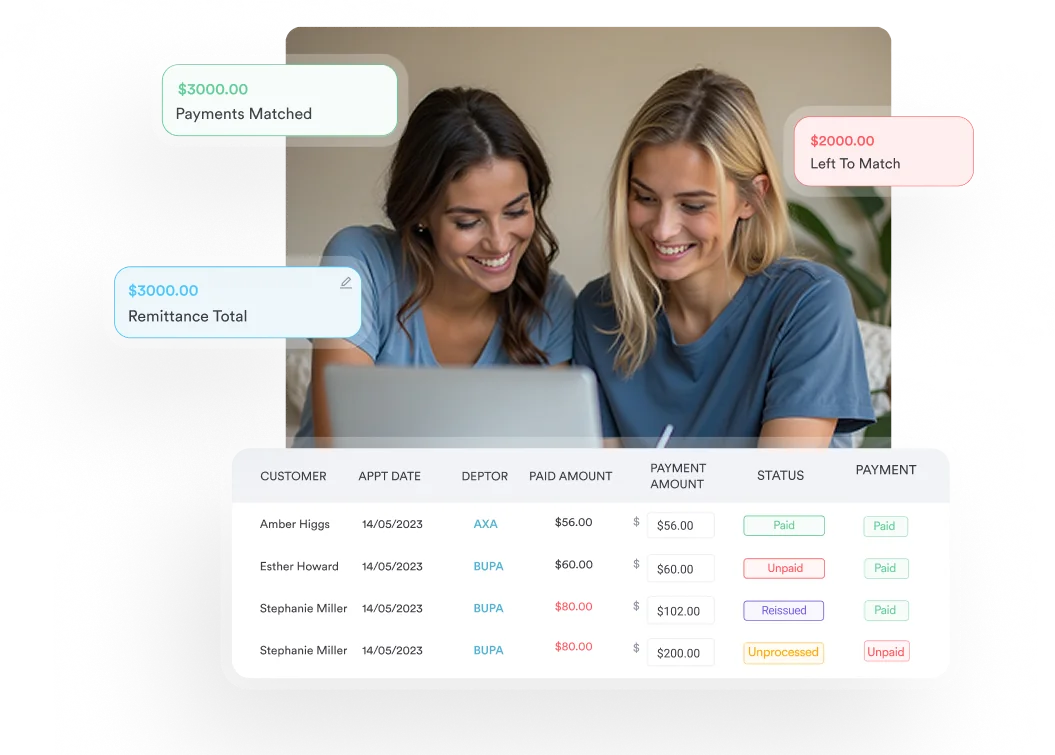

Pabau links diagnosis codes to the procedures your team documents. It checks every claim for missing submission fields before it goes out, and keeps claim status in one dashboard. See how it fits your practice.

CPT code 12006 is simple in theory and routinely miscoded in practice. Two habits fix most of it. Measure every wound before you close it, and leave the arithmetic in the note where an auditor can follow it.
The global period costs practices in the other direction. This code has none, so the wound checks and suture removals many teams still write off are billable encounters. Correct the length tiers and the global period together, and 12006 stops producing denials at one end and lost revenue at the other.
If your team is stitching these details together across a paper note and a separate billing system, that is where the errors come from. Pabau keeps the wound measurements, the diagnosis codes, and the claim in one place. Book a demo to see how it handles your repair claims.

Closing a wound that needs more than one layer? CPT code 12055 covers intermediate repair at the same 20.1 to 30.0 cm length on the face.
Working out when a repair becomes complex? CPT code 13120 walks through complex closure of the scalp, arms, and legs.
Billing closure after a skin excision? CPT code 11400 explains what the excision code already includes.
Handling a surgical wound that has come apart? CPT code 12020 covers treatment of superficial wound dehiscence.
Coding staged Mohs surgery in dermatology? CPT code 17312 sets out how the add-on stages are reported.
No. When an excision created the wound, simple closure is already bundled into the excision code. You do not report 12006 on top of it. Only intermediate or complex closure is separately billable in that situation. The rule catches practices that treat every closure as a repair, whatever made the wound.
Yes, provided laceration repair sits within their state scope of practice and they are enrolled with the payer. Medicare pays a nurse practitioner or physician assistant 85% of the fee schedule amount when the claim goes out under their own NPI. Supervision and incident-to rules vary by payer, so check the policy first.
Traditional Medicare does not require prior authorization for laceration repair, since the closure is usually urgent. Some commercial and Medicare Advantage plans do ask for it on non-emergency skin procedures. Check the plan before a scheduled repair, and record why the wound needed closing when it was acute.
A surgical wound that comes apart is not a fresh laceration, so the 12000 series does not fit. Treatment of a superficial dehiscence with simple closure is 12020, and 12021 covers the same work with packing. An extensive or complicated secondary closure is 13160.
Yes. The vaccine product and the administration are separate line items, and 12006 does not absorb either one. Report the vaccine code alongside the administration code, then document consent and the lot number as you would for any immunization.