CPT code 93503: Swan-Ganz catheter billing and modifiers
CPT code 93503: Official descriptor and procedure overview In the AMA CPT code s...

Last Updated: Oct 23, 2026

CPT code 12032 covers intermediate repair of wounds on the scalp, axillae, trunk, and extremities measuring 2.6 to 7.5 cm.
The repair must close at least one deeper layer of subcutaneous tissue or superficial fascia, not only the skin.
Measured length picks the code. 12031 stops at 2.5 cm, 12032 runs to 7.5 cm, and 12034 starts at 7.6 cm.
Lengths add together across every site in the 12031 to 12037 grouping, so record each wound and the total.
Practice management software like Pabau checks required claim fields before you submit and tracks each claim’s status.
CPT code 12032 covers intermediate repair of a wound measuring 2.6 to 7.5 cm on the scalp, axillae, trunk, or extremities. Two details decide whether that claim gets paid. One is the measured length in centimeters. The other is a closure that reaches a deeper layer of tissue.
Both of those live in the note, not in the code. A chart that reads “large laceration, repaired” hands the payer a reason to pay you at the simple repair rate instead. Get the note right and the rest of the claim follows.
CPT code 12032 describes intermediate repair of wounds on the scalp, axillae, trunk, or extremities totaling 2.6 cm to 7.5 cm. The American Medical Association (AMA) ties the code to a layered closure.
So your repair has to close one or more deeper layers of subcutaneous tissue and superficial fascia, on top of the skin. A single-layer closure of the same wound does not qualify, however long the wound is.
Body site matters as much as length here. The 12031 to 12037 series covers the scalp, axillae, trunk, and extremities, and the descriptor leaves out hands and feet.
Face, ears, eyelids, nose, lips, and mucous membranes sit in the 12051 to 12057 series. That holds even when the wound and the repair look identical. Neck, hands, feet, and external genitalia belong to 12041 to 12047.
Choosing the wrong series for the site is one of the most common rejection reasons on intermediate repair claims. So check the site before you reach for the ruler. Once the series is settled, the next question is what Medicare pays for it.
Medicare pays for CPT code 12032 through the Physician Fee Schedule (PFS), which CMS updates every January 1. The rate splits by setting, so an office repair pays more than the same repair in a hospital outpatient department. Geography moves it again, through the Geographic Practice Cost Index (GPCI).
Those numbers change every year, so this page does not hardcode a dollar figure. Use the CMS Physician Fee Schedule lookup tool for current facility and non-facility rates.
Enter the code, pick your locality or ZIP, then choose the current year’s schedule. For the components behind the rate, FastRVU’s RVU lookup breaks out work, practice expense, and malpractice.
Commercial payers negotiate their own rates and often pay above Medicare. Check your contracted fee schedule before you quote a patient anything.
Run a locality rate check before you quote a patient an out-of-pocket cost. The same 12032 repair pays differently in San Francisco than it does in rural Iowa. Pull your own locality in the CMS fee schedule tool rather than working from a national average.
Most 12032 denials start in the note, not in the code. The clinical note has to support every element of the descriptor before the claim goes out. One missing data point can delay payment or force a downcode to simple repair.
Solid medical documentation for a wound repair captures the elements below. Leave one out and the payer has grounds to reject the intermediate classification. A standard SOAP progress notes layout keeps the same fields in front of every practitioner.
The mistake that costs the most: measuring after closure. Post-closure approximation understates the wound, and a 2.8 cm laceration can end up reading as 2.3 cm. Measure at presentation, before any irrigation or debridement, and write that number down.
Knowing where a 12032 claim can stall helps you catch trouble earlier. Here is the path one repair takes, from the exam room to the remittance.
Steps one and two are the only ones you can still fix at the point of care. Everything after that works from what the note already says. A measurement taken after closure is expensive for exactly that reason, because no coder can recover it.
Step five is also where a records request usually arrives. That chart then travels outside your practice. Repairs over a vertebral injury draw those requests most, S23.122D included.
Every CPT claim needs a diagnosis code that establishes medical necessity. For 12032 that means the wound itself, coded from the S-series by body site. A lower-quadrant puncture wound, for instance, codes to S31.644D on a follow-up visit. The CMS ICD-10 coding guidelines require laterality wherever the code structure provides for it.
The 7th character carries the encounter type. Use “A” for the initial encounter, which is when you perform the repair. “D” covers subsequent encounters inside the global period, and “S” covers sequela. Billing “A” on a follow-up visit is a common error that invites a recoupment audit. S31.031S sits at the far end of that scale, reporting only what the wound left behind.
Watch the codes that look close but sit deeper. A wound in the axilla that reaches the artery is a separate diagnosis. The vessel repair is then reported apart from the skin closure. Penetrating trunk wounds work the same way, which is why the two trunk codes above both specify no deeper penetration. Skeletal injury is coded apart again, with S22.49XD covering multiple rib fractures at a later visit.
These three codes sit next to each other in the intermediate series and cover the same body sites. Wound length is the only thing between them. 12031 stops at 2.5 cm, 12032 runs from 2.6 cm to 7.5 cm, and 12034 starts at 7.6 cm.
There is no CPT 12033. The series runs 12031, 12032, 12034, 12035, 12036, and 12037, so nothing sits between 12032 and 12034.
Measure before you close, then let the number choose. A 7.4 cm trunk laceration closed in layers is 12032. The same laceration at 7.8 cm becomes 12034. Round nothing, and never measure the sutured line.
Summing works by grouping, not by single site. CPT tells you to add the lengths of repairs in the same classification across every anatomic site that shares a code descriptor. For 12031 to 12037, that grouping is the scalp, axillae, trunk, and extremities together.
So a 5 cm trunk laceration and a 4 cm forearm laceration, both closed in layers, total 9 cm and become 12034. Only two situations break the sum. One is a change of grouping, such as a face wound. The other is a change of classification, such as one simple repair beside one intermediate.
AAPC’s CPT code reference lists this rule as a frequent source of claim errors. It is worth re-reading before an audit, because summing across a grouping feels wrong the first few times.
The wound repair series runs from 12001 to 13160 and uses three classification tiers. Where 12032 falls in that hierarchy sets both the documentation you need and the rate you get.
Bill 12032 when the wound genuinely needed deeper-layer closure. Upcoding a long wound that took only a single-layer closure is an OIG audit trigger. The diagnosis is read beside it, so S22.061G tells the payer a fracture is still healing. Billing a complex code such as 13121 without a reconstructive step has the same problem in reverse.
Tissue adhesive deserves its own note here. When glue is the only thing holding the wound closed, Medicare wants G0168 rather than a repair code. Add a single suture or staple and the repair codes apply again.
Documentation has to match the tier you chose. So train the habit to the tier, not to the payment you are hoping for.
Modifiers tell the payer what else happened at the visit. On a 12032 claim, a few of them decide whether anything gets paid beyond the repair itself.
Modifier 25 is the one most often misapplied in wound repair billing. The E/M has to be medically necessary independent of the decision to repair. A routine wound check inside the global period does not clear that bar. Payer rules differ here, so re-read them once a year rather than assuming last year’s edit still holds.
CMS National Correct Coding Initiative (NCCI) edits govern which codes can be billed together for one patient on one date. Three bundling situations come up regularly around wound repair.
The edit applies when the debridement happens at the same wound site on the same day, because NCCI treats it as part of the repair. To report both, the debridement has to involve a separate wound or a separately identifiable tissue area.
Modifier 59 plus a note confirming that separate site is what backs it up. Trimming the wound edges before closure counts as part of the repair, so billing debridement for that work rarely survives review.
CPT code 12032 carries a 10-day global surgery period. Routine follow-up care for that wound is already inside the procedure payment and cannot be billed again. The global package covers wound checks, suture removal as normal post-operative care, and minor complications handled in the office. Care for the underlying injury sits outside that package, which is where S22.061G is often reported.
Some services can still be billed separately during those 10 days:
When you bill a separately identifiable E/M service inside the global period, append modifier 24. That tells the payer the visit was not routine post-operative care.
CPT code 12032 sits inside a wider wound repair family. Knowing the neighbours makes the length boundaries easier to hold in your head, and it stops a long wound landing in the wrong tier. The table below lays out the full intermediate series for these body sites, plus the simple and complex codes either side of it.
Excisions land here too. A lesion excision such as 11602 leaves a defect that needs closing, and the repair is billed separately when it required layered work. Simple closure stays bundled inside the excision code, so measure the defect rather than the lesion before you pick anything.
Wound repair billing fails in three familiar places. The note comes out thin at the point of care. Code selection slips when a length lands near a series boundary. And the claim leaves with a required insurer field still blank. Practice management software like Pabau, our all-in-one system, works on the first and third of those.
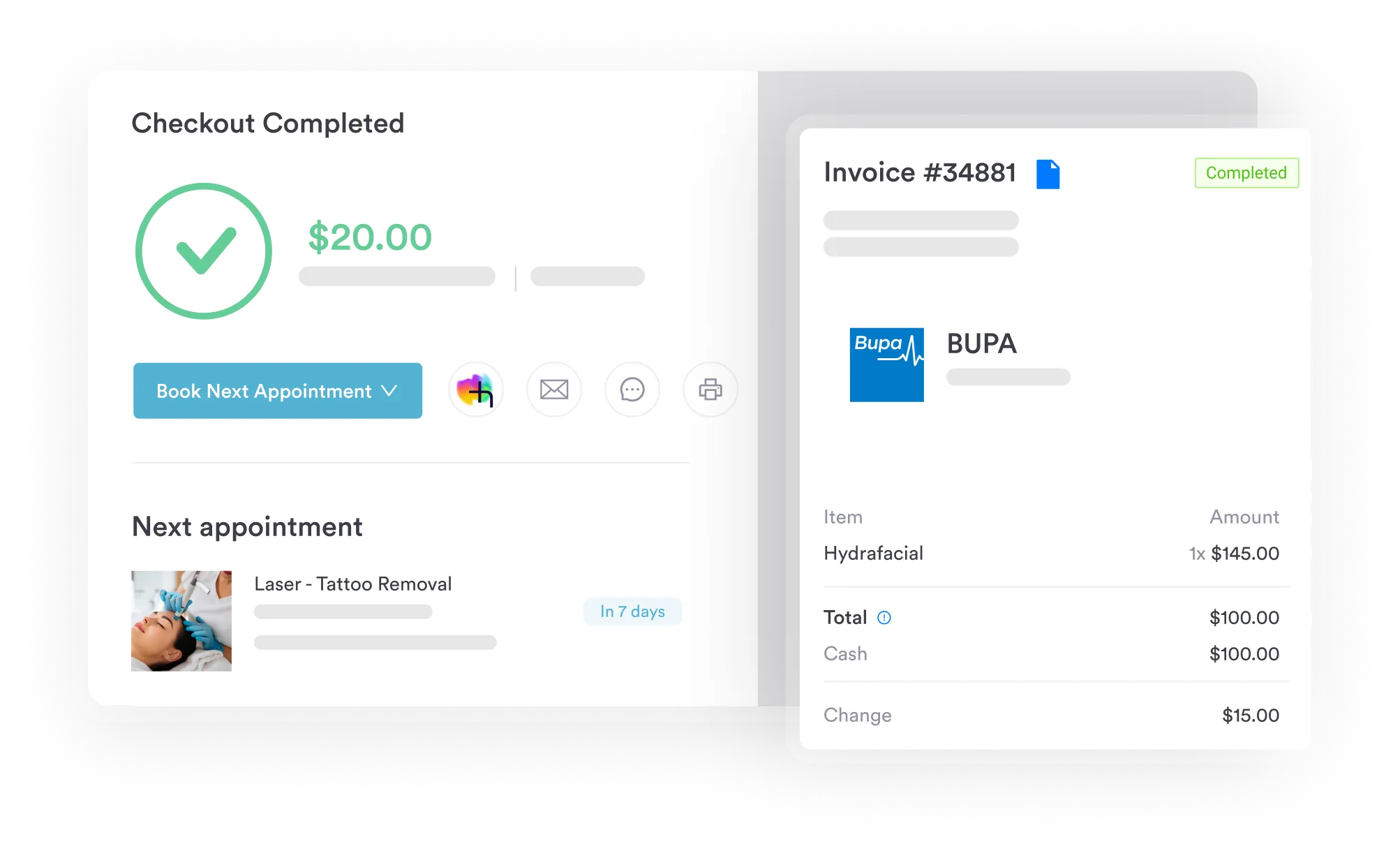
Structured charting templates in Pabau’s clinical charting and records module prompt for what this code needs. Wound location, measured length, closure layers, suture type, and contamination notes get captured while the note is written. Practitioners complete those fields before saving, so the supporting detail exists before anyone opens a claim. The clearinghouse validates structure before the payer validates content, which is why an electronic claim can fail twice.
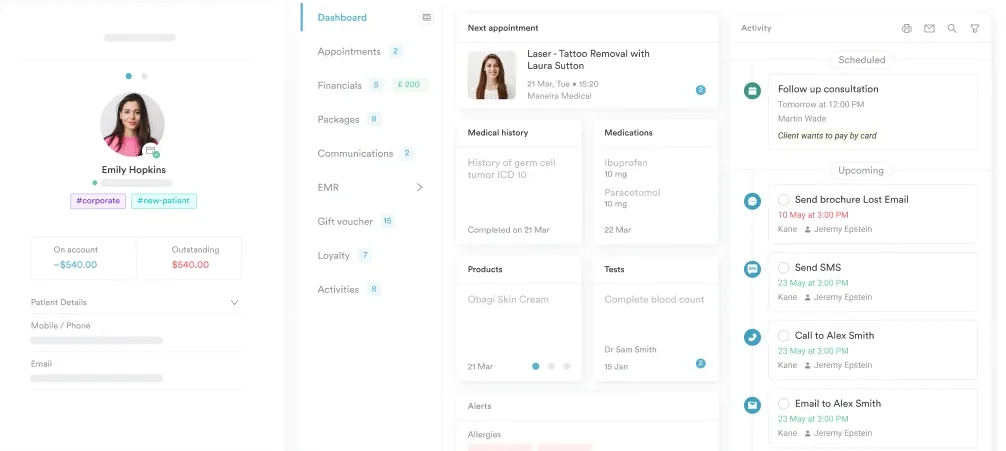
On the billing side. A status dashboard then shows where every claim sits, from submitted through to paid or errored. So nobody waits on a remittance to find out something was missing.
Repair volume runs high in dermatology practices, where excisions and lacerations both end in a closure decision.
The same pattern shows up in plastic surgery settings, where the tiers sit close together and one measurement moves the code. Getting the note structure right once pays off across every claim after it.
Build a wound repair template in Pabau with required fields for length in cm, anatomical site, closure layers, and suture type. Making those fields mandatory before the note saves means an incomplete repair note never reaches the billing queue.

Pabau’s claims management software checks the fields an insurer requires and holds the submission until they are complete. A status dashboard then tracks every claim. See how it fits your practice.

CPT code 12032 is simple in principle and still generates denials. The code is right when the wound sits on the scalp, axillae, trunk, or extremities. It also has to measure 2.6 to 7.5 cm and need a deeper layer closed. Everything past that is bookkeeping.
So the work sits upstream. Fix the measurement habit first, because that one number picks the code and cannot be recovered later. Then fix the note template, so closure layers and suture detail land in the chart without anyone having to remember them.
One trade-off is worth keeping in mind. A note built for the payer costs an extra 30 seconds at the point of care and saves a rebill three weeks later. Book a demo to see how Pabau structures wound repair notes and checks claim fields before submission.

Closing a wound longer than 20 cm? 12036 covers intermediate repair from 20.1 to 30.0 cm, with the same documentation rules.
Was the closure a single layer? 12006 is the simple repair code for these body sites at longer lengths.
Coding a scalp wound that has already healed? S01.00XS shows how the sequela character changes what the claim can say.
Repairing a laceration on the lower back? S31.010A is the diagnosis when nothing penetrates the retroperitoneum.
Physicians, physician assistants, and nurse practitioners can all perform the repair, within the scope their state allows. When a physician bills for work a staff member did, the incident-to rules apply. Supervision requirements vary by state, so check yours before you set the billing provider.
Not when your own practice placed the sutures. Removal falls inside the 10-day global period, so the repair payment already covers it. A different practice taking them out usually reports an office visit instead.
POS 11 for an office repair, which pays the non-facility rate. Use POS 22 for hospital outpatient, 23 for an emergency room, and 24 for an ambulatory surgery center. The wrong POS pulls the wrong rate column.
Yes, when the defect needed layered closure. Simple closure stays bundled into the excision code, so only intermediate or complex repair is reported on its own line. Measure the defect you are closing, not the lesion you removed.
Rarely. Qualifying lengths combine into a single code, so one unit normally covers the visit. If you find yourself entering two units, check whether the second wound belongs in a different code series.