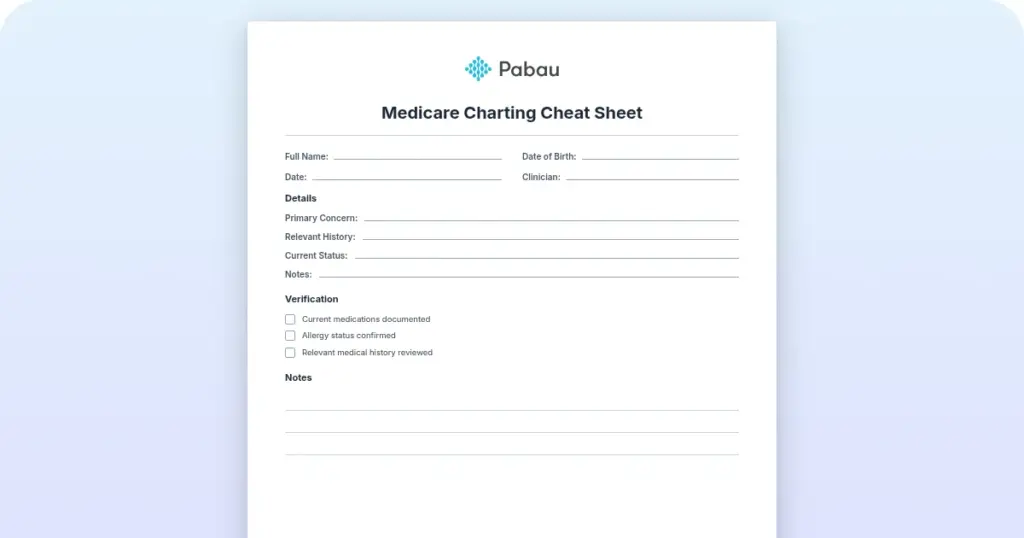
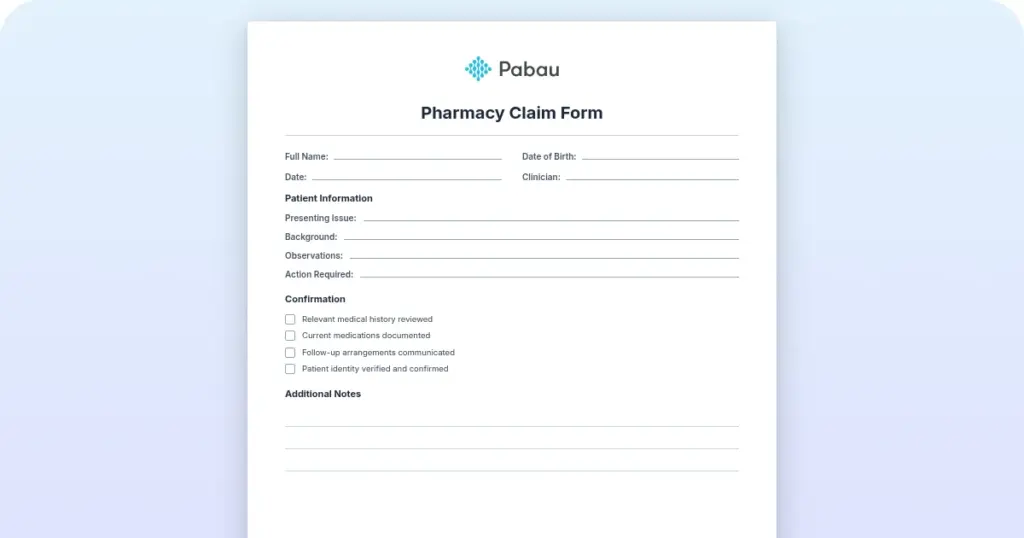
Medicare charting cheat sheet
A Medicare charting cheat sheet is a one-page reference that lists what Medicare...

6
Last Updated: Oct 21, 2026

Pabau offers the strongest end-to-end setup for surgical and aesthetic practices.
Remedly provides flexible medical EHR tools with solid templates and billing.
ModMed delivers advanced specialty documentation and visual tools for high-volume clinics.
DrChrono is simple to use and mobile-friendly, but limited for surgical workflows.
Vagaro works for booking and admin, though it lacks clinical and surgical features.
Running a surgical practice on separate tools for booking, records, and photos means managing one patient journey across systems that don’t talk to each other. The best plastic surgery software in 2026 handles the whole workflow, from the first consultation to post-operative follow-up.
This guide compares the five leading plastic surgery software platforms side by side, with pricing, standout strengths, and real user reviews for each. Start with the comparison table below, then jump to the write-up for any tool that fits your practice.
| Software | Best for | Key features | Clinical depth | G2 rating |
|---|---|---|---|---|
| 1. Pabau | Surgical + aesthetic clinics | Full clinical workflow in one system | High | 4.7/5 |
| 2. Remedly | Clinics needing strong EHR & billing | Flexible templates + billing tools | High | 4.7/5 |
| 3. ModMed | High-volume surgical clinics | Specialty charting + integrated imaging | High | 4.5/5 |
| 4. DrChrono | Small, mobile-first practices | iPad-native charting and scheduling | Medium | 3.4/5 |
| 5. Vagaro | Beauty-first med spas / retail-heavy clinics | Booking + retail marketplace tools | Low | 4.6/5 |
The best plastic surgery software combines clinical precision, streamlined workflows, and support built for surgical practices. These five come closest, whether you want the best EMR for plastic surgery on a tight budget or an all-in-one system for a growing plastic surgery practice.
Each entry below follows the same format, so you can compare them like for like.

Pabau is an all-in-one practice management software built for aesthetic and surgical practices. It brings the whole workflow together, from the first consultation to the final follow-up, and includes built-in marketing tools to help you attract and retain patients. It doubles as plastic surgery lead management software, tracking each inquiry from first contact to booked consultation.
For plastic surgery, the strength is clinical depth. Implant tracking, structured operative notes, before-and-after photos, and automated pre- and post-care all run through the appointment, so your team manages the surgical journey without bolting on extra tools.
| Plan | Price | Users | Clients | Key inclusions |
|---|---|---|---|---|
| Starter | $62 / month | 1 | < 100 clients | Full feature set |
| Solo | Talk to sales | 1 | Unlimited clients | Full feature set |
| Team | Talk to sales | 2–3 users | Unlimited clients | Full feature set |
| Medium | Talk to sales | 4-5 users | Unlimited clients | Full feature set |
| Group | Talk to sales | 6-15 users | Unlimited clients | Full feature set |
| Enterprise | Custom quote | 15+ users | Unlimited clients | Dedicated onboarding + full feature set |
You can see the full breakdown on Pabau’s pricing page.
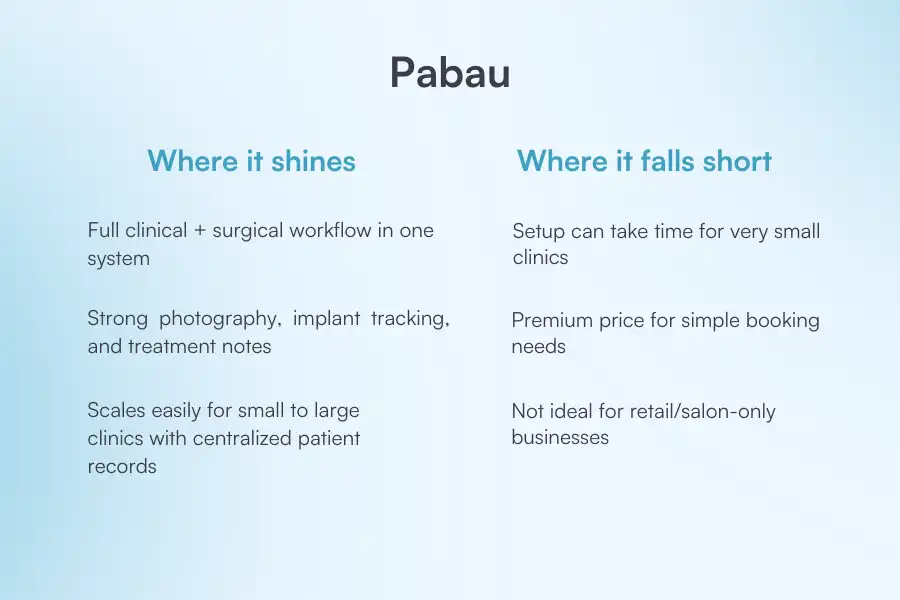
“I love how intuitive Pabau is for managing patient journeys. The integrated appointment scheduling, clinical notes, and treatment photos make it simple to track patient progress and ensure high-quality care.” – Olena K., verified G2 reviewer
“I’ve found the software to not only be very comprehensive (they’ve thought of everything) but also quite user-friendly and easy to navigate. The custom service and assistance with the site are also fabulous.” – Shaye P., verified G2 reviewer
Map your full surgical pathway (consult, pre-op, surgery, post-op) before you migrate, so the system mirrors how your team already works from day one.
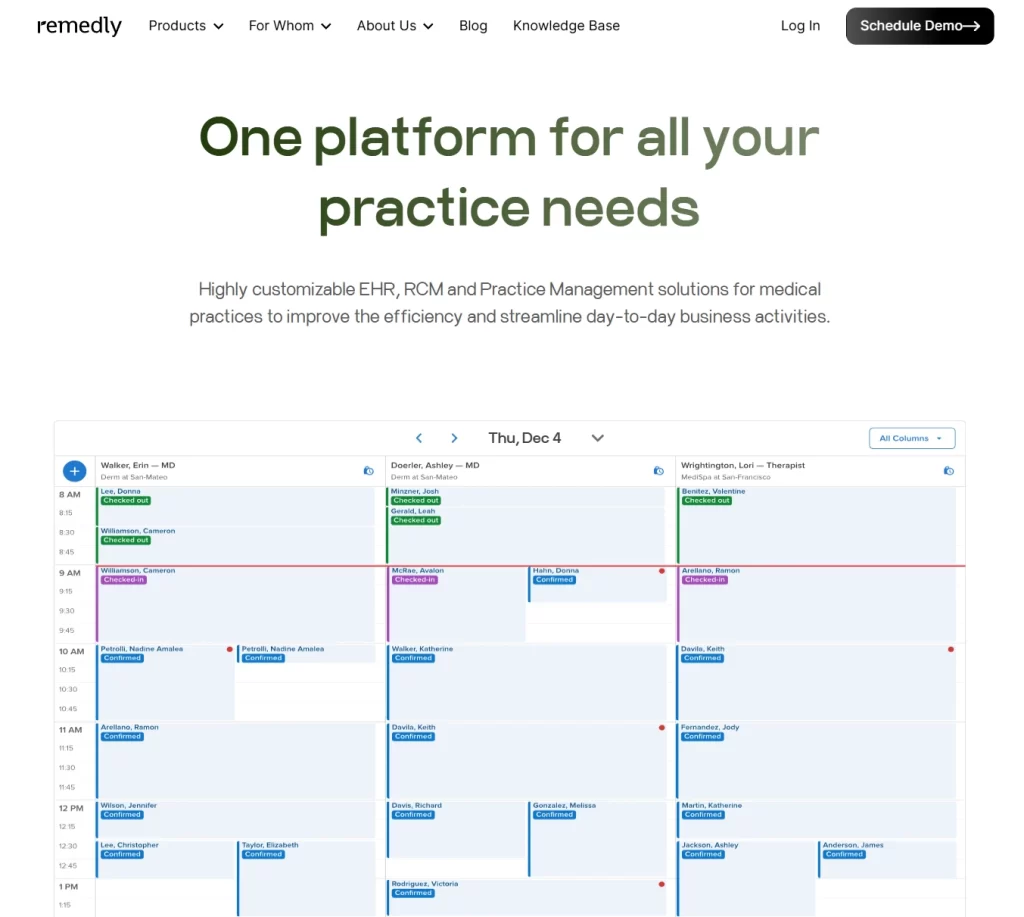
Remedly is an electronic health record (EHR) and practice management platform that covers scheduling, charting, billing, and patient communication in one place.
Custom templates, financial tools, and body-mapping features let staff record clinical detail without extra add-ons. Because it centers on medical workflows, you may still want a separate tool for marketing and growth.
| Plan | Price |
|---|---|
| All-in-one EHR and practice management | Custom quote |
Remedly doesn’t publish pricing on its website. Cost is quote-based and depends on the modules and integrations your practice needs, so you’ll need to contact its sales team.
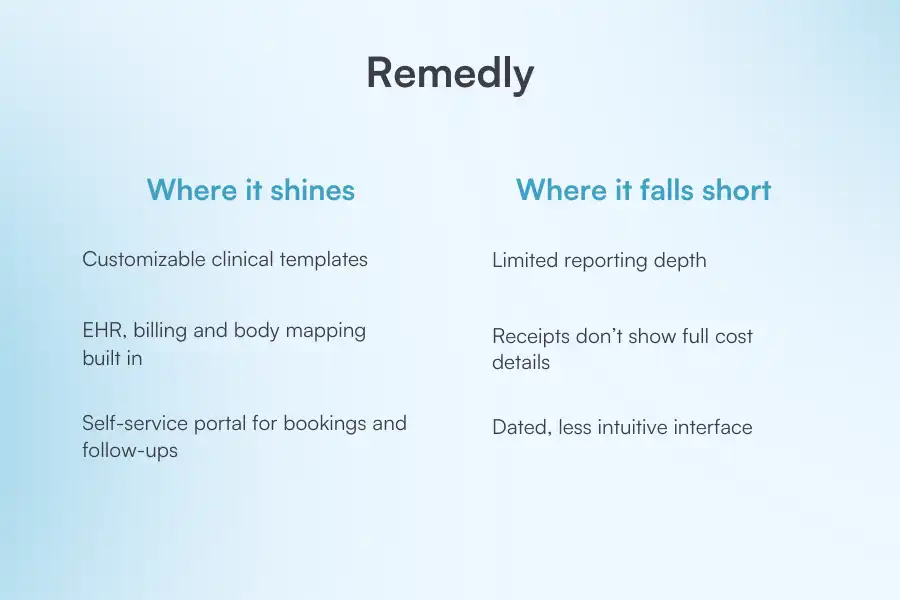
“Remedly is very easy to use! I like the ability to build my own templates to fit my style of documentation.” – Christine, Capterra reviewer
“Some features could be easier to customize, and the customer support is a bit difficult to reach and solve problems.” – Vânia, Capterra reviewer
Limited reporting slows decision-making. Pabau gives you sharper views of treatments, revenue, and team activity.

ModMed’s plastic surgery product centers on EMA, an iPad-native EHR built for the specialty. It supports fast charting, integrated photography, and structured surgical workflows.
The layout is easy to navigate, and the specialty tools help busy practices document more efficiently while giving patients a smoother experience.
| Plan | Price |
|---|---|
| Fundamentals+ | Custom quote |
| Premium+ | Custom quote |
| Enterprise | Custom quote |
ModMed bundles its all-in-one plans and doesn’t publish dollar figures. Cost depends on your specialty, practice size, and optional add-ons like ModMed Pay and ModMed BOOST.
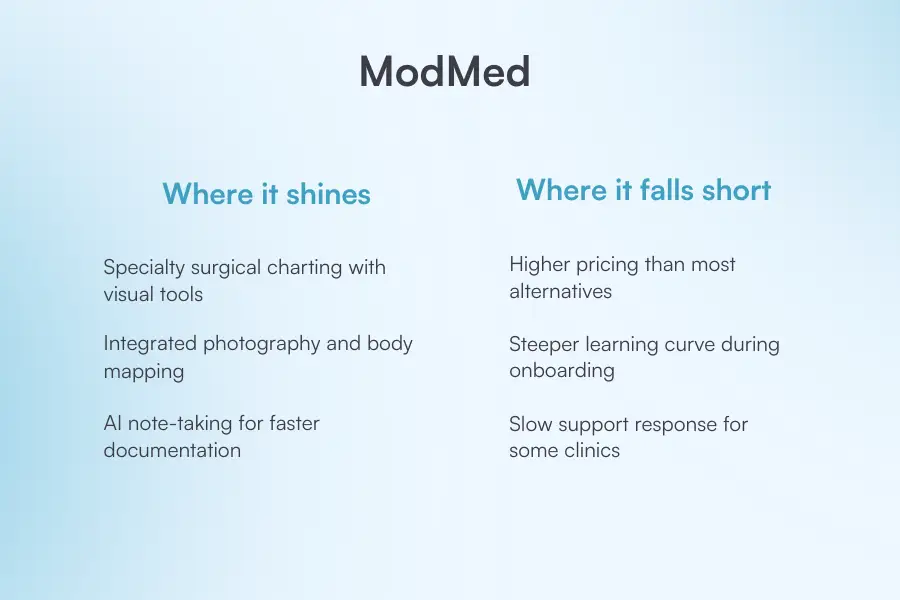
“Having the EHR and the PM integrated makes billing and taking care of patients easy.” – verified G2 reviewer
“Program is great, but the price increases are not friendly to practices that are growing.” – verified G2 reviewer
A complicated onboarding process drags out setup and training. Pabau gives teams a cleaner, more intuitive setup from day one.

DrChrono by EverHealth is an EHR and practice management platform used by small and mid-sized medical practices. It offers scheduling, charting, billing, and mobile documentation.
Many teams choose it for its iPad-friendly workflow and large library of prebuilt clinical templates.
| Plan | Price |
|---|---|
| Essentials | Custom quote |
| Essentials Plus | Custom quote |
| Advanced | Custom quote |
| Advanced Plus | Custom quote |
| Elite | Custom quote |
DrChrono doesn’t list plan prices publicly, so you’ll need to request a quote. It advertises no long-term contracts and a $0 monthly base fee on its standard terms.
Note: DrChrono charges usage fees on top of the plan: about $0.05 per text, $0.07 per faxed page, and $0.10 per phone reminder, plus small add-on costs for paper claims and patient statements.
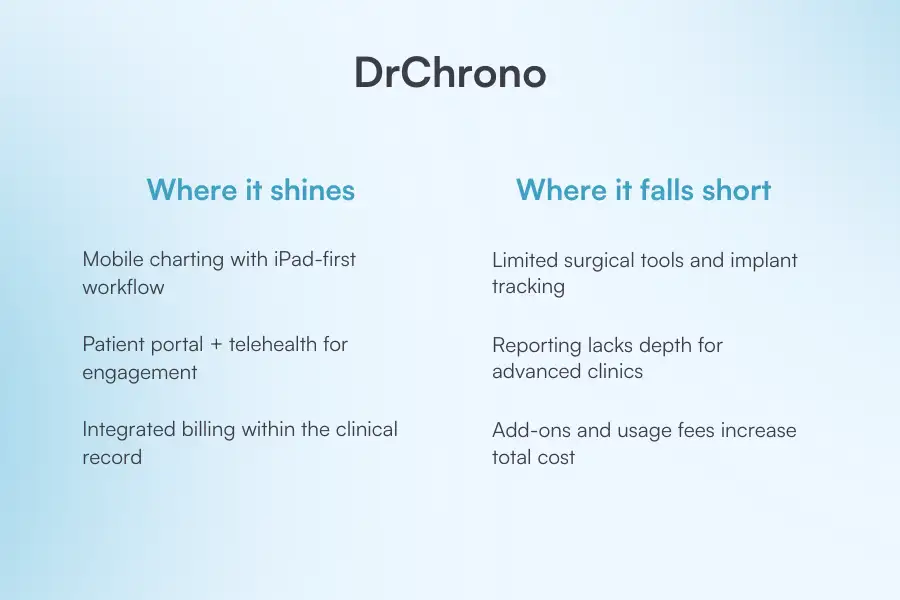
“Overall, a satisfactory experience. I have my medical appointments scheduled and improvised reminders. It enables optimised patient data management. I use it to track my billing and invoicing. The payment options are limited.” – Alfiya M., Capterra reviewer
“I really did like this EMR, but could not justify paying so much when I could get something similar for half the cost.” – Chandra S., Capterra reviewer
Plastic surgery needs more than mobile charting. Pabau covers implants, pathways, and photography in one workflow.
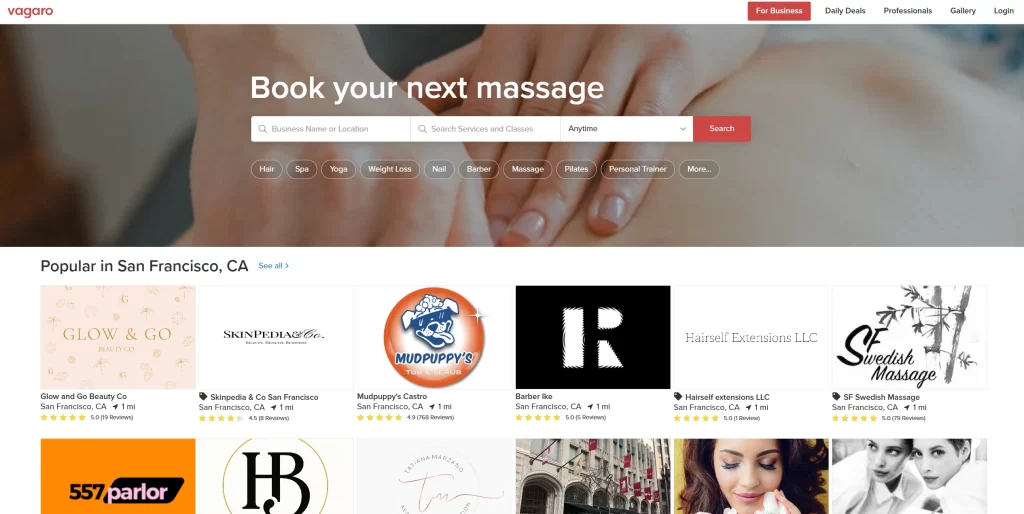
Vagaro is cloud-based scheduling and business management software built mainly for salons, spas, and wellness teams. Some med spas use it as lightweight medical spa software for front-desk tasks.
It handles online booking, payments, reminders, and marketing. It does not include clinical charting or surgical workflow tools like the other platforms here.
| Plan | Price | Users |
|---|---|---|
| 1 bookable calendar | $23.99 per month | 1 |
| Additional calendars | +$10 per month | 2-7+ |
Note: Prices shown are US rates. Vagaro adjusts pricing by region, so costs may differ when you switch countries on its website.
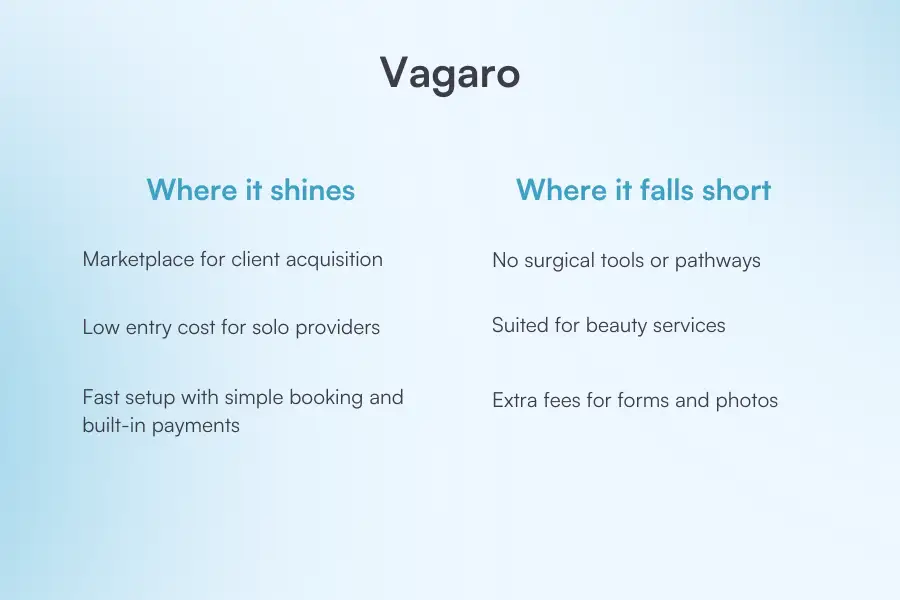
“I love that it is easy to work. Patients get reminders automatically. The reports are just what I need. The website for my office was easy to set up.” – verified G2 reviewer
“It’s slow. Takes forever to load sometimes. Also, my clients say the self-booking experience online can be very glitchy and not intuitive.” – verified G2 reviewer
Core clinical tools shouldn’t sit behind add-ons. Pabau includes forms, photos, and notes in every plan.
Plastic surgery software is specialized practice management software built for aesthetic and cosmetic surgery practices. Sometimes called cosmetic surgery clinic software, it helps teams manage clinical documentation, keep patient data secure, and support the workflow for surgical and non-surgical procedures.
Two different tools both get called plastic surgery software. One is practice management and EMR software: the five platforms compared above, which run the practice itself across patient records, scheduling, billing, and surgical documentation. The other is simulation or imaging software, such as 3D visualization tools that let patients preview a possible result before surgery. Practices that put charting depth first often begin by comparing dedicated plastic surgery EHR software.
This guide focuses on the first group, the plastic surgery office software that keeps a practice running day to day. A strong surgery software system includes:
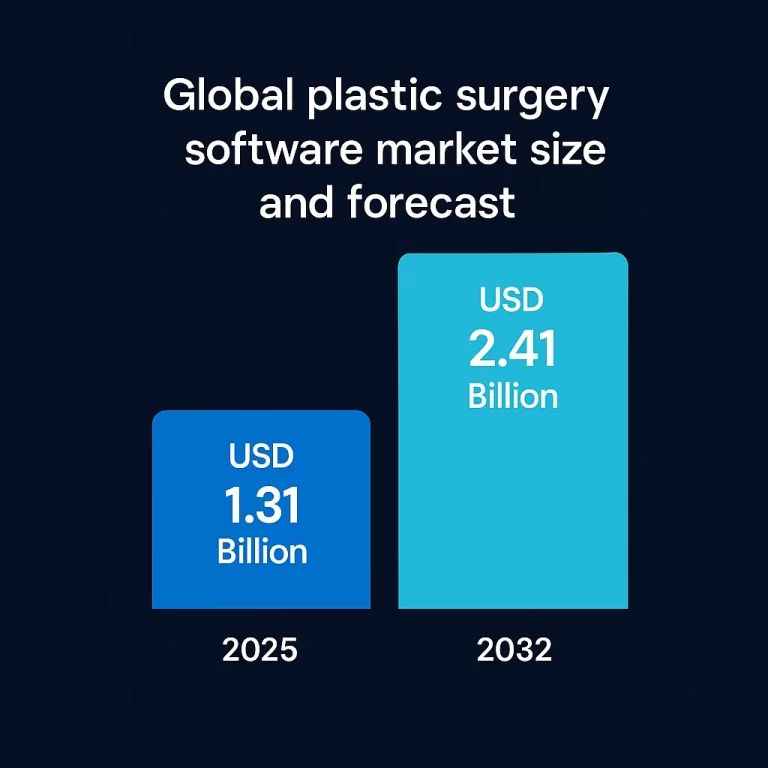
The plastic surgery software market is valued at $1.40 billion in 2026 and is projected to reach $2.67 billion by 2033, according to Coherent Market Insights. Adoption at this scale shows how essential dedicated software has become for modern cosmetic surgery practices.
If you’re setting up a new practice, this guide on opening a surgery clinic can help you plan your foundation. Growth raises a different set of questions, and our guide to scaling a med spa covers the operational side of growing one.
Good software for plastic surgery has to support both clinical and operational work. Here’s what to look for.
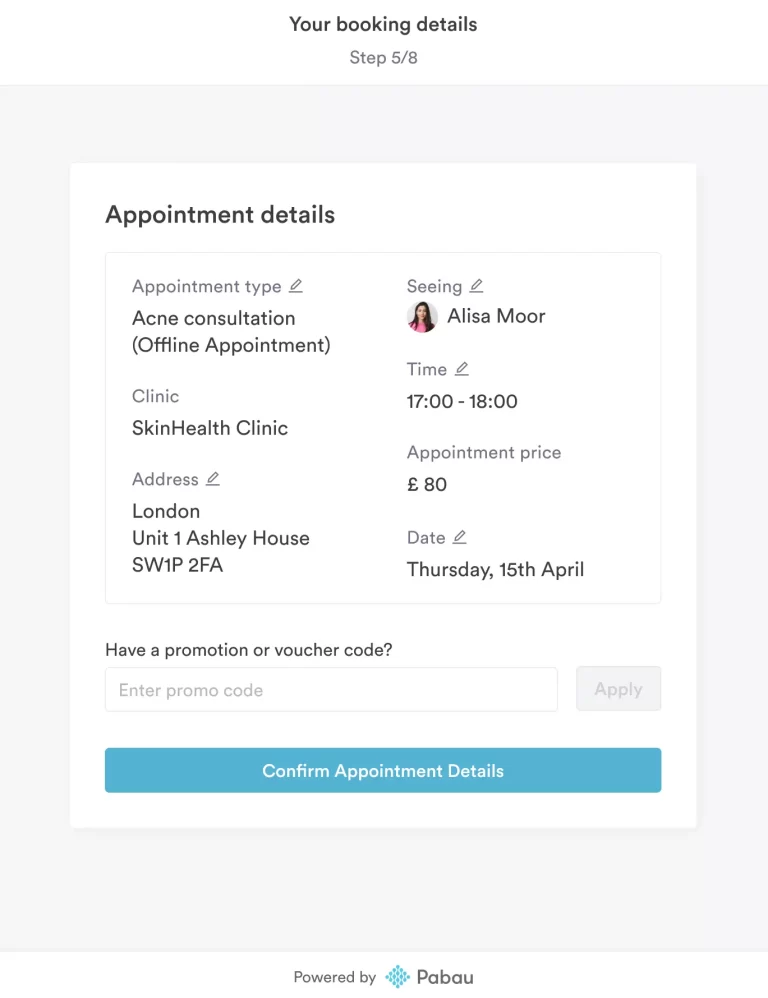
Online booking lets patients schedule a visit at any time. Plastic surgery scheduling software cuts phone traffic, gives your front desk breathing room, and reduces the double-booking that happens when teams juggle multiple channels.
Cancellations still leave holes in the diary. A waitlist marketing strategy fills those slots automatically, so a late drop-out becomes a booked consult.
Booking tools capture demand, but the bigger revenue lever is converting consultations into bookings, which depends on structured follow-up far more than the booking widget itself.
Useful booking functions include:
Use software that links bookings directly to EMR notes to keep the consult-to-post-op workflow smooth.
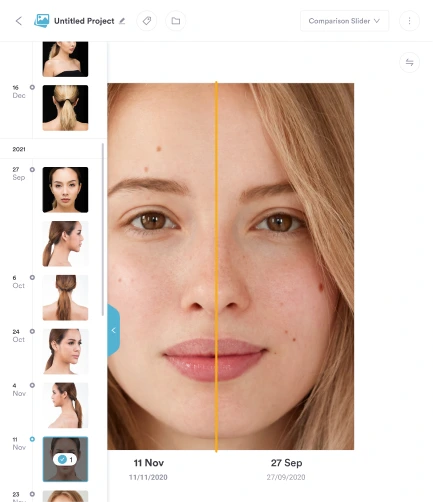
Before-and-after photos are central to cosmetic surgery. Clinical photography software for plastic surgeons saves images straight to the patient record and builds a clear visual history of each case.
You can track consultations, treatment reviews, and healing progress. That level of documentation protects practices during complaint reviews and supports compliance.
Correct coding protects revenue too. A benign lesion shave billed as CPT 11310 needs the right code the first time, or the claim comes back for correction.
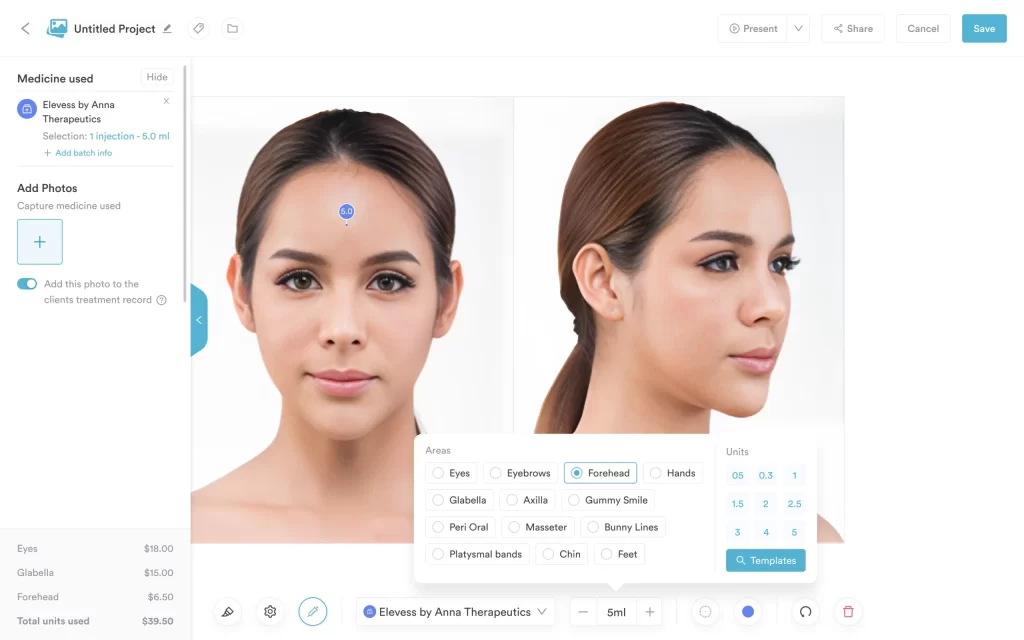
Injection plotting tools, which pair well with techniques like face mapping, record the exact details of injectable treatments. Teams mark treatment points directly on a patient photo or diagram and log details such as:
Plotting works best when the note behind it is structured. Our Botox treatment note template shows the fields to capture at each visit.
Good plotting supports safe repeat Botox and filler treatments and lowers the risk of complications.
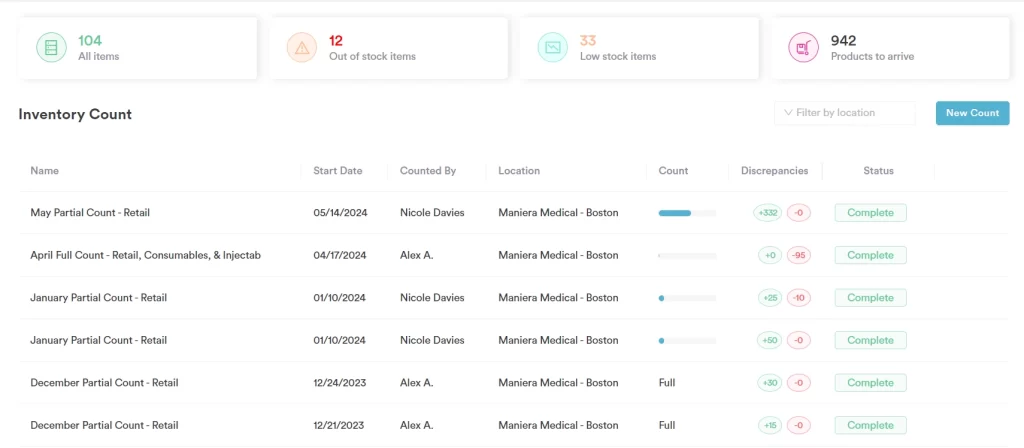
Effective inventory management should monitor:
Real-time data prevents shortages and removes expired items from use. It also lets aesthetic clinics and surgical practices act quickly if a product recall occurs.
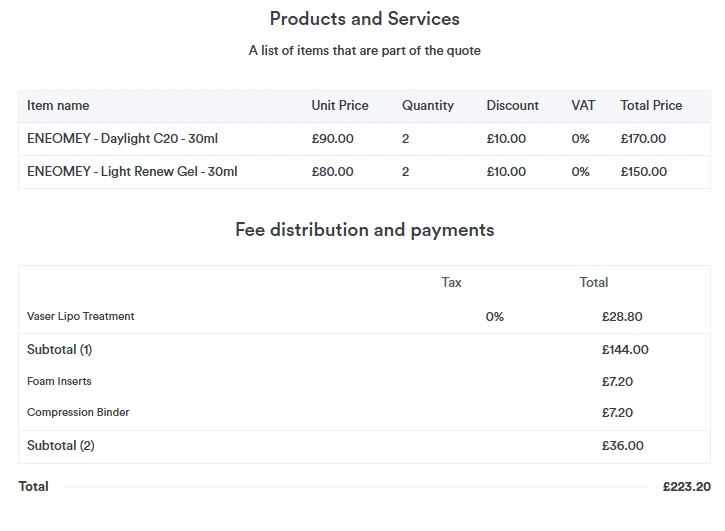
Automated quotation lets you build treatment plans with accurate costs and send a polished quote in minutes. It cuts manual admin and gives patients the information they need upfront.
When pricing is clear from the start, trust grows quickly and there’s less back-and-forth over fees. Patients get a clearer picture of their options and can decide with confidence. Clear quotes also make plastic surgery patient financing conversations easier, since patients see the full cost before committing.
The wording of a quote matters as much as the math. This walkthrough on writing professional service quotes covers what to itemize and what to leave out.
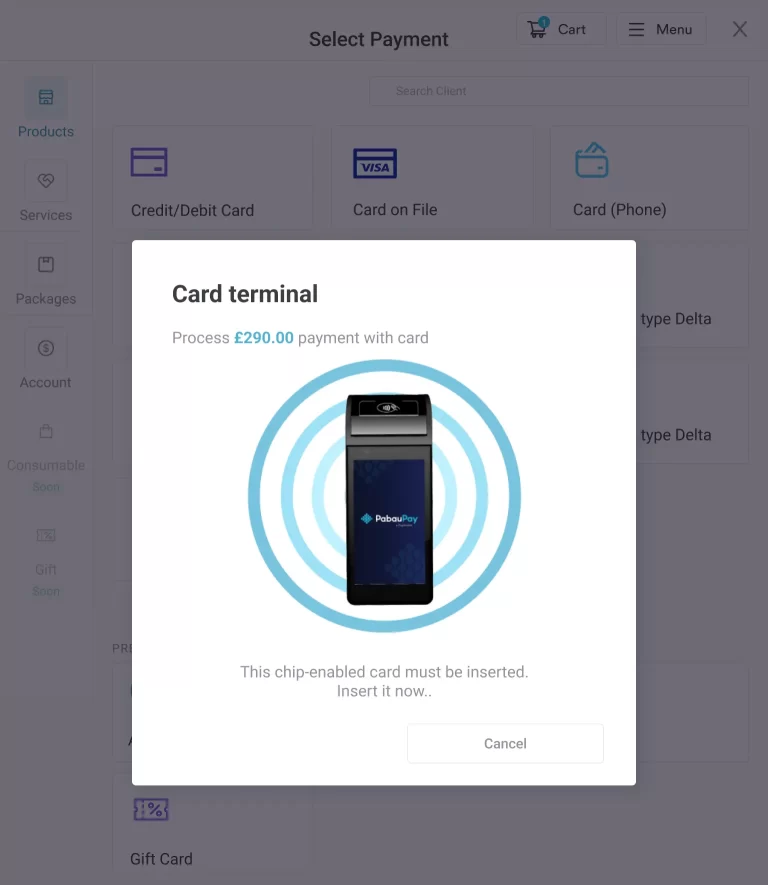
A point-of-sale (POS) system makes payments fast and secure. It streamlines checkout, reduces wait times, and keeps the process simple for patients.
A strong POS setup lets people pay the way they prefer, including:
For practices, the benefit is accuracy. Every transaction logs straight into the system, supporting reconciliation, reporting, and audits. It also protects sensitive payment data at checkout.
Policy on tips varies from practice to practice. Our guide to tipping at med spas covers how teams set expectations before checkout.
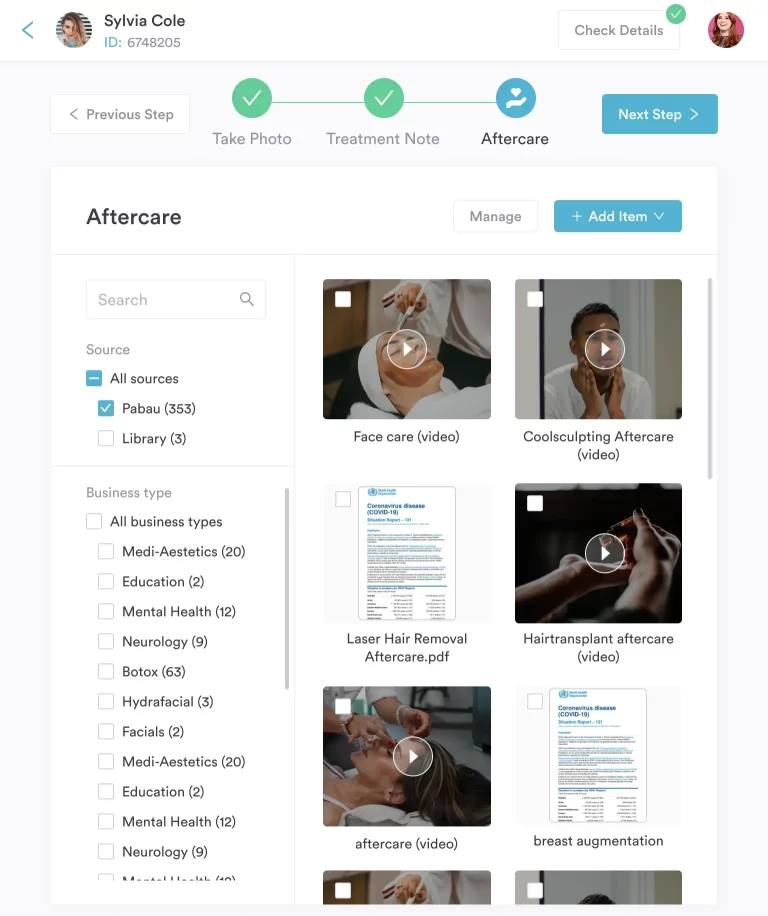
Automation helps patients follow the right steps before and after their procedure. Practices can send these instructions by email, SMS, or through a patient portal. Patients reply to those instructions, and a unified patient inbox keeps the answers with the rest of the case.
Non-surgical treatments need the same structure. A practice running device facials can log the Hydrafacial settings it used, then send aftercare on the same automated schedule.
Set each service to trigger its own pre- and post-care messages so patients get the right guidance at the right time.
Choosing the best plastic surgery software comes down to how well it supports your clinical accuracy, daily workflow, and long-term growth.
A surgical practice and a medical spa weigh these differently, so match each feature to how your practice actually runs. A busy surgical group hunting for the best EMR for plastic surgeons will prioritize different tools than a med spa shopping for medical spa software. These are the features your team shouldn’t compromise on.
Look for software that can:
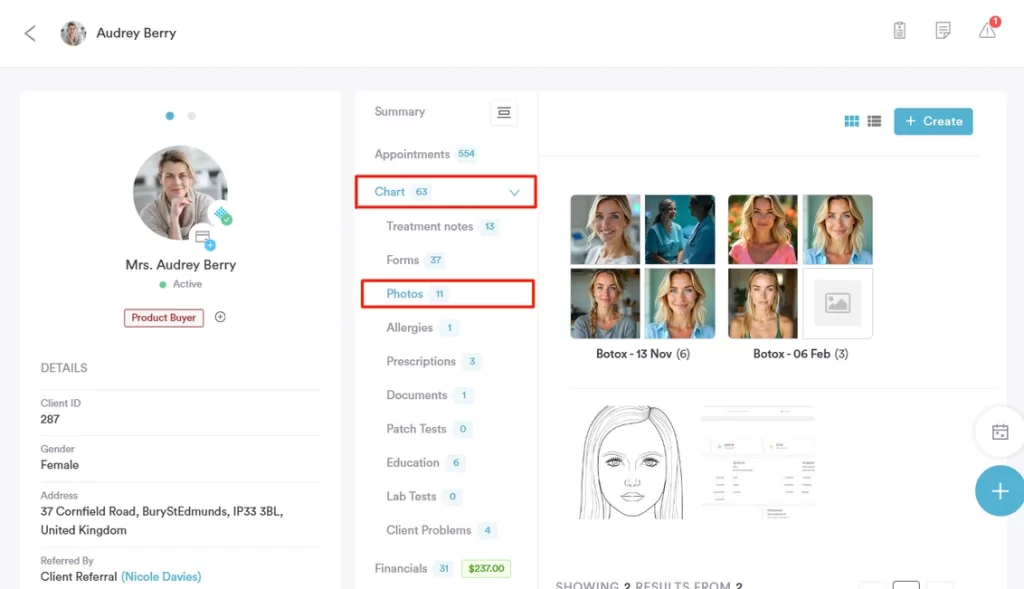
Pabau includes everything you need for before-and-after photos. Care Plus, our additional patient care add-on, then adds bulk uploads, high-quality images, and a slider that makes progress easy to review.
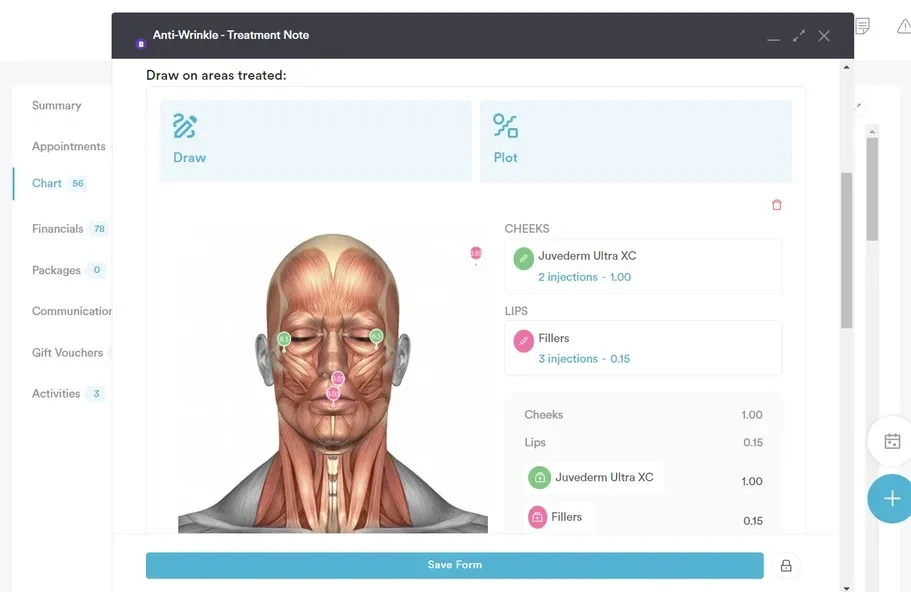
Accurate plotting keeps injectable and minor procedure work consistent. Your software should offer:
Pabau supports all of these. Its face mapping tool records each injection point, product, and unit straight into the client record.
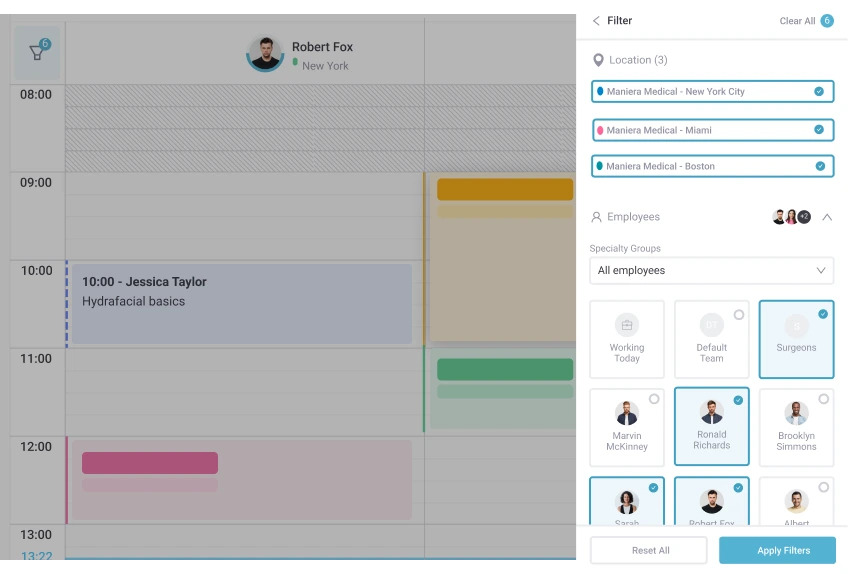
Surgical workflows rely on structure and automation. The right system should be able to:
Pabau lets you set up custom pathways with automated forms and reminders. Pabau Scribe, our AI scribe, takes it further with instant treatment notes and consultation summaries.
As your practice grows, your software needs to grow with you. Prioritize systems that support:
Pabau is designed to support scaling practices at every stage. Shared settings and role-based permissions keep your workflows unified across teams and locations, which is what makes an all-in-one software for a plastic surgery practice worth the switch.
Growth changes the job, not just the software. Shared protocols and one reporting line matter as much as the system itself. The playbook for multi-location med spa management transfers well to surgical groups.
Plastic surgery practices depend on accurate billing and strong data protection. Your software should combine:
You can also attach coding straight to the record. A diagnosis code like ICD-10 M95.2 (an acquired deformity of the head) or a procedure code like CPT 11644 (a facial lesion excision) flows straight into the claim.
Rules tighten as soon as you add a second specialty. Practices adding restorative work should read up on hair transplant compliance before the first case.
Pabau brings billing, records, consents, and compliance tools together in one place, giving you a central and secure financial workflow.
Few surgical practices sell surgery alone. Most also run injectables, skin, laser, or hair services, and those lines share the same front desk and the same records. The guides below go deeper on each neighboring specialty.
All of these tools have their strengths, so what makes Pabau stand out?
Call us biased, but it’s the only platform here that truly supports the full clinical workflow of a plastic surgery practice. And yes, we do mean the whole workflow.
An all-in-one software for a plastic surgery practice like Pabau helps you:
And if that isn’t enough, it also includes marketing features that help boost revenue.
Discover how Pabau can transform your practice by booking a demo today.
Most plastic surgeons use practice management and EMR software that combines scheduling, clinical records, before-and-after photography, and billing in one place. The platforms above range from a full all-in-one system for a plastic surgery practice to lighter, booking-first tools, so the best EMR for plastic surgeons depends on how much surgical documentation you need.
The best EHR for plastic surgery depends on how much clinical depth you need. Purpose-built plastic surgery EMR platforms such as Pabau, Remedly, and ModMed add surgical documentation, implant tracking, and photo tools that general medical records systems leave out.
For cosmetic surgery practices that live and die by their patient records, the strongest option is an all-in-one plastic surgery EMR that ties records, consents, photos, and billing to one patient timeline. Pabau does this natively, so nothing is tracked outside the system.
Yes. Strong plastic surgery software helps you apply the right diagnostic and procedure codes at the point of care, then carries them straight into billing. You can attach procedure codes such as 12020 or 12001 to the patient record without leaving the chart, which keeps claims accurate.
Some tools advertise free plans, but they usually cap clinical features or charge a commission on each booking. A surgical practice that needs secure records, consents, and photography is better served by a paid platform that includes those tools in every plan.
Pricing runs from $23.99 per month for booking-first Vagaro to custom quotes for EMR-first systems like Remedly, ModMed, and DrChrono. Pabau publishes a Solo plan at $104 per month with every feature included.
Pabau offers the strongest before-and-after photo management on this list because images save straight to the patient record. You can capture, compare, and review photos alongside notes and consents, so every case keeps a complete visual history.
For small practices, Pabau’s Solo plan gives one user the full feature set for $104 per month. DrChrono also suits small, mobile-first teams, though it offers less surgical depth.