ICD-10 Code S42.444P: Medial epicondyle fracture, right humerus
ICD-10 Code S42.444P: full descriptor and code validity ICD-10 Code S42.444P car...

Last Updated: Oct 13, 2026
Billable Code Specific Code
M95.2 is the billable ICD-10-CM code for other acquired deformity of head.
According to the Centers for Medicare and Medicaid Services (CMS), ICD-10-CM codes are updated annually, with each fiscal year edition effective October 1. M95.2 has been a stable, billable code under these updates and remains valid for FY 2026.
Let Pabau's smart automation suggest the right codes, reduce claim denials, and keep your practice compliant—effortlessly.
Automate repetitive tasks and focus on what matters most—your patients.
Reduce coding errors and ensure compliance with the latest regulations.
Clean claims, fewer denials, and faster reimbursements.
Powerful insights and reporting to help your practice thrive.
HIPAA compliant SOC 2 certified GDPR-compliant Trusted by 4,000+ clinics worldwide

M95.2 is a billable ICD-10-CM code for other acquired deformity of head, valid for fiscal year 2026 submissions.
The code became effective October 1, 2025 and is accepted for HIPAA-covered transactions.
M95.2 falls under the M95 category within the musculoskeletal and connective tissue chapter (M00-M99) and has no child codes.
Pabau, practice management software, integrates ICD-10 code lookup directly into billing workflows, reducing coding errors at the point of submission.
ICD-10 code M95.2 describes “Other acquired deformity of head” and is a billable/specific ICD-10-CM code. It can be used to indicate a diagnosis for reimbursement purposes on HIPAA-covered transactions. The 2026 edition became effective on October 1, 2025.
“Acquired” is the operative word. M95.2 applies to head deformities that develop after birth as a result of external forces, trauma, surgery, disease progression, or chronic mechanical pressure. This distinguishes it from congenital deformities, which are coded elsewhere under the Q-chapter (congenital malformations).
Common clinical scenarios where coders working with skin clinic software or plastic surgery EMR may encounter M95.2 include post-surgical skull contour changes, residual deformity following healed head trauma, and deformity secondary to long-term external pressure devices.
M95.2 does not apply when a more specific code exists. If the deformity is of the nose, ear, or another named site with its own M95 sibling code, use the specific sibling rather than the “other” code. An acquired deformity of the nose, for instance, belongs under M95.0.
The “other” in M95.2 refers to the deformity type, while the head still has to be documented as the site. Where the note establishes neither the region nor the deformity type, M95.9 becomes the fallback, and only after every M95 subcode is ruled out.
Approximate synonyms used in clinical documentation and coding crosswalks for M95.2 include the following. Recognizing these helps coders confirm M95.2 is the right choice when the physician’s note uses non-standard phrasing.
These synonyms reflect the natural-language descriptions clinicians may record in notes. None of them change the code assignment when M95.2 is the appropriate selection. Coders should map any of these phrases to M95.2 in the absence of a more specific code.
Musculoskeletal caseloads demand solid charting, and several Jane App competitors handle it with billing built in.
Understanding where M95.2 sits in the classification helps coders select the right level of specificity. The full hierarchy from chapter to terminal code is shown below.
The sibling codes within the M95 category help clarify when M95.2 is and is not appropriate. Use the table below to confirm site specificity before assigning M95.2.
The M95 category carries excludes notes that affect when M95.2 can be used. Violating these notes is one of the most common denial triggers for musculoskeletal deformity codes. Always verify excludes1 and excludes2 notes before submitting any M95.2 claim.
Excludes2 means the excluded conditions can be coded simultaneously with M95.2 when both conditions coexist and are documented independently. However, if the head deformity is the direct result of a postprocedural complication, the M96 range takes precedence. Similarly, congenital deformities must not be assigned M95.2 regardless of when they present clinically.
Payers require documentation that supports an acquired (not congenital) deformity of the head. Vague notes like “head asymmetry” without context are insufficient. Practices using digital intake forms can structure pre-visit data capture to include the relevant history fields that satisfy these requirements before the encounter even begins.

Documentation supporting M95.2 should include the following elements.
Document the mechanism of acquisition explicitly in the clinical note. ‘Skull deformity following craniotomy in 2022’ supports M95.2 far better than ‘abnormal head shape.’ Payers reviewing post-surgical cases will look for a clear link between the prior procedure and the current deformity.
M95.2 is valid for submission on HIPAA-covered transactions. However, reimbursement depends on pairing it with an appropriate procedure code and confirming the diagnosis meets medical necessity standards under the relevant payer’s local or national coverage determination (LCD/NCD).
Practices submitting M95.2 claims benefit from claims management software that surfaces coding alerts before submission. Supporting HIPAA-compliant billing workflows ensures the diagnostic code is linked correctly to the procedure code in the claim record. Review the AAPC Codify ICD-10-CM lookup for crosswalk guidance on pairing M95.2 with procedure codes.

The ICD-10-CM alphabetic index routes several search terms to M95.2. Coders using manual lookup or the CDC/NCHS ICD-10-CM web tool will encounter these pathways.
The WHO ICD-10 browser provides the international reference standard for M95 category definitions, which underpins the ICD-10-CM US implementation. Coders verifying definitions against the international source should reference the WHO browser alongside the CMS US implementation tables.
Coding errors on M95.2 claims typically stem from three points in the workflow: Clinicians documenting acquisition ambiguously, coders selecting codes outside the EHR context, and billing staff submitting without claim-level validation. Pabau addresses all three within a single platform.
Pabau’s structured patient records allow clinicians to document acquired deformity context directly in the clinical note, creating a clear audit trail from diagnosis to claim. The claims management software connects diagnosis codes to billing records within the same workflow, supporting accurate ICD-10-CM code M95.2 submission without manual transcription between systems. Patients paying up front and claiming later need a superbill, which itemizes the service, the code and the charge. A quick reference sheet cuts lookup time on codes a practice bills every week.
Practices exploring software options can review the practice management software landscape to understand what integrated coding support looks like in a modern practice.
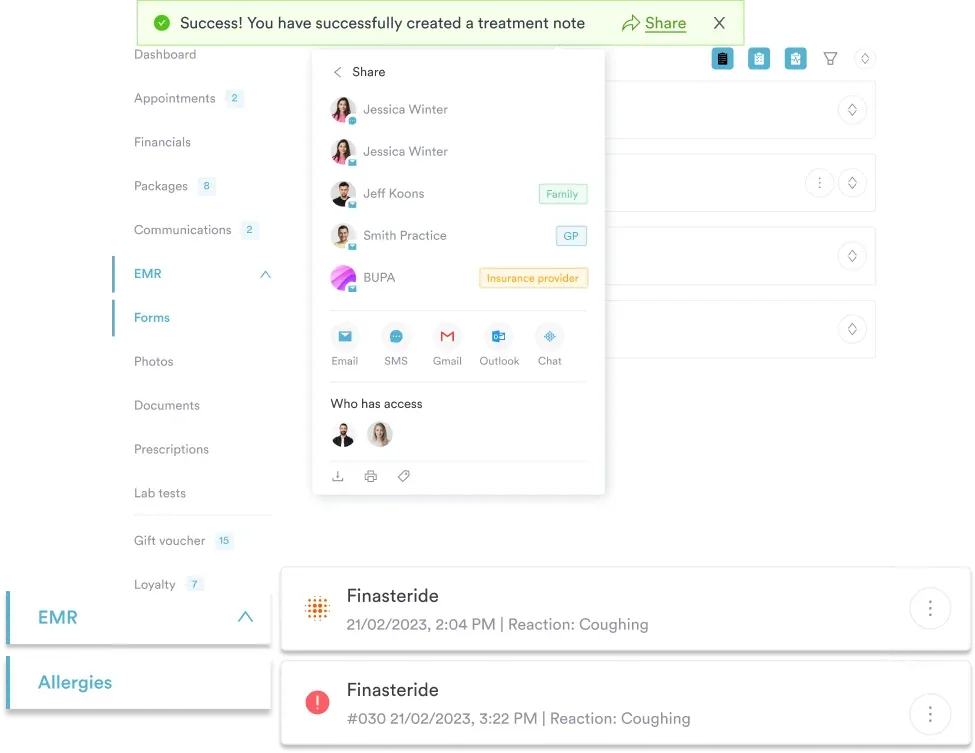
Practices already using Pabau report that removing the context-switch between clinical notes and billing significantly reduces code selection errors. If you’d like to see how Pabau handles diagnostic coding workflows, book a demo with the team.
Practices looking at how technology impacts daily workflows can review time-saving tools for a useful operational overview.

Pabau connects clinical documentation, ICD-10 code assignment, and claim submission in one platform. See how integrated billing workflows reduce denials for musculoskeletal codes like M95.2.

ICD-10 code M95.2 is a specific, billable code for acquired head deformities that don’t fall under a named-site sibling code. The coding risk lies in incomplete documentation, congenital/acquired confusion, and improper sequencing when post-surgical context applies.
Pabau’s integrated claims management connects diagnosis coding directly to billing records, reducing the transcription errors that generate M95.2 denials.

Coding a femoral neck fracture that is healing normally? Femoral neck fracture healing code It covers the 7th character for a midcervical femur fracture healing on a routine course.
Billing a same-visit lesion shave? CPT code 11310 covers shave removal of a facial lesion under 0.5cm that coders often confirm alongside head deformity claims.
Coding an excision involving facial structures? CPT code 11644 applies to malignant lesion excisions of the face, ears, eyelids, nose, or lips.
Also documenting a jaw-related diagnosis? ICD-10 code M27.2 covers inflammatory conditions of the jaw, part of the M26-M27 range excluded from M95.2 under the dentofacial anomalies note.
Coding the first visit for an open femur fracture? Left femur shaft fracture code It covers the 7th character needed for an initial encounter with a Gustilo type III fracture.
ICD-10 code M95.2 is a billable ICD-10-CM diagnosis code for “Other acquired deformity of head,” valid for fiscal year 2026 and accepted for HIPAA-covered claim submissions. It falls under the M95 category within the musculoskeletal and connective tissue chapter (M00-M99) and became effective October 1, 2025.
Yes, M95.2 is a billable/specific ICD-10-CM code. It can be used as a standalone diagnosis code for reimbursement purposes on HIPAA-covered transactions and does not require a more specific child code to be billable.
Cauliflower ear is coded as M95.1 (Cauliflower ear), a sibling code to M95.2. Because cauliflower ear has its own specific code, it should never be coded as M95.2. Use M95.2 only when the acquired head deformity does not involve the ear specifically and no other more specific sibling code applies.
The most relevant related codes are the M95 siblings: M95.0 (acquired deformity of nose), M95.1 (cauliflower ear), M95.3 (acquired deformity of neck), M95.4 (chest and rib), M95.5 (pelvis), M95.8 (other specified acquired deformities), and M95.9 (unspecified). For post-surgical deformities, also review the M96 range (postprocedural musculoskeletal disorders).
The M95 category covers acquired deformities of the musculoskeletal system that are not congenital and not limb-specific. Codes run from M95.0 through M95.9, each assigned to a named body site or serving as a residual category for sites not listed individually. M95.2 is the named-head code within this range.
Documentation must confirm an acquired (not congenital) origin, identify the anatomical site as the head or skull (not a named site with its own code), and establish the deformity as a current, active clinical finding. Noting the cause (trauma, surgery, or disease sequelae) strengthens medical necessity and reduces denial risk.