



HCPCS code E0198: Water pressure pad billing guide
HCPCS code E0198 is a water pad for a standard mattress HCPCS code E0198 is the ...

Last Updated: Oct 13, 2026

CPT Code 11310 covers shaving of a single epidermal or dermal lesion on the face, ears, eyelids, nose, lips, or mucous membrane with diameter 0.5 cm or less.
The 2026 Medicare non-facility national average rate is approximately $89.47. The facility rate is approximately $54.21.
Misclassifying lesion size or anatomical site is the top denial trigger for CPT Code 11310. Document the measured diameter and exact location in every operative note.
Pabau’s claims management software supports dermatology billing workflows with automated code checks and documentation templates that capture all required elements for the 11300 series.
CPT Code 11310 covers shaving of a single epidermal or dermal lesion on the face, ears, eyelids, nose, lips, or mucous membrane, with a diameter of 0.5 cm or less. Payers scrutinize both the anatomical site and the measured diameter at the time of claim submission, and a lesion measured at 0.6 cm triggers a different code entirely.
Most denials trace back to a missing measurement or an incorrect site code. This reference covers the official 2026 fee schedule, correct ICD-10 pairings, applicable modifiers, documentation requirements, and the most common denial reasons for CPT Code 11310.
Coders working in dermatology EMR software environments will find this guide useful for selecting CPT Code 11310 accurately and avoiding the most common submission errors.
CPT Code 11310 carries the following official descriptor from the American Medical Association (AMA), the body that maintains the CPT code set:
Clinically, shaving means sharp removal of a lesion using a scalpel blade, razor, or similar instrument. Unlike excision, shaving does not require a full-thickness dermal incision. The technique removes the lesion at or below the epidermal-dermal junction without extending through the full dermis. Using an excision code, such as 11440, when shaving was performed constitutes upcoding and creates an OIG audit risk.
CPT Code 11310 belongs to the 11300-11313 series, which covers shaving of epidermal or dermal lesions across all body sites. Code selection depends on the anatomical location and the lesion diameter. Using the wrong code within this family is one of the most common coding errors in dermatology billing.
The face-site group (11310-11313) consistently reimburses at higher rates than the trunk group (11300-11303) due to the greater complexity of facial anatomy and the technical demands of working near sensitive structures. When multiple lesions are removed in the same session, each is billed separately using the appropriate code for its individual site and size.
Reimbursement for CPT Code 11310 follows the Medicare Physician Fee Schedule (MPFS), published annually by the Centers for Medicare and Medicaid Services, or CMS. Rates vary by geographic locality and differ between facility and non-facility settings. The figures below reflect 2026 national averages. Verify your specific locality using the CMS MPFS Look-Up Tool.
The non-facility rate is higher because the physician’s practice absorbs the overhead costs (equipment, supplies, staff) when the procedure is performed in a private office. When performed in a hospital or ambulatory surgical center (ASC), the facility separately bills for those overhead costs, so Medicare pays the physician a lower professional component rate.
For current RVU values by locality, use the 2026 RVU lookup tool from FastRVU.
Skin procedure documentation gets demanding fast, so plastic surgery EMR software with photo and consent tools helps.
Medicare coverage for lesion shaving procedures including CPT Code 11310 is governed by Local Coverage Determinations (LCDs). Two LCDs are most widely applicable: LCD A57113 and LCD A57482, both addressing removal of benign skin lesions. Coverage is contractor-specific, and the relevant MAC (Medicare Administrative Contractor) for your jurisdiction determines which LCD applies.
Review medical spa compliance requirements alongside CMS LCD guidance to understand how coverage criteria interact with documentation standards.
Under these LCDs, Medicare generally covers lesion shaving when at least one of the following clinical indications is documented:
Cosmetic removal alone does not meet Medicare medical necessity criteria. Practices submitting CPT Code 11310 for asymptomatic cosmetic lesions without documented clinical indication will typically receive a medical necessity denial. Always document the specific symptom or functional impairment driving the procedure.

Pabau’s billing workflows help dermatology and skin practice teams capture every required documentation element for CPT Code 11310 before claim submission, reducing denials and rework.

Every CPT Code 11310 claim requires a supporting ICD-10-CM diagnosis code that establishes medical necessity. The diagnosis must match the documented clinical indication. Consult the CDC/NCHS ICD-10-CM web tool for the current official code list.
Pabau’s dermatology and skin practice teams also capture lesion characteristics, such as border irregularity, color changes, and prior treatment history, in structured records that directly support accurate ICD-10 code selection.
Some payers require laterality-specific codes for facial lesions. For example, D22.11 (right eyelid, including canthus) vs D22.12 (left eyelid, including canthus) is more specific than D22.39 for eyelid lesions. Check your MAC’s LCD addendum for site-specific requirements. Practices using filler face mapping documentation tools will find that structured lesion location records simplify ICD-10 code selection for facial sites. Two practices can bill the same encounter at a different visit level, and the note settles which was right. Diagnosis pointers on the claim form link each service line to the diagnosis that justifies it.
Modifier selection for CPT Code 11310 depends on the clinical scenario and the same-day service combination. Incorrect modifier use is an OIG audit risk and a frequent source of claim delays. The following modifiers are applicable based on AAPC guidance and NCCI policy:
Modifier 25 is the most commonly misused. It requires that the E&M service represent a separate clinical decision beyond the decision to perform the shaving procedure itself. Documenting “decision to remove lesion” within an E&M note is not sufficient. The E&M must address a separate, distinct condition or complaint.
Practices managing medical spa compliance standards alongside dermatology billing can use structured note templates to keep E&M and procedure documentation clearly separated.
Incomplete documentation is the leading cause of post-payment audits and recoupment requests for the 11300 series. Every CPT Code 11310 claim must be supported by a procedure note that captures all of the following. Using digital procedure documentation forms with pre-built dermatology fields reduces the risk of missing a required element at submission time.
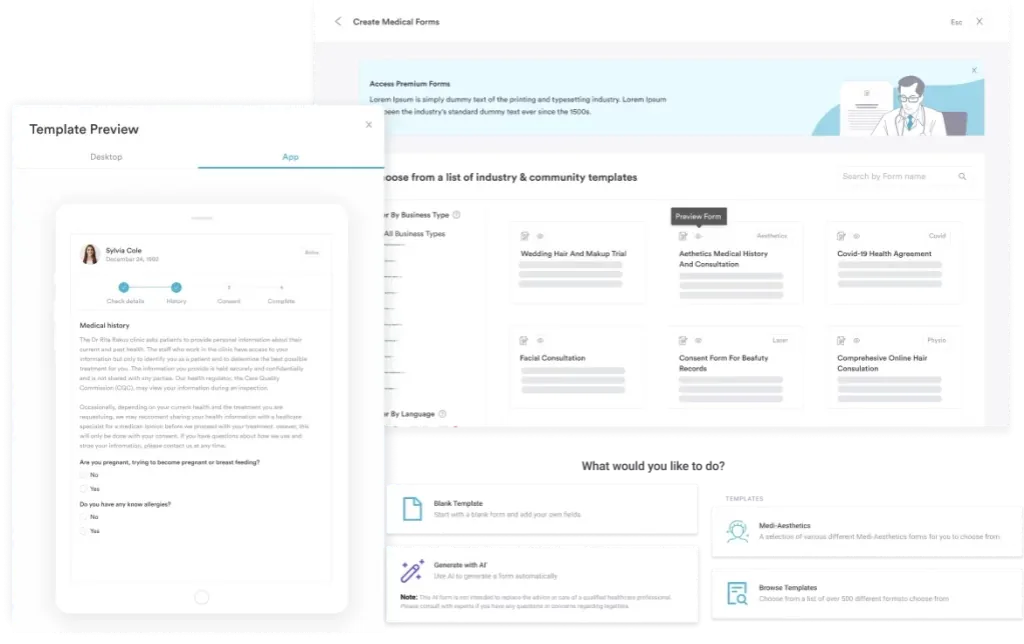
Practices using skin assessment documentation tools that capture lesion measurements in structured fields, rather than free text, are better positioned to pass payer audits. A note that says “small lesion removed from face” will not survive scrutiny. The measured diameter and exact location must be present.
Audit your CPT Code 11310 documentation templates quarterly. Confirm that every procedure note field prompts clinicians to record the lesion diameter in centimeters, the exact anatomical sub-site (not just the general region), and the specific clinical indication driving removal. Pre-built templates in your practice management system reduce transcription errors and submission delays.
Denials for CPT Code 11310 cluster around a predictable set of errors. Understanding the pattern is the first step toward reducing rework. The AAPC code reference and your MAC’s LCD addendum are the primary sources for staying current on payer-specific coding requirements.
Practices that implement automated billing workflows with pre-submission claim checks catch most of these errors before the claim leaves the system.
The National Correct Coding Initiative (NCCI) tables are updated quarterly. NCCI edits that commonly affect the 11310 series include bundling with certain pathology specimen collection codes when the specimen is obtained during the same shaving procedure.
When a modifier (typically 59 or XS) is appropriate to override a bundling edit, the documentation must clearly establish that the services were distinct and separately identifiable. Review practice management software features that integrate NCCI edit checking to catch bundling conflicts before submission.
The most consequential coding decision in this category is choosing between shaving and excision. They are not interchangeable. The technique performed determines the code, not the provider’s preference for reimbursement. Upcoding a shaving procedure to an excision code is a compliance violation.
The operative note must specify the technique used. If the note states “excised” but the procedure code billed is 11310, a payer audit will flag the discrepancy. Conversely, if the technique was genuinely shaving, with no full-thickness incision and no closure required, billing an excision code overstates the complexity.
Malignant lesion excisions on the face fall under an entirely different code family. When an excision requires closure, the repair itself is billed separately under CPT 12034.
Coders reviewing procedure notes at skin clinic software platforms should verify technique language against the submitted code before each claim is finalized.
Coding references define CPT Code 11310 but stop short of preventing the documentation errors that cause denials. Pabau connects the clinical encounter directly to the billing submission, catching those errors before they reach a claim.
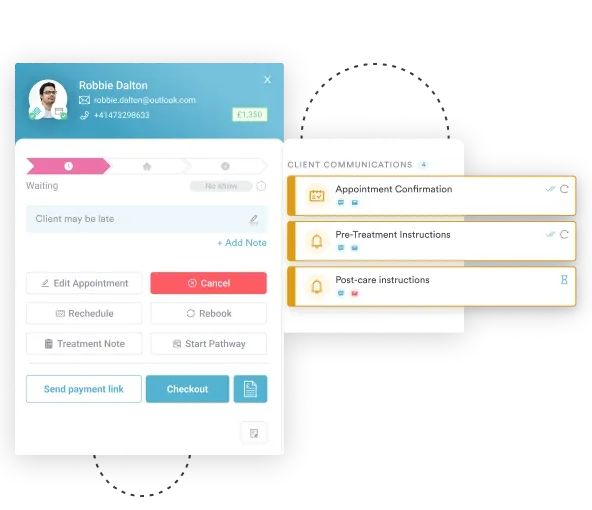
Pabau’s claims management software supports dermatology and skin practice teams with features that reduce denial rates for CPT Code 11310 and the broader 11300 series:
For teams managing high-volume dermatology billing, the combination of structured documentation and pre-submission claim scrubbing is where CPT Code 11310 denial rates meaningfully improve. Reviewing compliance checklists alongside Pabau’s billing tools helps build a consistent documentation standard across your team.

Excising a malignant lesion larger than the shaving codes allow? CPT 11644 is the reference for excision of a malignant facial lesion measuring 3.1 to 4.0 cm.
Billing for the repair after a facial excision? CPT 12034 is the intermediate wound repair code, billed separately from the excision or shaving code itself.
Coding lasting effects of past polio? ICD-10 code B91 guide covers the code for residual effects like paralysis or joint deformity after polio resolves.
CPT Code 11310 has a narrow scope, covering only face-site lesions at 0.5 cm or less. Payers enforce both thresholds at claim adjudication. The most preventable denial causes are missing lesion measurements, incorrect site family codes, and undocumented clinical indications. Getting these right at the point of care is far more efficient than managing rework after the fact.
Pabau gives dermatology and skin practice teams structured note templates and pre-submission code checks that catch 11310 documentation errors before claims leave the system. To see how Pabau handles dermatology billing from encounter note to clean claim, book a demo with our team.
CPT Code 11310 is the procedure code for shaving of a single epidermal or dermal lesion on the face, ears, eyelids, nose, lips, or mucous membrane with a diameter of 0.5 cm or less. Shaving involves sharp removal using a scalpel or blade without a full-thickness dermal incision. It differs from excision codes, which require a complete full-thickness cut through the dermis.
The 2026 Medicare national average non-facility rate for CPT Code 11310 is approximately $89.47. The facility rate (hospital outpatient or ASC) is approximately $54.21. Rates vary by geographic locality – always verify your specific rate using the CMS Physician Fee Schedule Look-Up Tool for your MAC jurisdiction.
Yes, Medicare covers CPT Code 11310 when medical necessity is documented under the applicable LCD (A57113 or A57482). Coverage requires a documented clinical indication such as a symptomatic lesion, one causing functional impairment, a potentially malignant lesion, or a lesion with unexplained changes. Cosmetic removal without a documented clinical indication does not meet Medicare coverage criteria.
Commonly paired ICD-10-CM codes include L82.0 (inflamed seborrheic keratosis), L82.1 (other seborrheic keratosis), L57.0 (actinic keratosis), D22.30 (melanocytic nevi, unspecified part of face), and L91.0 (hypertrophic scar). The chosen diagnosis must reflect the specific lesion type and the documented clinical indication for removal.
The Work RVU for CPT Code 11310 is 0.89. The Total RVU in a non-facility setting is approximately 2.13. RVU values are set by CMS under the Medicare Physician Fee Schedule and may be adjusted annually. Use the CMS MPFS Look-Up Tool or a third-party tool such as FastRVU to confirm current-year values by locality.
Yes, but only when a separately identifiable E&M service was provided during the same encounter. Modifier 25 must be appended to the E&M code, and the E&M documentation must address a distinct clinical issue separate from the decision to perform the lesion shaving. Documenting only the procedural decision within the E&M note is not sufficient to support modifier 25.
CPT 11310 and CPT 11300 are both for shaving lesions of 0.5 cm or less, but they cover different anatomical sites. CPT 11300 applies to lesions on the trunk, arms, or legs. CPT 11310 applies to lesions on the face, ears, eyelids, nose, lips, or mucous membrane. Using 11310 for a trunk lesion – or 11300 for a facial lesion – constitutes a coding error that may trigger a claim denial.



