Fertility clinic marketing: Strategies that attract & convert patients
Fertility clinic marketing is how a fertility practice attracts, educates, and c...

Last Updated: Oct 14, 2026

Orthodontic practice marketing requires a layered approach: local SEO, referrals, social proof, and automation working together
Google Business Profile and local SEO are the highest-intent channels because they capture patients already searching for treatment nearby
HIPAA and FTC endorsement rules apply to patient testimonials, before-and-after photos, and retargeting campaigns – consent is non-negotiable
Pabau’s automated recall workflows, email/SMS campaigns, and review management tools turn your existing patient base into a continuous referral engine
Most orthodontic practices spend their marketing budget trying to find new patients while the easiest growth opportunity sits in their existing records. Orthodontic practice marketing is most effective when it works in two directions simultaneously: attracting new patients through digital visibility and re-engaging past patients through systematic follow-up. This guide covers the strategies that actually move the needle, from local SEO fundamentals to the patient acquisition strategies that compound over time.
Whether you run a solo practice or a multi-location group, the core problem is the same: patients make their decision before they ever pick up the phone. By the time someone calls to book a consultation, they have already compared your Google rating against two competitors, scrolled your Instagram, and read three reviews. Your marketing determines whether you appear in that comparison at all.
Effective orthodontic practice marketing is not a single campaign. It is a set of interconnected systems, each reinforcing the others. The practices that grow most predictably treat practice marketing fundamentals as operational infrastructure, not a quarterly project, the same way a well-run chiropractic marketing program leans on repeatable systems rather than one-off promotions.
Here are the seven highest-impact strategies, with practical implementation guidance for each.
Local SEO is the highest-intent marketing channel for orthodontic practices. Someone searching “orthodontist near me” or “braces in [city]” has already decided they want treatment. They are choosing a practice, not deciding whether to start. Getting in front of that person requires three things: a fully optimized Google Business Profile (GBP), consistent NAP (name, address, phone number) across every directory, and location-specific service pages on your website.
Your GBP needs more than basic information. Add photos of your practice interior and team, post weekly updates, respond to every review, and use the Q&A section to answer common questions about treatment timelines and pricing. Practices that actively manage their GBP appear more often in the local map pack, which occupies the most prominent position on mobile search results.
Online reviews are the single strongest trust signal for orthodontic practices. A practice with 200 reviews at 4.8 stars wins the comparison against a practice with 30 reviews at 5.0, every time. Volume signals that your practice is active and that patients trust it enough to leave feedback publicly.
The best time to ask for a review is immediately after a positive moment: the day a patient’s braces come off, the appointment where someone first sees their Invisalign results, or the follow-up call where a parent reports their child is adjusting well. Automated review management tools can trigger a review request text or email within hours of the appointment, capturing the emotional high before it fades.
Peer-reviewed research on orthodontic practice marketing has found that recommendations and social proof significantly influence how patients choose a provider. Your review count is not just a vanity metric; it directly affects how often you appear in local search results.
Instagram and TikTok are particularly effective for orthodontic practices because the results are visually compelling. A patient’s smile transformation is naturally shareable content. The key is consistency and patient consent. Before-and-after photos require explicit written consent, and any testimonial used in advertising must comply with FTC endorsement guidelines, which require disclosure of any material connection between the reviewer and the practice.
For social media marketing for healthcare practices, the content mix that works best for orthodontic practices includes treatment process videos (day one through debanding), practitioner Q&A stories, patient milestone posts (with consent), and educational content about the difference between treatment types. Educational posts build authority and attract patients who are still in the research phase.
Paid social on Meta (Facebook and Instagram) allows you to target by geography, age, and household income. Campaigns targeting parents of children aged 9-14 in your zip code, or adults aged 25-45 who have shown interest in cosmetic dental procedures, can generate consultation bookings at a predictable cost per lead.
Referrals from existing patients are the lowest-cost and highest-conversion patient source for most orthodontic practices. A referred patient arrives pre-sold on your practice. They trust you because someone they trust trusts you. The problem is that most practices leave referrals entirely to chance.
A structured referral program changes that. Offer existing patients a meaningful incentive (a gift card, a credit toward whitening, or a donation to a cause they care about) in exchange for introducing a friend or family member who starts treatment. The incentive does not need to be large. The act of asking, and making the process easy, is what drives behavior. Converting leads into paying patients starts well before a consultation.
Professional referrals from general dentists are equally important. Build relationships with referring general dentists through regular communication about shared patients, treatment updates, and the occasional drop-off of relevant educational materials. Dentists refer to orthodontists they trust and remember.

Pabau automates patient recall campaigns, review requests, and treatment follow-ups so your marketing keeps running between appointments. Book a demo to see it in action.

Most orthodontic patients have a treatment arc of 18-30 months. That is 18-30 months of opportunities to communicate, educate, and deepen the relationship before they become your most vocal advocates. Systematic communication also catches patients who go quiet. A patient who misses two appointments and stops responding to calls is not always lost. A well-timed SMS offering a convenient rescheduling link often reactivates them.
Pabau’s automated email and SMS campaigns let you build treatment-stage sequences that fire without manual effort. A sequence might include a welcome email on the day of the first appointment, a care reminder at the one-month mark, a mid-treatment check-in at six months, and a retention reminder three months after debanding. Each touchpoint keeps your practice top-of-mind and reduces dropout between appointments.
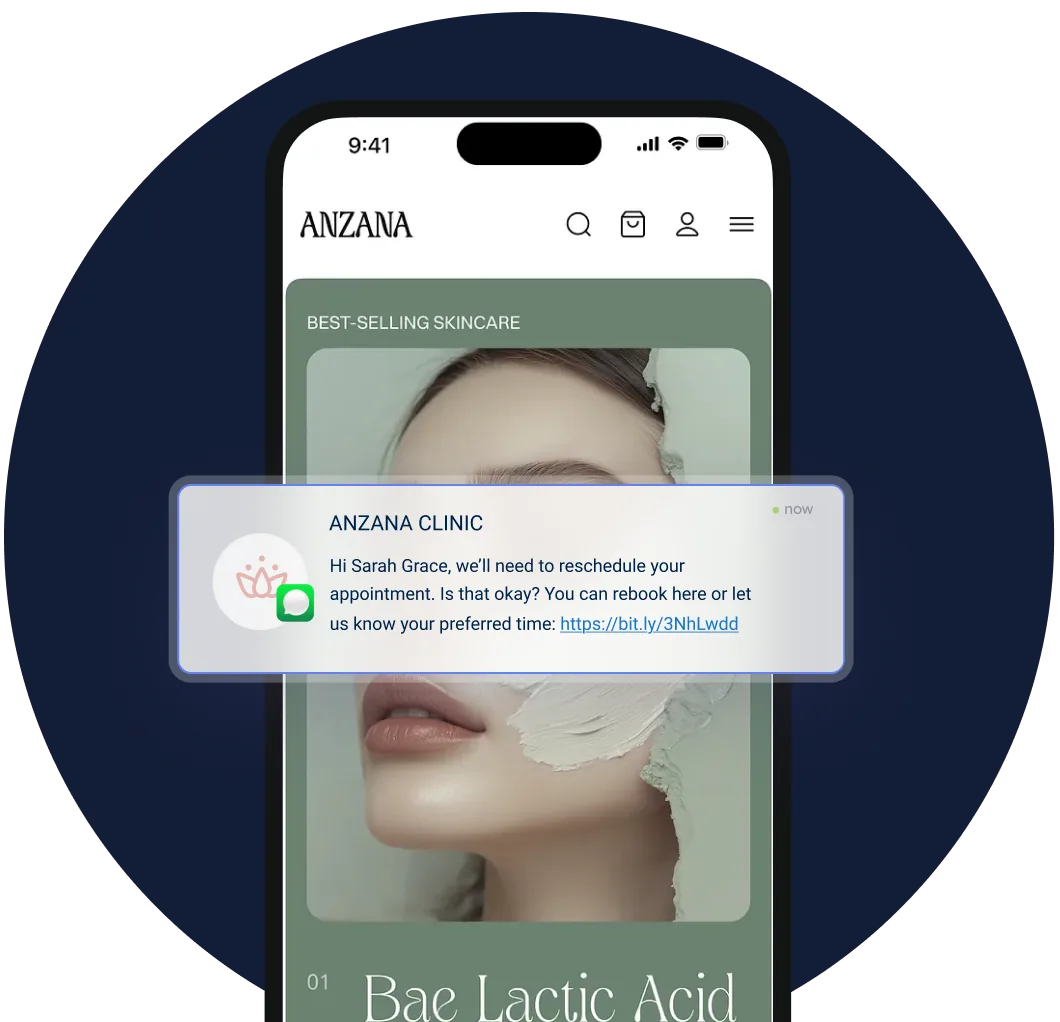
For inactive leads (patients who inquired but never booked), a 3-touch re-engagement sequence over 30 days recovers a meaningful percentage. The first message acknowledges the time gap and asks if their treatment needs have changed. The second offers a direct booking link. The third provides a time-limited incentive.
Pay-per-click advertising places your practice at the top of Google for searches like “orthodontist [city]”, “Invisalign provider near me”, and “braces cost [city]”. These are people ready to book. Organic SEO takes months to build; PPC delivers results from day one.
Competition for new patients in metropolitan markets has increased significantly as corporate orthodontic organizations expand their digital advertising spend. Independent practices — the membership base of the American Association of Orthodontists (AAO) — can compete effectively by targeting hyper-local terms and directing ad traffic to dedicated landing pages rather than the homepage. A landing page designed for a specific search term (e.g. “Invisalign in Chicago”) outperforms a generic homepage redirect by a significant margin in conversion rate.
Budget guidance varies widely by market. Rural and suburban practices may achieve cost-effective results on $800-$1,500 per month. Competitive urban markets often require $2,500-$5,000 or more to maintain meaningful visibility. The key metric is cost per consultation booked, not cost per click.
Every other marketing strategy sends traffic to your website. If your website does not convert that traffic into consultation bookings, every upstream investment is wasted. Conversion rate optimization (CRO) for orthodontic websites focuses on three areas: speed, trust signals, and booking friction.
A site that loads in under 3 seconds, displays your Google rating prominently, and has a booking button visible without scrolling on mobile will outperform a beautiful but slow site with a buried “contact us” form. Offer online booking as the primary conversion path. Practices that enable instant scheduling see significantly higher conversion rates than those requiring a phone call to book, particularly with adult patients and parents booking on behalf of children.
Audit your website’s mobile experience on a real phone, not a browser simulator. Click through the booking flow as if you were a new patient. Count every tap required before the appointment is confirmed. If it takes more than four taps, each additional step is costing you bookings. Simplify the path ruthlessly.
Orthodontic marketing operates under regulatory constraints that purely commercial businesses do not face. Understanding these constraints protects your practice from enforcement action and builds patient trust simultaneously. Review HIPAA rules for social media marketing before launching any campaign that involves patient data or patient stories.
The three areas where orthodontic practices most commonly create compliance exposure are patient testimonials, retargeting advertising, and before-and-after photos. The stakes rise further in mental health practice marketing, where privacy expectations are even stricter.
| Marketing activity | Key compliance requirement | Common mistake |
|---|---|---|
| Patient testimonials | Written HIPAA authorization + FTC disclosure if any benefit was provided | Using testimonials without written consent or failing to disclose incentives |
| Before-and-after photos | Written consent specifying use in marketing materials, platform, and duration | Repurposing clinical photos without separate marketing consent |
| Retargeting ads | Website pixels must comply with HIPAA if the site collects health information; use HIPAA-compliant analytics alternatives | Installing Meta Pixel or Google Tag on pages where patients enter health data |
| Google Ads / PPC | Ad copy must not make specific treatment outcome claims without substantiation | Writing “guaranteed results” or “best orthodontist in [city]” without evidence |
| Email/SMS campaigns | Patients must have opted in; include unsubscribe option in every message | Sending marketing messages to patients who consented only to appointment reminders |
The FTC’s endorsement guidelines apply specifically to reviews and influencer partnerships. If a patient receives a discount, a free treatment, or any material benefit in exchange for a review, that relationship must be disclosed. Practices that incentivize Google reviews without disclosure risk FTC enforcement. The disclosure does not need to be lengthy; a simple “(received a discount on treatment)” in the review or post is sufficient.
The most effective orthodontic practice marketing programs run largely on automation. Manual follow-up is inconsistent. Staff forget. Patients fall through cracks. Marketing software for your practice that integrates with your scheduling and patient records turns one-off campaigns into permanent systems.
Pabau connects patient data, appointment history, and treatment stage to marketing triggers. When a patient completes their first adjustment, a post-care message fires automatically. When a patient misses an appointment, a re-engagement sequence starts. When a patient’s treatment ends, a review request sends within 24 hours. These are not campaigns that require a marketing coordinator to set up each time. They run in the background.
Automated patient recall workflows also address a specific challenge in orthodontics: long treatment gaps. A patient who is three months between retainer checks needs different messaging than a patient mid-treatment. Pabau’s segmentation allows you to send relevant communication at every stage rather than generic “we miss you” blasts that feel impersonal.
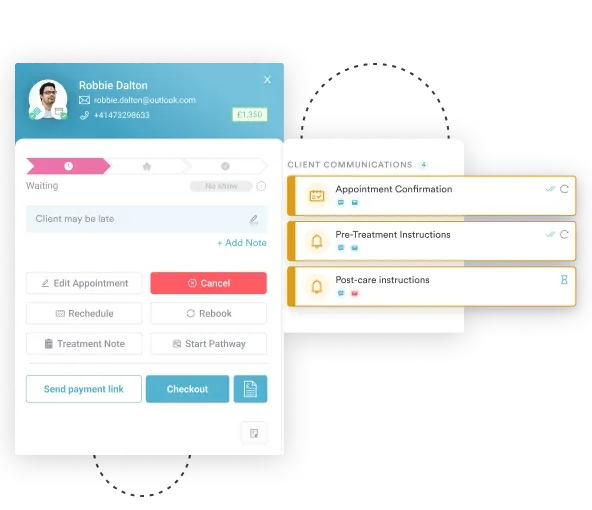
For multi-location practices, centralized building a practice marketing plan across sites becomes significantly easier when all patient data lives in one system. Campaign performance by location, lead source attribution, and consultation-to-starts conversion rates are all visible from a single dashboard, making it possible to allocate marketing budget where it actually produces results.
You cannot improve what you do not measure. The practices that grow most efficiently track a small set of metrics consistently rather than occasionally measuring everything.
Tracking marketing ROI remains one of the most consistently underutilized capabilities in dental and orthodontic practices; the American Dental Association (ADA) publishes practice-management resources on closing that gap. Most practices know their total new patient count but cannot attribute starts to specific channels. That gap costs practices thousands of dollars annually in misdirected spend.
Orthodontic practice marketing is a long game. Local SEO, review generation, referral programs, and automated recall campaigns each produce compounding returns over time. The practices that struggle are usually those treating marketing as a series of one-off campaigns rather than a system.
Pabau gives orthodontic and aesthetic practice teams the infrastructure to run that system without adding to the administrative workload. Automated follow-up, built-in review requests, and segmented recall campaigns keep the pipeline moving even when the clinical team is focused entirely on patient care. Marketing strategy for aesthetic practices built on Pabau runs consistently rather than reactively. To see how the system works in practice, book a demo and walk through the marketing automation features with the team.

Need a full strategy framework for your practice? Marketing for practices covers the core principles that apply across all healthcare practice types, from digital channels to patient retention systems.
Writing up your service pages next? Service description templates for your clinic shows how to set expectations before a client books.
Building a marketing plan from scratch? Marketing plan for private practice walks through a step-by-step approach for growing referrals and inquiries.
Orthodontic practice marketing is the set of strategies a practice uses to attract new patients, re-engage existing ones, and build the online visibility and trust that drives consultation bookings. It combines digital channels (local SEO, paid ads, social media, email) with referral programs and reputation management, typically supported by practice management software that automates follow-up workflows.
Start with Google Business Profile optimization and systematic review collection, both of which cost nothing beyond time. Referral programs that reward existing patients for introductions produce the highest ROI at the lowest cost. Automated email and SMS recall campaigns through your practice management system recover lapsed patients without ongoing manual effort.
Local SEO is the highest-intent channel in orthodontic practice marketing because it captures patients who have already decided to start treatment and are choosing a provider. Appearing in the Google local map pack for searches like “orthodontist near me” produces consultation inquiries from patients further along the decision process than any other channel.
HIPAA requires written patient authorization before using any identifiable patient information (including photos or testimonials) in marketing materials. Website retargeting pixels may create HIPAA exposure if installed on pages where patients submit health information. All email and SMS marketing must include opt-out options, and patients must have explicitly consented to marketing communications separately from clinical appointment reminders.
Practice management software connects patient data, appointment history, and treatment stage to automated marketing triggers. This means review requests fire after treatment milestones, recall messages send when patients are overdue, and re-engagement sequences activate when leads go quiet without requiring manual intervention from the clinical or admin team.
Market your orthodontic practice by layering channels that compound: optimize your Google Business Profile and local SEO to capture “orthodontist near me” searches, collect reviews after positive treatment moments, post before-and-after social content with consent, and automate email and SMS recall so lapsed and mid-treatment patients keep booking. Referrals from existing patients and general dentists remain the lowest-cost, highest-conversion source.
Build the plan around a few measurable KPIs instead of a long tactic list: set targets for new patient starts by lead source, consultation-to-start conversion rate, and cost per new start. Choose two or three channels you can run consistently, assign each a monthly budget, and review the numbers monthly so spend shifts toward whatever actually produces starts.