Self-esteem worksheet for adults
Download your free self-esteem worksheet for adults Self-esteem worksheet for ad...

43
Last Updated: Sep 4, 2026

A vitamin B6 injection is pyridoxine hydrochloride 100 mg/mL, given intramuscularly or intravenously when an oral dose will not work.
Dosing is set by indication, from 10 to 20 mg daily for dietary deficiency up to 100 mg daily for isoniazid-induced deficiency.
Isoniazid overdose is the emergency case, where pyridoxine is dosed gram for gram against the amount of isoniazid ingested.
Sustained intake above the 100 mg daily upper limit risks sensory peripheral neuropathy, so screen nerve function before and during a course.
Each administration needs a lot number, site, route, and dose recorded against a signed consent form, which software like Pabau keeps on one patient record.
The template covers patient screening, contraindication prompts, and a signed informed consent section written for pyridoxine. It also carries an administration record with fields for dose, route, injection site, lot number, and the follow-up review.
Download templateA vitamin B6 injection delivers pyridoxine hydrochloride, usually 100 mg per mL, into muscle or vein. Dosing runs from 10 mg daily for dietary deficiency up to gram-for-gram dosing against isoniazid in an overdose. The indication sets the dose, not the patient’s energy levels.
Most pyridoxine references scatter those numbers across pages of indication-by-indication prose. This guide puts them in one table. It then covers what a practice has to run day to day. That means needle choice, site rotation, multi-dose vial handling, consent, and the chart entry.
It is written for the teams giving vitamin B injections regularly. That means IV therapy and wellness practices, private practices running isoniazid prophylaxis, and obstetric teams managing pregnancy nausea. The consent template above handles the paperwork half of the job.
A B6 injection is pyridoxine hydrochloride delivered into muscle or vein, bypassing the gut entirely. The vial label reads pyridoxine hydrochloride injection USP, 100 mg per mL. Patients and wellness marketing call the same product a B6 shot, injectable B6, or a B6 vitamin injection.
Pyridoxine is a water-soluble B vitamin. Its active form, pyridoxal 5′-phosphate, works as a cofactor in more than 100 enzyme reactions. Those include amino acid metabolism, heme synthesis, and the production of serotonin, dopamine, and GABA.
The injectable route earns its place when absorption cannot be relied on. Malabsorption, persistent vomiting, and bariatric anatomy all blunt oral uptake. Tablets and liquid vitamin B6 are cheaper and perfectly good for maintenance, but they are slower and depend on a working gut.
Injectable pyridoxine is a prescription medicine. It needs a valid clinical indication, a prescriber’s authority, and supervision at the point of administration. Pyridoxine injection is not a supplement that a practice can hand out on request.
Vitamin B6 injection uses split into four labeled indications and a small set of established off-label ones. The US product labeling covers dietary deficiency, drug-induced deficiency, inborn errors of metabolism, and isoniazid poisoning. Everything else is a clinical judgment you have to document.
A vitamin B6 test measures plasma pyridoxal 5′-phosphate, and a result below 20 nmol/L indicates inadequate status. Order it before starting a course, not after. A baseline result is also what defends the decision if the patient later reports neurological symptoms.
Vitamin B6 deficiency symptoms are easy to miss because none of them are specific to B6. The recognized picture includes seborrheic dermatitis, glossitis, cheilosis, microcytic anemia, and peripheral neuropathy. Confusion and depression appear in more advanced cases, and infants can present with irritability and seizures.
Wellness marketing sells vitamin B6 shots for energy, mood, and premenstrual symptoms. None of those are labeled indications. Injecting a patient whose PLP result is normal adds toxicity risk without a clinical target, and it is hard to defend in a complaint.
Work through the template in five steps, in this order. Each step maps to a section of the downloadable form. Anything already captured on your new patient questionnaire can be carried straight across.
Digital forms sit at the center of practice management software, feeding records, billing, and follow-ups from one entry.
Any practice that puts a prescription injectable into a patient needs a documented consent trail. That runs from an IV therapy practice giving weekly B-complex rounds to an emergency team stocking pyridoxine as an antidote. These are the settings where it comes up most:
It closes the liability question early. A signed form showing the indication, the risks discussed, and the alternative offered is the difference between a defensible decision and a disputed one. Regulators such as the FDA, the CQC in England, and HIS in Scotland all expect documented consent before a prescription medicine is given.
It stops screening steps being skipped. A fixed field order means the levodopa check and the baseline neurological note happen every time. Free-text notes drift, especially when the same practitioner gives 20 injections in a day.
It makes a recall possible. Lot number and expiry recorded per patient means you can identify everyone who received a specific vial within minutes. Without that field, a manufacturer recall turns into a manual file search.
It shortens inspection prep. A complete record of indication, dose, batch, site, and patient response is what an inspector asks for. Assembling it after the request is far more work than capturing it at the point of care.
Vitamin B6 injection dosage runs from 10 mg daily for dietary deficiency to gram-for-gram dosing against isoniazid in an overdose. Nothing in between is interchangeable. The table sets out vitamin B6 injections dosage and frequency side by side, so you read one row instead of four pages of prose.
Labeled figures come from the US pyridoxine hydrochloride injection labeling on DailyMed, with the antidote and prophylaxis figures from StatPearls. Check current labeling and your local formulary before dosing, and treat pediatric cases as specialist territory.
At 100 mg per mL, a 10 to 20 mg dose is only 0.1 to 0.2 mL. Draw it with a 1 mL syringe, because a 3 mL barrel makes that volume hard to measure accurately. Change the needle after drawing up so you inject through a clean tip.
One practical point about practice stock rather than a single patient. A 30 mL multi-dose vial holds 3,000 mg, which is 150 doses at 20 mg. Almost no practice uses that within 28 days, so single-dose vials usually waste less product than they appear to. Automated stock management is what stops expired vials sitting in the fridge.
Most side effects are local and short-lived. Expect pain and stinging at the injection site, transient nausea, and headache. They are milder than the IV therapy complications an infusion service plans for, and allergic reactions are rare. The safety concern that changes clinical practice is dose-dependent sensory peripheral neuropathy.
The tolerable upper intake level for adults is 100 mg per day from all sources combined. Neuropathy is classically associated with sustained intake well above that, but susceptible patients have developed symptoms at lower doses. Treat 100 mg per day as a ceiling for anything other than a labeled short course.
Screen for these signs at every follow-up:
Symptoms can appear weeks or months after a course starts. They may not fully reverse once established, which is why screening beats waiting for a complaint.
You cannot manage an overdose of vitamin B6 that you never counted. Ask what else the patient is taking, because multivitamins, B-complex products, and energy drinks all add pyridoxine. If neurological symptoms appear, stop the injections and refer for neurological assessment rather than reducing the dose and waiting.
Four interactions matter enough to check before every course:
Combination products are where the arithmetic goes wrong. A vitamin B1 B6 B12 injection, marketed for neuropathy in several countries, can carry 100 mg of pyridoxine or more per ampule. Check the pyridoxine content of any vitamin B6 B12 injection before adding a separate B6 dose.
The risk is quiet. Take a patient already having a weekly B-complex infusion who then starts a daily 20 mg course. They pass the upper limit without anyone writing down a total. The consent form’s medication review field exists for exactly this.
Contraindications: hypersensitivity to pyridoxine hydrochloride is absolute. Relative contraindications include concurrent levodopa without carbidopa, and severe renal impairment, where excretion is reduced and the dose should come down. Pregnancy is not a contraindication.

Oral pyridoxine is first-line therapy for nausea and vomiting of pregnancy, at 10 to 25 mg every six to eight hours. ACOG supports it alone or paired with doxylamine, and the doxylamine-pyridoxine combination is the only prescription treatment the FDA has approved for this use.
Nausea and vomiting affects most pregnancies, and a smaller share becomes severe enough to threaten hydration and weight. That severe group is where the injection is sometimes used, because a patient who cannot keep a tablet down cannot absorb an oral dose either.
Treat the injectable route here as off-label and document it that way. A pregnancy-specific consent form should also name the non-drug options the patient was offered.
Pyridoxine injection is a prescription medicine, so someone with prescribing authority has to authorize each patient’s course before anyone injects. In wellness practices the injecting practitioner and the prescriber are often different people, which is where that authority slips.
In the US, physicians, nurse practitioners, and physician assistants prescribe within the limits their state sets. Registered nurses and medical assistants may administer under an order or a delegation protocol, and what a medical assistant can inject varies sharply by state. Most states also require a med spa to name a medical director.
In the UK, injectable pyridoxine is a prescription-only medicine. A nurse without independent prescribing rights administers it against a named-patient prescription or a patient group direction. A patient group direction has to be written, signed, and specific about the drug, dose, and patient group.
Three checks are worth doing before your first B6 injection appointment:
Your consent template should carry a plain disclaimer. It is a starting point. Your legal or compliance team needs to review it against local scope-of-practice rules before you use it with patients.
In most practices the pieces of a B6 injection record live in different places. The consent is a scanned PDF. The lot number is on a paper log by the fridge, and the follow-up note sits in the patient file. Answering “who received vial batch 4471” then means opening all three.
Practice management software like Pabau keeps them on one patient timeline. The consent form is signed digitally before the appointment and files itself against the record. The administration entry carries dose, route, site, lot number, and expiry in structured fields, so you can search them later instead of reading them.
The follow-up is the part that usually slips. Because the review is booked at the same time the injection is recorded, the neurological check on a three-week course happens.
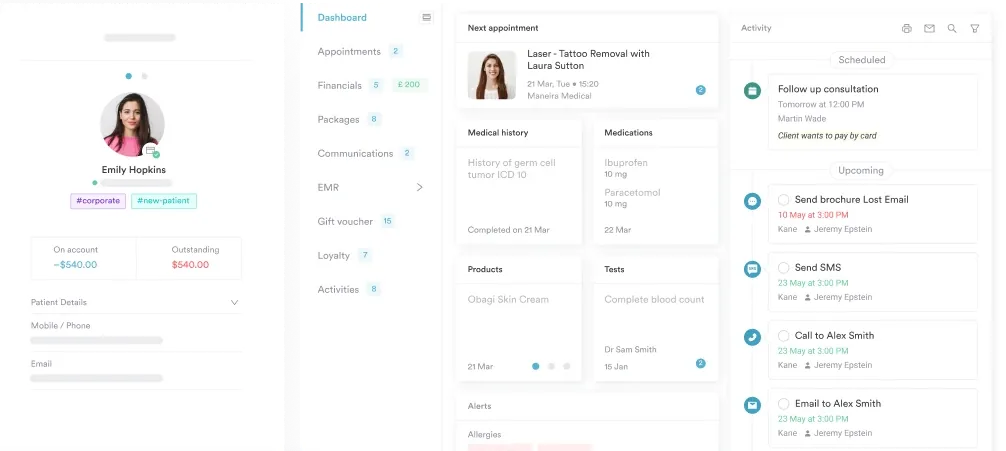

Pabau’s digital consent forms and clinical records capture the dose, route, site, and lot number against the patient timeline. Follow-up reviews get booked at the same time, and a batch query takes seconds instead of an afternoon.

Two decisions carry almost all the risk in pyridoxine administration. The first is whether the patient has a labeled indication at all, which a PLP result usually settles. The second is whether anyone is adding up total B6 across every product the patient takes.
Get those right and the rest is technique and paperwork. Get them wrong and the harm is a neuropathy that may not fully reverse, caused by a vitamin the patient assumed was harmless. That is the trade-off worth remembering before you offer B6 shots as a wellness add-on.
Download the template above, adapt it with your compliance team, and make the medication review a required field rather than an optional one. Book a demo to see how Pabau keeps consent, lot numbers, and follow-up reviews on a single patient record.

Need the screening form that comes before the injection? IV therapy patient intake captures medical history, allergies, and contraindications before anyone draws up a dose.
Not sure who on your team can give the injection? IV vitamin therapy rules walk through qualification, supervision, and prescribing authority by role.
Running other injectable vitamins alongside B6? Vitamin C injection aftercare gives you the post-injection sheet to hand the patient before they leave.
Building the intake side of a functional medicine service? Functional medicine intake form covers the medication and nutrition history a pyridoxine decision rests on.
Administering vitamin D3 injections as well? vitamin D3 injection protocol sets out dosage bands and ng/mL targets for correcting deficiency.
A vitamin B6 injection treats pyridoxine deficiency, corrects drug-induced deficiency from isoniazid or penicillamine, and acts as the antidote in isoniazid overdose. It is also used off-label for nausea in pregnancy when the patient cannot keep an oral dose down.
Dosing follows the indication. Dietary deficiency is 10 to 20 mg daily for three weeks. Isoniazid-induced deficiency is 100 mg daily for three weeks, then 30 mg as maintenance. Neuropathy prophylaxis during isoniazid therapy is 25 to 50 mg daily. An isoniazid overdose is dosed gram for gram against the amount ingested.
Seborrheic dermatitis, glossitis, cheilosis, microcytic anemia, and peripheral neuropathy are the recognized signs. Confusion and depression appear in more advanced deficiency, and infants can present with irritability and seizures. None of these are specific to B6, so confirm with a vitamin B6 test measuring plasma pyridoxal 5′-phosphate.
Yes. A sustained overdose of vitamin B6 causes sensory peripheral neuropathy, because excess pyridoxine damages the dorsal root ganglia that carry sensation. Symptoms begin as numbness and tingling in the hands and feet, then progress to an unsteady gait. The adult upper intake level is 100 mg per day from all sources, and recovery is not always complete.
Injection site pain and stinging are the most common, followed by transient nausea and headache. Allergic reactions are rare. Repeated injections into the same site cause induration, which is why site rotation matters on a three-week course.
They are different vitamins treating different conditions. B6 is pyridoxine, used for pyridoxine deficiency, isoniazid-related neuropathy, and isoniazid overdose. B12 is cobalamin, used for pernicious anemia and B12 deficiency, often caused by malabsorption. A combined vitamin B6 B12 injection exists, but neither vitamin substitutes for the other.
Doxylamine plus vitamin B6 is the standard first-line combination for pregnancy nausea, but both parts are normally taken orally. Doxylamine is the antihistamine in Unisom SleepTabs. Unisom SleepGels contain diphenhydramine instead, so they are not a substitute. The injectable route is off-label and reserved for patients who cannot keep an oral dose down.
Yes, in two different ways. Low-dose pyridoxine, 25 to 50 mg daily, prevents isoniazid-induced peripheral neuropathy during tuberculosis therapy. In an acute isoniazid overdose, pyridoxine is the antidote and is dosed gram for gram against the amount ingested, starting with 4 g intravenously.
Oral pyridoxine depends on gut absorption and works more slowly. Injectable B6 bypasses digestion, so its availability does not rely on the gastrointestinal tract. Tablets and liquid vitamin B6 are the sensible default for maintenance, with the injection reserved for malabsorption, persistent vomiting, or urgent correction.