Fertility clinic marketing: Strategies that attract & convert patients
Fertility clinic marketing is how a fertility practice attracts, educates, and c...

Last Updated: Oct 14, 2026
Marketing for therapists works when it moves people through the four stages of what we call the Caseload Funnel: found, chosen, booked and kept.
Four moves carry the most weight. Build a Google Business Profile and directory profile around a clear niche, and reply to inquiries the same day with online booking. Then add two-way referral partners and rebook patients before they leave. Start with whichever stage leaks first, not with whichever channel gets talked about most.
Demand is not the problem. In 2022, an estimated 59.3 million US adults had a mental illness, and only 50.6% of them received treatment that year. That figure comes from NIMH statistics based on SAMHSA survey data. This guide sorts mental health practice marketing by the stage each strategy fixes, for solo, group and telehealth-only practices.

Marketing for therapists fills a caseload when people can find you, choose you, book you, and stay, so fix the earliest stage that leaks first.
A complete Google Business Profile and one or two directory profiles that name a clear niche are the fastest way to get found.
Same-day inquiry replies, 24/7 self-scheduling and intake forms sent at booking turn more inquiries into first sessions.
Two-way referral relationships with primary care, pediatricians, school counselors and EAPs keep new patients arriving without ad spend.
APA Standard 5.05 rules out testimonials from current patients, and a review reply can breach HIPAA by confirming someone is a patient.
Marketing for therapists works when a prospective patient can find you, choose you, book you, and stay, so fix the earliest leaking stage first.
Each stage has a leak sign you can read from numbers you already have. Found leaks when profile views and calls are low. Chosen leaks when views are high but inquiries are rare. Booked leaks when inquiries arrive but first sessions don’t. Kept leaks when patients drop out after one or two sessions.
The order matters because every stage feeds the next. More traffic into a practice that answers inquiries two days later only buys more lost inquiries. When we onboard practices onto Pabau, the practice management platform we build, the inquiry-to-booking step is often the one nobody owns. It runs from an inbox checked between sessions.
The diagram below maps every strategy in this guide to the stage it repairs. Use it to judge each therapy practice marketing decision against your own leak.
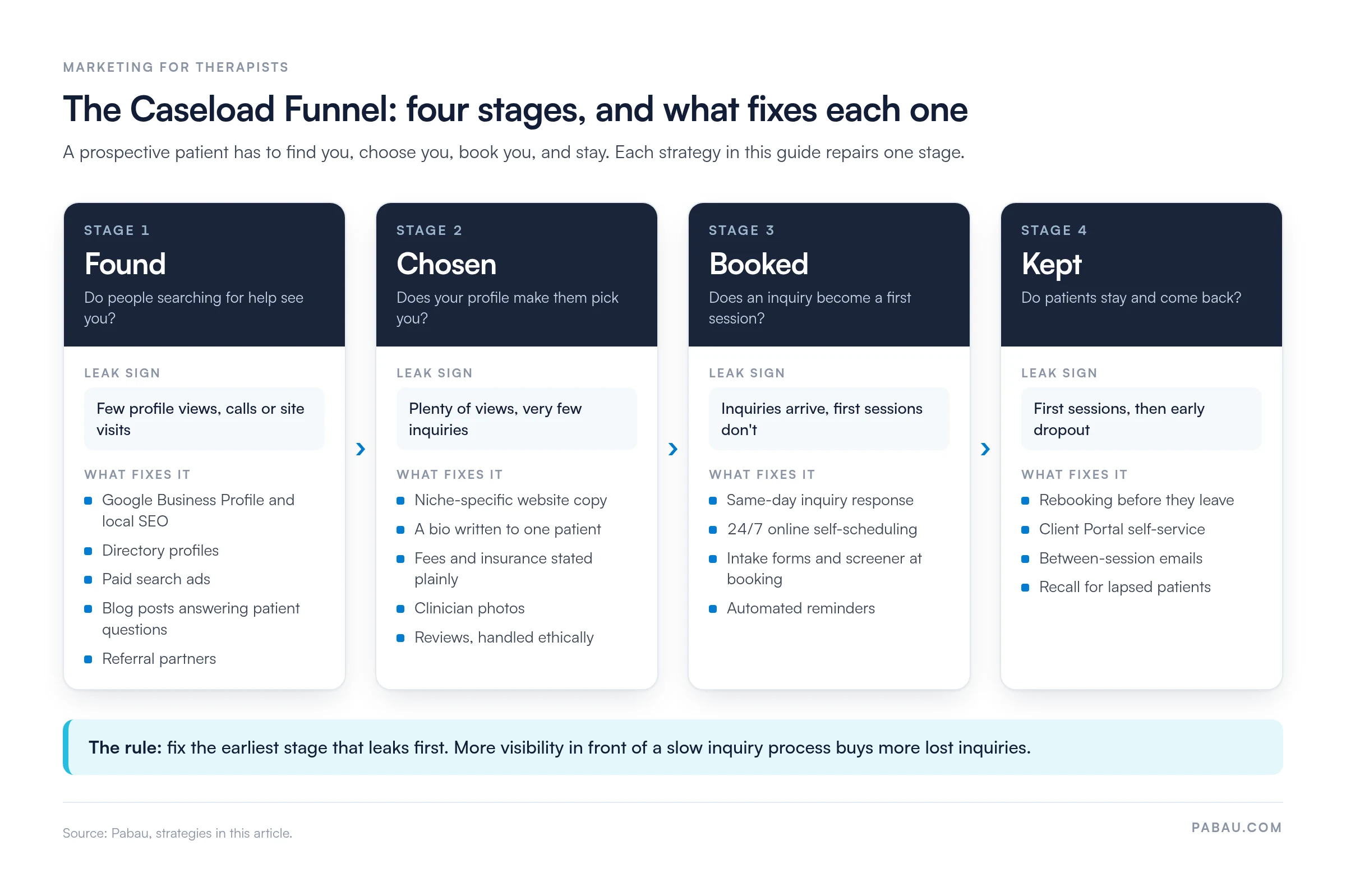
The marketing strategies for therapists that get you found are a complete Google Business Profile, specific directory profiles, targeted search ads and question-led blog posts.
These four fill the Found stage of the Caseload Funnel. Most people start their search for a therapist on Google or a directory, typing a condition and a place.
A verified, fully completed Google Business Profile is the quickest route into the local map results that appear for searches like “anxiety therapist near me”. Fill in the primary category, every service you offer, accurate hours and current photos of your office.
Keep your name, address and phone number identical on your website, your profile and every directory. Mismatched listings make it harder for Google to trust which details are correct. Reviews help local ranking too, but therapists face extra limits on asking for them, covered in the ethics section below.
Telehealth-only practices still need local SEO, just at state level. A California-licensed therapist who sees patients by video can rank for “online therapist California”. Name the state and the format in page titles and body copy.
Directory profiles are a separate discovery channel from Google, because many people go straight to a directory to filter by issue, insurance and location. Many US therapists name Psychology Today as their busiest directory, while TherapyDen and GoodTherapy reach smaller, more niche-aligned audiences.
Clinicians often list every modality they’ve trained in rather than the two or three they want to be known for. Directories reward specificity. “I work with adults who have OCD and health anxiety” will pull better-matched inquiries than a list of 15 approaches and eight populations.
Keep availability current, too. A profile marked “accepting new patients” that leads to a full caseload burns goodwill on both sides.
Paid search works for therapists when ads target condition-plus-location searches, land on a page with online booking, and are judged on booked first sessions.
Build small ad groups around the searches your niche attracts, such as “postpartum anxiety therapist Denver” or “EMDR therapy Austin”. Add negative keywords like “free”, “jobs”, “degree” and “salary” so the budget goes to people looking for care.
Send each ad group to a page about that specific issue, with fees, insurance and a booking button above the fold. Keep ad claims general and verifiable, with no promised outcomes. Google’s healthcare ads policy requires LegitScript certification before you can advertise drug and alcohol addiction services in the US.
Practices that treat substance use face more of these rules, which our guide to behavioral health marketing walks through.
Blog content compounds. A clear post answering “what is cognitive behavioral therapy for insomnia” can bring in searchers for years, and they arrive already knowing how you work. Write for the searches your ideal patients make, in their words, not for clinical peers.
One practical approach is to write down the five questions new patients ask most during consultations. Each one becomes a blog post that matches a search people are already making. Record the same answer as a two-minute video for YouTube and your website, since video lets people hear your voice before they call.
Mental health marketing gets you chosen when your website and profiles name the problem you treat, who you help, your fees and how to book.
Being found only earns a click. The Chosen stage of the Caseload Funnel is the moment a person compares you with four other tabs and decides who to contact.
A 2024 mixed-methods study in BMC Health Services Research looked at how college students respond to university mental health clinic websites. Sites that clearly described services, the evidence behind treatments, costs and therapist backgrounds earned more interest and trust.
The same elements decide whether a visitor to a private practice site makes contact. Plain language mattered in the study too, so cut clinical jargon from every page a prospective patient reads.
Reviews shape the choice, but therapists can’t collect them the way other local businesses do. Soliciting testimonials from current patients is off limits, and replying to a review can itself disclose that the reviewer is a patient. The ethics section below covers both rules.
Social media builds trust over time rather than filling a caseload this month. Instagram and TikTok suit practices that reach younger adults with short educational videos. LinkedIn works for building referral relationships with HR teams, employee assistance programs (EAPs) and other clinicians.
Consistency beats volume. One genuinely useful post a week does more than a daily stream of generic quotes. The APA Ethics Code, the NASW Code of Ethics and the ACA Code of Ethics all apply to posts, stories and comments.
| Platform | Best for | Content type | Ethical watch point |
|---|---|---|---|
| Instagram / TikTok | Young adults, general awareness | Short educational videos, infographics | Avoid case-adjacent content |
| Referral partners, EAPs | Professional updates, specialty explainers | Professional tone, no patient stories | |
| Ages 30 to 55, local groups | Community education, Q&As | No unsolicited outreach | |
| YouTube | In-depth education, trust-building | Therapy explainers, FAQ videos | Clear disclaimers, not clinical advice |
Audit your social media content quarterly against your professional ethics code. Ask whether a post could be misread as a therapeutic relationship or a clinical recommendation. When in doubt, add a clear note that the content is educational and not a substitute for care.
To increase referrals in private practice, build two-way relationships with primary care physicians, pediatricians, school counselors and EAPs. Keep them warm with a one-page specialty summary and quarterly touchpoints.
Referrals feed the Found stage of the Caseload Funnel, and they arrive pre-qualified because another professional has already matched the patient to you. Treat referral development as a formal channel with an owner, not an occasional favor.
The strongest relationships run both ways. Identify the patients you can’t serve well, such as those outside your specialty, on your waitlist or needing medication management, and refer them on. Referrers notice who sends patients back. The steps below show how to increase referrals in private practice without paid advertising.
Group practices can assign one team member to referral relationships as an ongoing role. Solo practitioners often build referral networks through local peer consultation groups. For more ways to fill an empty caseload in the first months, see how to get more therapy clients.
Turn inquiries into booked first sessions by replying the same business day, offering self-scheduling at any hour, and sending intake forms the moment someone books.
The Booked stage of the Caseload Funnel covers this handoff, which most marketing advice skips. Someone who emails at 11pm on a Sunday and gets a reply on Tuesday has often booked elsewhere by then. You paid to earn that inquiry and lost it to a slow reply.
A workable inquiry-to-first-session handoff runs in five steps:
A standardized screener such as the Zung Self-Rating Depression Scale gives the clinician baseline context before the first session. Patients also arrive having already done their paperwork, so the hour goes to therapy.
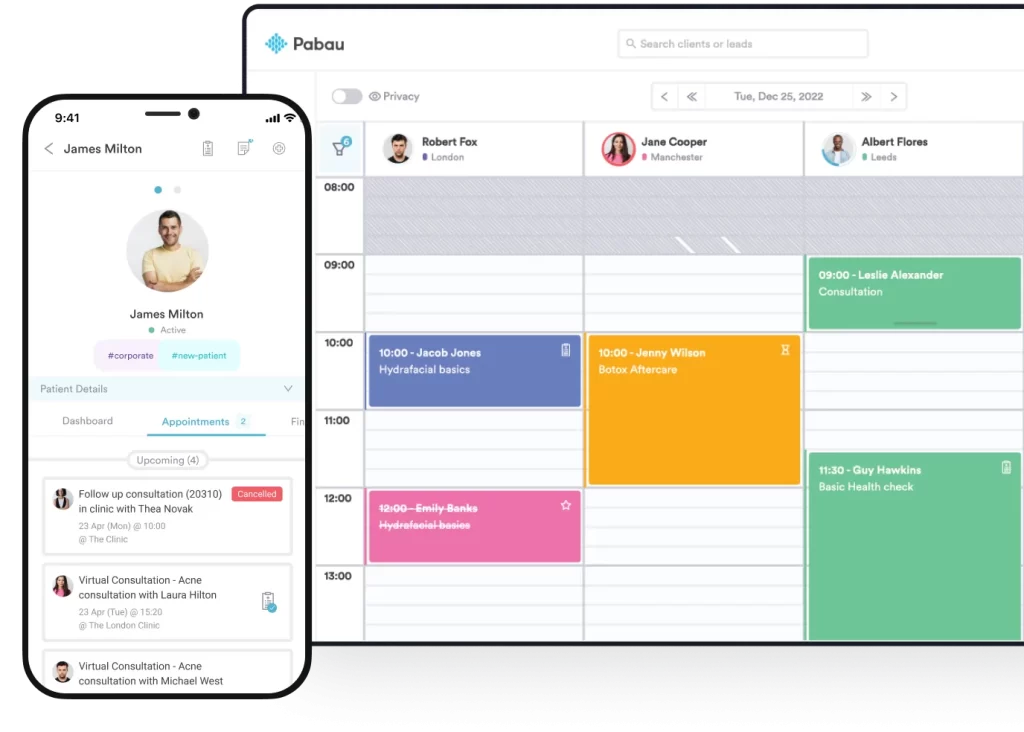
Pabau handles this handoff with an embeddable booking widget and automated workflows that send forms and reminders without staff involvement. If you are comparing tools for this step, our roundup of the best therapy practice software sets the options side by side.
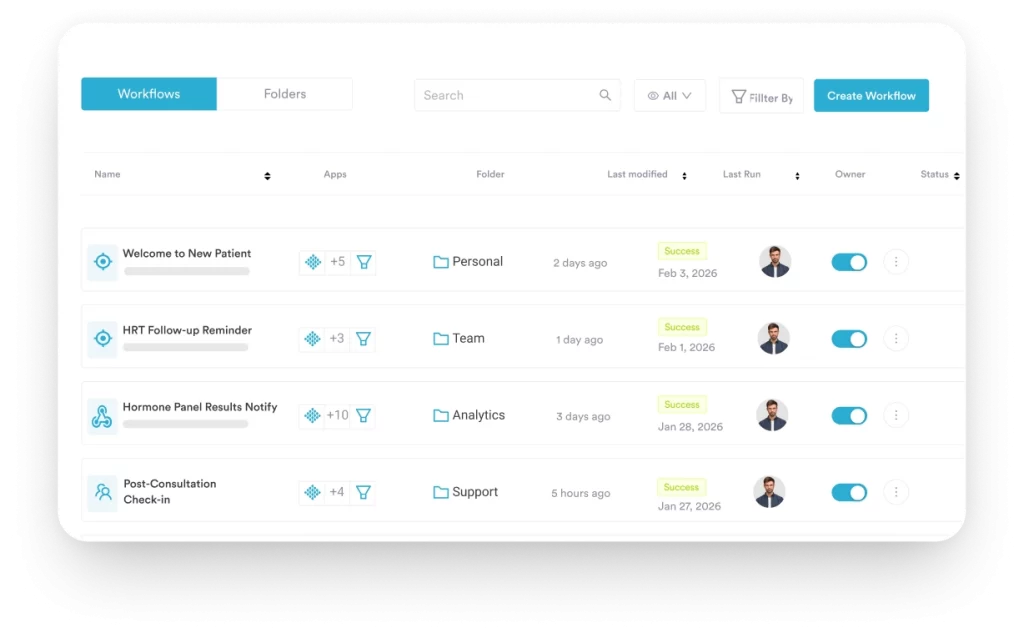
Review your source data after six months. Count booked first sessions by channel, not website clicks or profile views, and cut the channel that brings inquiries but no bookings.
Keep patients engaged by booking the next session before they leave, giving them a portal to manage appointments, and sending useful, consented emails between sessions.
The Kept stage of the Caseload Funnel protects every other stage’s work. A practice that loses patients after two sessions has to keep replacing them, and that caps how far the caseload can grow.
A monthly newsletter keeps your practice present without clinical contact. Seasonal topics work well, such as back-to-school anxiety in August or seasonal affective disorder as the days shorten. Psychoeducation on the conditions you treat and practical coping strategies earn opens too.
Newsletters to patients need opt-in consent and a HIPAA-compliant sending channel. The CAN-SPAM Act also requires a working unsubscribe link and clear sender details on commercial email. Pabau’s email and SMS campaigns send from the same system that holds patient consent, so the opt-in record and the send list match.
A patient portal gives patients one place to rebook, reschedule, complete forms and message the practice between sessions. Self-service rebooking removes the phone call that a hesitant patient might otherwise put off.
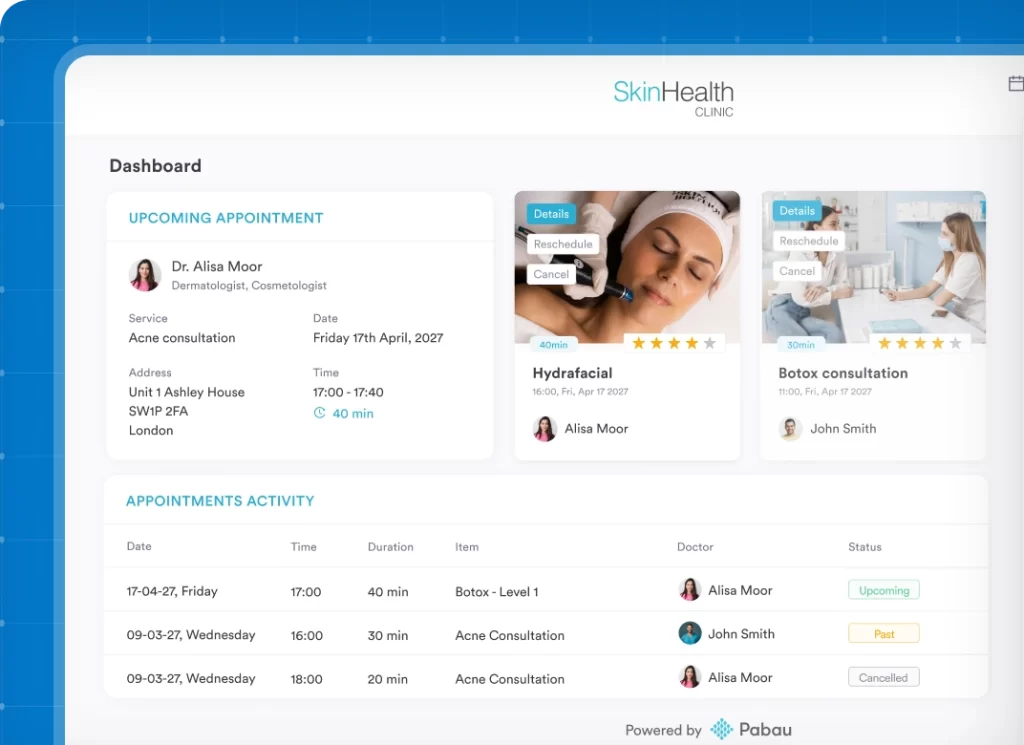
Pair the portal with a recall message for patients who haven’t booked since their last session, worded as a check-in rather than a sales pitch. That message wins back people who simply fell out of the habit, without new ad spend.
Therapist marketing is bound by your ethics code and HIPAA, which rule out current-patient testimonials, outcome guarantees and review replies confirming someone is a patient.
The APA, NASW and ACA codes all bar false, deceptive or exploitative advertising, and licensing boards enforce them. The rules below are the ones that bite most often in day-to-day marketing.
Ethical marketing also tends to be effective marketing. Realistic, specific copy attracts patients who are well matched and more likely to complete treatment. Overpromising attracts people who leave disappointed and say so publicly.
Start with the channel that fixes your leakiest Caseload Funnel stage: usually Found for a new practice and Kept for a full one.
The table below turns that rule into a starting order for four common practice situations. It deliberately says what to skip, because spreading a small budget across every channel leaves each one underfunded.
| Practice stage | Fund first | Add second | Skip for now | Why |
|---|---|---|---|---|
| New solo practice | Google Business Profile and one directory profile with a clear niche | Referral partners in primary care and schools | Social media content | Found is the leak, and profiles cost time rather than money while the caseload is empty. |
| Established solo practice with a waitlist | Rebooking and Client Portal self-service | Two-way referrals for the overflow | Paid search | More visibility only lengthens the waitlist, so protect Kept and strengthen referrers. |
| Group practice with open clinician hours | Same-day replies and self-scheduling by clinician | Paid search on the open clinicians’ specialties | Broad brand awareness posts | Open hours mean Booked must route each inquiry to whoever has slots. |
| Telehealth-only practice across a state | Statewide website SEO and telehealth directories | Paid search on condition-plus-state terms | Google Business Profile | Google excludes online-only businesses from profiles, so Found runs on search and directories. |
Effective marketing ideas for therapists are small fixes tied to one Caseload Funnel stage each, like rewriting your directory bio or timing inquiry replies.
These mental health marketing ideas each take under a day and need no agency:
Many therapy practices run the Booked and Kept stages by hand. Inquiries sit in a shared inbox, and intake forms and reminders go out one by one. Pabau’s software for therapy practices replaces that with one system for booking, forms and patient communication.
Pabau’s online booking sits on your website and directory profiles, so a prospective patient can book a first session at any hour. The booking triggers intake forms and a screener automatically, then a reminder sequence with a reschedule link.
After the first session, Pabau keeps patients coming back. The Client Portal lets patients rebook themselves, and email and SMS campaigns handle newsletters and recall messages from consented lists. Every subscription includes the full marketing suite, and structured onboarding sets up your workflows with you.

Pabau books late-night inquiries online, sends intake forms automatically and runs reminders and recall campaigns. Your marketing turns into booked sessions instead of unanswered emails.

The cheapest new patient is the one who already contacted you. Before you pay for ads or an agency, check how quickly your last 10 inquiries got a reply and how many became first sessions. If that number disappoints, fix the Booked stage first.
Once inquiries convert reliably, more visibility pays back properly, and the referral and retention work keeps the caseload full between campaigns. The trade-off is patience. Profiles, referrers and blog posts take months to compound, so start them early and judge them on booked sessions.
Book a demo to see how Pabau turns therapy inquiries into booked first sessions and keeps patients rebooking.

Still setting up your practice? How to start a private therapy practice covers licensing, insurance panels and the systems to have in place before your first patient.
Taking insurance? Insurance billing for therapists walks through claims step by step, so the fees you advertise get paid.
Choosing your clinical system? Best EHR for therapists compares seven platforms on notes, booking and billing.
Building a structured intake process? Psychiatric evaluation template covers every component of a full psychiatric evaluation, from intake onward.
Want the full picture for psychology practices? Psychology practice software outlines the workflows that support psychology and therapy practices as they grow.
Market a therapy practice by fixing the stages in order: get found, get chosen, get booked, and keep patients engaged. Marketing for mental health therapists starts with a niche-specific Google Business Profile and directory profile, then same-day inquiry replies with online booking.
Most solo and small group practices don’t need an agency to start, because profiles, referrals and inquiry handling are cheap to do yourself. An agency that specializes in marketing mental health practice websites and ads earns its fee once you run paid search or a full rebuild.
The therapist market is crowded mainly among generalist, in-network listings in big metro areas. A clear niche, stated fees and a fast reply to every inquiry still win patients, even in competitive cities.
Start with channels that cost time rather than money. Complete your Google Business Profile, write one or two specific directory profiles, and build two-way referral relationships with local physicians. Then publish a few blog posts answering the questions new patients ask most.
For most practices, a specific directory profile plus a referral network with a few primary care providers brings the steadiest flow of new inquiries. Content and social media build trust more slowly, so treat them as long-term channels.
Therapists should not solicit testimonials from current patients, which APA Standard 5.05 prohibits because of the power differential in therapy. The ACA and NASW codes take a similar line. Check your licensing board’s guidance before using any patient-generated content.
SEO matters because many people look for a therapist by searching a condition and a location. Pages that name the issues you treat, the areas you serve and your fees give Google and searchers what they need to choose you.
Name telehealth and every state where you hold a license on your website and directory profiles. Target searches like “online therapist [state]” in your content, list on telehealth-friendly directories, and make sure your online booking system offers virtual appointment types.