Maja Popovska
Nutrition intake form
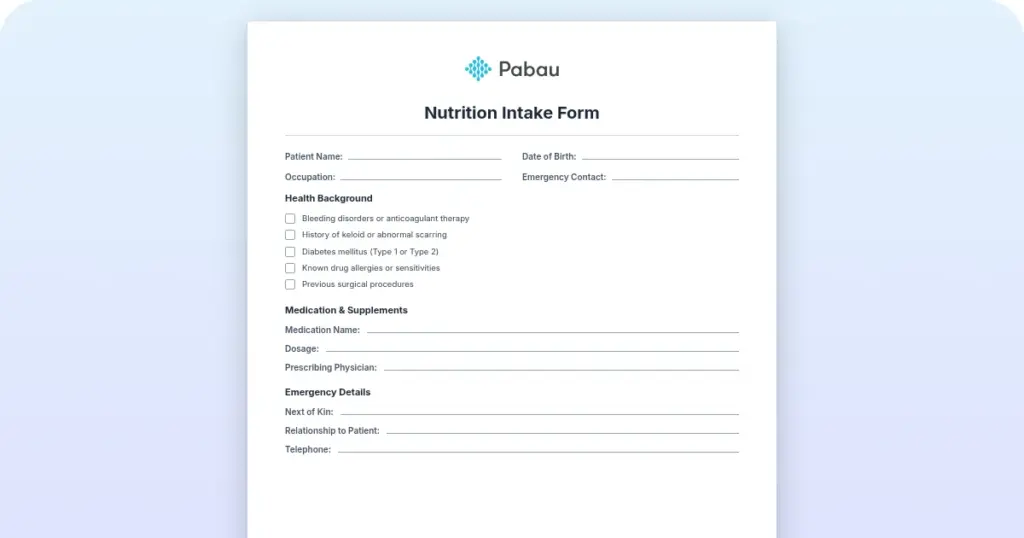
A nutrition intake form is a structured questionnaire that records a patientR...

4
Last Updated: Oct 22, 2026
Free PDF 2 pages, print-ready Clinician-reviewed
A low carb diabetic diet meal plan gives practitioners a structured tool for helping patients with Type 2 diabetes and prediabetes lower blood glucose through carbohydrate reduction. Instead of generic “eat less sugar” advice, it sets specific carb targets, a meal structure, and food choices tuned to the patient’s diabetes type and current medications.
Practitioners distribute the plan during diabetes management visits, nutrition counseling, and weight-loss consultations. Because carb targets shift with medication, the plan below sets them by drug class: a patient on a sulfonylurea needs tighter limits and closer monitoring than one on metformin alone.
A ready-to-use template covering patient assessment, carbohydrate targets by diabetes type, a sample day of meals, food lists, and progress monitoring guidance for healthcare practitioners.
Upload this PDF, or any form you already use, and Pabau's AI Form rebuilds it with tick boxes, text fields and a signature. Attach it to the treatment once, and every patient gets it on time.
AI Form rebuilds the consent, history and aftercare forms you already use. You review each one, then publish.
Patients complete forms on their phone before they arrive, so the front desk stops retyping paper.
Every signed form is versioned and attached to the treatment record, ready when you need it.
Set how long a consent stays valid. Returning patients skip forms they have already signed.
Supports HIPAA and GDPR compliance AES-256 encryption 4.8 on G2 4.7 on Capterra Trusted by 4,000+ practices worldwide

A low carb diabetic diet meal plan targets 50–130g of carbohydrates per day, helping patients with Type 2 diabetes and prediabetes manage blood glucose and improve A1C.
The template guides clinicians through individualized carb targets, meal structure, food selection, and weekly monitoring, plus a sample day of meals to share with patients.
Carb targets shift with medication: patients on sulfonylureas or insulin need tighter limits and closer monitoring than those on metformin alone.
Practice management software like Pabau can share the plan, capture signatures, track adherence, and send automated follow-up reminders.
A low carb diabetic diet meal plan, also called a low carb diabetic diet plan, is a structured nutritional template that helps practitioners guide patients with Type 2 diabetes and prediabetes in reducing carbohydrate intake to improve blood glucose control. It builds on the same principles as a broader healthy eating plan, applied to metabolic health.
The American Diabetes Association (ADA) defines a low carb eating pattern as 26–45% of daily calories from carbohydrates, with very low carb patterns dropping below 50g a day. In clinical practice, most low carb diabetic diet meal plans work to a tighter daily target of 50–130g, which is easier for patients to count and track.
The template provides clear carbohydrate targets, meal structure guidance, food selection frameworks, and monitoring protocols. It turns clinical guidelines into practical patient behavior change, so practitioners can customize recommendations based on individual metabolic status, medications (including newer GLP-1 agonists), and lifestyle factors.
This is a professional tool requiring individualized clinical advice. Practitioners must adjust targets based on kidney function, medication use, and patient preferences before sharing with patients.
Share the plan through practice management software like Pabau.

Here is one day of eating that lands at roughly 70g of net carbs, suitable for a patient with Type 2 diabetes on metformin. Use it as a starting point and scale portions to each patient’s daily target.
For a patient on a sulfonylurea or insulin, trim the higher-carb items (the chickpeas, berries, and part of the dessert) to bring the day closer to 50g, and coordinate any medication changes with the prescriber. For a full week of meals, a lower carb meal plan lays out seven days with a running daily carb total.
This template is designed for healthcare practitioners across multiple specialties managing metabolic conditions:
The template is not suitable for Type 1 diabetes without specialist endocrinology support, as carbohydrate reduction requires careful insulin adjustment and ongoing glucose monitoring.
Improved glycemic control: Low carb eating lowers post-meal blood glucose spikes and can reduce HbA1c. Pooled trial data show average reductions of roughly 0.3–0.5 percentage points, with larger drops in patients who start with poorly controlled Type 2 diabetes and the biggest gains in the first 3–6 months. Compare results against an A1C goals chart to set realistic targets by age.
Weight loss support: Carbohydrate restriction supports fat loss, often without calorie counting. In the first 3–6 months, low carb diets tend to produce more weight loss than low-fat diets. For patients wanting more structure, a food portion size chart sets visual serving sizes for protein, vegetables, and carb sources without a food scale.
Lean mass preservation during GLP-1 therapy: A 2026 review highlighted by the Obesity Medicine Association reported that GLP-1 trials pairing semaglutide or tirzepatide with carbohydrate-restricted targets preserved more lean mass, though the authors caution that the interaction between low carb diets and these medications is not yet fully understood. Practices offering tirzepatide should also have tirzepatide informed consent on file before starting treatment.
Protein intake works alongside the carbohydrate target during GLP-1 therapy. A high-protein eating plan sets the daily protein goal by body weight, which helps patients hold muscle while they lose weight.
Reduced medication requirements: As blood glucose improves, patients may require lower doses of metformin, sulfonylureas, or other glucose-lowering agents, reducing medication burden and side effects. Keep the patient’s diabetes medication list current and coordinate dose reductions with the prescriber.
Simplified patient education: The template removes guesswork. Rather than generic “eat healthier” advice, practitioners provide a concrete plan with meal examples, food lists, and target numbers. This improves patient compliance and reduces consultation time spent on diet questions.
Audit-ready documentation: The template includes carb calculations, patient signatures, and progress notes. These support HIPAA compliance, a documented HIPAA privacy policy, and dietary guidance aligned with bodies like the CDC.
Track not just carbs but fiber and micronutrients. Patients often reduce carbs but miss key nutrients (magnesium, potassium, B vitamins). The template should include a note: ‘Aim for 25-30g fiber daily from low-carb sources (broccoli, spinach, chia seeds) to maintain digestive health and satiety.’
Carbohydrate recommendations vary based on diabetes classification and current medications. Documentation should reflect the specific diagnosis code, such as E11.9 or Z79.4, so carbohydrate counseling aligns with the record. This reflects the broader balance between lifestyle vs pharmacologic interventions in diabetes care.
A low carb diabetic diet meal plan template turns general dietary advice into a concrete clinical tool. Clear carbohydrate targets, medication-specific guidance, and monitoring protocols help patients see steady improvements in blood glucose and A1C. Share the template at diagnosis or during a care plan review, track outcomes at each follow-up, and adjust targets as medications change.
To take the next step, book a demo with Pabau to see how practice management software can automate template distribution, follow-up reminders, and progress tracking.

Also managing a patient’s cholesterol? The low cholesterol diet food list covers foods that lower LDL, like oats, barley, and legumes, plus foods to cut.
Assessing a patient for metabolic acidosis? The metabolic acidosis template structures the evaluation with ABG parameters, electrolyte panels, anion gap calculations, and history fields.
Need a full nutrition workup form? The nutrition assessment form covers medical history, a 24-hour dietary recall, lab values, and a diagnosis and goals section.
A low carb diabetic diet plan is a structured nutritional template that helps patients with Type 2 diabetes and prediabetes lower blood glucose by reducing carbohydrate intake, typically to around 50-130g per day depending on diabetes type and medication.
A typical day lands between 50 and 100g of net carbs: an egg and vegetable breakfast, a large salad with lean protein at lunch, a small handful of nuts as a snack, and fish or poultry with non-starchy vegetables at dinner. Practitioners scale portions to each patient’s carb target.
Targets vary by condition: prediabetes typically allows 100-130g/day, Type 2 diabetes on metformin alone 75-130g/day, and patients on sulfonylureas, insulin, or GLP-1 agonists often need lower targets of 50-100g/day with closer monitoring.
Yes, with prescriber coordination. Cutting carbs while on these medications increases hypoglycemia risk, so dose adjustments and more frequent glucose monitoring are usually needed as intake decreases.
Only with specialist endocrinology support. Carbohydrate reduction in Type 1 diabetes requires careful insulin adjustment and ongoing glucose monitoring, so this template is not suitable as a standalone resource for these patients.
Many patients see measurable improvements in post-meal glucose within days. HbA1c changes take longer: pooled trials show average reductions of about 0.3-0.5 percentage points over 3-6 months, with larger drops in patients who start with poorly controlled Type 2 diabetes.
Often, yes. As blood glucose control improves, patients may need lower doses of metformin, sulfonylureas, or other glucose-lowering medications. Always coordinate any dose changes with the prescriber.