Maja Popovska
Nursing care plan for aggressive behavior
A nursing care plan for aggressive behavior is a structured clinical document fo...

2
Last Updated: Oct 26, 2026
Free PDF 2 pages, print-ready Clinician-reviewed
A 21-day weight loss plan is a structured clinical template that gives healthcare practitioners a systematic framework for guiding patients through a focused three-week weight management program. Sometimes searched for as a 21-day diet plan for weight loss, it maps out what a patient eats and does each day, so they can lose weight in 21 days without relying on guesswork or ad-hoc advice.
Unlike consumer-focused diet trends or branded fitness systems, this template grounds weight loss in evidence-based principles: caloric deficit, macronutrient balance, hydration, and progressive exercise.
Upload this PDF, or any form you already use, and Pabau's AI Form rebuilds it with tick boxes, text fields and a signature. Attach it to the treatment once, and every patient gets it on time.
AI Form rebuilds the consent, history and aftercare forms you already use. You review each one, then publish.
Patients complete forms on their phone before they arrive, so the front desk stops retyping paper.
Every signed form is versioned and attached to the treatment record, ready when you need it.
Set how long a consent stays valid. Returning patients skip forms they have already signed.
Supports HIPAA and GDPR compliance AES-256 encryption 4.8 on G2 4.7 on Capterra Trusted by 4,000+ practices worldwide

A 21-day weight loss plan is a structured, time-bound template that helps healthcare practitioners guide patients through sustainable dietary and exercise modifications over three weeks.
Safe weight loss targets 0.5-1 kg per week (a 500-calorie daily deficit yields roughly 0.5 kg/week), supported by CDC and NHS guidelines-realistic outcomes vary by individual baseline and adherence.
Structured meal plans, portion control, progress tracking, and weekly milestones keep patients motivated and accountable, reducing dropout rates and improving long-term habit formation.
Pabau’s digital forms and client portal enable practitioners to deploy customized templates, track patient progress in real time, and provide timely follow-up care without manual data entry.
The template serves as a clinical tool-not a guarantee of specific weight loss outcomes. Healthcare providers (nutritionists, registered dietitians, GPs, wellness coaches, metabolic health specialists) use it to standardize patient guidance, ensure consistency across the patient population, and reduce documentation time. Sustainable weight loss happens when total daily energy expenditure exceeds caloric intake, the core energy-balance principle reflected in CDC healthy weight guidance. The 21-day weight loss plan structures this deficit over a fixed period while maintaining nutritional adequacy and patient safety.
The three-week timeframe serves a dual purpose: it creates a measurable milestone for motivation, and it’s long enough to establish initial routine changes without requiring a major lifestyle overhaul. Research suggests habit formation takes longer-on average 66 days.
Deploying a 21-day weight loss plan with patients involves five key operational steps grounded in real clinical workflows:
Integration with practice management software like Pabau streamlines this workflow by centralizing intake data, automating reminder emails for check-ins, and providing secure patient portals where clients download and track progress.
A 21-day weight loss plan template serves multiple healthcare settings and practitioner roles:
Wellness practices track plans like this inside wellness clinic software, alongside bookings and client notes.
Weight loss outcomes over 21 days vary significantly based on individual baseline, metabolic rate, adherence, and starting weight. Safe, sustainable weight loss targets 1 to 2 lbs (0.5-1 kg) per week, in line with CDC and NHS weight management guidance. Over 21 days (three weeks), realistic outcomes range from 3-7 lbs (1.5-3 kg), though some individuals, particularly those with high starting weight or strict adherence, may see greater initial loss (often water weight and glycogen depletion).
The “lose up to 15 lbs in 21 days” claim popularized by commercial 21-day programs lacks peer-reviewed evidence for most individuals and represents a minority outcome. Position this in patient conversations as an aspirational ceiling, not a typical expectation. Most sustained weight loss happens over months and years, not weeks, so treat the 21-day plan as a foundation-building phase.
Frame the template around medical documentation of baseline, weekly measurements, and habit markers (exercise frequency, meal adherence, sleep quality, energy levels). This broadens the definition of “success” beyond pounds lost and captures the behavioral shifts that predict long-term outcomes.
Recording a starting weight against a weight height chart for women shows where a patient sits before day one. That context keeps the three-week target proportionate to her healthy range.
A comprehensive template includes seven structural elements:
Templates that lack any of these elements, especially progress tracking and post-program guidance, often result in low completion rates and patient frustration.
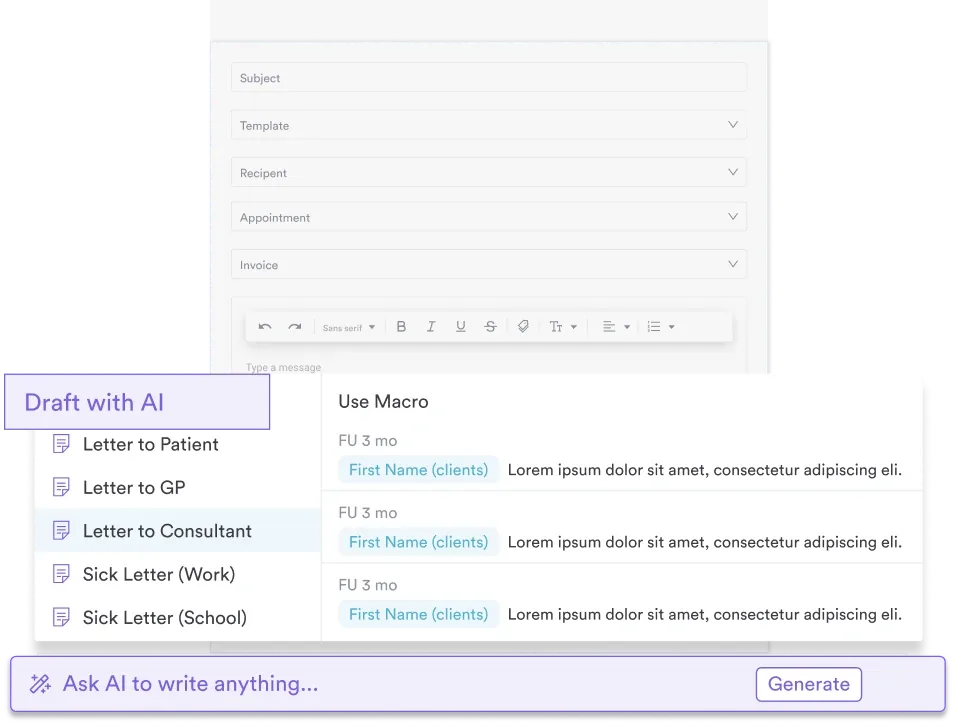
See how digital forms, patient portals, and automated reminders can streamline deployment and tracking of weight loss templates across your practice. Book your demo today and learn how practitioners are improving patient outcomes with integrated care management software.
A 21-day weight loss meal plan works best when it builds week by week instead of slashing calories all at once. Give each week a clear focus, then hand the patient a day-by-day layout they can follow with no decisions left to make.
Each day follows the same simple shape: three balanced meals and two snacks, built from whole foods. A typical day looks like this:
To keep a 21-day diet plan for weight loss easy to follow, give patients a short list of foods to build meals around and a shorter list to keep occasional.
Foods to emphasize:
Foods to keep occasional:
Pair the meals with a 21-day weight loss workout plan of three to five sessions a week, plenty of water, and weekly weigh-ins. Realistic results over three weeks are 3 to 7 lbs (1.5 to 3 kg), so frame it as a foundation for patients who want to lose weight in 21 days and keep going, not a crash diet.
For patients who want low-cost cardio, a four-week beginner jumping rope exercise plan covers the sessions this template schedules. Swap it in on days set aside for cardiovascular work.
The resistance half of those sessions needs its own structure. A four-week template for weight training for women sets out the lifts, sets and reps across three or four sessions a week.
Hand this out as the free, printable meal plan PDF at the top of this page, or send it straight to a patient portal so it lands in their record with check-in reminders already scheduled.
The 21-day timeframe is partly grounded in behavior science and partly marketing tradition. Research on habit formation (Lally et al., University College London) found that it takes an average of 66 days to form a habit, with a range of 18-254 days depending on behavior complexity and individual differences. A 21-day plan is too short to cement lasting habits alone, but long enough to establish the neural and behavioral foundations for change.
From a nutritional perspective, 21 days allows the body to stabilize blood sugar regulation, reduce refined-carbohydrate cravings, and adjust to lower-calorie intake without severe metabolic adaptation. The Academy of Nutrition and Dietetics recommends a 500-calorie daily deficit as a safe starting point, yielding approximately 0.5 kg (1 lb) per week loss. Over 21 days, that translates to 1.5-3 kg depending on starting weight and consistency.
The template should emphasize protein intake (supporting satiety and muscle preservation during weight loss) and whole-food density (high fiber, low energy density) to help patients feel full despite lower calories. Avoid very-low-calorie diets (under 800 kcal/day), which require medical supervision and carry metabolic and safety risks.
A flexible 21-day weight loss plan should accommodate multiple dietary frameworks: omnivore, vegetarian, vegan, low-carbohydrate, intermittent fasting, and culturally specific preferences. Practitioners often serve diverse populations with conflicting dietary beliefs and constraints. A one-size template limits relevance and compliance.
The most effective templates include modular sections: core meal principles (calorie/macro targets) apply across all variations, then specific meal options branch into dietary pattern subsets. This approach reduces redundancy while honoring patient choice-a key driver of long-term adherence.
Ensure the template documents patient satisfaction with their assigned plan variant. If a vegan patient reports unsustainable hunger or a low-carb patient struggles with energy, the template should support rapid adjustment without starting over.
Track non-scale victories alongside weight: improved energy, better sleep, clothes fitting differently, mood elevation, and increased exercise capacity. These markers predict long-term success more reliably than weight alone and keep patients motivated through the inevitable plateaus.
A 21-day weight loss plan template is a practical tool for healthcare practitioners to standardize weight management guidance, improve patient compliance, and document outcomes. Grounded in evidence-based principles-caloric deficit, macronutrient balance, exercise, and progress tracking-the template reduces practitioner time burden while ensuring consistent, safe care.
The three-week timeframe creates a measurable milestone, though lasting weight management requires extending the plan beyond 21 days. By positioning the template as a foundation-building phase and supporting patients through structured check-ins and obstacles, practitioners increase the likelihood that initial habit gains become long-term lifestyle changes. Integrate the template with practice management software to centralize data, automate reminders. Book a demo to see how digital systems streamline template deployment and follow-up care.

Need to track patient progress in real time? Weight loss clinic software enables practitioners to monitor weekly check-ins, measurements, and adherence across multiple patients from a centralized dashboard.
Looking to automate patient reminders? Email and SMS campaign tools send automated check-in prompts at days 7, 14, and 21, reducing no-shows and improving engagement.
Screening a candidate before bariatric surgery? Bariatric psychological evaluation covers surgical readiness, eating-disorder screening, and clearance documentation.
A comprehensive template includes daily meal plans with portions, macronutrient targets, an exercise schedule, hydration guidance, progress tracking sheets, motivational checkpoints, obstacle-planning strategies, and a clinical disclaimer. The best templates also provide post-program guidance to help patients maintain habit gains beyond 21 days.
Safe weight loss targets 1 to 2 lbs (0.5-1 kg) per week according to CDC and NHS guidelines. Over 21 days, realistic outcomes range from 3-7 lbs (1.5-3 kg), though initial loss often includes water weight and glycogen depletion. Individual results vary by baseline weight, metabolism, and adherence. Avoid claims of “up to 15 lbs in 21 days,” which are rare and misleading.
Yes. Most people can shed 3 to 7 lbs over three weeks with a moderate calorie deficit, higher protein intake, and regular movement. Early drops are partly water and glycogen, so position the three weeks as the start of steady progress rather than a one-time result patients need to sustain by hand.
Yes, when built on evidence-based principles: a 500-calorie daily deficit, adequate protein, whole foods, hydration, and supervised by a qualified practitioner. The plan is unsafe if it recommends very-low-calorie diets (under 800 kcal/day), eliminates food groups without supplementation, or ignores contraindications (medications, eating disorders, metabolic conditions). Always include a clinical disclaimer requiring consultation with a healthcare provider before starting.
Research suggests habit formation takes an average of 66 days (range 18-254 days). A 21-day plan is a foundation-building phase, not a complete transformation. Position it as the launch point for longer-term lifestyle change. Include post-program guidance and encourage patients to extend successful habits beyond the initial 21-day framework for lasting results.
Collect baseline data (height, weight, BMI, activity level, medical history) during an initial consultation. Customize macronutrient targets and meal preferences, then provide the patient with a printed or digital copy via a patient portal. Schedule check-ins at days 7, 14, and 21 to review progress, gather feedback, and adjust the plan if barriers emerge. Document all interactions in the clinical record.
Yes. You can download the free 21-day weight loss meal plan PDF from the top of this page, print it, or share it with patients through their portal. It lays out daily meals, portion sizes, and an exercise schedule across all three weeks, and you can customize it before sending it out.
A challenge is mostly a motivational framing, built around a countdown and daily check-ins to keep people engaged. A structured clinical plan adds the parts a challenge skips: baseline assessment, evidence-based calorie and protein targets, contraindication checks, and documented progress. The strongest results come from pairing the motivation of a fixed timeframe with a plan a practitioner can adjust.