Cervix length during pregnancy chart
A cervix length during pregnancy chart records cervical length in millimeters ag...

1
Last Updated: Oct 14, 2026

A healthy eating plan is a structured guide that helps patients align daily food choices with health goals through portion guidance, food group balance, and personalized nutrition targets.
Evidence-based eating plans following USDA MyPlate or DASH frameworks reduce cardiovascular risk and support sustainable weight management when tailored to individual needs and preferences.
Sharing a printable eating plan template during consultations improves patient compliance, clarifies expectations, and creates a documented reference for ongoing dietary progress tracking.
Practice management software like Pabau lets you build the template once as a digital form, auto-fill it from the patient record, and track who has viewed or completed it.
A comprehensive template featuring customizable meal planning sections, daily calorie and macronutrient targets, food group recommendations aligned with USDA MyPlate guidelines, goal-setting fields, and practical grocery list worksheets for dietitians and nutrition professionals to share with patients.
Download templateA healthy eating plan template gives dietitians, nutritionists, and wellness practitioners a consistent starting point for every nutrition consultation. Instead of telling someone to “eat healthier,” you hand them a structured plan with portion sizes, food-group balance, meal timing, and personal targets.
It also documents exactly what guidance was given, which matters if a patient later says they were never advised on their diet.
A healthy eating plan is a personalized or semi-customizable document that outlines daily food recommendations based on caloric needs, health goals, and nutritional science. Templates designed for clinical use structure this guidance into visible sections: food groups to emphasize, portion sizes per meal, example meal ideas, hydration targets, and space for patients to log or track compliance.
Unlike generic diet books, a clinician-provided eating plan carries professional authority and integrates with patient intake workflows. When printed or shared via patient portal, the template becomes both an educational tool and a compliance document. It shows that clear guidance was delivered and understood.
Implementing an eating plan template follows a five-step practice workflow that ensures both patient understanding and documented compliance.
Eating plan templates serve a range of healthcare settings and practitioner roles:
The common thread is simple: any practice delivering nutritional guidance benefits from a standardized template that documents what was discussed and gives patients something concrete to follow at home.
A wellness practice platform turns templates like this into trackable client programs.
Improves follow-through. A written plan with specific meals and targets is more likely to be acted on than verbal advice alone. Patients leave knowing exactly what to eat, not just that they should “eat healthier” — which shows up as steadier progress between visits.
Frees up consultation time. A pre-filled template handles the portion-size and food-group basics, so the appointment goes to the patient’s real obstacles: budget, cooking time, and family meals. You explain less nutrition science and solve more of what actually stops people following a plan.
Creates clear documentation. A signed or electronically acknowledged eating plan becomes part of the patient record, demonstrating that nutritional guidance was delivered. This protects the practice during compliance audits and supports liability insurance if a patient later claims they were never given dietary advice.
Supports evidence-based practice. Templates grounded in USDA MyPlate, DASH, or Mediterranean diet frameworks anchor recommendations in published research. Patients gain confidence knowing their plan rests on clinical evidence rather than personal opinion. Many templates include citations or links to authoritative sources like the CDC healthy eating guidelines or American Heart Association nutrition guidance.
Enables digital integration. Built into practice management software, eating plan templates can be auto-populated with patient data (age, weight, activity level), version-controlled, and tracked for completion. Pair that with Pabau Scribe, our AI scribe, and your consultation notes flow into the patient record automatically. Patients receive reminders to review the plan and can respond through the patient portal.
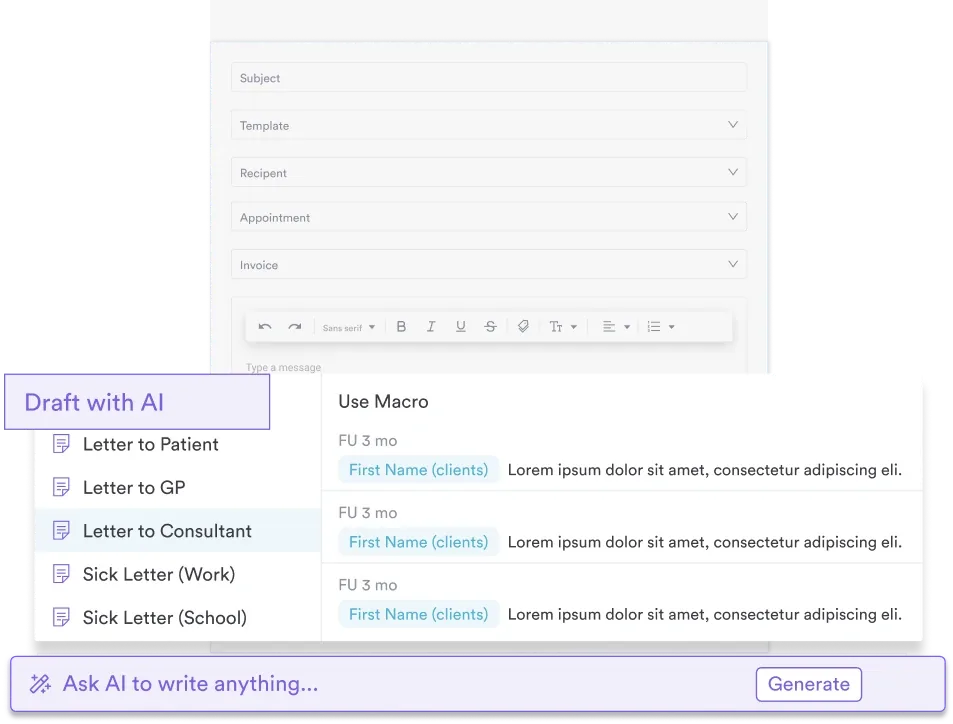

Pabau’s digital forms let you customize templates once, then reuse them across your patient base with personalized fields auto-populated from patient records. Reduce plan creation time and increase compliance tracking.

An effective eating plan adapts to individual circumstances rather than applying one-size-fits-all rules. Start with a recognized framework:
From this foundation, customize by adjusting portion sizes based on caloric needs and health goals. A patient with hypertension needs lower sodium and added sugars. One with diabetes requires carbohydrate consistency and fiber emphasis. An athlete needs higher protein and total calories. The template should include fields where you document these clinical decisions and the patient’s specific targets, making the “why” behind recommendations clear.
A healthy eating plan template works best when paired with brief education on food groups, macronutrients (carbohydrates, proteins, fats), and portion control strategies. Teaching patients how to read nutrition labels, recognize serving sizes, and identify nutrient-dense foods versus processed alternatives empowers them to make substitutions and adapt the plan to real-world situations: social meals, restaurant dining, and travel.
Many templates include a one-page visual guide to food groups, portion sizes, or meal examples. Others provide grocery shopping lists organized by food group so patients can build meals around their plan. Some include space for recipes, meal prep tips, or links to resources like Harvard’s Healthy Eating Plate. These touchpoints reinforce learning and give patients tools to problem-solve independently between visits.
A healthy eating plan template turns nutrition science into a concrete, personalized document your patients can follow at home. It also cuts repetition during consultations and creates an auditable record of what was discussed. Whether you’re a dietitian, functional medicine practitioner, or primary care provider, a structured template supports better outcomes and a smoother clinic day.
Ready to streamline your patient nutrition workflows? Book a demo and see how Pabau’s digital forms feature lets you build, customize, and distribute eating plans in seconds, then track patient completion and gather outcome data automatically.

Need to screen a patient’s weight risk? Body mass index assessment explains how to read adult and pediatric BMI ranges and when to add waist circumference.
Screening for liver disease progression? Elastography test guide explains how the test catches liver fibrosis early without a needle or sedation.
Managing patients through diabetes care plans? A1C conversion chart maps A1C percentages to estimated average glucose for patient education and monitoring.
A healthy eating plan is a personalized food and nutrition guide that outlines daily recommendations for food groups, portions, meal timing, and hydration based on individual health goals, nutritional needs, and dietary preferences.
Dietitians use templates to standardize patient education, personalize recommendations (calorie targets, macronutrient ratios, food restrictions), and create documented guidance that patients can follow at home and reference between appointments.
Yes. Patients given a written, structured eating plan tend to follow through on dietary changes more consistently than those receiving verbal advice alone. A tangible template with meal examples and clear targets removes ambiguity.
Absolutely. Templates can be adapted for cardiovascular health (lower sodium, DASH framework), diabetes (carbohydrate consistency, fiber emphasis), weight loss (portion-controlled, higher protein), and other conditions. The template provides the structure; clinical customization adds the safety net for specific diagnoses.
Effective templates include daily calorie and macronutrient targets, food group recommendations (aligned with USDA MyPlate or similar framework), meal examples, portion size guidance, hydration targets, space for personal preferences and restrictions, tracking fields for compliance, and links to educational resources.
Yes. Many practice management platforms like Pabau let practitioners embed eating plan templates into patient portals, send them electronically, and track whether patients view or complete them, automating distribution and increasing accessibility compared to paper handouts.