Patient follow up letter template
A patient follow up letter template lets your practice confirm a patient’s...

2
Last Updated: Oct 21, 2026

A bariatric intake form systematically captures medical history, weight loss attempts, comorbidities, and pre-operative readiness to guide weight loss surgery candidacy decisions.
Comprehensive intake documentation is legally required for informed consent, HIPAA compliance, and Medicare/insurance pre-authorization eligibility.
Digital bariatric intake forms reduce paper clutter, speed up practice workflows, and improve data accuracy compared to handwritten questionnaires.
Practice management software like Pabau lets bariatric practices automate intake collection, auto-populate patient records, and integrate documentation seamlessly with clinical notes.
A ready-to-use medical assessment form covering patient demographics, medical history, weight loss history, comorbidities (diabetes, hypertension, sleep apnea), medications, dietary habits, surgical history, insurance information, and informed consent with signature blocks.
Download templateEvery bariatric surgery candidate needs a documented paper trail before reaching the operating room. A structured intake form captures that history in one place, from comorbidities to informed consent, so your team can move a patient from consultation to surgical clearance without missing a required field.
A bariatric intake form is a comprehensive medical assessment document designed to evaluate patients considering weight loss surgery or non-surgical bariatric interventions. This form systematically gathers essential medical history, current health status, weight history, and lifestyle factors to help clinicians determine appropriate treatment pathways and ensure patient safety throughout the bariatric care process.
The form serves three functions: it establishes baseline health data for surgical candidacy evaluation, documents informed consent for liability protection, and generates the clinical record required by Medicare, private insurers, and accrediting bodies like the Joint Commission.
Bariatric surgery — whether gastric sleeve, gastric bypass, lap-band, or duodenal switch — requires thorough pre-operative assessment. Weight loss surgery eligibility criteria are tied to BMI thresholds (typically 40 or higher, or 35 or higher with obesity-related comorbidities, per ASMBS guidelines) and documented medical necessity.
Under HIPAA, patient intake forms containing protected health information (PHI) must be collected, stored, and transmitted securely. That requirement makes the shift from paper to digital bariatric intake forms both a compliance necessity and an operational efficiency gain.
Practices that collect intake electronically via digital forms software reduce transcription errors, speed up chart completion, and ensure data is immediately available to the care team.
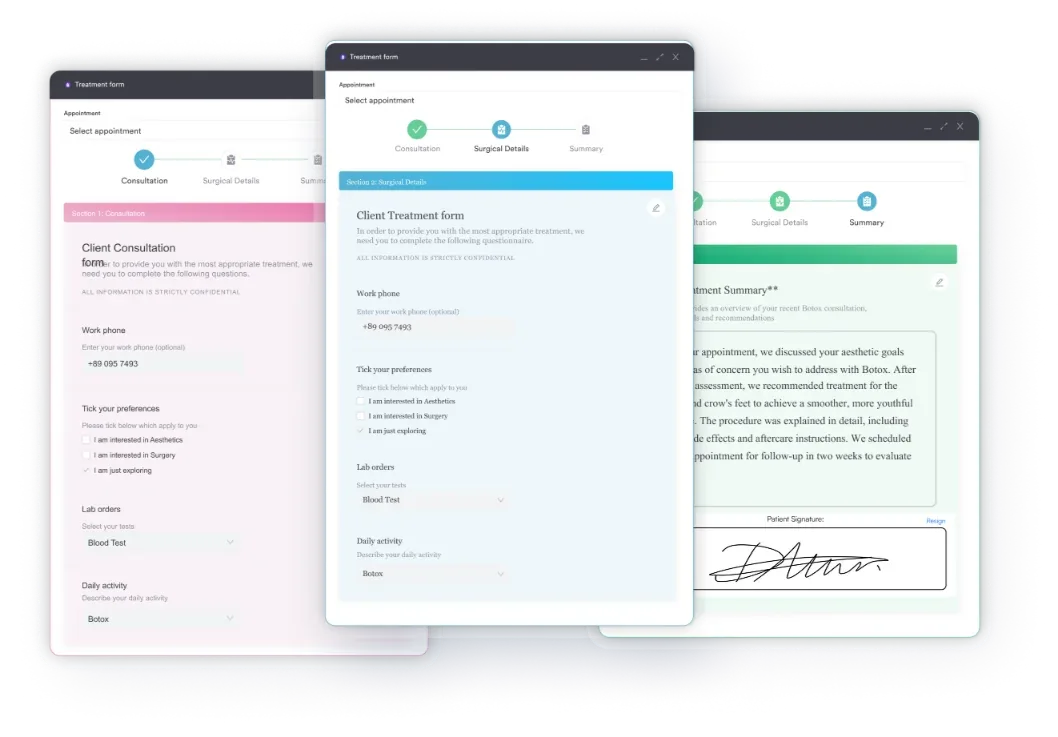
A typical bariatric intake form workflow follows five operationally distinct steps. Each step captures specific clinical data that feeds directly into the decision-making process for surgery candidacy and personalized treatment planning.
Time allocation matters: practices should allow at least 60 minutes for patients to complete the full bariatric intake form. Some practices send the form before the appointment via a patient portal, reducing in-office wait time and enabling clinical staff to review answers before the consultation begins.
Bariatric intake forms serve multiple clinical settings. Weight loss surgery programs at hospitals and surgical centers are the primary users.
But privately owned bariatric practices, integrated weight loss clinics offering both surgical and non-surgical options, medical weight management practices, and primary care practices screening patients for bariatric referral all benefit from a structured intake template.
Pre-operative coordinators, nurse practitioners, registered dietitians, and bariatric surgeons each rely on intake form data. The form is also essential for multi-location bariatric practices, where consistent, standardized documentation prevents inconsistent care when patients move between practice locations or rotate through different surgical teams.
Digital forms sit at the center of practice management software, feeding records, billing, and follow-ups from one entry.
Compliance and legal protection: A signed, dated intake form documents that informed consent was obtained and that medical necessity for surgery was established, which is critical for defending malpractice claims and satisfying insurance audit requirements. CMS, state regulators, and accrediting bodies all expect to see evidence of pre-operative assessment in the medical record.
Workflow efficiency: Standardized forms reduce time spent on unstructured interviews. Coordinators know exactly what information is needed, patients spend less time repeating their history to different staff members, and clinical handoff between departments (surgery to nutrition to psychology) is faster because the form contains the expected data fields.
Documentation clarity: A comprehensive bariatric intake form creates a single source of truth for patient baseline data. Instead of scattered handwritten notes and missing medication lists, the form provides a consolidated pre-operative snapshot that guides anesthesia planning, surgical technique selection, and post-operative complication monitoring.
Many practices continue that record after surgery with a tool like a gastric sleeve weight loss chart to track outcomes.
Continuity of care: When patients require revision surgery, transfer between practices, or follow-up years after the initial procedure, the original intake form establishes what was assessed, consented to, and planned. This is invaluable for medicolegal defense and clinical decision-making.
Paper forms create friction at every step. Patients handwrite forms in the waiting room, handwriting is often illegible, data entry staff manually type responses into the EHR (introducing transcription errors), and forms are stored in physical files that take up practice space and are difficult to search during follow-up visits.
Digital bariatric intake forms eliminate these delays. Patients complete forms on a tablet or phone before arrival, or via a web link sent by email. Responses are automatically captured into structured fields, and clinical staff can access the data instantly in the EHR. The right EMR for weight loss clinics should accept these structured responses directly, without requiring manual re-entry into the chart.
Automated workflows can also trigger follow-up tasks, such as scheduling a nutrition consultation once intake is complete. Data quality is higher too, because required fields prevent submission until the form is fully completed.
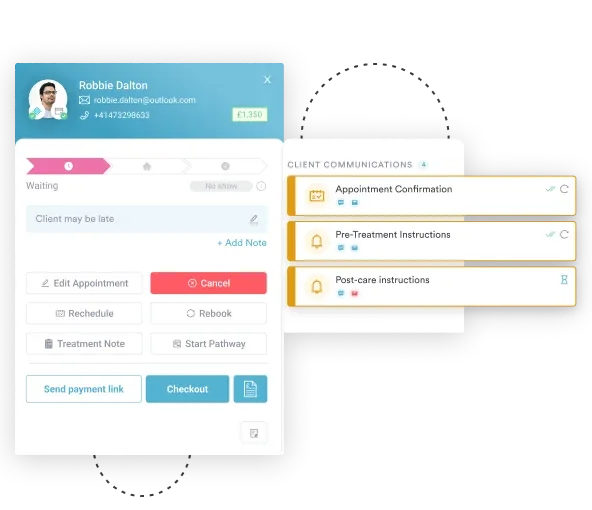
For multi-location bariatric practices, digital intake ensures every practice location uses the same form version, eliminating the risk of outdated paper templates circulating. Compliance audits are also simpler: regulators can review digitally-timestamped intake records rather than searching through paper files.
Privacy and HIPAA compliance: Paper forms carried between the waiting room and clinical staff areas, left on desks, or filed in open cabinets pose data breach risks. Digital forms transmitted via encrypted portals and stored in HIPAA-compliant practice management systems meet regulatory standards for protecting PHI.

See how Pabau’s digital forms platform automates patient intake, reduces administrative burden, and improves pre-operative data accuracy for bariatric practices.

A well-designed bariatric intake form balances comprehensiveness with practical administration time. The sections below reflect clinical consensus across bariatric surgery programs, similar to what’s used at academic medical centers like University of Rochester Medicine.
Practices using Pabau Scribe, our AI scribe, can streamline summary sections: the system auto-generates a concise summary of key findings after intake data is submitted, which the clinician reviews and edits before finalizing.
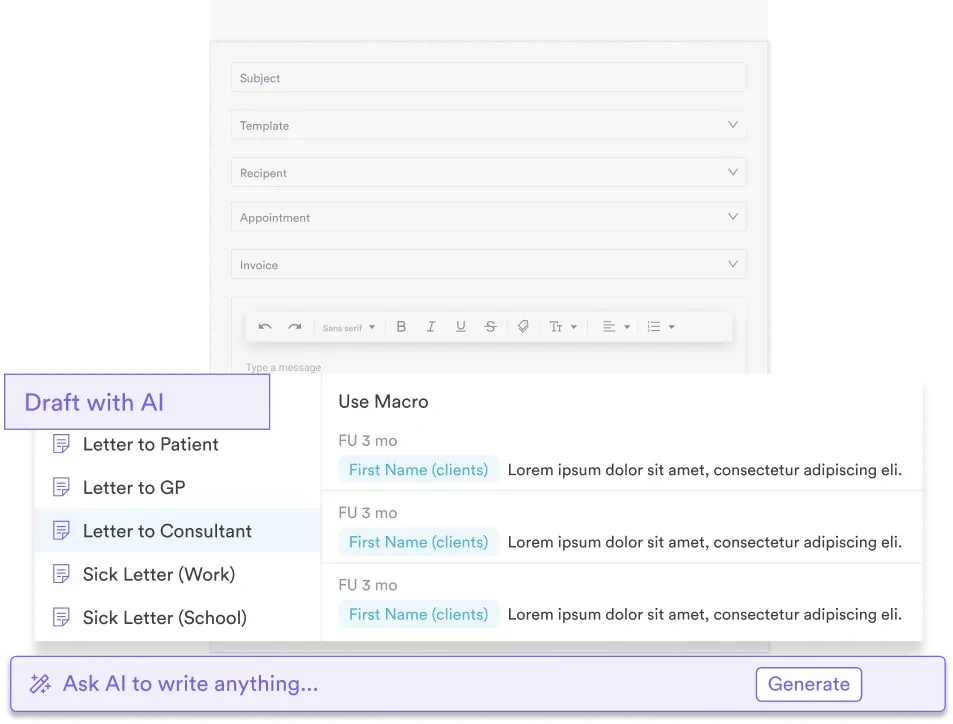
Bariatric intake forms contain sensitive PHI: weight, medical diagnoses, medication names, insurance details, and mental health disclosures. Under the HIPAA Security Rule, practices must implement administrative, physical, and technical safeguards to protect this data, which fall into three categories:
Access logs should track who views or modifies each form.
Many bariatric practices choose to shift entirely to digital workflows to avoid the risks of paper forms sitting on desks or in open file rooms. HIPAA-compliant practice management software built for practices ensures forms.
Store completed bariatric intake forms separately from the main clinical chart if your state has specific retention rules for pre-operative screening documents. Some insurance pre-authorization records must be retained longer than the patient’s general medical record. Confirm your practice’s document retention policy with your compliance officer before adopting a new intake form template.
Implementation starts with choosing between paper and digital, then assigning ownership. Designate a bariatric coordinator or intake specialist to manage form collection, verify completion before the appointment, and flag missing data for phone follow-up with patients.
For digital intake, send the form link via email or SMS at the time of appointment booking, ideally 5 to 7 days before the visit. Remind patients to allow 60 minutes to complete it.
Once submitted, the form data flows directly into the patient record and triggers automated tasks. The dietitian reviews the food diary, nursing staff check for comorbidities that need pre-operative optimization, and the surgeon reviews surgical history for technique planning.
A nursing teaching plan can guide the patient education that follows, and billing staff can flag related procedures.
Paper workflows should include a backup plan: if a patient forgets the form, have blank copies available and allow extra appointment time. Train staff to prompt completion (e.g., “Please spend 15 minutes on this before we call you back”) rather than rushing through it during the visit.
A comprehensive bariatric intake form is the foundation of safe, informed, and compliant weight loss surgery care. Whether you start with the template above, on paper or digital, or customize it to your practice’s protocols, the core sections remain essential: medical history, weight loss history, comorbidity screening, medications, dietary assessment, and informed consent.
Shifting to digital bariatric intake reduces administrative friction, improves data accuracy, and ensures HIPAA compliance. Book a demo with Pabau to see how digital forms integration can accelerate your pre-operative workflow and let your team focus on patient care rather than paperwork.

Working with a patient who eats mostly plants? flexitarian diet plan captures dietary goals with meal guidance, foods to avoid, and a blank shopping list.
Looking to automate pre-operative patient reminders? Automated email and SMS campaigns help bariatric practices send pre-surgery preparation instructions, required fasting guidelines, and post-operative follow-up scheduling automatically.
Screening a patient for celiac disease? gluten-free diet plan records dietary guidelines, foods to avoid, a sample meal plan, and progress notes.
A bariatric intake form is a comprehensive medical assessment document that evaluates patients considering weight loss surgery, capturing medical history, weight loss attempts, comorbidities, medications, dietary habits, and informed consent to determine surgical candidacy and guide treatment planning.
Allow at least 60 minutes for patients to complete a comprehensive bariatric intake form, especially if the form includes a 3-day food diary and detailed comorbidity screening sections.
Yes, digital forms collected via HIPAA-compliant platforms (encrypted transmission, secure storage, access controls) meet HIPAA requirements for protecting patient health information, often providing better security than paper forms stored in open files.
Document the BMI, comorbidities, and non-surgical alternatives discussed, such as GLP-1 medications, dietitian-supervised weight loss, or medical weight management programs, in the intake form and patient record. Refer to your practice’s candidacy protocol for next steps.
Yes, the core sections (medical history, weight loss history, comorbidities, medications, and dietary assessment) apply to any weight loss practice. Simply remove or modify the informed consent section for surgery and adapt the form to non-surgical interventions.