GLP-1 diet plan
A GLP-1 diet plan is a structured eating framework for patients taking semagluti...

2
Last Updated: Oct 13, 2026

A body composition test measures fat mass, lean mass, bone mineral density, and water, which tells you far more than BMI alone.
DEXA scans are the closest thing to a clinical gold standard, though the four-component model is technically more precise.
Healthy body fat ranges shift with sex and age, sitting at 20-32% for women aged 20-39 and 8-19% for men.
A clinical-grade BIA device costs $5,000 to $15,000 and pays for itself at roughly five tests a week.
Pabau’s measurements tracking lets wellness and aesthetic practices log results in the patient record and chart progress across visits.
A body composition test measures what your weight is made of: Fat mass, lean mass, total body water, and bone mineral density. A scale cannot tell you any of that.
Two people can weigh exactly the same and still have very different health profiles. Practitioners use the breakdown to set a baseline, judge metabolic risk, and check whether a program is working. Costs run from about $30 for a practice-grade BIA scan to $200 for DEXA.
A body composition test splits total body weight into its parts instead of reporting one number. Clinicians, personal trainers, sports medicine teams, and wellness practitioners use it to assess health risk, guide treatment, and track progress.
Reading those components separately is what makes the result useful. A patient who loses four pounds of fat and gains two pounds of muscle looks static on the scale. Their body composition has changed considerably.
Body Mass Index (BMI) divides weight by height squared. It takes seconds to calculate and costs nothing, which is why a printable BMI chart still sits at plenty of front desks. What it cannot tell you is whether that weight is fat or muscle, where the fat sits, or what your metabolic risk looks like.
The World Health Organization treats BMI as a population screening tool rather than a measure of one person’s health. A competitive athlete and a sedentary adult of the same height and weight share an identical BMI. A body composition test is what tells them apart.
No single method suits every setting. Each one trades accuracy against cost, access, and patient comfort. The five below cover almost everything in use across practices, gyms, and research labs today.
Dual-energy X-ray absorptiometry (DEXA) passes two low-dose X-ray beams through the body at different energy levels. Fat, lean mass, and bone absorb radiation differently, so the scanner can calculate each compartment precisely. The American College of Sports Medicine treats DEXA as the closest practical gold standard for clinical measurement. Only the four-component model, which also accounts for total body water, is more accurate. Lab results that land in the patient record rather than an inbox are easier to act on at the next appointment.
A scan takes 10-20 minutes. Radiation exposure runs to roughly 1-10 microsieverts, far below a standard chest X-ray. Expect $75-$200 in the US without insurance. Results break the body down by region, covering arms, legs, trunk, and android or gynoid fat, plus a visceral fat estimate.
US practices bill the bone density portion of a DEXA study under 77080. Body composition analysis on its own is normally self-pay, which is why most practices price it as a wellness service. The bone reading there covers density only. Marrow function is a separate question, and a bone marrow test is what answers it.
BIA sends a low-level electrical current through the body. Fat resists the current, while lean tissue conducts it because it holds more water and electrolytes. The device measures that resistance and estimates fat mass and lean mass. Clinical-grade units such as InBody use multiple frequencies and segmental analysis to sharpen the result.
Hydration, food, recent exercise, and time of day all move the number. Consumer bathroom scales use the same principle, but validation studies show much wider variability against DEXA. For serial comparisons to mean anything, patients have to test under the same conditions every time.
BIA is still the most accessible option for a practice. InBody units are now close to standard in metabolic health practices, sports medicine settings, and weight management programs.
Skinfold measurement uses calipers to pinch subcutaneous fat at standardized sites, typically 3, 7, or 9 of them depending on the protocol. Those numbers feed a regression equation that estimates body fat percentage. The kit is cheap and portable. Accuracy depends heavily on technician skill, and error between inexperienced testers can reach 3-4 percentage points.
Calipers still earn their place in fitness settings and athletic programs, where the same trained tester handles every assessment. In a practice with staff turnover, they are less reliable than BIA or DEXA.
Hydrostatic weighing, also called underwater weighing or hydrodensitometry, compares a person’s weight on land with their weight fully submerged. Fat is less dense than water and lean mass is denser, so body density gives you body fat percentage. Before DEXA became widely available, this was the accepted gold standard.
The method is accurate and impractical for most clinical settings. It needs a dedicated tank, the patient has to exhale completely while submerged, and it takes far longer than DEXA or BIA. Research labs and elite sports programs still use it.
The Bod Pod uses the same density principle as hydrostatic weighing, with air in place of water. The patient sits inside an egg-shaped chamber while the device measures how much air is displaced. COSMED makes the main commercial unit, and accuracy is comparable to underwater weighing. Patients who cannot tolerate submersion find it far easier.
Cost is the catch. A Bod Pod runs $35,000-$50,000, which limits it to research facilities, universities, and high-end performance centers. In routine practice, DEXA and BIA are far more common.
DEXA is the most reliable option a practice can realistically run, with hydrostatic weighing and the Bod Pod close behind on accuracy. The table compares all five methods on the factors that decide the choice.
Method choice also shapes how you talk about the result. Practitioners who are careful about interpreting biomarkers avoid promising a precision that a caliper reading cannot deliver. The same caution applies to any test with a gray zone, such as an ANA blood test with a low titer.
Schedule body composition tests at the same time of day, under the same hydration and fasting conditions, wearing similar clothing. Serial comparisons only mean something when the testing protocol stays consistent. For BIA, ask patients to avoid exercise, alcohol, and large meals for at least three hours beforehand.
The two outputs that matter most are body fat percentage and lean mass. Healthy body fat percentage varies substantially by sex and age. The American Council on Exercise (ACE) norms below are the ones practitioners quote most often.
Source: ACE body fat percentage norms. These are general guidelines rather than diagnostic thresholds. Interpretation should still account for ethnicity, fitness level, medical history, and the method that produced the number.
A DEXA report usually adds visceral fat estimates, regional lean mass, and bone mineral density. Visceral fat, the fat around the internal organs, carries more metabolic risk than subcutaneous fat at the same volume. The NIDDK, part of the NIH, ties an excess of it independently to cardiovascular and metabolic disease.
For patients in weight loss programs, a falling visceral fat number can matter more than total pounds lost. Practices that read the result alongside a fasting blood sugar chart catch risk that either test alone would miss. Cardiac symptoms need their own assessment, and that usually starts with a 12-lead ECG.
A test gives you the starting point. Four things move the numbers from there: Resistance training, adequate protein, cardiovascular exercise, and sleep.
Most patients leave a test wanting a plan rather than a percentage. Sending a lean diet plan and a workout plan with the results turns the number into something they can act on this week.
Serial results also solve a motivation problem. A patient gaining muscle while losing fat sees nothing change on the scale. Their test shows fat mass down and lean mass up, which is the evidence that keeps them going.
Repeat testing also tells you whether a program is working. Lean mass falling faster than planned, or visceral fat that will not budge, is your signal to change the protocol. That decision matters most when managing metabolic health with diet and medication together. Lean mass falling alongside abdominal pain needs a different look, and an amylase test checks pancreatic inflammation.
Body composition testing also works as a service line. For wellness practices, med spas, and longevity programs, it adds a repeatable, high-value touchpoint to the patient journey without a new treatment room. Many of these practices also offer an allergy blood test, and every result belongs in one patient record.
A clinical-grade BIA device costs $5,000 to $15,000. Practices charge $40 to $75 per session or fold testing into membership packages. At $60 a test, five tests a week covers a $15,000 device inside a year.
For med spas selling body contouring, a baseline test before treatment and a repeat afterward gives you documentable evidence of the outcome. That evidence belongs in the medical spa EMR rather than on a printout the patient takes home.
Sports medicine practices use the same data to justify programming decisions, alongside bedside exams like the Coleman block assessment for hindfoot flexibility. It is worth checking that your sports medicine software can store the fields, because a result stranded in a device report helps nobody.
Body composition data has a documentation problem. Numbers from a BIA or DEXA device need to live in the patient record. A separate spreadsheet or a paper printout that never gets filed defeats the point.
Practice management software like Pabau keeps all of it in one place. Our measurements tracking software logs body composition metrics against the patient record, charts the trend across visits, and feeds the result into personalized treatment plans.
Automated workflows then book the retest at the interval you set, so no patient drifts six months between scans. Digital intake forms capture fasting status, hydration, and last workout before the patient sits down, which is what makes two results comparable.
The practice ends up with a clean audit trail and a progress report the patient can take away.
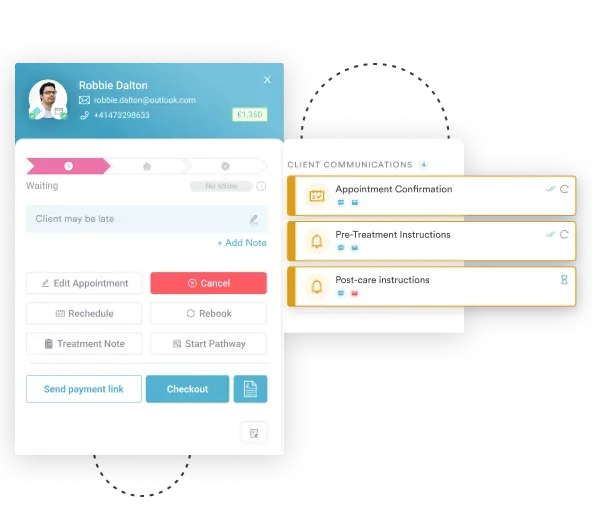

Pabau logs measurements in the patient record, charts the trend, and books the retest automatically. See how it fits your practice.

Body weight on its own answers the wrong question. Once you know how much of that weight is fat and how much is lean, the treatment conversation changes shape.
The trade-off worth remembering is consistency over equipment. A cheap BIA scan repeated under identical conditions is more useful than one expensive DEXA scan a patient never repeats.
So pick the method your practice can run the same way every time, then document every result in the same place. Book a demo to see how Pabau tracks body composition results across a patient’s visits.

Investigating unexplained gastrointestinal symptoms? Ova and parasite test explains what the stool exam finds and where it falls short.
Need a refresher on another common test? Arterial blood gas test explains how the values are read and what they rule out.
Need to document a broader drug panel? 12-panel drug test report is a free template for cutoff levels, specimen validity, and chain of custody.
Interpreting a liver or kidney panel? Albumin blood test template covers normal ranges and what abnormal results mean.
Tracking antibody test results over time? ANA levels chart template helps practices record titer levels and immunofluorescence patterns.
A body composition test breaks total body weight into its parts: Fat mass, lean mass, bone mineral density, and total body water. Lean mass covers muscle, bone, and organs. BMI uses only height and weight, so it cannot tell you any of that.
DEXA (dual-energy X-ray absorptiometry) is the most accurate body composition test available in clinical settings. The four-component model, which also directly measures total body water, is technically more precise but is used primarily in research. For practical clinical use, DEXA provides the best combination of accuracy, regional detail, and accessibility.
BMI calculates weight relative to height and cannot separate fat from muscle. A body composition test measures how much of your weight is fat and how much is lean. Two people with the same BMI can return very different results, which is why the test guides treatment better.
Home BIA scales give a rough body fat estimate, but they are much less accurate than clinical-grade devices. Calipers used at consistent sites by the same person each time repeat better. Either way, home results vary more than a clinical DEXA or InBody scan.
Most practitioners recommend retesting every 8-12 weeks for patients actively working on body recomposition, and every 6-12 months for general health monitoring. Testing more frequently than every 4 weeks rarely shows meaningful change and risks misleading results due to day-to-day hydration variation.
According to ACE norms, a healthy body fat percentage for women aged 20-39 is 20-32%, and for men in the same age group, 8-19%. Ranges shift slightly upward with age. These are general guidelines; clinical interpretation should account for individual factors including fitness level, ethnicity, and the specific testing method used.