An incident report form is a standardized documentation tool for recording unexpected events, patient safety concerns, staff injuries, and near misses in healthcare settings.
Required fields include date and time, location, a description of what happened, persons involved, witness statements, immediate actions taken, and authorized signatures.
Incident reporting is mandated by regulators including the CQC (UK), OSHA (US), and DHA (UAE), and timely documentation ensures compliance and supports root cause analysis.
Pabau’s digital forms replace paper incident reports with automated workflows, standardized fields, and audit trails that support patient safety and regulatory investigations.
Download your free incident report form
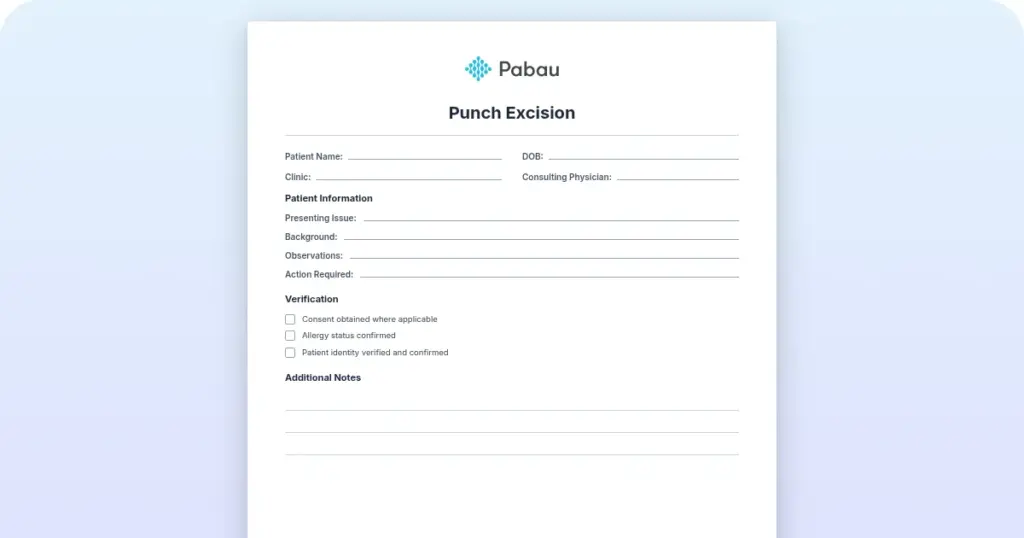
A standardized incident report form for healthcare practices to document unexpected events, accidents, safety concerns, patient incidents, staff injuries, medication errors, and near misses. It includes required fields for date, time, location, description, persons involved, witnesses, actions taken, and compliance signatures.
An unexpected event or safety concern can occur in any clinical setting.
When it does, rapid and accurate documentation is the foundation of both patient protection and regulatory compliance. A well-completed incident report form captures the facts objectively and protects the practice from liability. It also provides the data needed for root cause analysis and continuous improvement.
This guide explains what an incident report form is and what it must contain. It also covers how to complete one compliantly.
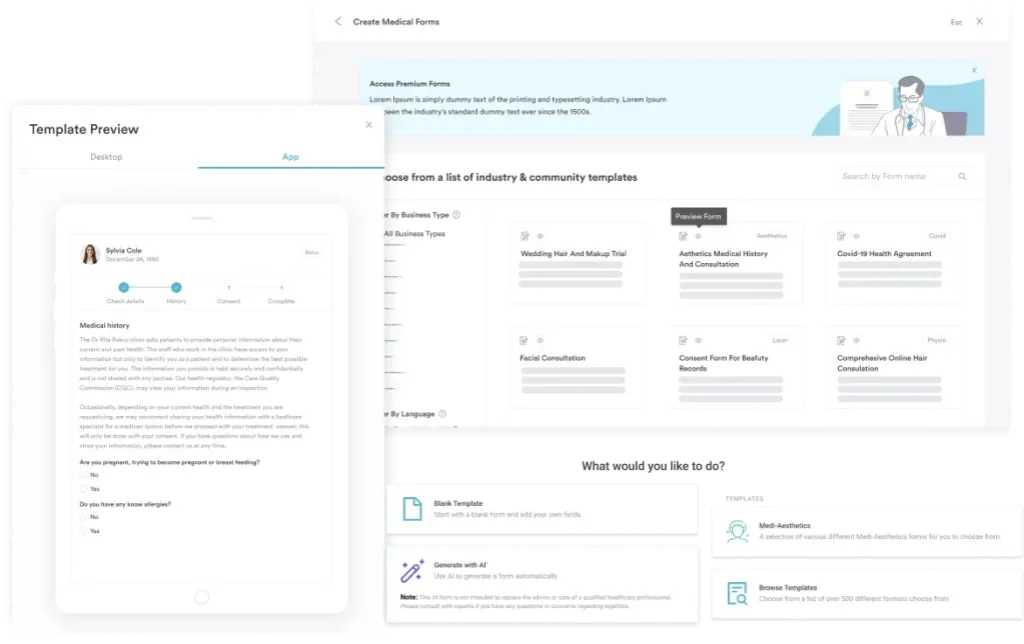
Pabau’s digital forms feature offers a searchable template library. Practices can launch a standardized incident report form in minutes instead of building one from scratch.
Found our content helpful?
What is an incident report form?
An incident report form is a structured document used to record the details of any unexpected event that disrupts normal operations in a healthcare setting.
These events range from patient safety incidents (falls, medication errors, adverse reactions, procedure complications) to staff workplace injuries (needlestick exposures, chemical spills, slip hazards). They also include near misses: events that could have resulted in harm but were caught before an outcome occurred.
Legal record: Incident reports create a dated, signed record that protects the practice and demonstrates due diligence during regulatory investigations or legal proceedings.
Clinical learning: Systematic incident documentation reveals patterns in workflow failures, training shortfalls, and environmental hazards that inform safety improvements.
Regulatory compliance: The CQC (UK), OSHA (US), and healthcare authorities in other jurisdictions mandate incident reporting for certain event types.
Patient safety culture: A non-punitive reporting system encourages staff to report incidents early, preventing harm escalation and supporting a culture of openness.
Types of incidents that require reporting in a practice
Staff workplace injuries: Needlestick injuries, chemical exposures, slips, trips or falls, back injuries, violence or assault.
Near misses: Events that could have harmed a patient or staff member but were prevented. One example is a medication picked up incorrectly but caught before administration.
Medication errors: Wrong drug, wrong dose, wrong route, wrong time, wrong patient, or omitted doses that reach the patient (not just near misses).
Equipment or facility failures: Malfunctioning sterilizer, failed climate control, electrical hazards, water contamination, fire safety system breakdown.
Security or data incidents: Unauthorized access to records, data breach, lost patient documents, and confidentiality breaches involving personal health information.
Adverse events: Any unintended injury or complication arising from patient care, even if staff followed correct procedures.
What to include in a healthcare incident report form
A complete incident report form captures essential facts that investigators and regulators need to understand what happened and why. Missing or vague information weakens the report’s value and can complicate compliance responses.
Field
Purpose
Example
Date and time
When the incident occurred (not when reported)
15 July 2026, 14:30
Location
Specific practice room or area
Treatment room 3, ground floor
Description of incident
Objective, factual narrative of what happened (not interpretations or blame)
Patient reported dizziness 10 minutes after filler injection; vital signs checked, found low BP; patient reclined, offered water
Persons involved
Patient name, staff member(s) present, role(s)
Patient: Jane Smith, DOB 12/5/1985; Staff: Sarah Jones (nurse injector), Dr Ahmed (oversight)
Witnesses
Names and contact details of non-involved staff or visitors who observed the event
Emma Lee (receptionist), ext. 102
Immediate action taken
Emergency response, first aid, escalation, or treatment provided
Patient monitored for 30 minutes; blood pressure returned to baseline; discharged home with safety instructions
Outcome or injury
Effect on patient or staff (none, minor, serious)
No lasting injury; patient discharged safely
Reporter name and signature
Person completing the form and their role
Sarah Jones, Nurse Injector, signed 15 July 2026
Manager/supervisor review
Signed confirmation that supervisor or senior clinician has reviewed the report
Dr Ahmed, Clinical Lead, signed 16 July 2026
Key principle: Write objectively and factually. An incident report is not a blame assignment; it is a safety and compliance tool. Describe what happened, not who caused it or what you think should happen next.
Knowing how practice management software works helps you decide which forms to digitize first.
How to write an incident report in a medical setting
Completing an incident report form correctly takes only a few minutes but has long-term consequences for patient safety and legal protection. Follow these steps:
Report immediately. Complete the form as soon as practicable after the incident, ideally within 24 hours while details are fresh. Early reporting also allows immediate containment measures and avoids the unconscious bias that sets in once staff have discussed the event.
Use objective language. Describe facts: what you observed, what the patient said, what vital signs or measurements showed. Avoid words like “negligent,” “incompetent,” “should have,” or emotional language (“it was terrifying”). These trigger legal concerns and distract from learning.
Include context without blame. If staffing was short that day, or equipment was faulty, note it. Context helps investigators understand system failures, not individual failings. Good patient care management systems identify workflow bottlenecks instead of scapegoats.
Name individuals accurately. Spell names correctly and include roles (RN, NP, medical director, etc.). This ensures accountability and helps with follow-up communication.
Document immediate response. What did staff do right after the incident? Was first aid given? Was the patient isolated or transferred? Was a family member notified?
Be specific about dates and times. “This morning” is not sufficient; use the actual date, time of incident, and time the report was completed. Regulators cross-check this against shift logs and clinical documentation timestamps.
Sign and date the form. A handwritten or electronic signature confirms the reporter’s accountability and prevents anonymous rumour. Supervisors or managers must also sign, confirming they have reviewed the report.
Submit to the designated folder or system. Do not leave incident reports in visible locations or email them to multiple staff. Most practices and health systems have a confidential incident reporting channel, increasingly a digital incident tracking system within practice management software.
Patient safety incidents in medical practices
Patient-facing incidents are the most common type of incident report in clinical settings. These include events where a patient experiences an unexpected outcome, adverse reaction, or safety concern during or after treatment.
Common patient incident categories:
Falls during treatment (fainting, dizziness, loss of balance)
Allergic reactions (to medications, local anesthetics, fillers, or topical products)
Medication or injection errors (wrong drug, wrong dose, wrong site)
Consent issues (patient claims they did not agree to or understand the procedure)
Patient aggression or threatening behavior toward staff
A patient incident form should include clinical data fields specific to the treatment delivered. These cover the product used, batch number, injection site, dose, and time. It should also capture the patient’s pre-treatment and post-incident vital signs or observations. This level of detail enables rapid investigation and supports communication with product manufacturers if a batch defect is suspected.
Documenting staff and workplace incidents
Workplace incidents affecting staff must also be formally reported and recorded. In the UK, serious workplace injuries may trigger RIDDOR reporting requirements. In the US, OSHA Form 301 may be required depending on injury severity.
Needlestick or sharps injuries: Type of injury (needlestick, cut, splash), source (patient, sharps bin, equipment), and whether prophylaxis was offered. Also note the bloodborne pathogen status of the source patient, if known.
Chemical or biological exposure: Substance involved, route of exposure (skin, respiratory, oral), actions taken (decontamination, first aid), and any health monitoring arranged.
Slip, trip, or fall: Location, cause (wet floor, clutter, poor lighting), injury sustained, and corrective actions to prevent recurrence.
Back or musculoskeletal injury: Manual handling task involved, body part affected, whether the staff member could continue work, and any first aid or physiotherapy arranged.
Assault or aggression: Nature of the incident (verbal, physical, threat), persons involved, whether police or security were called, and support offered to the staff member.
Completing that exposure entry is quicker when the practice already keeps a hazardous medication list. That register names the drugs classed as hazardous and the four exposure routes staff face, needlestick included.
Incident reporting best practices for healthcare providers
Filling out a form is only the first step. Creating a culture where incident reporting is viewed as a safety mechanism, not a punishment mechanism, is what drives continuous improvement. Completed reports also feed the practice’s risk management cycle, where each logged event is scored by likelihood and severity.
Timeliness: Report incidents within 24 hours. Delayed reporting impairs memory, allows protective narratives to form, and may breach regulatory timelines for notifiable events.
Confidentiality: Incident reports are sensitive documents. Restrict access to managers, clinicians, and compliance officers. Do not discuss incidents in staff meetings or circulate forms by email.
Non-punitive culture: Staff must trust that reporting an honest mistake will not result in immediate termination. Punishment drives underreporting, which hides patterns and prevents prevention. Reserve discipline for negligence or repeated lapses, not isolated incidents.
Escalation protocol: Define which incident types go to the responsible regulator (CQC, OSHA, DHA) and on what timeline. Serious incidents may require notification within 24-48 hours. Minor incidents may be recorded locally only.
Root cause analysis: Once an incident is reported, assign someone to investigate. Was it a one-off human error, a systemic workflow failure, inadequate training, or a faulty process? Use the answer to drive improvement, not blame.
Feedback loop: Share findings and corrective actions with the team. When staff see that an incident led to a better process, they trust the system and are more likely to report the next incident.
Regulatory and compliance context for incident reporting
Incident reporting requirements vary by country, regulator, and healthcare setting. Familiarizing yourself with your jurisdiction’s obligations is essential.
UK (CQC-registered providers): The duty of candour applies under the Health and Social Care Act 2008 (Regulated Activities) Regulations 2014, Regulation 20. It requires registered providers to tell a patient when a safety incident causes or risks notifiable harm. Providers must give a truthful account within a reasonable timeframe and explain what action they are taking. CQC also expects systematic incident reporting as evidence of a strong safety culture during inspections.
UK (RIDDOR): Deaths and specified injuries must be reported to the Health and Safety Executive (HSE) without delay under RIDDOR 2013. A written report is due within 10 days. Injuries causing more than 7 days of incapacitation must be reported within 15 days.
US (OSHA): Employers with 11+ employees must record occupational injuries and illnesses on OSHA Form 300. Offices of physicians, dentists, and other health practitioners are often partially exempt from this routine recordkeeping. Every employer must still report a fatality within 8 hours, and an in-patient hospitalization, amputation, or loss of an eye within 24 hours. This reporting duty applies regardless of exemption status.
US (Joint Commission): Accredited hospitals must investigate any sentinel event internally (an unexpected death or serious injury unrelated to the patient’s underlying condition). Reporting it to the Joint Commission is voluntary, not mandatory. If a hospital chooses to self-report, its root cause analysis and corrective action plan is due within 45 business days.
UAE (DHA/DOH): Dubai Health Authority and Department of Health Abu Dhabi require healthcare facilities to report adverse events and near misses through defined channels. Serious incidents must be escalated to quality and patient safety teams.
Caveat: Specific timelines, definitions of “notifiable harm,” and exemptions vary. Consult your local regulator, legal advisor, or professional body for jurisdiction-specific guidance before finalizing your incident reporting policy.
Related templates
Medical Certificate Template
Ineffective airway clearance nursing care plan + Free PDF
Infertility Consultation Notes Template
Informed consent for tirzepatide (Mounjaro®) treatment Template
How Pabau helps practices manage incident reporting?
Paper-based incident forms scattered across filing cabinets make it difficult to track reports, identify patterns, and respond to regulator requests. Digital incident management within practice management software like Pabau replaces manual processes with consistency and accountability.
Standardized forms: Every staff member completes the same incident template, ensuring no critical fields are missed and all reports contain comparable data.
Automated workflows: Digital forms route incident reports directly to the manager or safety officer, with automatic timestamping and signature capture. Paper is never lost or misfiled.
Audit trail: Every change to an incident report, including who created it, who reviewed it, and when comments were added, is logged. Regulators see evidence of prompt investigation and corrective action.
Searchable archive: Quickly retrieve all reports involving a specific staff member, patient, treatment type, or location. Patterns become visible, such as five needlestick injuries from the same sharps bin design pointing to a bin replacement.
Regulatory reporting: When an incident meets the threshold for external notification (CQC, OSHA, Joint Commission), the system flags it automatically. It then guides you through the escalation process with required data fields and submission timelines.
By moving incident management from paper to digital, practices demonstrate a modern, proactive approach to patient safety, exactly what regulators want to see.
See how Pabau manages incident reporting
Eliminate paper forms and manual filing. Streamline incident documentation with digital workflows, standardized fields, and audit trails that satisfy CQC, OSHA, and other regulators.
An incident report form only earns its place in a practice if staff complete it honestly, every time. Download the template above, customize it with your practice’s logo and contact details, and hand it to every clinician and staff member during onboarding.
Reinforce the non-punitive, safety-first philosophy in team meetings, so staff report a near miss as readily as an injury. Book a demo to see how Pabau turns that paper process into a searchable, audit-ready workflow trusted by regulators.
Continue your research
Worried about your EHR’s defenses?EHR security best practices covers the technical, administrative, and physical controls that protect records from unauthorized access.
Posting about your practice online?HIPAA rules for social media flags where social media posts can inadvertently put patient privacy at risk.
Unsure how long to keep records?medical record retention rules explains why HIPAA’s 6-year rule doesn’t cover charts, and how state retention periods differ.
Opening a new regulated service?step-by-step CQC registration guide walks through the steps for getting your service registered with the Care Quality Commission.
Confident your charts would pass audit?medical chart audit guide explains how a systematic records review catches coding errors and prepares practices for payer scrutiny.
Frequently asked questions
What should be included in an incident report form?
Date and time of the incident, location, objective description of what happened, persons involved (names and roles), and witness details. Also include immediate actions taken, outcome or injury level, and signatures from the reporter and supervisor. See the table above for full field-by-field breakdown.
How do you write an incident report in healthcare?
Write objectively and factually within 24 hours of the incident. Describe what happened (observations, vital signs, patient statements) without blame or interpretation. Include context (staffing, equipment issues) if relevant. Sign and date the form and ensure a manager reviews it. Avoid emotional or accusatory language.
What is the difference between an incident report and an accident report?
An incident is any unexpected event; an accident is a specific type of incident involving injury from a collision, fall, or environmental hazard. Some practices use the terms interchangeably; others use “accident report” for workplace injuries and “incident report” for patient safety events. Use whichever term your regulator and practice policy define.
What are the types of incidents that require reporting in a medical setting?
Patient safety incidents (falls, medication errors, allergic reactions, procedure complications) and staff workplace injuries (needlestick, chemical exposure, slip/fall) both qualify. So do near misses, medication errors, equipment failures, security breaches, and adverse events. Check your regulator’s definition of notifiable incidents in your jurisdiction.
How long should incident reports be kept on file?
Retention periods vary by jurisdiction and whether the incident involved a minor. In the UK, general incident records are often kept 7-10 years; in the US, OSHA requires 5 years. If the incident involved a child, records may be kept until age 18 or 21. Consult your local regulator or legal advisor for specific timelines.
Is an incident report the same as a near miss report?
No. An incident causes (or risks) harm; a near miss is an event that could have caused harm but did not. Both should be documented using similar forms, but near miss reports help identify system vulnerabilities before anyone is injured. A culture that captures near misses is more proactive than one that only reports actual incidents.
What happens after an incident report is filed?
A designated manager or safety officer reviews the report, investigates the underlying cause, documents findings, and implements corrective actions (retraining, process change, equipment repair). Serious incidents are escalated to the responsible regulator (CQC, OSHA, DHA) within defined timelines. The reporter and relevant staff should be informed of actions taken.