Professional development record
A professional development record is a structured log of a healthcare practition...

8
Last Updated: Oct 8, 2026

Client rights define patient entitlements to confidentiality, informed consent, respectful treatment, and the ability to refuse or withdraw from services.
Every client rights policy must include informed consent documentation, grievance procedures, privacy protections, and clear communication about client responsibilities.
HIPAA, state regulations, and accreditation standards (Joint Commission, CARF) require practices to provide written client rights at the start of care.
Pabau’s digital forms and client portal features help practices document client rights acknowledgment, store consent securely, and maintain audit trails for compliance.
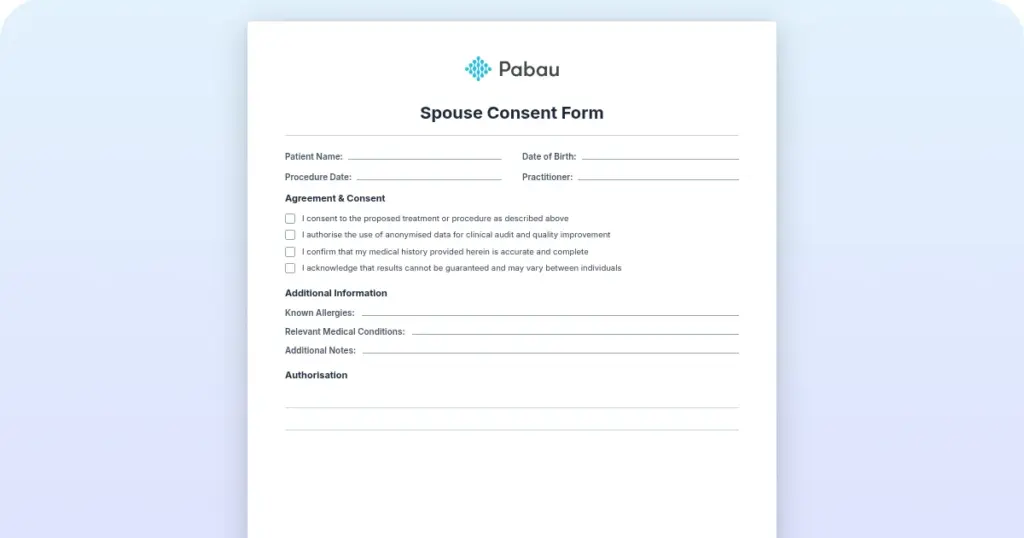
A ready-to-use template covering patient confidentiality, informed consent, right to refuse treatment, grievance procedures, and client responsibilities. Suitable for private practices, mental health practices, medical spas, dermatology, and allied health providers.
Download templateClient rights are the fundamental protections and entitlements that patients and clients must understand before receiving healthcare, mental health, therapy, or wellness services. A written client rights policy is not optional — it is a legal requirement under HIPAA, state regulations, and accreditation standards.
This guide explains what belongs in a comprehensive client rights document and how to implement one in your practice. Whether you operate a medical spa.
A client rights policy is a written document that outlines the legal protections, entitlements, and responsibilities of patients and clients receiving services. It serves three purposes:
Under CMS Conditions of Participation and state licensing regulations, practices must provide this document to every client in writing at the start of services. The document is often called a “bill of rights” or “patient rights notice.”
Building a client rights policy is a straightforward process. Follow these five operational steps to draft, review, and implement a compliant document:
Using a downloadable template accelerates this process by providing the foundational language that meets regulatory standards. You customize it for your practice’s specifics rather than starting from scratch.
A compliant client rights document must include these core sections:
Clear paperwork supports a well-run team; staff management software handles rotas, permissions, and performance in one place.
All clients receiving healthcare, mental health, therapy, or wellness services must have these fundamental rights, regardless of practice type or service:
Client rights are balanced by client responsibilities. A comprehensive policy explains what is expected of clients to maintain a professional therapeutic and clinical relationship:
Clarifying responsibilities helps establish mutual accountability and reduces misunderstandings about what the clinical relationship requires.
Every client rights policy must include a clear grievance process so clients know how to raise concerns without fear of retaliation. A formal grievance procedure strengthens trust and gives you the opportunity to resolve problems before they escalate into regulatory complaints or lawsuits.
Your template should include:
Having a documented grievance procedure demonstrates regulatory compliance and signals to clients that you take concerns seriously.
Your client rights policy must spell out what confidentiality means for clients: all information they share stays private except in mandatory reporting situations (abuse/neglect, imminent danger, or court order).
Informed consent is the process of ensuring clients understand what treatment involves before agreeing to it. Your policy should describe how you obtain informed consent (conversation, written form, or both), what information you provide (benefits, risks, alternatives), and how you document that consent was given. This is especially critical for:
Use client portals to share treatment plans and consent documents digitally, ensuring clients can review information before their appointment and ask questions.
Obtain informed consent BEFORE treatment begins, not after. Document the consent conversation or have clients sign a consent form. This protects both the client’s autonomy and your practice’s liability if a client later disputes whether they understood the risks.
Many practices still rely on paper consent forms that get misfiled, left blank, or stuffed in a drawer between visits. Moving that acknowledgment step online keeps a complete, timestamped record without adding front-desk work.

Use Pabau’s digital forms to collect client acknowledgment of rights, store consents securely, and maintain audit trails for regulatory inspections.

Implementing a client rights policy is only half the battle. You also need documentation practices that hold up to scrutiny.
Practice management software like Pabau lets you build a paperless consent workflow: clients sign the client rights acknowledgment form on a tablet in the waiting room or receive it via email before their first appointment. The signed form lands in their secure record with an automatic timestamp and audit trail.
This approach ensures every client has acknowledged their rights, eliminates lost or illegible paper forms, and gives you searchable proof of compliance for state licensing boards or CMS audits.
A written client rights policy is both a legal requirement and a trust-builder that strengthens client relationships and day-to-day operations. The template above covers all the core sections regulatory bodies expect: confidentiality, informed consent, right to refuse treatment, grievance procedures, and client responsibilities.
Implementing this policy takes effort: draft the document, have it reviewed for legal compliance, collect written acknowledgment from every client, and update it annually. That investment pays for itself by reducing liability, demonstrating professionalism, and helping clients understand their protections before they walk through your door.
Book a demo with Pabau to see how digital forms and secure client records can streamline your acknowledgment process and keep your compliance documentation organized.

Documenting how patients were told about their data rights? notice of privacy practices template A four-page notice covering required disclosures, patient rights, and a signed acknowledgment section.
Need a HIPAA compliance checklist? HIPAA compliance basics covers the documentation and safeguards required to protect client confidentiality.
Keeping your data practices aligned with UK rules? UK GDPR compliance checklist Walks through the forms and policies practices tend to leave unfinished, from privacy notices to consent.
A client bill of rights is a written document that outlines the legal protections and entitlements of patients or clients receiving services from a healthcare, mental health, therapy, or wellness practice. It typically covers confidentiality, informed consent, the right to refuse treatment, grievance procedures, and client responsibilities. The terms “bill of rights,” “patient rights,” and “client rights” are often used interchangeably.
Any practice that provides healthcare, mental health, therapy, or wellness services must provide a written client rights policy. This is required under HIPAA, state licensing regulations, and accreditation standards like Joint Commission or CARF. Even small practices and solo practitioners must provide this document.
Clients must receive the client rights document before or at the start of their first service. Many practices provide it during check-in, in the intake paperwork, or via email before the first appointment. Clients should sign or acknowledge the document in writing, and the practice should retain the signed copy in the client’s file.
Client rights are protections or entitlements (e.g., confidentiality, informed consent, the right to refuse treatment). Client responsibilities are obligations or expectations (e.g., providing honest health information, keeping appointments, paying fees). A comprehensive policy includes both so clients understand the mutual obligations in the therapeutic or clinical relationship.
Clinicians must break confidentiality in specific legal situations: imminent danger to self or others, suspected abuse or neglect of a child or vulnerable adult, court order or subpoena, and public health emergencies. Your client rights policy should list these exceptions clearly so clients understand the limits of confidentiality from day one.
Yes. Every client has the right to refuse recommended treatment, request a different provider, or withdraw from services at any time. The only exceptions are involuntary commitment (mental health crises) or court-ordered treatment. Your policy must state that clients can exercise this right without retaliation or loss of care.