HIPAA compliant texting: What you can send patients & how to communicate securely
HIPAA compliant texting is possible when a text holds no protected health inform...

Last Updated: Oct 16, 2026

No single federal law sets how long to keep medical records: state law governs clinical records, typically 5-10 years from last service date.
HIPAA’s 6-year rule covers administrative policies and documentation only, not the clinical records themselves.
Minor patient records require special treatment: retain until the patient reaches the age of majority plus the applicable state statute of limitations.
Pabau’s compliance management and client record features help practices automate retention tracking, access controls, and audit logs.
Practices lose malpractice cases not because they provided bad care, but because they cannot produce the records to prove they provided good care. The American Medical Association consistently identifies record retention gaps as one of the top administrative risks for physicians in private practice.
Yet most practices operate without a written retention policy, relying on a vague sense that “seven years is probably fine.” However, that assumption does not always hold up. Knowing how long to keep medical records matters just as much as keeping them accurate in the first place. Keeping client records up to date is only half the battle. You also need to know exactly when you are legally permitted to destroy them.
This guide covers how long to keep medical records under federal law and state-specific rules. In addition, it covers special cases for minors and deceased patients, plus the practical steps for secure disposal.
There is no single federal law that tells every practice how long to keep medical records. The answer depends on three overlapping layers of obligation:
Practices outside the US work to a different regime. In Ontario, retention and access sit under PHIPA rather than state law.
A practical working rule covers most situations. Retain every record for the longer of your state’s minimum retention period, or the state’s malpractice statute of limitations plus two years. As a result, that formula keeps practices covered against the most common legal exposure scenarios.
This is the most common misconception in healthcare administration. In fact, HIPAA does not require clinical records to be kept for any specific period. What HHS HIPAA guidance requires instead is that covered entities retain HIPAA-related policies, procedures, and documentation for 6 years. That period runs from the date of creation or the date the document was last in effect, whichever is later.
That 6-year rule applies to things like your Notice of Privacy Practices, workforce training records, and risk assessment documentation. However, it does not apply to patient charts, clinical notes, or treatment records. In practice, those fall under state law instead.
Understanding this distinction matters for HIPAA compliance for medical offices, because conflating the two creates real risk. A practice that destroys clinical records after 6 years because “HIPAA said so” may be making a costly mistake. State statute often requires those same records to be kept for 7 or 10 years. Check the HIPAA compliance checklist for a fuller picture of what HIPAA administrative documentation covers.
Operational records sit outside both categories. The CDC’s Vaccines for Children program expects a fridge temperature log to be kept for at least three years. File those sheets with your compliance paperwork rather than the patient chart.
Providers participating in federal programs face an additional retention floor on top of state law. For instance, the CMS Medicare Conditions of Participation require hospitals to retain medical records for at least 5 years from the date of discharge. For a minor patient, that period extends to 3 years after the patient turns 18, whichever is longer. Similarly, physician practices billing Medicare are subject to comparable retention requirements tied to billing and reimbursement documentation.
Medicaid requirements vary by state. Because Medicaid is jointly administered, each state sets its own retention period for Medicaid-funded services. Some states align Medicaid retention with their general clinical retention statute; others impose a separate, longer period. Always verify current requirements with your state Medicaid agency.
State law is the primary governing source for clinical record retention in private practice. The table below covers major US states. These figures reflect commonly cited state statutes and medical board guidance, but state laws change. Verify current requirements through your state’s medical board or a healthcare attorney before destroying any records.
Medical records retention for minor patients follows a different formula than adult records. The standard approach is endorsed by the American Academy of Pediatrics. It calls for retaining records until the patient reaches the age of majority, plus the applicable statute of limitations period in your state.
In practice, consider a child treated at age 5 in a state with an 18-year age of majority and a 2-year malpractice SOL. That child’s records would need to be retained until age 20. This is because the clock does not start running on the SOL until the minor reaches adulthood in most states.
Most states require that the standard retention period runs from the date of last service or the date of death, whichever is later. Estate claims and wrongful death suits can be filed after a patient dies. As a result, the records remain legally relevant.
Signed advance directives stay with the chart, so a Texas medical power of attorney follows the same retention timeline. Keep those forms as long as the clinical record they support.
The statute of limitations for malpractice claims is the other critical variable. State SOL periods for medical malpractice generally range from 2 to 3 years. Some states, though, allow up to 6 years in cases of fraud or concealment. For data protection best practices in practice management, retain records beyond the SOL by at least two years. That buffer provides reasonable protection against late-filed claims.
The practical formula: keep all records for the longer of your state’s minimum retention period, or the state’s malpractice SOL plus 2 years. In short, this single rule resolves most retention decisions without needing to track individual record ages on a case-by-case basis.
Review your state’s malpractice statute of limitations annually. For example, several states have changed SOL periods in recent years, including caps for minors and discovery-rule extensions. Flag any change in your retention policy and adjust your minimum retention period accordingly.
No. Retention obligations apply equally to EHR data and paper charts. In other words, the format of the record does not change the legal requirement to keep it.
Electronic records do introduce additional compliance considerations beyond simple retention. For example, HIPAA’s Security Rule requires that patient data security tools protect electronic protected health information (ePHI) throughout its entire lifecycle. That protection must continue during the retention period too. That means:
For practices moving to digital, resources on running a paperless, HIPAA-compliant practice cover the access control and encryption requirements in detail.
Manual retention tracking creates compliance risk. For example, a practice with 2,000 active patients and 10 years of history cannot reliably track individual record ages. A spreadsheet or a wall calendar simply is not built for that. This is where practice management software changes the risk profile.
Pabau’s client record management stores all patient notes, treatment records, consent forms, and communications in a single secure, cloud-based environment. In addition, role-based access controls ensure that historical records are visible only to authorized staff, satisfying HIPAA’s minimum-necessary access standard throughout the retention period. In turn, audit logs track every access event automatically.
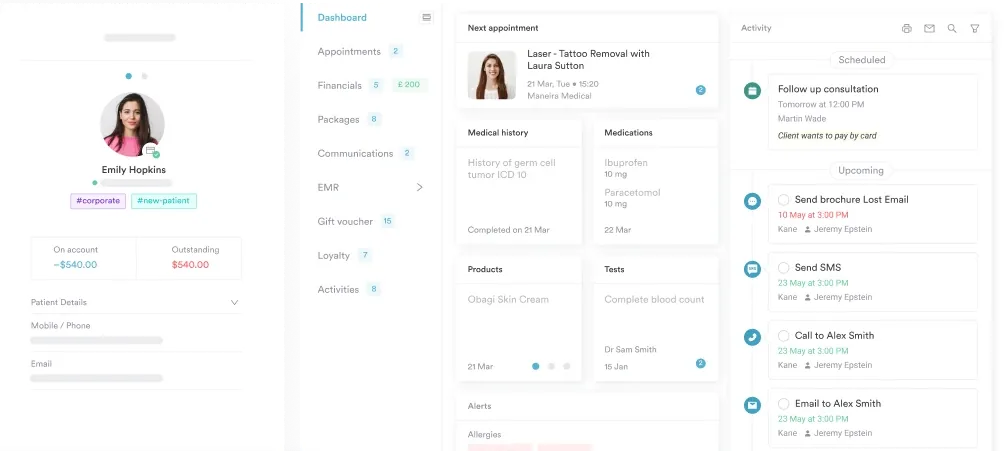
The platform’s compliance management features help practice managers document their retention policies and set review reminders. In addition, the system maintains the administrative paper trail that HIPAA requires for its own 6-year documentation rule. As a result, for practices across multiple locations, centralized record storage means retention compliance does not depend on individual site managers remembering the rules.
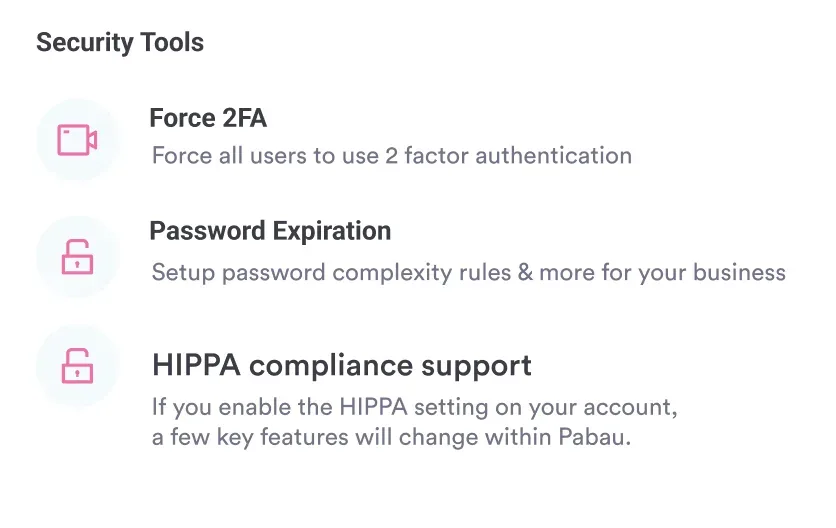
Learn more about Pabau’s HIPAA compliance posture and how the platform supports secure record management throughout the full retention lifecycle.

Pabau stores patient records securely, maintains access-controlled audit logs, and helps your team stay compliant with HIPAA administrative documentation requirements without manual calendar reminders.

Practice closure does not end your retention obligations. Records must be kept for the full retention period from the date of last service, regardless of whether the practice is still operating.
Most state medical boards require physicians closing a practice to notify patients in advance, typically within 30 to 90 days. In addition, physicians must give patients a reasonable opportunity to transfer or obtain copies of their records. In addition, the notification must include information about where records will be stored and how patients can request them. Closure announcements can spark frustrated calls, so brush up on how to deal with difficult patients before notices go out.
Once the retention period has passed, you are not just permitted to destroy records. In some cases, holding records longer than necessary actually increases privacy exposure. Therefore, destruction must be done correctly to satisfy HIPAA Security Rule requirements.
For practices using a cloud-based EHR, check the vendor’s data deletion policy before relying on it for HIPAA-compliant destruction. In fact, the vendor should be able to certify that data is deleted from all servers, backups, and disaster-recovery systems.
Put that commitment in the business associate agreement, which must require the vendor to return or destroy PHI when the contract ends.
Use this checklist as a starting point for your practice’s written retention policy. Verify every period against your current state statute and federal program requirements before finalizing.
Record retention failures are preventable. Most practices are not destroyed by bad clinical care. Instead, they are exposed by incomplete documentation, records destroyed too early, or minor patient records wiped before the SOL clock even started. Overall, the rules are manageable when you understand the layered structure: state law first, federal program floors second, HIPAA administrative requirements third.
Pabau’s client record and compliance management features remove the manual burden. Every patient record stored securely, every access logged, and retention documentation maintained automatically. Book a demo to see how it works in practice.

Need software to manage your full compliance program? HIPAA compliance software compares platforms for secure, HIPAA-compliant payment processing and claims handling.
Wondering who on your team needs HIPAA training? HIPAA training for employees covers what the law demands, how often to retrain staff, and a compliance checklist.
Need a HIPAA release form for Florida patients? HIPAA release form for Florida covers federal HIPAA requirements and the Florida Medical Records Act, with signature blocks and expiration options.
The standard retention period for how long to keep medical records is 7 years for adult patients in most US states. However, state requirements range from 5 to 10 years overall. There is no single federal rule for clinical records: state law governs for private practices, while Medicare and Medicaid add separate federal floors. Always apply the longer of your state’s minimum period or the state’s malpractice statute of limitations plus two years.
HIPAA does not set a retention period for clinical patient records. Instead, it requires covered entities to keep HIPAA-related administrative documentation, including policies, procedures, and risk assessments, for 6 years from creation or last effective date. In short, clinical record retention is governed by state law, not HIPAA.
Minor patient records should be retained until the patient reaches the age of majority, plus the applicable state statute of limitations. This is because the SOL clock typically does not start running until the child becomes an adult. As a safe default, retain pediatric records until the former patient turns 21. Alternatively, keep them until the standard adult retention period has elapsed from their 18th birthday, whichever is later.
Most states require the standard retention period to run from the date of last service or the date of death, whichever is later. Estate claims and wrongful death suits can still be filed after death, so records remain legally relevant. Apply the same formula: retain for the longer of the state minimum or the malpractice SOL plus two years, calculated from the date of death.
When a practice closes, records must still be kept for the full retention period from the date of last service. In addition, the closing physician must notify patients, give them an opportunity to transfer records, and arrange compliant storage or transfer to a successor provider. For example, using a certified medical records archival vendor is the standard approach when no successor takes over the records directly.
Paper records must be cross-cut shredded by a certified document destruction vendor. Electronic records require certified data deletion, degaussing, or physical media destruction. However, standard file deletion does not meet HIPAA standards. Always create and retain a destruction log documenting what was destroyed, when, by whom, and the method used. This log is itself HIPAA documentation, so it is subject to the 6-year retention rule.