Journal prompts for mental health
Journal prompts for mental health are guided questions that help people process ...

2
Last Updated: Oct 13, 2026

All-or-nothing thinking is a cognitive distortion where people see situations in extremes, with no middle ground. It’s a core target of cognitive behavioral therapy.
This distortion is linked to anxiety, depression, and perfectionism, making early identification and intervention clinically important.
The worksheet’s seven sections guide clients from identifying a specific all-or-nothing thought through evidence-based challenge to a balanced alternative and an action plan, with gray-area thinking layered in verbally during the challenge and replace steps rather than as a section on the page.
Practice management software like Pabau lets therapists attach this CBT worksheet directly to session notes and treatment plans, using its client record and digital forms integration.
A ready-to-use CBT worksheet that walks clients from identifying a specific all-or-nothing thought through evidence-based challenge to a balanced alternative and a follow-up action plan.
Download templateAll-or-nothing thinking, also called black-and-white thinking or dichotomous thinking, is one of the most recognizable cognitive distortions in therapy. This rigid thinking fuels anxiety, depression, and perfectionism, making it a priority target for cognitive behavioral therapy intervention.
This guide explains how all-or-nothing thinking develops, why it matters clinically.
All-or-nothing thinking is a cognitive distortion in which a person evaluates situations, behaviors, or outcomes in absolute terms. There’s no middle ground, just entirely good or entirely bad, complete success or total failure. Unlike balanced thinking, which acknowledges shades of gray, all-or-nothing thinking operates in a binary frame: pass/fail, perfect/worthless, right/wrong.
This pattern is central to many mental health presentations. The Beck Institute, a leading Cognitive Behavior Therapy training organization, identifies all-or-nothing thinking as one of the first cognitive distortions to target in therapy. Understanding this distortion also illuminates the dynamics of group therapy structure, where collective processing helps individuals recognize shared thinking patterns.
Recognizing all-or-nothing thinking in sessions helps clinicians identify it quickly and validate clients’ experiences. These real-world examples illustrate how the distortion manifests across contexts:
Clients often frame their thinking as logical (“If I’m not perfect, I’m failing”), but the pattern is deeply rooted in emotional reasoning rather than evidence. Cognitive restructuring exposes where the evidence doesn’t support the thought and helps clients develop more realistic appraisals.
All-or-nothing thinking is not merely a communication style. It is a clinical risk factor. According to the American Psychological Association, this cognitive pattern is a core maintaining factor in anxiety, depression, eating disorders, and obsessive-compulsive disorder (OCD).
Aaron Beck’s cognitive therapy model treats all-or-nothing thinking as one of the first distortions to target in treatment, because it sits underneath so many of the more specific negative thoughts clients bring into a session.
Early intervention through cognitive restructuring prevents these patterns from solidifying. A structured worksheet makes the intervention replicable and gives clients a tool they can use independently between sessions.
Practices running virtual sessions through a telehealth platform can share and review worksheets on screen.
This all-or-nothing thinking worksheet is a clinician-led exercise tool with seven sections that take a client from a single all-or-nothing thought through to a concrete plan for next time. It’s designed for use within therapy sessions and as a take-home exercise for skill consolidation.
The resource is suitable for:
The worksheet pairs well with digital intake forms and session note templates, allowing clinicians to attach the completed worksheet directly to the client’s record for continuity tracking.
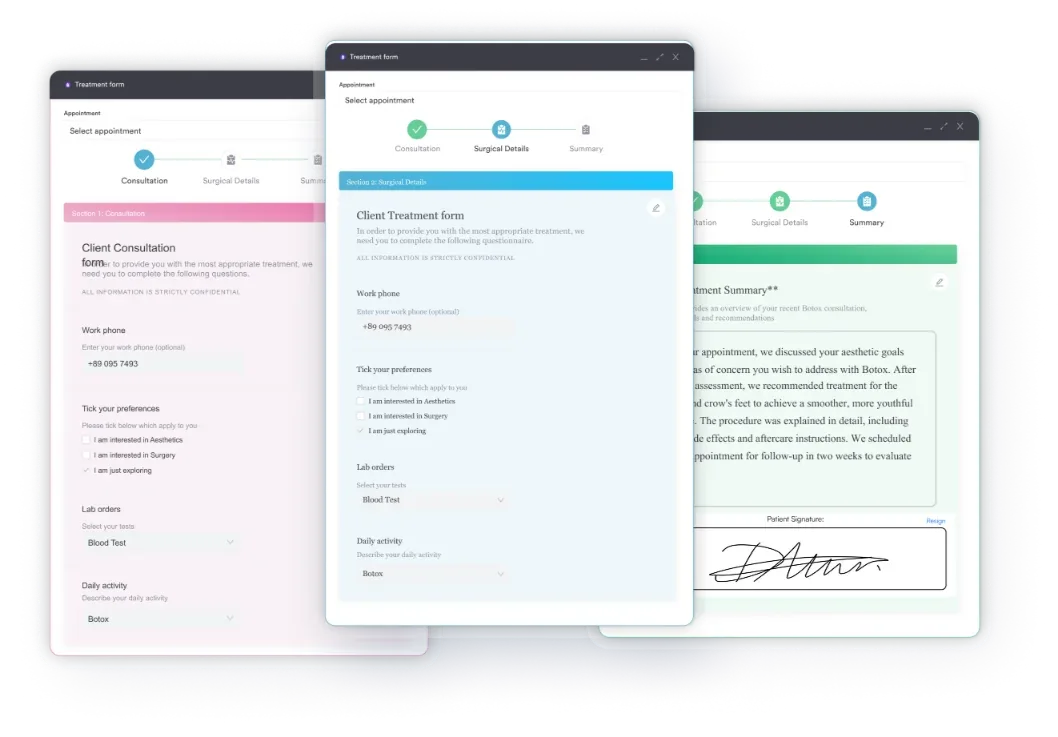
The worksheet is most effective when completed collaboratively during a session, then revisited at home to consolidate the skill. Work through the seven sections in order, adding psychoeducation and Socratic questioning as you go.
This creates a reference point for review in future sessions and builds metacognitive awareness.
Gray-area or continuum thinking isn’t a section on the worksheet. It’s a verbal technique you add during the Challenge and Replace steps to help the client see the middle ground. Rather than “good/bad”, the client learns to place a situation on a spectrum: somewhat good, mostly good, neutral, somewhat difficult, very difficult. This reflects reality more accurately and reduces emotional reactivity.
Many clinicians use AI-powered clinical documentation to capture these verbal shifts in the session note. That way, the gray-area discussion stays visible at the next review, even though it never appears as a field on the printed worksheet.
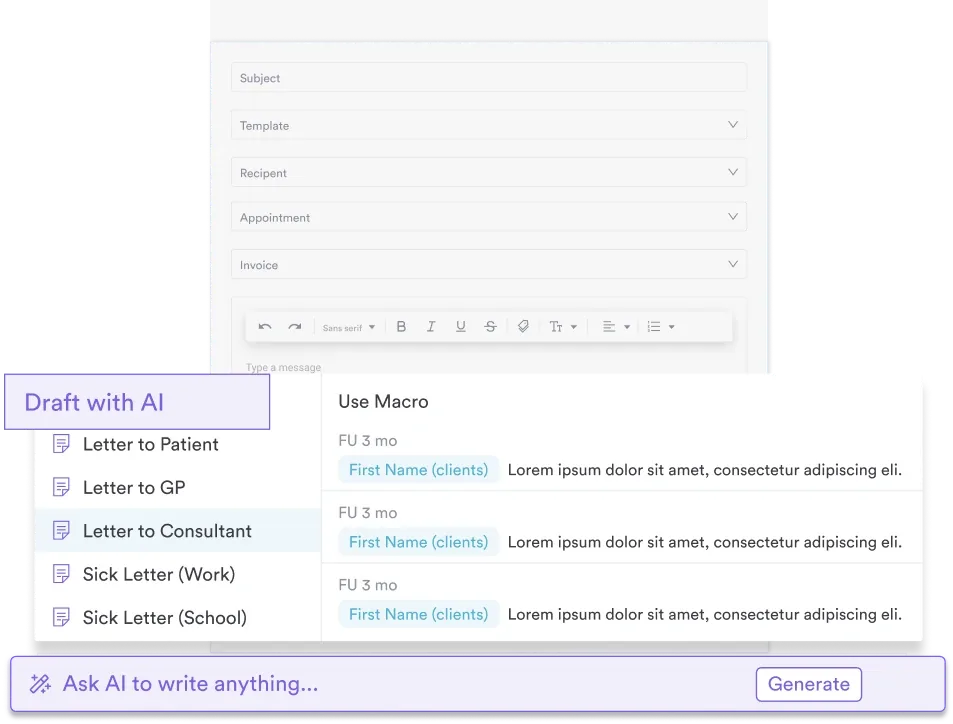

Pabau lets you attach clinical worksheets like this directly to client records and session notes, so your whole team stays aligned on treatment progress.

This all-or-nothing thinking worksheet becomes even more powerful when integrated into your practice’s clinical documentation system. Pabau’s therapy practice management platform lets you attach the completed worksheet to each client’s record, track progress across sessions, and automatically remind clients to revisit the skill between appointments.
By embedding CBT worksheets into your practice software, you shift from paper-based, one-off exercises to a continuity-focused system where every client sees their progress tracked and valued.
A completed worksheet contains sensitive detail, including:
Treat it the same way you’d treat any other session note, not as a throwaway handout.
If a client fills it out on paper, file it in their record and shred the copy once your jurisdiction’s retention window closes.
If you’re using a digital form, a secure patient portal with HIPAA and GDPR-compliant storage keeps it encrypted in transit and at rest. Role-based access means front-desk and billing staff don’t need to see a client’s specific all-or-nothing thoughts to do their jobs.
All-or-nothing thinking is a foundational cognitive distortion that maintains anxiety, depression, and perfectionism in many clients. Addressing it early through structured cognitive restructuring, with a tool like this worksheet, accelerates progress and gives clients a skill they can apply independently for years to come.
Download the worksheet today, then book a Pabau demo to see how the platform brings your clinical tools into one organized system.

Supporting a client through a high-conflict custody case? Parenting plan with a narcissist provides specific language and parallel parenting strategies to limit manipulation and conflict.
Screening for body image concerns? Body dysmorphia questionnaire helps assess symptoms and behaviors linked to body dysmorphic disorder.
Supporting clients in recovery? AA Step 8 worksheet gives clients a structured way to identify harm caused during addiction and build willingness to make amends.
All-or-nothing thinking is a cognitive distortion where a person evaluates situations in absolute extremes, with no middle ground. Everything is either entirely good or bad, a complete success or a total failure. It is a core target in cognitive behavioral therapy because it maintains anxiety, depression, perfectionism, and self-criticism.
The worksheet is designed for clients aged 16+ and can be used with older adolescents with clinician guidance. For younger teens, consider adapting the language and examples to reflect age-appropriate situations (school, friendships, family). Always assess the client’s cognitive capacity and motivation before introducing structured worksheets.
Cognitive restructuring is evidence-based: it examines what is factually true and develops balanced thoughts grounded in reality. Positive thinking often skips the evidence-gathering step and replaces one extreme (all-or-nothing negative) with another (forced positivity). Balanced thinking lands in the evidence-supported middle, making it more sustainable and credible to clients.
Yes. In group settings, you can have clients complete the worksheet individually, then optionally share their thought and balanced alternative with the group. Group discussion often helps clients see how universal the all-or-nothing pattern is and builds mutual support. Set group norms about confidentiality and respect.
Frequency depends on the client’s needs and the severity of the distortion. Some clients benefit from completing the worksheet once per session as the primary intervention. Others use it weekly at home for specific triggering situations. The goal is skill mastery and independent use. Once the client internalizes the restructuring process, they may no longer need the printed worksheet.
Yes. While this worksheet focuses on all-or-nothing thinking, CBT addresses many other distortions: catastrophizing, mind reading, overgeneralization, and personalization. Pabau’s library of clinical resources includes templates for other cognitive work. Ask your clinician or practice manager if additional worksheets are available.