Printable values cards: What they are and how to use them in therapy
Printable values cards are a reflection tool that helps a patient work out which...

14
Last Updated: Sep 30, 2026

A wellness wheel worksheet is a self-assessment tool that scores well-being across eight dimensions of life.
The eight dimensions are physical, emotional, social, occupational, spiritual, intellectual, environmental, and financial.
Clients rate each dimension from 1 to 10, shade the wheel, then plan around their two lowest scores.
Dr. Margaret Swarbrick created the eight-dimension model, and SAMHSA later adopted it for its own wellness materials.
Practice management software like Pabau keeps every assessment in the client record, so scores can be compared over time.
A printable eight-segment wheel with a 1 to 10 rating scale and a short prompt explaining what each dimension covers. There is also space to record two action-plan goals and the date of the next assessment.
Download templateA wellness wheel worksheet is a self-assessment tool that scores well-being across eight areas of life. You rate each area from 1 to 10, shade the matching segment of a circle, and read the shape that comes back. A balanced life fills the wheel evenly. An uneven wheel shows you where to put your effort first.
Therapists, coaches, and wellness practitioners hand it out at intake, then again a few weeks later. The picture is quicker to read than a long questionnaire, and clients remember it. This guide covers the eight dimensions, how to score the wheel, and how to turn the result into a plan.
A wellness wheel worksheet is a structured template that rates satisfaction and health across eight dimensions of well-being. The wheel itself is a circle split into eight segments, one per dimension. Users score each area on a scale, usually 1 to 10, then shade the segment up to their score.
The finished sheet does two jobs. It gives clients a concrete way to compare parts of life they rarely rank side by side. It also makes imbalance obvious at a glance, so both of you can see where the effort should go.

The eight-dimension model was created by Dr. Margaret Swarbrick, an occupational therapist and researcher who published it in 2006. The Substance Abuse and Mental Health Services Administration, better known as SAMHSA, later adopted the model and promoted it through its own wellness materials.
That is why the eight-dimension version is the one you meet most often in behavioral health, coaching, and integrative medicine.
The framework splits well-being into eight distinct but connected areas. Knowing what each one covers is what keeps the scores grounded instead of arbitrary.
Each dimension pulls on the others. Someone with a high physical score and a low social score can feel isolated despite good health. Someone thriving at work but struggling emotionally is often on the way to burnout. The wheel is useful because it puts those relationships on one page.
Completing the wheel takes five to 10 minutes. Here is the sequence practitioners walk clients through.
The visual result lands faster than a written report. Clients can see the shape of their own answers, which is why the exercise tends to stay with them.
Pairing this plan with patient scheduling tools keeps progress reviews booked ahead of time.
The worksheet earns its keep at the next step. Scores on their own are a snapshot, so the work is deciding what to do about the lowest ones.
Read the spread before you read any single number. A client scoring 8, 8, 8, and 3 has one area to work on. A client scoring 5 across all eight has something broader going on, and that is where the conversation should start.
From there, take the lowest dimension, or the lowest two if there is time, and set goals you can measure. A social score of 4 might become “join a weekly group by the 30th” or “call one friend every Sunday”. A goal like “be more social” gives you nothing to review later.
Recording the baseline scores and the agreed goals in the client record means the next session starts where the last one finished.
The worksheet travels well across practice types, from mental health to workplace programs.
At intake, the worksheet gives you an opening question that covers a lot of ground. “How are things across these eight areas?” frames the relationship as holistic from the first session. In a wellness practice, that framing is usually what the client came for.
Through treatment, the wheel becomes a benchmark. Re-administer it every 6 to 8 weeks and the movement shows up on its own. Did social wellness rise after group therapy? Did occupational wellness drop after a job change? Those trends shape what you do next.
Between assessments, a weekly wellness planner gives the client somewhere to record goals and note how each week went. Those weekly notes make the next wheel easier to interpret.
When one dimension needs a closer look, follow the wheel with a narrower tool. A low emotional score might lead to a thought record worksheet.
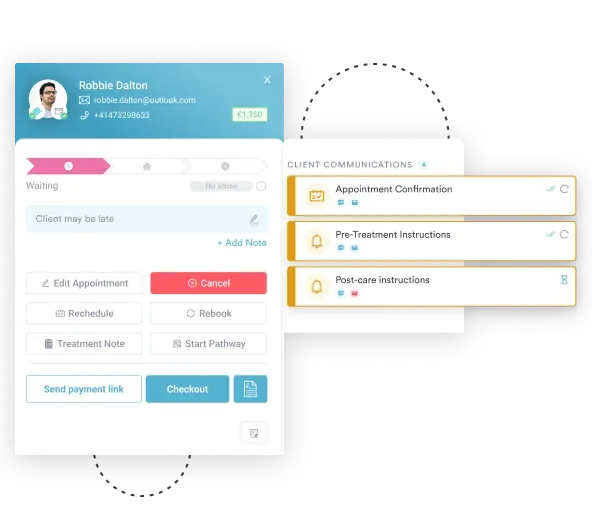
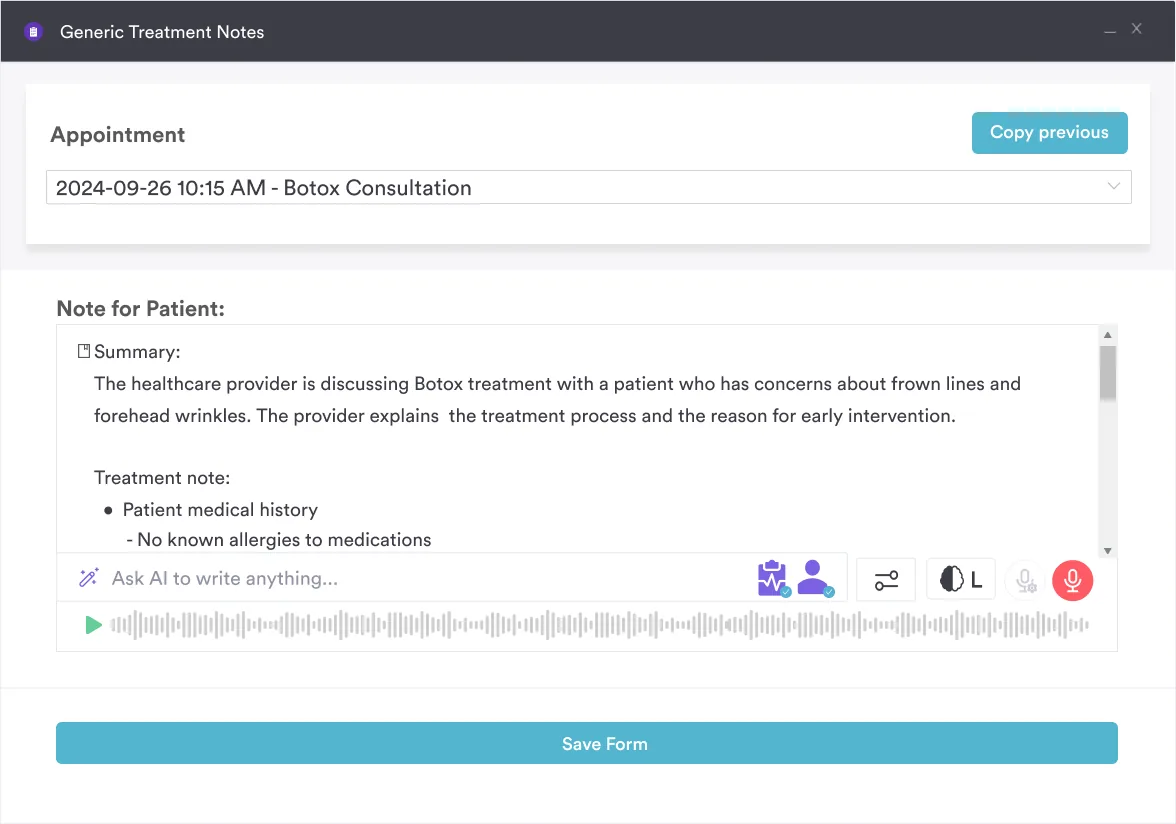
Recording each assessment in your treatment notes keeps the thread intact. Baseline scores and goals written down once are there for every appointment after. In a multi-practitioner practice, that is how a therapist’s observation reaches the medical director.
Pro tip: Set the next assessment date in the same session you set the goals. Re-administer the wheel every 6 to 8 weeks, and keep every old copy. A client who can see two wheels side by side needs far less convincing that the work is paying off.
Coaches use the wheel a little differently. The before-and-after wheels become the accountability record. Seeing the second wheel fill out is what keeps clients working between sessions.
The two tools do different jobs. The wellness wheel measures where someone is now across eight dimensions. The self-care wheel lists activities they can do in each dimension to improve. One assesses, the other prescribes.
A client might score low on spiritual wellness, then turn to a self-care wheel for options: meditation, journaling, time outdoors, or a faith service. Most practitioners keep both to hand. You assess with one and plan with the other.
Dimension counts vary between versions. The six-dimension model many people have seen came from Dr. Bill Hettler and the National Wellness Institute. It leaves out the financial and environmental areas. Swarbrick’s version grew from five to eight over time, and eight is now the common standard in behavioral health. Psychiatry EMR software keeps prescribing history, notes and review appointments in one record.
The wheel shifts the conversation from problems to balance. Clients see themselves as whole people rather than a list of symptoms. That reframe takes the edge off the defensiveness a symptom checklist can provoke.
For practices, it speeds up intake and progress tracking. A visual assessment takes less time than a long questionnaire and gives you more to talk about. Folded into holistic patient care, it makes sure no dimension is quietly ignored. It also gives you a way to measure client satisfaction over time.
There is a documentation benefit too. A dated, scored assessment sitting in the client record shows how care was planned and why. That is worth having when an inspector or an insurer asks.
Most practices still hand the wheel over on paper. The client fills it in, the practitioner reads it, and the sheet goes into a folder nobody opens before the next review. The scores never reach the notes, so nothing can be compared later.
Practice management software like Pabau puts the assessment where the rest of the record lives. Build the wheel as a digital intake form, send it out before the appointment, and the scores arrive already attached to the client’s file.
Sharing the before-and-after wheels back to the client is a straightforward way to lift patient engagement between appointments.
Check-ins on each action-plan goal then go out on schedule. Reporting shows which client groups are improving and which practitioners are getting there fastest.
The advantage is having the assessment, the record, and the follow-up in one system. A worksheet you can download is easy enough to find anywhere. A worksheet that stays attached to the client’s history, and chases its own review date, is what moves the score.

Pabau’s digital forms and client records make it easy to send wellness wheel worksheets, track scores over time, and build holistic care plans.

The wheel is only as good as what happens after the shading. Scoring it once tells a client something they probably already suspected. Scoring it again eight weeks later, against a plan they agreed to, is where the change actually shows.
So set the re-assessment date in the same session you set the goals. It costs nothing, and it separates a pleasant exercise from a record of progress you can both point at.
Book a demo to see how Pabau sends the wellness wheel, keeps every score in the client record, and chases the follow-up for you.

Want a lighter opener for a first coaching session? Proust questionnaire gets clients talking about values before anything gets scored.
Prefer to work one dimension at a time? 8 dimensions worksheet gives every area its own prompts and space to write.
Rate your satisfaction in each of the eight dimensions from 1 to 10, shade each segment up to your score, then look at the shape. Short segments are the areas needing attention. Build an action plan around your two lowest scores.
Physical, emotional, social, occupational, spiritual, intellectual, environmental, and financial. Each covers a distinct area of life. Together they give a holistic view of well-being.
The wellness wheel is an assessment that shows your current balance across eight dimensions. The self-care wheel is a menu of activities for improving each one. One assesses, the other prescribes.
Use a 1 to 10 scale, where 1 is very unsatisfied and 10 is completely satisfied. Whole numbers are enough. Write the score down, then shade the matching segment of the wheel.
Pick one or two of your lowest-scoring dimensions and set a measurable goal for each. Use reminders or scheduled check-ins to stay accountable. Re-assess every 6 to 8 weeks to track progress.
Yes. Therapists, coaches, and wellness practitioners routinely use wellness wheels as assessment and conversation tools. They work especially well at intake, where they surface the wider context behind a presenting concern.