Antipsychotic medication list
An antipsychotic medication list is a structured reference that organizes psychi...

2
Last Updated: Oct 13, 2026

The Devereux Student Strengths Assessment (DESSA) is a norm-referenced rating scale measuring eight social-emotional competencies in K-8 students.
The eight scales are self-awareness, social awareness, self-management, goal-directed behavior, relationship skills, personal responsibility, decision-making, and optimistic thinking.
The Total Protective Factor is the composite score summed from all eight scales, not a ninth scale of its own.
The DESSA-Mini uses one of four parallel 8-item forms and takes about one minute per student to complete.
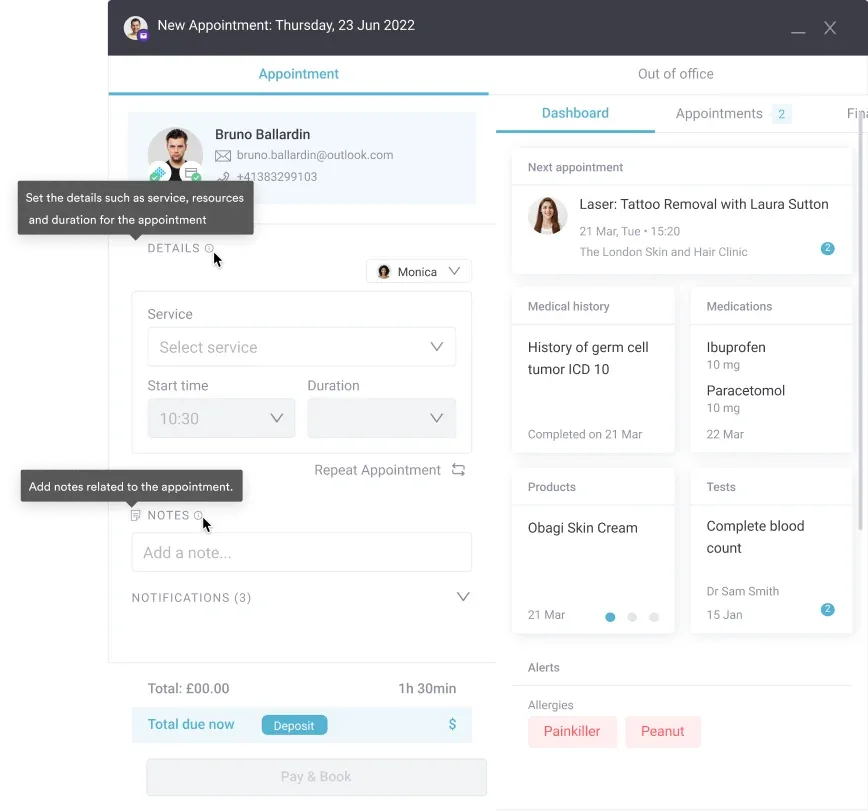
Digital forms and automated workflows in practice management software like Pabau cut the manual data entry out of screening.
This template lists all eight competency scales with administration guidance, scoring tables, and interpretation notes. Use it to plan a K-8 screening cycle before you order official forms.
Download templateSchool psychologists, counselors, and special education teams use the Devereux Student Strengths Assessment (DESSA) to identify protective factors and resilience in students. Unlike deficit-focused screeners.
This guide covers what the DESSA measures, how to administer it, and how to read the scores. It also shows how results feed multi-tiered systems of support (MTSS) and social-emotional learning (SEL) programs across a school.
The DESSA is a standardized, norm-referenced rating scale for students in kindergarten through eighth grade. A teacher, counselor, or other adult who knows the student completes a 72-item questionnaire. The items capture protective factors, meaning the personal and environmental strengths that support resilience and classroom engagement.
The Devereux Foundation built it on national research into childhood resilience, and Riverside Insights publishes it. Standardization used a diverse sample of more than 2,500 US students. That grounding in positive psychology is why schools reach for it in psychoeducational assessment and universal screening.
FERPA compliance and confidentiality sit inside the design. Rater identities and individual student data stay protected within secure school systems. Many states align DESSA use with Response to Intervention and Instruction (RTI2) and Positive Behavioral Interventions and Supports (PBIS) mandates.
The DESSA measures eight social-emotional competency domains. Each scale holds a cluster of observable behaviors that the rater scores on a Likert-style response format. Here is what each one captures.
Add the eight scale scores together and you get the Total Protective Factor (TPF). The TPF is a composite, not a ninth scale, and it is the number most schools track over time. Together the eight scales describe the strengths that buffer a student against risk.
Riverside Insights publishes two versions: the full 72-item DESSA and the DESSA-Mini, a brief screening variant. Choose based on your school’s assessment timeline and purpose.
Most schools start with the full DESSA for the baseline screening, then switch to the DESSA-Mini for progress checks. Others run the DESSA-Mini as a fast Tier 1 gate and give the full form only to students it flags.
A good patient management system files each completed scale under the right patient automatically.
Any school staff member who knows the student well can serve as a rater. That includes classroom teachers, special educators, counselors, and paraprofessionals. Here is the standard sequence.
Typical timeline: A school screening 500 K-8 students needs two to four weeks. Staffing and whether raters work on paper or on screen decide where you land in that range.
DESSA scores come back as T-scores, standardized with a mean of 50 and a standard deviation of 10. The interpretation labels follow a strengths-based framework.
Interpretation rests on one principle. The DESSA is not a diagnostic instrument, and it does not identify ADHD, anxiety, or depression. Symptom-specific tools such as the SCARED screening tool do that job.
What the DESSA does is find students who would benefit from SEL instruction or targeted support. A “Needs support” score on goal-directed behavior points to motivation-building work. It is not grounds for a psychiatric referral.
The value of a screening shows up in what the school does next. Results feed multi-tiered systems of support, so the intensity of the intervention matches each student’s protective factor level.
Documentation matters as much as the score itself. Continuity then survives a change of grade, teacher, or building.
Re-administer the DESSA or DESSA-Mini every 10 to 12 weeks to see whether the interventions moved anything. Growth in protective factors tells you the Tier 2 and Tier 3 supports are working, and flat scores tell you to change the plan.
The DESSA holds up well across diverse student populations. Its standardization sample included more than 2,500 students from across the US, spanning multiple ethnicities, income levels, and regions.
For the full psychometric detail, read the DESSA technical manual from the Center for Resilient Children. Official forms, scoring software, and staff training come from Riverside Insights.
Most screening cycles still run on paper. Raters fill in forms, someone types the numbers into a spreadsheet, and the file sits untouched until the next review window. The scores exist, but nobody can see them next to the student’s notes.
Pabau keeps that cycle in one record. Raters complete the form on any device, and every score attaches to the student’s file without being re-typed.
The result is fewer clerical hours and a cleaner trail for anyone who inherits the case. Every Pabau subscription includes the whole platform, so a two-counselor team gets the same reporting as a district department. School psychologists with a private caseload run both sides in the same psychology practice software.

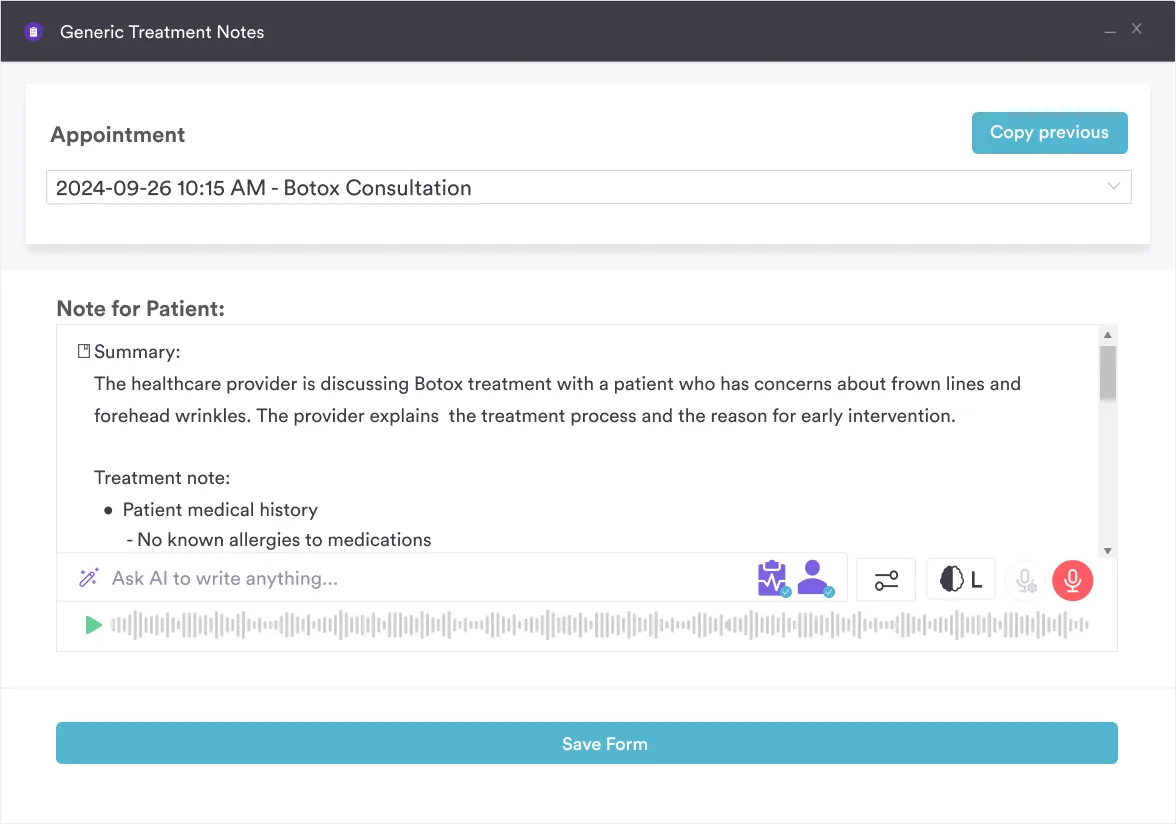
Pabau’s digital forms capture DESSA ratings without manual data entry, then automated workflows schedule the recheck and chase the rater. Your team spends its time on intervention instead of on scoring admin.

Start with one grade level rather than the whole school. A single cohort tells you how long rating really takes, which scales cluster low, and whether your Tier 2 groups have room. Widen the screening from there.
Two limits are worth carrying with you. The DESSA describes strengths rather than diagnoses, so a low scale is a teaching target and not a clinical finding. And the template above is for planning, because official forms come from Riverside Insights.
Screening is the cheap part of this work. What costs a school is the hand-scoring and the recheck that never gets booked. Book a demo to see how Pabau holds DESSA scores, intervention plans, and reassessment dates in one student record.

Documenting care for a student who has experienced trauma? PTSD nursing care plan sets out NANDA-aligned diagnoses, goals, interventions, and expected outcomes.
Helping a student build healthier boundaries? Relationship boundaries checklist helps clients evaluate boundaries across emotional, physical, digital, and financial dimensions.
Have a student flagged for Tier 3 support? Suicide prevention worksheet gives you a structured safety-planning format for high-risk cases.
Teaching well-being in class? Health triangle worksheet helps students map physical, mental, and social health in one Tier 1 activity.
Running a small-group SEL cycle? Thought record worksheet gives Tier 2 groups a simple format for challenging unhelpful thinking.
DESSA stands for Devereux Student Strengths Assessment, a standardized rating scale measuring social-emotional competencies in K-8 students. The Devereux Foundation developed it to identify protective factors and resilience.
The eight scales are self-awareness, social awareness, self-management, goal-directed behavior, relationship skills, personal responsibility, decision-making, and optimistic thinking. The Total Protective Factor is the composite of all eight, not a scale in its own right.
Any school staff member who knows the student well can serve as a rater, including a teacher, counselor, special educator, or paraprofessional. Ideally more than one rater completes the form.
The full DESSA has 72 items and takes 10 to 15 minutes, giving subscale scores for all eight competencies. The DESSA-Mini uses one of four parallel 8-item forms and takes about one minute per student.
Scores come back as T-scores with a mean of 50 and a standard deviation of 10. A score of 60 and above is a strength, 40 to 59 is typical, and below 40 needs support. The DESSA is not a diagnostic tool.
The Devereux Student Strengths Assessment is designed for students in kindergarten through eighth grade, roughly ages 5 to 13, in school settings.
No. The official forms and scoring software are published by Riverside Insights and require purchase. Free information about the DESSA is available online, but the instrument and its technical manual are proprietary.
Schools use the results for universal screening, progress monitoring, and MTSS decisions. Students with low protective factor scores move into targeted Tier 2 groups or intensive Tier 3 support, and reassessment shows whether it worked.