Free model waiver form + what it is and when your practice needs one
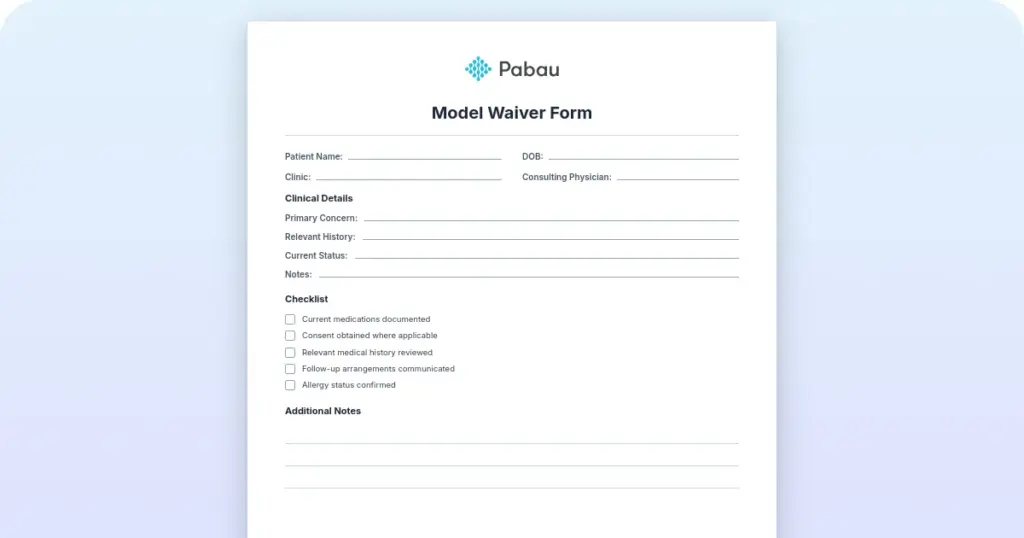
A model waiver form is a signed document that lets a healthcare practice use a p...

5
Last Updated: Sep 29, 2026

Aesthetic consultation notes capture medical history, allergies, prior treatments, and patient goals – essential for safe treatment planning and regulatory compliance.
A structured consultation template reduces liability risk by ensuring informed consent, contraindication screening, and thorough documentation are completed before every procedure.
Documentation must include treatment plan details, before/after photography consent, and post-procedure instructions to support continuity of care and patient retention.
Pabau’s digital forms and client records integrate consultation notes with treatment history, automating compliance tracking and enabling multi-location clinics to maintain consistent documentation standards.
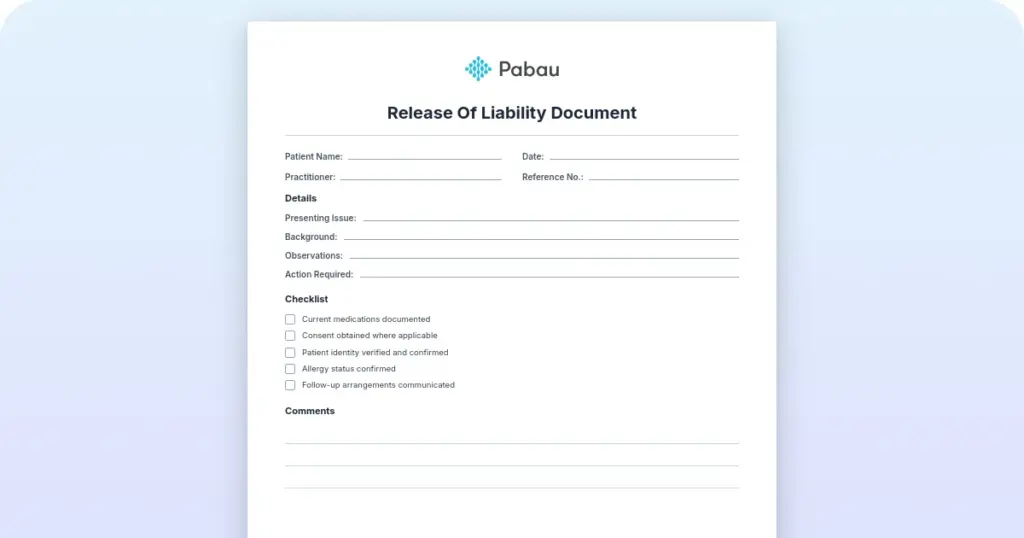
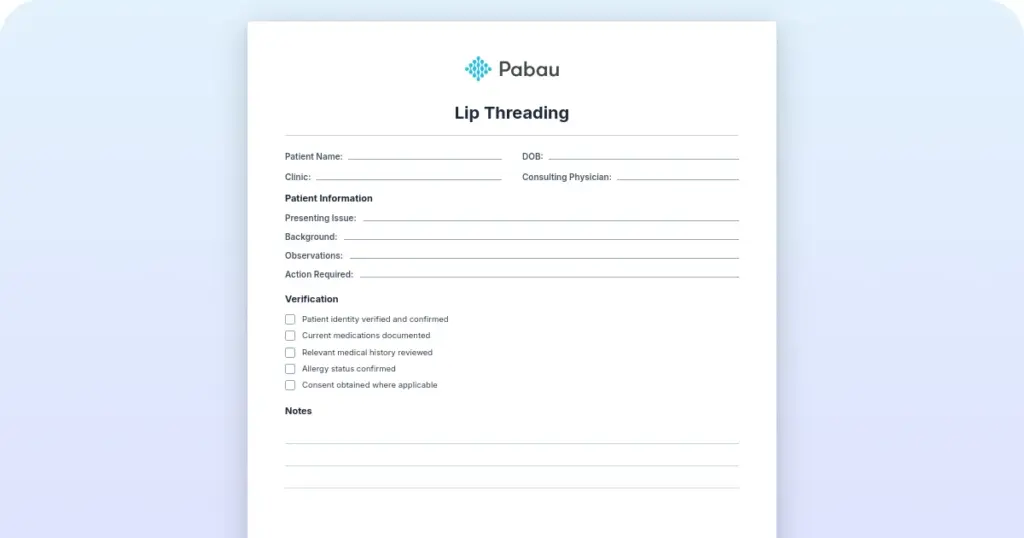
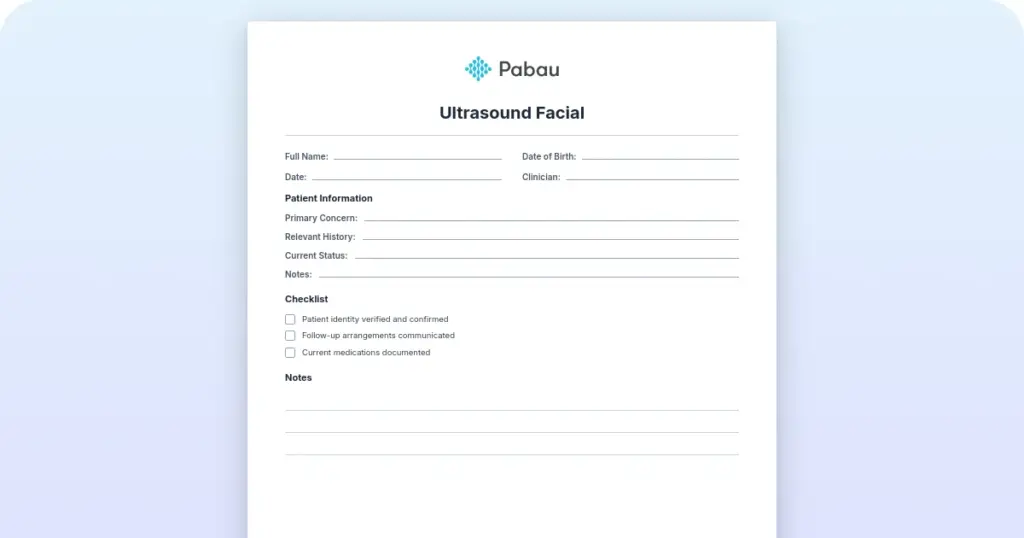
A ready-to-use consultation template covering patient demographics, medical history, allergy screening, prior aesthetic procedures, treatment goals, contraindication assessment, consent declarations, and post-procedure care instructions.
Download templateAesthetic consultation notes are the foundation of safe, compliant practitioner-patient relationships. A comprehensive consultation document captures medical history, allergies, contraindications, prior treatments, and patient expectations – all critical for informed decision-making before aesthetic procedures. This template guide walks you through implementing a structured consultation notes process that reduces risk, supports treatment continuity, and meets UK and US regulatory standards. Practitioners keeping these notes in a digital record will find charting compared across eight platforms in our guide to med spa software.
An aesthetic consultation notes template is a standardized documentation form that practitioners use to record patient information, assess suitability for treatment, and obtain informed consent during initial aesthetic consultations. Unlike a simple intake form, aesthetic consultation notes serve both clinical and medico-legal purposes.
The template structures the consultation conversation into distinct sections: patient demographics, comprehensive medical and allergy history, previous cosmetic procedures, current medications and contraindications, aesthetic goals and expectations, clinical observations, recommended treatment plan, and documented informed consent.
In the UK, the Care Quality Commission (CQC) and the Joint Council for Cosmetic Practitioners (JCCP) expect practitioners to maintain thorough consultation records demonstrating informed consent and clinical reasoning. In the US, HIPAA regulations require secure storage of patient consultation documentation. A structured template meets these regulatory expectations while supporting clinical safety.
Implementing a consultation notes template involves five operational steps that should take 20-30 minutes per patient and become routine within your clinic workflow.
Many UK and US clinics now use digital consultation forms within their practice management system to automate this workflow. Digital forms reduce paper handling, ensure completeness (mandatory fields cannot be skipped), and automatically file notes into the patient’s electronic record for future reference.
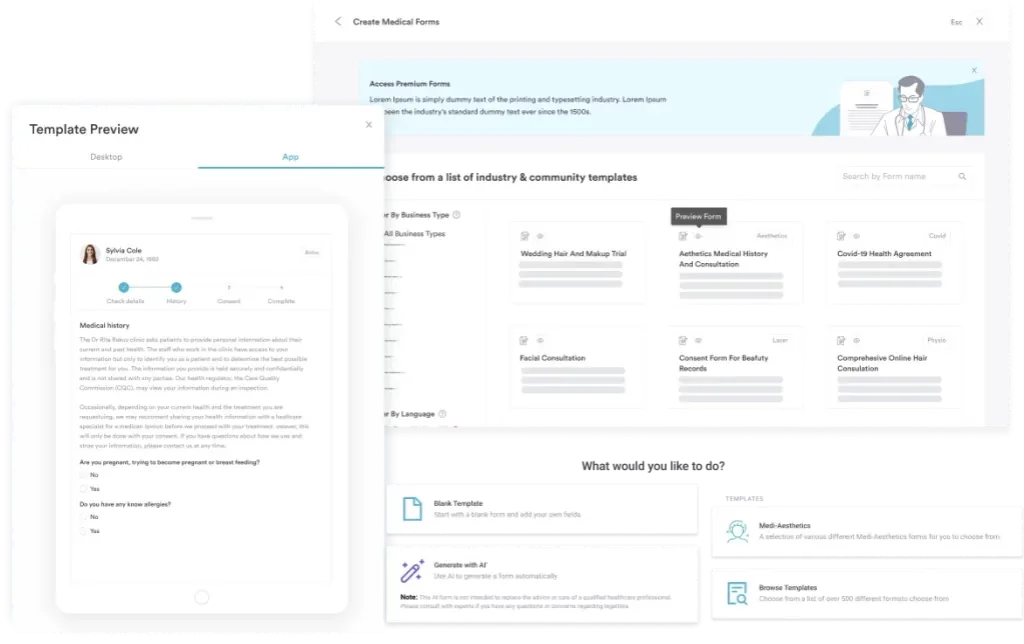
This template applies across multiple aesthetic and medical specialties:
How leading platforms handle clinical notes varies widely; our roundup of top medical spa software compares them directly.
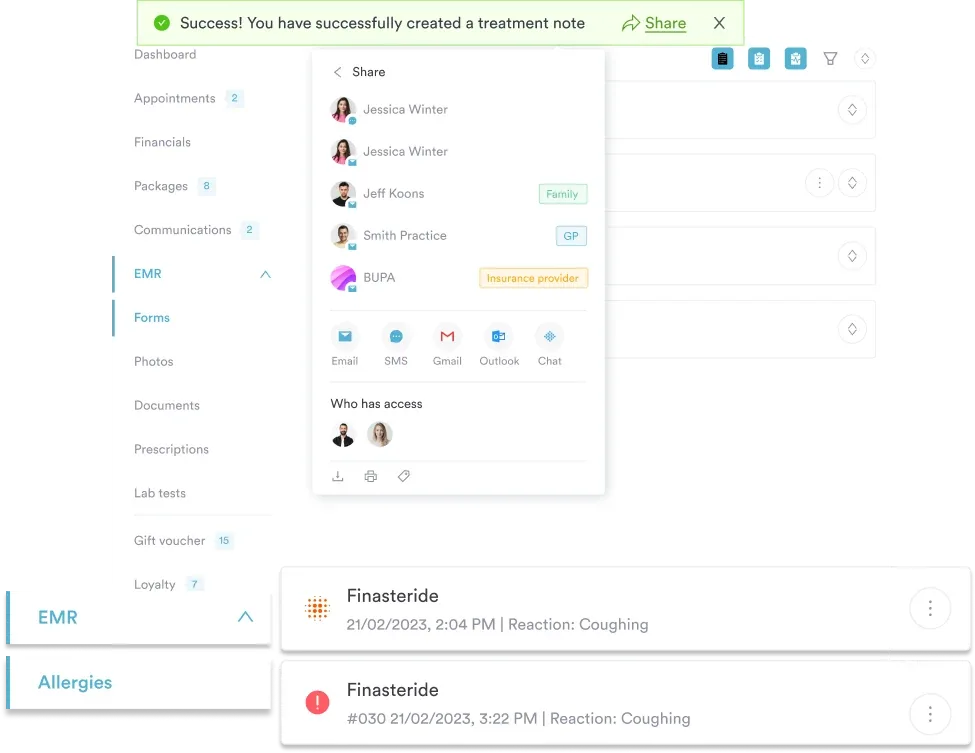

Pabau’s digital forms and integrated patient records automate consultation notes, ensure compliance, and support seamless multi-location operations.

Informed consent is the cornerstone of aesthetic consultation documentation. Legal and regulatory standards in the UK, EU, and US require practitioners to provide clear information about treatment, risks, alternatives, and expected outcomes – and to document that this conversation occurred.
Aesthetic practices routinely take before and after photographs to document treatment results and support clinical learning. However, photography requires specific documented consent separate from treatment consent, particularly under UK GDPR.
For detailed guidance. Many UK aesthetic practices now use dedicated before and after photo software within their practice software to automate consent tracking and secure storage.
Aesthetic consultation notes are non-negotiable documentation for any aesthetic clinic. A structured template ensures patient safety, demonstrates informed consent, supports treatment continuity, and meets UK CQC, GMC, and GDPR requirements as well as US HIPAA standards. The consultation is your first touchpoint with the patient – make it thorough, professional, and compliant. Download the template above and integrate it into your clinic workflow.

Need a comprehensive patient intake strategy? Preparing clients for aesthetic consultations walks you through pre-consultation communication, setting expectations, and building rapport before the appointment.
Looking to streamline multi-location consent tracking? Creating personalized treatment plans in medical aesthetics explains how structured documentation supports consistent care across multiple clinic sites.
Want to build a recognizable clinic brand? Building a consistent med spa brand shows how standardized documentation and communication templates strengthen clinic reputation and patient loyalty.
Patient demographics, medical history, allergies, current medications, prior cosmetic procedures, aesthetic goals, contraindication assessment, clinical observations, recommended treatment plan, and signed informed consent documenting risks and alternatives.
A thorough consultation typically requires 20-30 minutes. This allows time to review medical history, explain procedures, answer questions, and ensure informed consent is genuinely understood rather than rushed. Time management is essential to maintain quality documentation across a busy schedule.
Yes. Consultation notes are personal health data under UK GDPR and must be stored securely, with access limited to authorized staff. Patients have the right to request copies of their notes. Practices must also document consent separately for data storage beyond treatment.
Yes. Obtain documented consent in the consultation notes specifically for photography, separate from treatment consent. Specify what images will be used for (clinical record, marketing, research) and which body areas will be photographed. This meets GDPR requirements for special category data.
Do not proceed with treatment. Incomplete consultation notes create liability and compliance risk. If critical information is missing (allergies, contraindications, consent signature), reschedule the consultation or refer the patient to a medical professional for clearance before proceeding with aesthetic treatment.
Yes, with customization. Core sections (medical history, allergies, informed consent) apply universally. Add treatment-specific contraindication screening (for example, recent isotretinoin use for chemical peels or laser, skin type for laser, or bleeding disorders for injectables) based on your service offerings.
Work through the consultation in a fixed order: record patient demographics, take a full medical and allergy history, log prior aesthetic procedures, capture the patient’s goals and expectations, note your clinical observations and recommended plan, then document informed consent with the patient’s signature. A structured template keeps every consultation consistent and makes sure no section is skipped.
An aesthetic consultation form is the document used to capture the patient’s history, goals, and consent. Consultation notes are the practitioner’s clinical record of that conversation, including observations, the recommended treatment plan, and the reasoning behind it. The two overlap, and a single structured template can capture both.