Free model waiver form + what it is and when your practice needs one
A model waiver form is a signed document that lets a healthcare practice use a p...

5
Last Updated: Sep 29, 2026

Venus Freeze combines multi-polar radiofrequency with pulsed electromagnetic fields to heat the dermis and stimulate collagen and elastin production.
The US FDA clearance covers moderate to severe facial wrinkles only, so body and cellulite treatment is off-label use in American practices.
The download is one two-page form: procedure disclaimer, informed consent and photography, and a medical history questionnaire.
It carries no SOAP treatment record and no standalone aftercare handout, so plan to build both in your own records system.
Practice management software like Pabau sends the form before the appointment and files the signed copy against the patient record.
A two-page patient form covering procedure information, risks, contraindications, and a short aftercare note. It also carries the informed consent and photography statement, plus a yes-or-no medical history questionnaire with free-text fields.
Download templateVenus Freeze is a widely offered non-surgical skin-tightening treatment in aesthetic practices. Before choosing software to book Venus Freeze courses, see how each platform handles scheduling in our comparison of the top med spa software. Whether a course runs smoothly usually comes down to two documents. One is a consent form the patient genuinely understood. The other is a session record that still makes sense a year later.
This page sets out what the downloadable Venus Freeze form contains, what it leaves out, and how to run the treatment around it. It also explains where the device’s US regulatory scope is narrower than the marketing copy suggests.
Practices using skin clinic software can send the form ahead of the appointment and file the signed copy automatically.
Venus Freeze is a non-invasive device that combines multi-polar radiofrequency with pulsed electromagnetic fields. The energy heats the deeper layers of skin evenly, which stimulates collagen and elastin production. Practices use it for lines and laxity on the face and neck, and in some markets on the body.
Two mechanisms are at work. The radiofrequency energy generates controlled heat at the dermal-subcutaneous junction. That triggers immediate collagen contraction, then a slower fibroblast remodeling phase over 12 to 16 weeks.
The pulsed electromagnetic field component supports cellular energy production and lymphatic drainage, which helps limit post-treatment swelling. The visible change builds gradually and peaks three to six months after a full course.
In the United States, Venus Freeze holds FDA 510(k) clearance under two related submissions. K100586 is the original 2010 clearance, and K111670 covers the current Venus Freeze (MP)2 system. Both cover non-invasive treatment of moderate to severe facial wrinkles and rhytides in female patients with Fitzpatrick skin types I to IV.
No US clearance covers cellulite, circumferential reduction, or any body area. Those indications belong to different devices in the same family, Venus Legacy and Venus Bliss. Outside the US, Venus Freeze carries a CE mark and a Health Canada license that do extend to body and cellulite use.
The distinction matters for what you say and what you write down. A US practice treating an abdomen or a thigh with Venus Freeze is treating off-label, which is permitted but should be recorded as such. Raise it in the consultation, and never describe body or cellulite treatment as FDA-cleared in your marketing or your forms.
The download is a single two-page patient form rather than a bundle of separate documents. It has three parts, and they are designed to be completed in one sitting before the first session.
Add your practice name, the practitioner’s name, and the date. Where you need a wet signature, print it. Where you do not, send it as a digital intake form and capture the signature electronically.
Two omissions are worth naming up front. The file contains no SOAP progress notes section, so there are no subjective, objective, assessment, and plan fields for logging device settings. It also contains no standalone aftercare handout. Aftercare appears only as a short paragraph inside the procedure disclaimer.
Both are yours to build. The next two sections set out what to record after each session, and what a patient-facing aftercare sheet should say.
Build the session record in your laser clinic software rather than looking for it in the download. An entry that holds up later captures four things.
Attach before and after photographs to the same entry, taken in consistent lighting and position. Complete the note while the session is fresh, because reconstructed settings are worth very little in a review. Keeping it in the patient’s medical record means the consent form and the session history sit side by side.
The aftercare paragraph inside the download is deliberately brief. It tells patients they can return to normal activity straight away and stay hydrated. It also asks them to keep a sensible skincare routine and shield the area from strong sun. Most practices want more than that in writing.
Send that sheet as soon as the appointment is marked complete, so nobody leaves without it.
Candidate selection drives both results and adverse-event rates. Screen every patient before you confirm the booking, and write the outcome down.
File the screening outcome alongside the signed consent. That pairing is what shows evidence-based patient selection if the treatment is ever questioned.
A Venus Freeze session takes 20 to 30 minutes per area and follows a consistent protocol. Walk the patient through these steps at consultation so nothing on the day is a surprise.
Record each step as you go, including settings, passes, tolerance, and anything unexpected. That record supports the next session’s planning as much as it protects the practice.
Outcomes depend on finishing an adequate course. Most practices work to six to eight sessions spaced one to two weeks apart, adjusted by indication and by how the skin responds.
Give the patient the whole timeline at consultation and write the planned course into the record. Clear expectations are the cheapest way to stop people from dropping out halfway through.
Venus Freeze is well tolerated by most patients, but the consent conversation should still cover what can go wrong and how it is managed.
The device has a long safety record in its cleared facial indication, but individual results vary and patients should hear that from you. Document that the patient acknowledged the risks before treatment started. That signed acknowledgment is the evidence you will want if a complaint follows.
Consent for an energy-based treatment has to do six jobs. The statement in this template covers all of them, so you are checking rather than writing.
Add the patient signature, the practitioner’s name, and the date in the format your indemnity provider expects. Sending it as a digital consent form before the appointment gives you a timestamped trail and clears the paperwork off the treatment day.
Electronic signature is accepted for medical consent in most jurisdictions where the platform meets data-protection standards. Store the signed form and the clinical photographs the way your notice of privacy practices says you will.
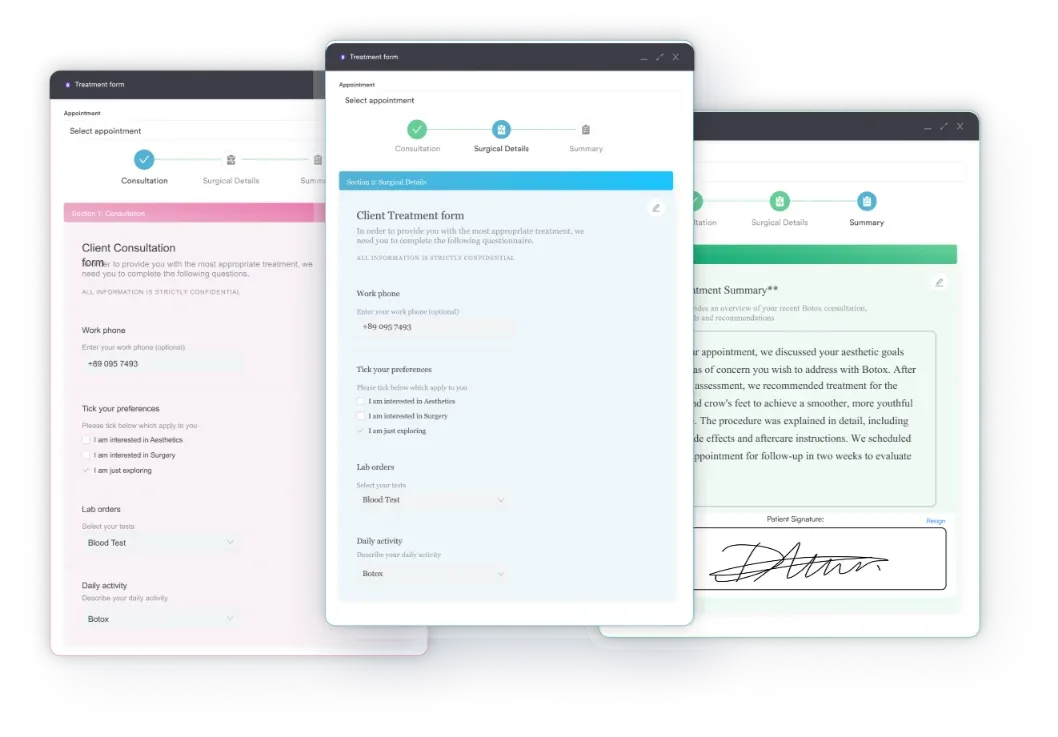
Most practices run this treatment across three disconnected places. The signed consent sits in a filing cabinet. The session notes live in a document on someone’s desktop. Aftercare goes out by hand, whenever a team member remembers.
Practice management software like Pabau puts all three on the patient record. The consent form goes out before the appointment and comes back signed and timestamped. The session note opens with your default device settings already filled in, so the practitioner spends the time on observations rather than parameters.
Aftercare then sends itself the moment the appointment is marked complete, and the send is logged. Course tracking shows who is four sessions into eight, so the front desk can rebook before the interval stretches and the result stalls. Patient management software turns a paper trail into one record you can produce on request.
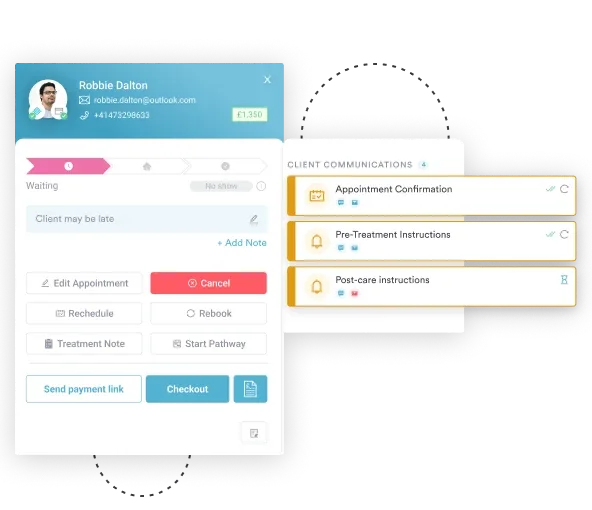

Digital consent sent before the appointment, session notes that open with your default device settings, and aftercare that sends itself. A whole course documented on one patient record.

Venus Freeze is easy to deliver and easy to over-promise. The US clearance covers facial wrinkles and nothing else. Any body or cellulite work needs describing honestly in the consultation and in the consent conversation.
The downloadable form does the first half of the documentation job. It captures procedure information, consent, and medical history in one signed document. The session record and the aftercare sheet are still yours to build. Those two are what an inspection or a complaint will ask to see.
Set both up once, then let the software repeat them for every patient. Book a demo to see how Pabau keeps Venus Freeze consent, session notes, and aftercare on a single patient record.

Running another energy-based tightening treatment? HIFU aftercare guide sets out post-treatment wording you can adapt for radiofrequency sessions.
Treating with Botox or fillers? Anti-wrinkle treatment consent form covers risks, contraindications, aftercare, and photo consent for Botox and fillers.
Need a documentation form for each session? Anti-wrinkle treatment note template covers patient details, contraindication screening, consent confirmation, and injection site mapping for botulinum toxin treatments.
Checking your wider compliance position? Medical spa compliance checklist walks through the policies and records inspectors ask for.
Documenting another aesthetic procedure? Tummy tuck revision form shows how consent wording changes for a surgical revision case.
Venus Freeze is a non-invasive treatment that combines radiofrequency with pulsed electromagnetic fields. The energy heats skin tissue to stimulate collagen and elastin production, which tightens skin and softens wrinkles with no downtime.
Most facial courses run 6 to 8 sessions spaced one to two weeks apart. Body courses run longer, usually 8 to 12 sessions. Visible change tends to start after 4 to 6 sessions and peaks 12 to 16 weeks after the final treatment.
Venus Freeze has a good safety record when patients are screened properly. Its US FDA clearance covers moderate to severe facial wrinkles in Fitzpatrick skin types I to IV. Side effects are usually mild and short-lived, such as redness and swelling. Scarring and lasting pigment change are rare, affecting under 1% of cases.
In the US, Venus Freeze is FDA-cleared for facial wrinkles only. The device is also used on the neck, abdomen, thighs, and arms. That body and cellulite use is CE-marked and licensed by Health Canada, not cleared by the FDA. Facial sessions take 20 to 30 minutes, and larger body areas take 30 to 45 minutes.
No downtime is required. Patients may see mild redness and swelling for 24 to 48 hours, but can return to normal activities straight away. Daily sun protection of SPF 30 or higher is recommended for two weeks afterward.
Venus Freeze feels like a warm stone massage. The radiofrequency energy creates controlled warmth that most patients find comfortable. No anesthesia is needed, and the sensation is usually described as relaxing rather than painful.