Vancouver scar scale template & scoring guide
Download your free Vancouver Scar Scale template A ready-to-use scoring form cov...

45
Last Updated: Sep 16, 2026
Knowing how to prepare for a cosmetic client consultation comes down to three stages: before the appointment, during it, and after the patient leaves.
This guide is written for the practice running the consultation, not for a patient preparing for their own appointment. Ten steps sit across those three stages.
Run them in order and the consultation sets realistic expectations, surfaces contraindications early, and gives the patient a reason to book. Skip them and you spend treatment day managing disappointment.

Consultation prep splits into three stages: before the appointment, during it, and after the patient leaves.
Send consent and intake forms at the moment of booking, so paperwork never happens in the waiting room.
Spend five to ten minutes on the patient’s file before every consultation, new or returning.
Ask open-ended questions first, then recap the patient’s goals in your own words before you recommend treatment.
Quote the price in the room and name one next step, then follow up in writing with instructions and a rebooking link.
Practices running several consultations a day need a back-to-back consultation system: buffers, one shared record, and automated reminders.
Prepare a client consultation in three stages: send forms and review the file beforehand, ask open questions during, then follow up in writing.
How you should prepare for a client consultation depends on where patients currently drop out of your process. The ten steps below run in order, so start at the stage that is costing you bookings.
Consultation prep matters because a cosmetic client is choosing an elective treatment, and that decision rests on the conversation rather than on a diagnosis.
The consultation process at a premium aesthetic practice therefore carries more weight than most first appointments in medicine. Our guide to the importance of consultations for med spas sets out why. In one client consultation, you cover:
That first conversation sets the tone for the patient’s whole relationship with your practice.
Patients decide quickly whether they will come back, and most of that decision is made before you discuss treatment. An appointment that feels rushed, disorganized, or salesy sends them to the practice down the road.
Several small signals shape that impression:
Patients who feel heard book. They also come back.
When patients know what to expect, and what will not happen, they are far less likely to complain afterwards.
Picture a patient who expected zero downtime from a chemical peel. She goes back to work the next day red and peeling, and her review says so.
So walk the patient through every step before treatment begins:
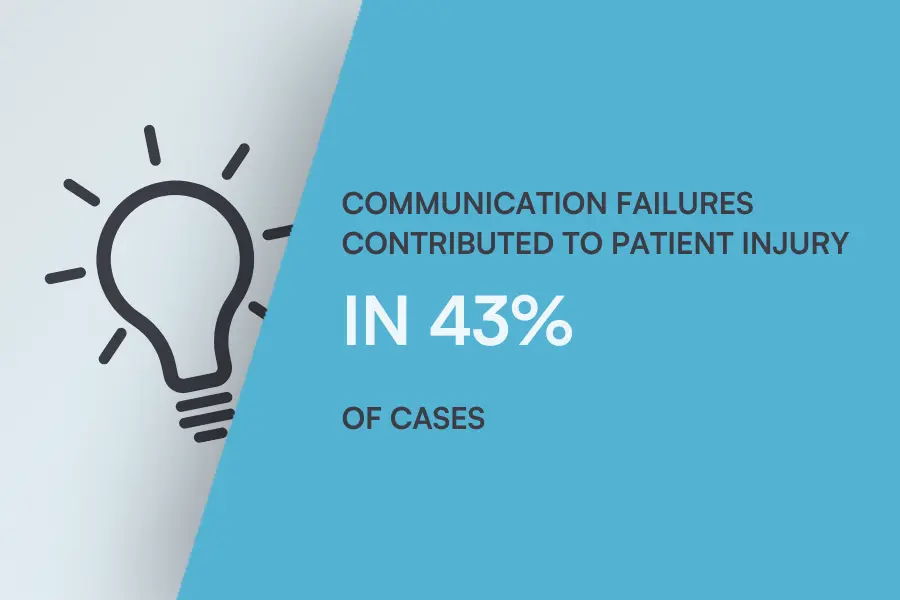
That leaves the patient informed and your practice documented. Poor communication carries a measurable cost in medicine. A review of closed anesthesia malpractice claims found communication failures contributed to patient injury in 43% of cases.
The better you explain, the fewer surprises land on treatment day.
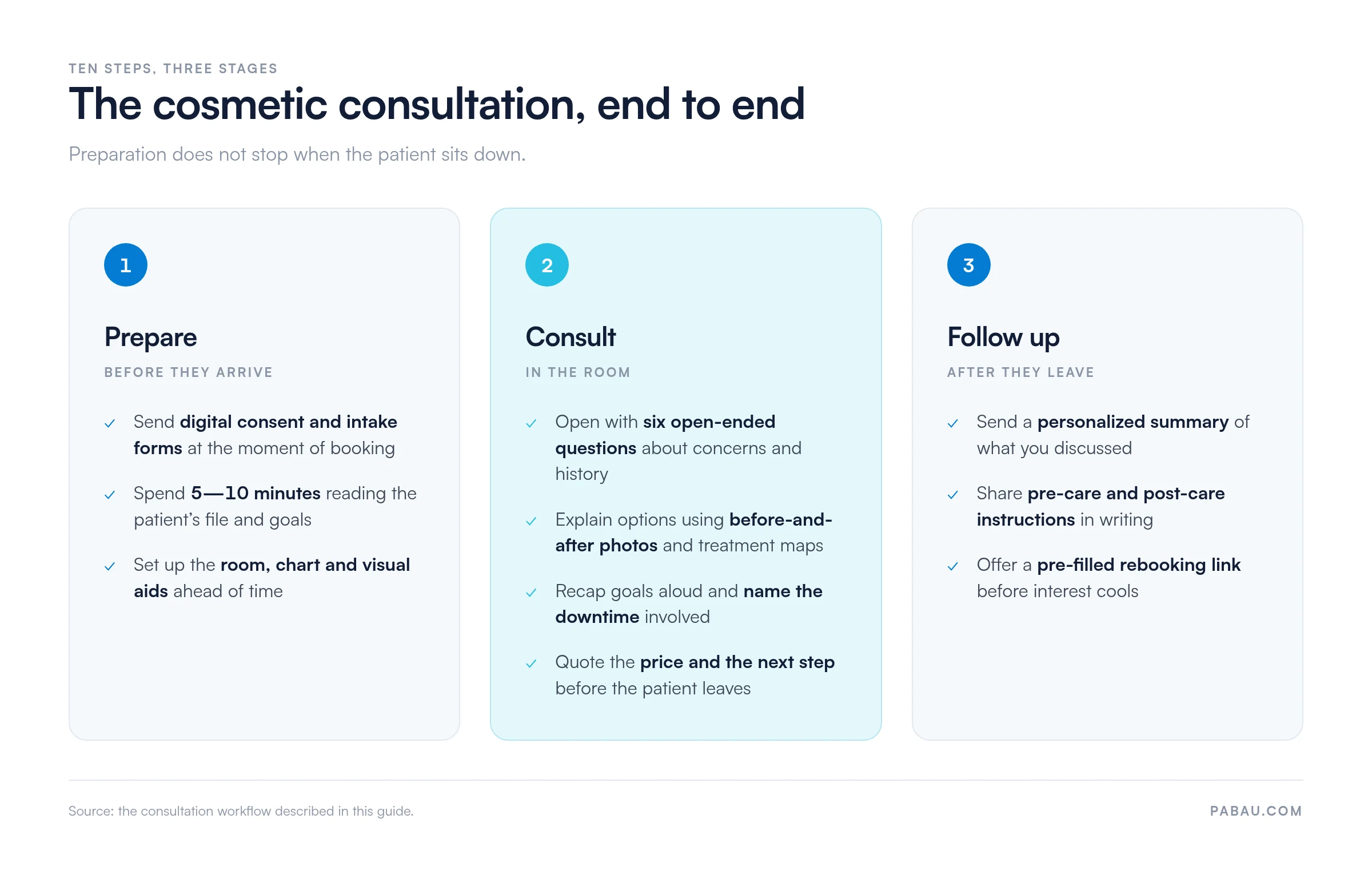
Before the consultation, send digital forms at booking, read the patient’s file for five to ten minutes, and prep the room and software.
Those three jobs hold whether the appointment is in person or virtual. State the procedure for client preparation in writing, so every member of the team runs the same sequence.
The chart below maps those three jobs against the two stages that follow.
Send the consent form, the medical history, and the treatment goal questions the moment the patient books.
Filling in paperwork in the waiting room is a poor start to an appointment the patient has been looking forward to. A cosmetic waiver covering risks, side effects, and photography consent belongs in that same send, signed before the patient arrives.
Practice management software like Pabau sends those forms automatically when the patient books. Three parts of the day improve at once:
That removes one job from the day of the appointment.
Take five to ten minutes to read the patient’s file before every consultation, new or returning.
For a returning patient, that means past treatments, clinical notes, and before-and-after photos. For a new one, read their form answers and plan the questions you want to ask.
If those answers point to expectations you cannot meet, you now have the whole appointment to reset them.
Prep is not the same job for a first-time patient as for someone three sessions into a course. Five parts of it change:
| What changes | New patient | Returning patient |
|---|---|---|
| Intake and consent | Full medical history, consent, and photography release, sent at booking | Short update form confirming medications, pregnancy status, and any change since the last visit |
| File review time | Around 10 minutes on their form answers and the reason they booked | Around 5 minutes on the last treatment note, the product used, and how it settled |
| Reference photos | Ask for the inspiration images they saved before the visit | Open your own before-and-after photos from previous sessions |
| Pricing conversation | Quote the whole course, because they have no benchmark to judge it against | Quote the top-up or next stage against what they already paid |
| Next step | Usually a patch test or a first session | Usually the next appointment in the course, booked before they leave |
Have the room clean, the chart open, the consultation template loaded, and your visual aids ready before the patient walks in.
A short pre-consultation checklist keeps it that way:
Reference photos do two jobs here. Your before-and-after images show what your work looks like, and the patient’s saved inspiration shots give you something concrete to test against their anatomy.
Software prep matters most when this is not the only consultation you are running today. Buffers between slots and notes landing on one shared record are what keep the fourth consultation as sharp as the first. We call that the back-to-back consultation system, and the Pabau section below sets it out in full.
If you do not have a template yet, our med spa consultation form covers the intake fields most aesthetic practices need. Five minutes of setup buys you an appointment where the patient never watches you hunt for a form.
During the consultation, ask open questions, show visuals, recap the patient’s goals back to them, then quote a price and name the next step.
The appointment asks for your full attention, which is hard when you are also typing notes. Dictation and AI note tools can draft the treatment summary for you, so your eyes stay on the patient.
Treatment-specific prep goes further than this. Our step-by-step guide to a Botox consultation breaks that appointment down in order.
Yes or no questions get you yes and no. Open questions get you the reason the patient booked. Six of them cover most of what you need:
Our free aesthetic interest questionnaire collects the same ground in writing before the appointment.
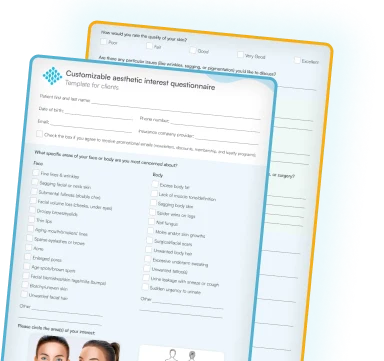
Expect questions back. Patients research before they arrive, and the lists of questions to ask a cosmetic surgeon that circulate online are the ones you will hear:
Agree those four answers as a team, so every practitioner gives the patient the same one.
One warning. Listen without jumping in with a recommendation. The longer the patient talks, the more you learn about what they want.
Diagrams, treatment maps, and before-and-after photos explain in seconds what takes a paragraph to describe. They also show progress across a course of treatment, which is what keeps patients booking.
Ask to see the reference photo the patient saved before the visit. Holding it next to a comparable before-and-after of your own is the fastest way to agree on what is achievable.
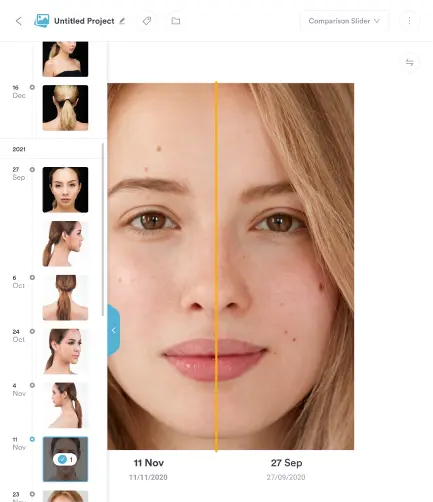
Capturing those photos on the patient record, rather than on a phone, keeps them dated, consistent, and comparable.
Recap the patient’s goal back in your own words before you recommend anything, and name what one session can and cannot do.
Before anyone books, make sure you and the patient are describing the same outcome. Be explicit about:
Then say it back in your own words. “To recap, you want to soften forehead lines before your wedding in two months. Based on that, I would suggest…”
Quote the price in the room, put it in writing, and name one next step the patient can say yes or no to.
Quote the whole course, not the single session, whenever the treatment needs more than one visit. A patient who hears the price of one session and later learns the course needs three feels misled, even though nobody lied.
“I need to think about it” is not a refusal. Ask what part they want to think about, because the answer is usually price, downtime, or timing. Each of the three has a different reply.
Then close on one of three next steps:
Write the chosen step on the patient record before the next consultation starts. A next step nobody logged is a next step nobody chases.
After the consultation, send a written summary, share pre-care and post-care instructions, and give the patient a way to book without calling.
The appointment ends, the job does not. Three follow-up steps decide whether the patient books, and whether they book with you.
A short thank-you, a summary of what you discussed, or the answer to a question they raised. Any of the three tells the patient you did not forget them the moment they left.
Set these up as templates and they send themselves. Appointment reminders, welcome messages, and pre-care instructions all work the same way.
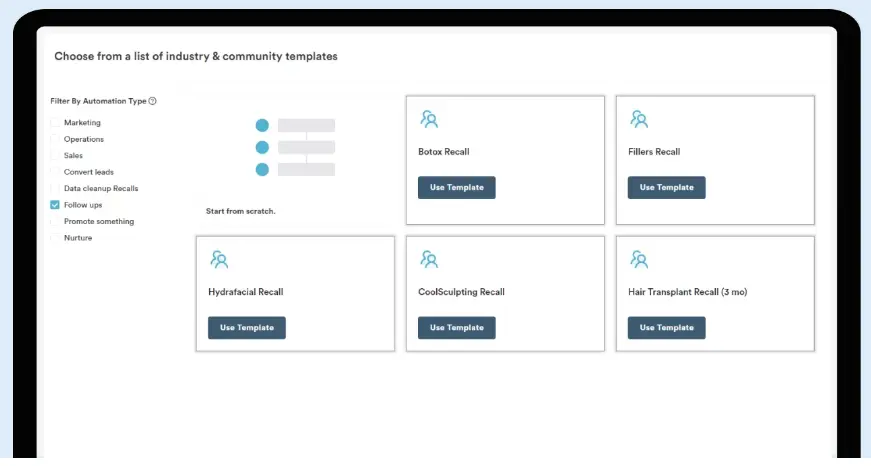
Targeted lists then keep each message going to the right group at the right time.
Send written pre-care and post-care instructions whether the patient books today or goes away to think about it.
The instructions cover the dos and don’ts, what to expect afterwards, and when to come back. For a filler booking, the pre-care note might read:
Post-care instructions follow the same pattern, written for the specific treatment the patient booked. Sending both digitally means the patient can find them again at 10pm, which is when they will look.
Offer the next appointment before the patient leaves, or send a booking link they can use later. The easier you make it, the more of them commit.
A “Book your next appointment” button with the date and time already filled in removes the last bit of friction.
The four mistakes that cost practices most are undocumented conversations, no room for questions, missing written aftercare, and too many options at once.
Running behind and juggling patients makes each one easy to slip into:
Watch for these four and the appointment feels calmer for both of you.
Pabau moves consultation admin to the point of booking, so most of the preparation above is done before you open the chart.
Plenty of practices still do that work by hand. Someone emails the consent form, someone else chases the signature, and the notes get typed up after closing.
The harder problem is volume. One consultation is easy to prepare for. Six in a day, across three providers and two rooms, is where the sequence starts to slip.
We call the fix the back-to-back consultation system, and it has four parts:
That last part is what practice owners are asking when they ask which platforms give you step-by-step guidance from initial consultation to full recovery. In Pabau, the intake form, the consultation note, the before-and-after photos, the aftercare send, and the rebooking link all read from one patient record.
In practices we onboard, the consultation that slips is rarely the first of the day. The fourth is the one at risk, because the notes from the second are still unwritten.
Pabau is medical spa software, built for the way an aesthetic practice actually runs a day. Every subscription includes every feature, so none of the above sits behind a higher tier.

Pabau sends consent and intake forms the moment a patient books, stores before-and-after photos on the patient record, and automates the follow-up. Your prep is done before you open the chart.

Ten small tasks across three stages make up consultation prep, and most of them happen when the patient is nowhere near your practice. That is the part worth fixing first.
Pick one stage. If patients arrive with blank forms, start at booking. If they leave without a price and a next step, start there instead.
Whichever you choose, write the steps down and hold your team to them. A consultation that runs the same way every time is the one patients trust. Book a demo to see how Pabau handles the paperwork side of that for aesthetic practices.

Turning consultations into bookings? Converting consultations into surgical bookings covers the follow-up sequence that moves a patient from interest to a booked date.
Need the paperwork ready to go? Our med spa consultation form template gives you the intake fields to send at the moment of booking.
Running a Botox consultation next? How to do a Botox consultation walks through assessment, dosing conversations, and consent.
Not sure what to offer? The most common cosmetic procedures shows which treatments patients ask about most.
Getting consent right? Our cosmetic surgery consent form sets out the risks and sign-off a procedure record needs.
Send digital consent and intake forms when the patient books. Spend five to ten minutes reading their file. Then set up the room, the chart, and your visual aids before they arrive.
Ask open-ended questions about what prompted the visit and what the patient wants to improve. Cover previous treatments and surgery, allergies, skin sensitivities, current medications, and the timeframe they have in mind.
Say what one session achieves, what needs a course of visits, and what downtime is involved. Then recap the patient’s goals in your own words before you recommend anything.
Send a short summary of what you discussed, written pre-care and post-care instructions for the treatment, and a link to book the next appointment.
Relying on verbal communication without documenting it, rushing past the patient’s questions, skipping written pre-care and post-care guidance, and overloading the patient with upsells.
A good client consultation surfaces why the patient booked, recaps the goal back in the patient’s own words, and ends with a written follow-up. Record all three on the patient file, and the next appointment starts where this one ended.