Journal prompts for mental health
Journal prompts for mental health are guided questions that help people process ...

2
Last Updated: Oct 13, 2026

Adult/adolescent CBIT initial evaluation is a structured assessment that evaluates tic severity, functional impairment, and treatment readiness before starting the 8-session behavioral intervention protocol.
Clinicians must administer standardized rating scales (YGTSS and PUTS) to measure tic intensity, complexity, interference, and premonitory urge.
Function-based assessment documents situational triggers and consequences that maintain tic behavior.
Co-occurring conditions (OCD, ADHD, anxiety) require screening during intake because they affect treatment planning, session structure, and psychoeducation emphasis.
A ready-to-use clinical intake form covering tic history, Yale Global Tic Severity Scale (YGTSS) and Premonitory Urge for Tics Scale (PUTS) administration, function-based assessment (antecedents and consequences), co-occurring condition screening (OCD, ADHD, anxiety), and treatment planning for the structured 8-session CBIT protocol.
Download templateComprehensive Behavioral Intervention for Tics (CBIT) is the leading behavioral therapy for Tourette’s and chronic tic disorders, and it works best when you start from a structured evaluation.
Before running CBIT for tics or CBIT for Tourette’s, therapists need a reliable way to judge whether a patient is a candidate and to set the baseline severity scores that guide treatment planning and measure progress.
The adult/adolescent CBIT initial evaluation form captures the clinical data that shapes the plan: tic phenotype, functional impact, rating scale scores, and the comorbid conditions that change how sessions are structured.
This guide walks you through the components of an evidence-based CBIT initial evaluation, explains what each rating scale measures, and shows you how to integrate this assessment into your practice workflow so you can launch the 8-session protocol with confidence.
A CBIT initial evaluation is a comprehensive tic disorder assessment. It determines whether a patient is a suitable candidate for Comprehensive Behavioral Intervention for Tics and establishes the baseline data needed to guide treatment.
Unlike a general psychiatric intake, it focuses on tic characteristics, severity, the situations that trigger or maintain tics, and any co-occurring conditions, like OCD or ADHD, that could affect the behavioral intervention.
Most published CBIT guidance is written for children. This form is built for the adult and adolescent caseload, where longer tic histories, work or school stressors, and self-referral change what you screen for.
The evaluation serves three purposes:
The DSM-5 criteria for tic disorders are the diagnostic foundation, though CBIT can be delivered to patients with Tourette syndrome, persistent motor tic disorder, persistent vocal tic disorder, or provisional tic disorder.
HIPAA-compliant documentation of the initial evaluation protects patient privacy and ensures every clinical decision, from tic target selection to comorbidity follow-up, is fully recorded for continuity of care.
A structured evaluation template.
This evaluation template applies to adults and adolescents (typically ages 12 and older) presenting with motor tics, vocal tics, or both. The form is appropriate for therapists in private practice, community mental health agencies, hospital-based behavioral health programs, and specialty tic disorder practices.
This template is built for ages 12 and up. Younger children are typically assessed with age-adapted protocols such as CBIT-JR, designed for roughly ages 4 to 8, rather than this form.
The evaluation is also not appropriate for patients with active untreated psychosis, active substance dependence, or severe cognitive impairment preventing protocol engagement. Screen for these contraindications before scheduling the full evaluation.
The evaluation is conducted over a single 60-90 minute session and follows five operational steps, each grounded in the form’s structured sections:
Each step is reflected in the form’s sections. At the evaluation’s end, deliver psychoeducation about tics and CBIT, establish 2-3 tic targets for habit reversal training, and schedule the 8-session protocol, typically weekly or biweekly.
Use digital intake forms in your practice management system so patients can begin the tic inventory at home, saving session time. Baseline scores are then automatically stored for easy retrieval at follow-up visits.
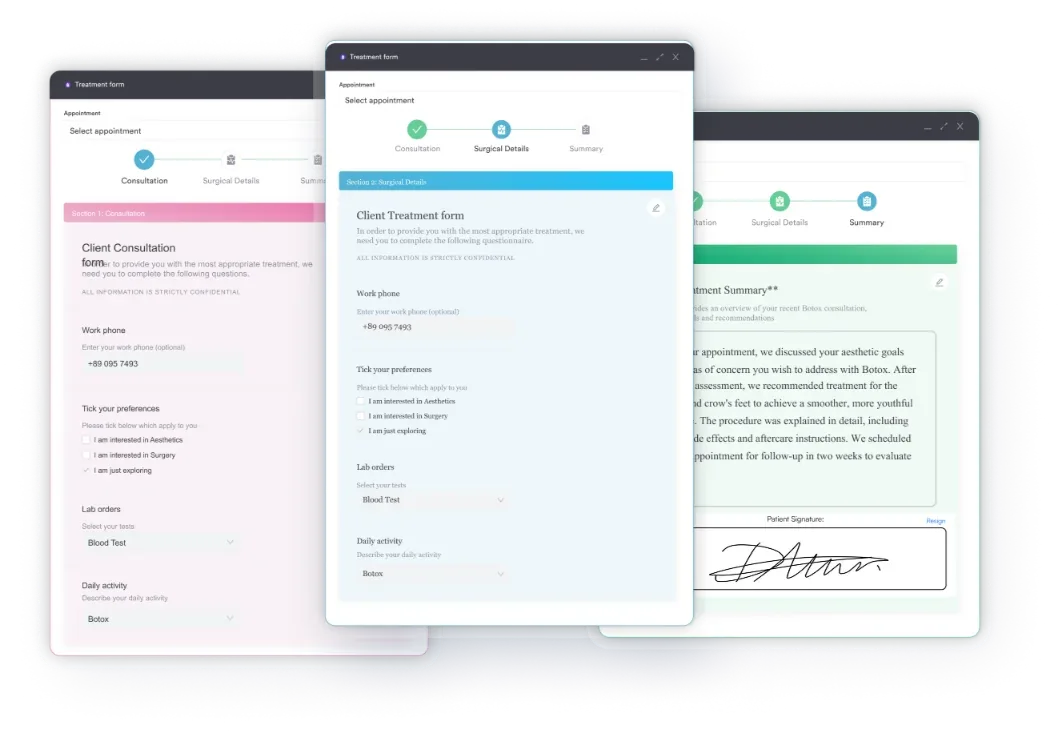
Completed forms belong in structured medical records management, not a filing cabinet.
The form is organized into sections that align with the clinical questions clinicians need to answer before starting habit reversal training.
This section lists every motor tic, such as eye blinking, head jerking, shoulder shrugging, or hand movements, and every vocal tic, such as throat clearing, humming, word repetition, or coprolalia if present. For each tic, document frequency (how many per minute or hour), intensity (mild, moderate, or severe), whether it causes physical discomfort, and whether it draws social attention.
Simple tics (a single muscle movement or sound) are rated separately from complex tics (multi-step sequences). This inventory becomes the basis for selecting which tics to target in habit reversal training.
The Yale Global Tic Severity Scale (YGTSS) is the gold-standard measure of tic severity in both adults and adolescents. Its 0-50 Total Tic Score covers five domains — number, frequency, intensity, complexity, and interference — scored separately for motor tics (0-25) and phonic tics (0-25).
Impairment is rated separately on its own 0-50 scale, and the two scores combine into a 0-100 Global Severity Score. This structure means a patient with many mild tics and a patient with few severe tics can both be scored accurately. A total tic severity score reduction of 25-35% is considered a clinically significant response to CBIT.
The Premonitory Urge for Tics Scale (PUTS) is a 9-item questionnaire measuring the patient’s awareness of the sensation that precedes a tic. Higher PUTS scores, indicating strong premonitory urges, are associated with better habit reversal training outcomes because the patient can recognize the warning signal and apply the competing response.
Low PUTS scores may require adjusting the HRT protocol, with more emphasis on awareness training or externally cued responses.
This section documents what happens before the tic, such as stress, fatigue, boredom, or social events (antecedents), the tic itself (behavior), and what happens after, such as attention from others, sensory relief, or avoidance of a task (consequences).
For example, a patient’s hand-wringing tic might be triggered by perfectionism about schoolwork (antecedent), performed as a repetitive hand motion (behavior), and followed by temporary sensory relief (consequence).
Understanding this ABC chain reveals which tics are maintained by external reinforcement versus internal reinforcement, which shapes whether habit reversal training should focus on social cues or internal urge management. Clinicians addressing other behavior problems often formalize this same antecedent-behavior analysis in a written behavioral intervention plan.
Tourette syndrome and persistent tic disorders frequently co-occur with OCD (40-50%), ADHD (50-60%), or anxiety disorders. The form includes brief screening items or embedded references to standardized tools for rapid assessment.
If screening is positive, document the comorbidity and consider whether concurrent treatment is needed. Comorbid OCD may require longer sessions or adjusted psychoeducation so the patient understands that habit reversal training, which suppresses the tic through a competing response, differs from compulsions, which reinforce anxiety.
Habit reversal training (HRT) is the engine of CBIT, and every section of the evaluation feeds a decision inside it. The tic inventory and the antecedent-behavior-consequence analysis tell you which two or three tics to target first and whether each one is reinforced internally through sensory relief or externally through attention or task avoidance.
The PUTS score tells you where to start. A patient with strong premonitory urges can begin competing response training in the first session, while a low score means you spend early sessions on awareness training so the patient can feel the urge before the tic fires.
For each target tic, you and the patient design a competing response: a movement physically incompatible with the tic that the patient holds until the urge fades, such as slow diaphragmatic breathing for a throat-clearing tic or gently tensing the neck for a head jerk.
Where the evaluation flags stress or fatigue as consistent triggers, add relaxation techniques so tic management holds up outside the office. Recording these decisions on the evaluation form keeps the competing responses, tic targets, and trigger list moving into every session that follows, instead of being rebuilt from memory each week.
At the evaluation’s end, use the form’s treatment planning section to document:
This section also documents any adjustments to standard CBIT based on evaluation findings:
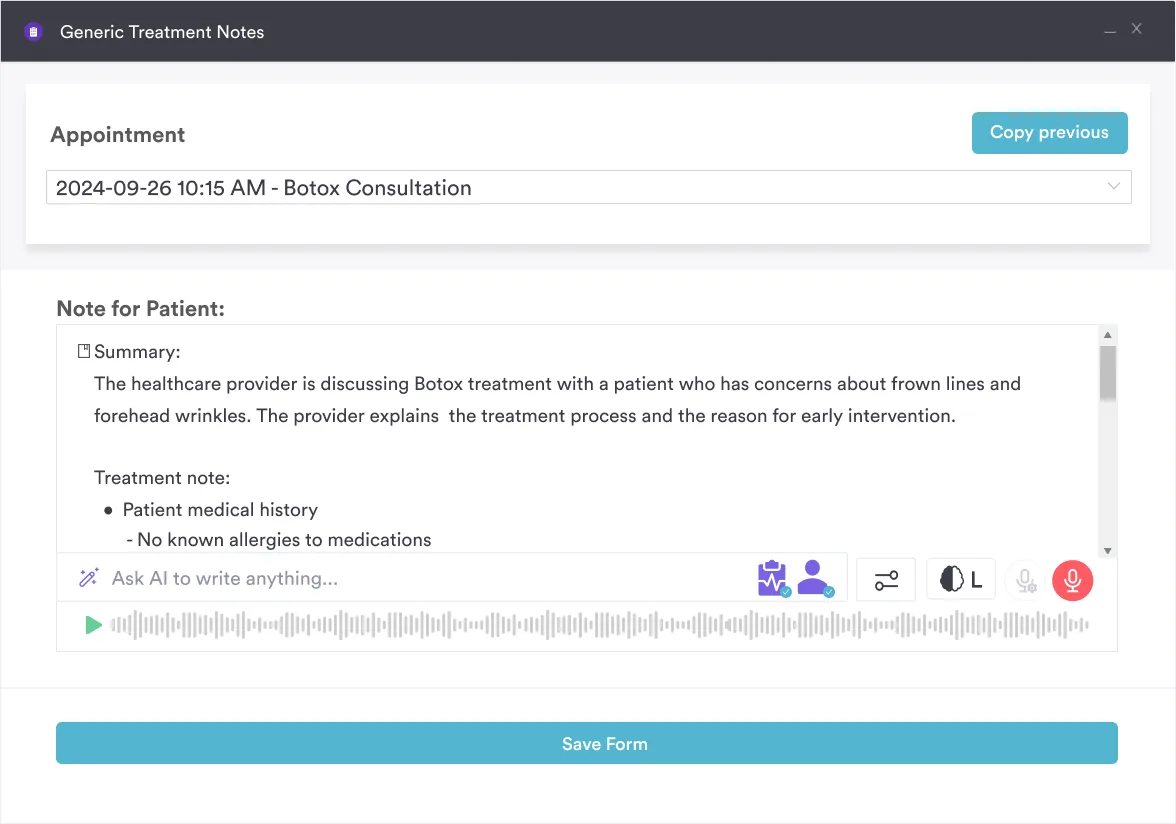

Pabau’s digital forms and clinical documentation features help you deliver structured CBIT intake assessments, track YGTSS and PUTS scores across the 8-session protocol, and maintain organized session notes-all in one place.

Therapists managing multiple CBIT cases benefit from a practice management system that consolidates intake forms, rating scale scores, and session notes. Many clinicians piece the paperwork together from their own CBIT worksheets or a CBIT treatment manual PDF picked up during CBIT training, then lose track of which version a patient completed.
Pabau’s digital forms feature lets you create a custom adult/adolescent CBIT initial evaluation form that patients complete on tablets before the session, saving time and ensuring legible baseline data.
Session-by-session YGTSS rescoring, tracked automatically in the patient record, shows treatment response at a glance. It also supports shared decision-making with the patient: “Your tic severity score was 38 at baseline. We’re now at 24, which is a 37% reduction, so you’re responding well to habit reversal training.”
It schedules appointments with linked treatment plan reminders, ensures habit reversal homework is documented between sessions, and flags when comorbid conditions like OCD or anxiety need concurrent follow-up.
Multi-location therapists use these systems to maintain consistent evaluation procedures across all sites, reducing variability and ensuring every patient receives the same evidence-based CBIT intake assessment.
Schedule 60-90 minutes for the full evaluation. Rushing through the tic inventory, rating scales, or function-based assessment compromises treatment planning. Adequate time shows the patient their symptoms are taken seriously and lets you gather rich detail about triggers and consequences.
Involve the patient collaboratively in tic target selection. Rather than clinician-driven goals, ask: “Which tic bothers you most? Which one would you most want to change?” Shared decision-making strengthens engagement and ensures the patient cares about the tics being targeted in habit reversal training.
Deliver psychoeducation about tics and premonitory urges during the evaluation. Patients often misunderstand tics as voluntary or a sign of anxiety disorder. Use the evaluation as a teaching moment to explain the neurobiology of tics and why care coordination across your team ensures consistent education and treatment approach.
Document baseline YGTSS and PUTS scores prominently so they are easy to retrieve at each follow-up session. Progress measurement depends on having clear baseline scores. Bury them in clinical notes, and you’ll spend time hunting for them later. Use your practice management system’s dashboard to surface these scores automatically.
The adult/adolescent CBIT initial evaluation is the clinical foundation that determines whether a patient is a suitable candidate for habit reversal training and what tics should be targeted. Administering standardized rating scales (YGTSS, PUTS), documenting the function-based assessment, and screening for co-occurring conditions ensures your treatment plan is personalized and evidence-based.
Book a demo with Pabau to see how digital forms and structured clinical documentation streamline your CBIT evaluations, helping you track progress across the 8-session protocol with confidence.

Need to assess family dynamics and parenting style? Parenting worksheet template covers parenting styles, family dynamics, communication patterns, behavior management, and emotion regulation.
Screening a client for possible PTSD? PCL-5 PTSD checklist shows how to score it correctly, with a total of 31 to 33 signaling probable PTSD.
Need a validated tool for personality assessments? PCL-R checklist covers all 20 items, Hare’s factor and facet structure, scoring, and cut-offs, plus a free template.
A CBIT initial evaluation includes detailed tic history, standardized severity rating scales (YGTSS and PUTS), function-based assessment documenting situational triggers and consequences, screening for co-occurring conditions (OCD, ADHD, anxiety), and collaborative treatment planning with tic target selection and session scheduling for the 8-session protocol.
The YGTSS is the gold-standard measure of tic severity for both adults and adolescents. Its 0-50 Total Tic Score covers tic number, frequency, intensity, complexity, and interference, scored separately for motor and phonic tics. Impairment is rated separately on its own 0-50 scale, and the two combine into a 0-100 Global Severity Score. A Total Tic Score reduction of 25-35% across the 8-session CBIT protocol is considered a clinically significant treatment response.
Yes, this evaluation template applies to both adolescents (typically ages 12+) and adults with tic disorders. Younger children are typically assessed with age-adapted protocols such as CBIT-JR, designed for roughly ages 4 to 8, rather than this form. Always screen for absolute contraindications (untreated psychosis, active substance dependence, severe cognitive impairment) before administering the full evaluation.
Premonitory urges are the uncomfortable sensation or build-up of tension that precedes a tic. The Premonitory Urge for Tics Scale (PUTS) measures patient awareness of these urges. Higher PUTS scores predict better habit reversal training outcomes because patients can recognize the warning signal and apply a competing response before the tic occurs.
If screening indicates comorbid OCD or ADHD, consider whether concurrent treatment is needed and adjust your CBIT approach accordingly. Comorbid OCD may require psychoeducation distinguishing habit reversal training from compulsions. ADHD may require longer breaks or simplified written materials during sessions. Document the comorbidity and any treatment adjustments in the initial evaluation form.
A comprehensive adult/adolescent CBIT initial evaluation typically takes 60-90 minutes. This allows adequate time for tic inventory documentation, rating scale administration, function-based assessment, comorbidity screening, psychoeducation, and collaborative treatment planning without rushing through critical clinical information.
CBIT stands for Comprehensive Behavioral Intervention for Tics, the leading behavioral therapy for Tourette syndrome and chronic tic disorders. It combines habit reversal training, a function-based assessment of tic triggers, and relaxation strategies delivered across a structured 8-session protocol.
CBIT therapy teaches patients to notice the premonitory urge before a tic and respond with a competing movement that makes the tic hard to perform. Delivered as CBIT for tics or CBIT for Tourette’s in both adolescents and adults, it lowers tic severity without medication and holds up as long as patients keep practicing their competing responses between sessions.
Not exactly. Habit reversal training is the central component of CBIT, but CBIT adds psychoeducation, a function-based assessment of what triggers and maintains each tic, and relaxation training on top. Habit reversal training for tics is the core skill. CBIT is the full protocol built around it.