Fair fighting rules worksheet
A fair fighting rules worksheet is a therapy handout that sets out ground rules ...

2
Last Updated: Oct 21, 2026

The adult attachment scale (AAS) is an 18-item self-report measure assessing three attachment dimensions: Close, Depend, and Anxiety.
The AAS was developed by Collins and Read in 1990 and revised by Collins in 1996 to improve psychometric properties.
Therapists use AAS scores to identify attachment patterns and guide targeted interventions in individual and group settings.
Pabau’s digital forms and client records help therapists administer, score, and integrate AAS results into structured treatment planning.
A validated 18-item self-report questionnaire for mental health professionals to assess adult attachment styles across three core dimensions: discomfort with closeness, reliance on others, and anxiety about rejection.
Download templateThe adult attachment scale (AAS) is an 18-item self-report questionnaire that measures three core dimensions of attachment: comfort with closeness, reliance on others’ availability, and anxiety about rejection and abandonment.
Developed by Collins and Read in 1990 and revised by Collins in 1996, it gives therapists, counselors, and researchers a structured, validated framework for understanding how adults form and maintain emotional bonds in close relationships.
This guide covers what the AAS measures, how to administer and score it accurately, how to interpret results clinically, and how to integrate findings into treatment — whether you’re working in individual therapy, couples counseling, group settings, or psychiatric assessment.
The adult attachment scale (AAS) is a self-report measure grounded in attachment theory, the psychological framework developed by John Bowlby. Bowlby’s theory holds that early caregiving experiences shape how individuals approach relationships, trust, intimacy, and emotional regulation throughout adulthood. The AAS operationalizes these patterns into three measurable subscales.
It is frequently paired with other validated tools such as the adult hope scale to build a fuller picture of a client’s psychological resilience.
Built on earlier work by Hazan and Shaver (1987) and Levy and Davis (1988), the original 18-item AAS was published in peer-reviewed literature and has been validated across decades of research. The revised version maintains the three-subscale structure and has demonstrated strong internal consistency and construct validity in clinical and non-clinical populations worldwide.
The adult attachment scale (AAS) breaks attachment into three separate dimensions. Each subscale is calculated from specific items within the 18-item questionnaire and interpreted separately to build a nuanced picture of the client’s relational functioning.
Unlike some attachment measures that assign a single categorical label, the AAS yields three independent subscale scores. Two subscales (Close and Depend) map onto avoidant attachment patterns, while Anxiety captures the anxious-preoccupied dimension — placing clients on a spectrum rather than in rigid categories.
Clinicians can use a structured client record system to track how these three dimensions evolve across treatment. Screening tools like the AC-OK screen for co-occurring disorders can complement AAS findings when complex presentations are suspected.
The adult attachment scale (AAS) is straightforward to administer in any clinical or research setting. The measure is self-administered. Clients complete it independently in 5 to 10 minutes, which makes it practical for intake appointments, ongoing assessment, or research protocols.
The entire process of administration, scoring, and interpretation typically takes 15 to 20 minutes for a clinician trained in the instrument.
A therapy practice management system files each completed worksheet under the client’s treatment plan.
Most published copies of the scale stop short of the scoring key, leaving it in an appendix or omitting it entirely. Here is the full method for the revised version (Collins, 1996), the standard in current clinical use.
Each subscale is made up of six items rated from 1 (not at all characteristic) to 5 (very characteristic). Reverse-score the marked items by subtracting the response from 6, then average the six items in each subscale for a score between 1 and 5.
Read the three subscale averages together to identify the attachment pattern:
One trap to watch: the original 1990 version orders its items differently, so its subscale keys do not match the revised keys above. Match the scoring key to the exact version you administer, or the subscale averages will be wrong.
Integrating the adult attachment scale (AAS) into treatment planning lets you anticipate relational difficulties, tailor your therapeutic approach, and help clients develop earned secure attachment.
Document how attachment patterns relate to the client’s presenting problem. For example: “Client reports anxious attachment (Anxiety subscale 4.2), which aligns with his hypervigilance in relationships and fear of abandonment driving his anxiety symptoms. Treatment will include attachment-focused psychotherapy and distress tolerance skills.” Pairing this formulation with a change plan worksheet turns the case note into concrete, trackable goals.
Use patient care workflows to schedule regular reassessment, typically at 12-week intervals or major treatment transitions, to track whether therapeutic work is promoting earned security. For clients presenting with mood instability alongside attachment difficulties.
Several attachment assessment tools exist. The adult attachment scale (AAS) is brief, normed across diverse populations, and free to use with minimal licensing restrictions.
The Experiences in Close Relationships (ECR) and its revised version (ECR-R) offer more dimensions and deeper psychometric validation but require licensing and take longer to administer. The Attachment Style Questionnaire (ASQ) and Adult Attachment Interview (AAI) serve different purposes — the ASQ for rapid screening, the AAI for in-depth clinical interviews.
For most therapy practices, the AAS offers the optimal balance of brevity, clinical utility, and evidence base. It integrates easily into psychological assessment templates and supports efficient practice workflows.
Practices managing eating-related concerns may also pair the AAS with the binge eating scale or a broader eating disorder worksheet, given attachment insecurity’s known association with disordered eating.
The adult attachment scale (AAS) has demonstrated robust psychometric properties across decades of research. The original Collins and Read (1990) publication established the three-subscale structure and provided initial validity evidence. The revised adult attachment scale (RAAS), published by Collins in 1996, improved item clarity and reliability, and continues to be the standard in clinical and research settings.
Studies confirm strong internal consistency, though reported alpha coefficients vary by version. The original Collins and Read (1990) AAS reports Cronbach’s alphas of roughly .69-.75 across the Close, Depend, and Anxiety subscales, while the revised RAAS (Collins, 1996) reports improved alphas of roughly .78-.85. Construct validity has held up well against related measures of relationship quality, trust, and emotional well-being.
Cross-cultural research, including validation studies in China and other international contexts, supports the AAS’s applicability across cultures and clinical populations. Clinicians dealing with related diagnostic questions may also consult ICD-10 code F44.9 for dissociative and conversion disorder or ICD-10 code F23 for brief psychotic disorder, which can co-present with severe attachment disruptions.
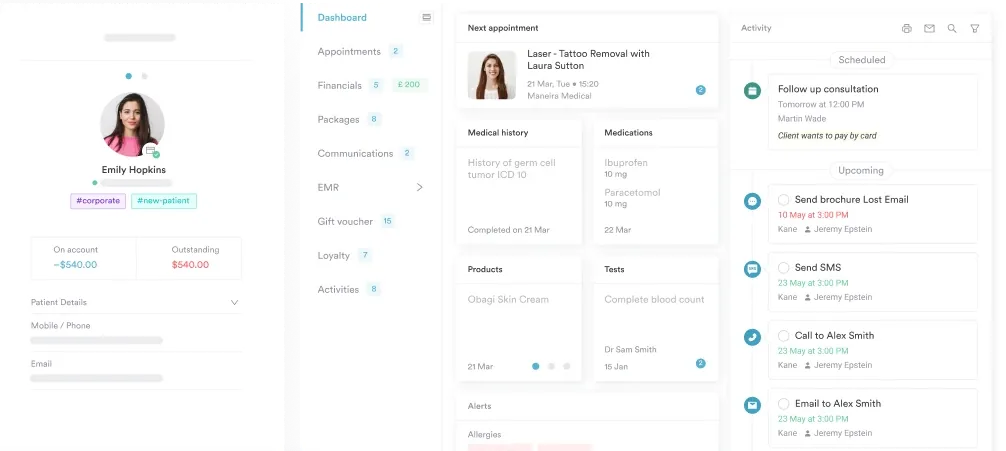
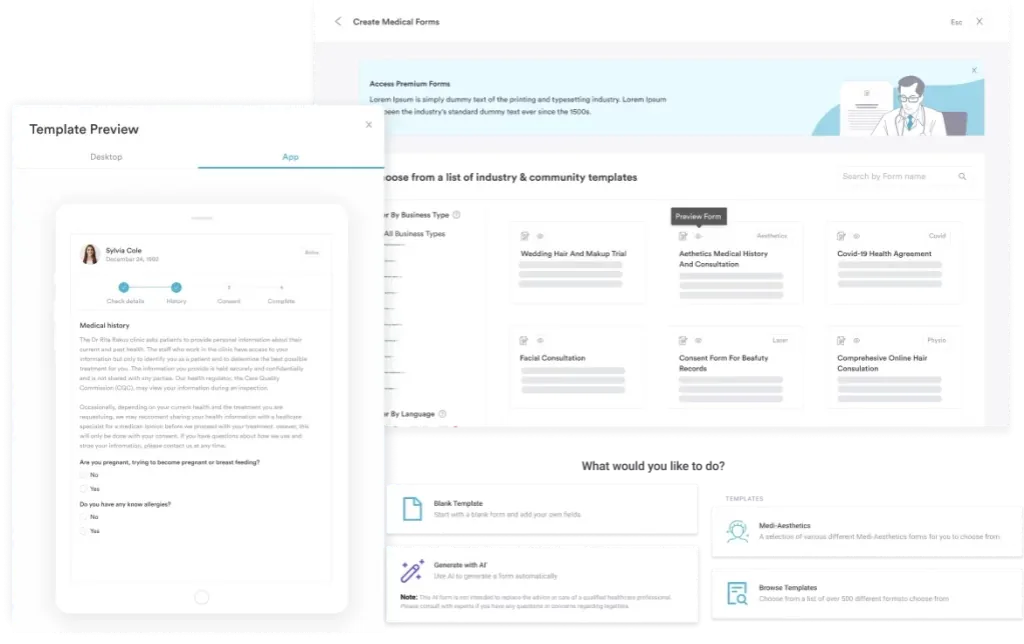
Mental health practices can simplify AAS administration and integrate results directly into treatment planning using practice management software like Pabau. Its digital forms let you load the 18-item AAS questionnaire as a client-facing form, administer it electronically at intake or during sessions, and export scored results into the client’s permanent record automatically.
Store all assessment data, including raw scores, subscale calculations, and clinician interpretations. Set clinical reminders to reassess attachment at regular intervals, and use reporting tools to track how client attachment security evolves over the course of treatment.
For ADHD-related presentations that can complicate attachment assessment.
Book a demo with Pabau to see how integrated assessment workflows can streamline your intake process and improve continuity of care.
The adult attachment scale (AAS) is a validated, accessible tool for understanding and addressing relational patterns in therapy. Systematically assessing attachment across three core dimensions clarifies a client’s relationship capacity, surfaces therapeutic challenges early, and grounds interventions in attachment theory and evidence-based practice.
Whether you’re working in individual, couples, group, or psychiatric settings, integrating the AAS into your intake and ongoing assessment process strengthens diagnostic accuracy and improves treatment outcomes. Download the free template above, and consider how Pabau’s digital forms and client management tools can help you scale assessment administration and maintain continuity of attachment-focused care across your practice.
You may also explore the Agility T-Test template and the Adson’s test template for broader clinical assessment workflows supported by Pabau.

Working through attachment ruptures rooted in early trauma? Our trauma timeline worksheet helps clinicians map formative relational events alongside the attachment patterns identified by the AAS.
Want to explore a client’s sense of self? Identity worksheet template covers values, beliefs, strengths, goals, and cultural identity across around 20 open prompts.
Looking to capture attachment and relational history at the first session? Our psychotherapy intake form template gives practices a structured starting point for recording relational history alongside presenting concerns.
The adult attachment scale (AAS) measures three core dimensions of attachment style: comfort with closeness and intimacy, reliance on partners for support, and anxiety about rejection and abandonment. These dimensions help therapists understand how clients approach relationships and emotional vulnerability.
Clients typically complete the 18-item questionnaire in 5-10 minutes. Scoring and clinician interpretation add another 5-10 minutes, for a total of 15-20 minutes from start to finish.
The Adult Attachment Scale (AAS) was developed by Collins and Read (1990) and revised by Collins (1996). It is widely reproduced in academic and clinical literature and is generally available for use in clinical practice, research, and educational settings at no cost. While it is not formally designated as public domain, the authors have not imposed licensing restrictions and the scale is freely accessible through published literature. Users in commercial or large-scale research contexts may wish to contact the authors for clarification.
The original AAS was published by Collins and Read in 1990. Collins revised the instrument in 1996 (RAAS) to improve item clarity and psychometric properties. Both versions use the same three-subscale structure; the revised version is now the standard in clinical use.
Each of the three subscales (Close, Depend, and Anxiety) is made up of six items rated 1 to 5. Reverse-score the marked items, then average the six items in each subscale for a score between 1 and 5. Read the three averages together to identify a secure, anxious, or avoidant pattern.
High scores on the Anxiety subscale (4-5) indicate anxious-preoccupied attachment, characterized by fear of rejection, abandonment anxiety, and heightened relationship monitoring. Therapeutic work focuses on distress tolerance, self-soothing, and building confidence in the relationship.
You can download a free PDF of the 18-item AAS questionnaire from the template box at the top of this page. It follows the revised adult attachment scale (RAAS) structure, so the Close, Depend, and Anxiety scoring keys in this guide match the form you hand to clients.