Scapular assistance test: Procedure, interpretation and free template
The scapular assistance test is a manual examination in which the clinician supp...

1
Last Updated: Oct 19, 2026

The Passionate Love Scale (PLS) is a validated 15-item questionnaire that measures how intense romantic passion feels right now.
Elaine Hatfield and Susan Sprecher published it in 1986, and every item is rated on a 9-point scale.
Totals run from 15 to 135, and the published bands run from 15-44 (the thrill is gone) to 106-135 (wildly in love).
The short form takes two to three minutes, so it fits into a routine intake without crowding the session.
A low score at year 10 often reflects normal companionate attachment rather than a relationship in trouble.
This PDF holds the 15-item short form, the standard instruction wording, and the 9-point response scale. It also includes a scoring key and the published interpretation bands, ready to print or send before a session.
Download templateTherapists need a way to measure how intense romantic passion feels, not just whether a couple is satisfied. The Passionate Love Scale (PLS) does that in 15 questions.
It captures the longing and preoccupation that mark new or renewed romantic attachment. For psychology practices, it is one of the quickest validated measures you can add to an intake pack.
Passion and commitment are different things, and the scale measures only the first. That separation earns its keep in couples work.
One partner’s fading passion can feel like rejection when it is simply how long relationships mature. Sent ahead as digital intake forms, the questionnaire takes two to three minutes and hands you a number you can track.
The Passionate Love Scale is a standardized questionnaire that quantifies the intensity of passionate love in a romantic relationship. Elaine Hatfield and Susan Sprecher published it in 1986. It covers three linked dimensions:
Broader satisfaction measures cannot pull those feelings apart from general contentment. The PLS isolates passionate love, the acute state that differs from companionate love. Companionate love is the secure, long-term attachment that grows as passion settles. So a couple reporting diminished passion at year 10 may have no clinical problem at all.
The scale exists in two versions, each suited to a different setting:
The short form suits most practices. It keeps the psychometric strength of the full scale while asking far less of the client. That matters when several assessments run in the same session.
Each item is rated from 1, “not at all true of what I feel”, to 9, “definitely true of what I feel”. The 15 items spread across the three domains. Representative items include:
The questionnaire works on paper in session, or asynchronously through a portal the client logs into. Either route gives you standardized scoring and a clean audit trail for compliant documentation.
Add up all 15 responses. Nothing is reverse scored, so the total lands between 15 and 135, and a higher total means more intense passion.
These bands were published with the original scale, so quote them to clients instead of inventing local cutoffs. Record the total and the date in the client’s clinical record. That gives you a baseline to compare against later in therapy.
The scale meets the standards you would expect of a clinical measure. Hatfield and Sprecher reported internal consistency of 0.90 to 0.94 (Cronbach’s alpha), so the items track one construct.
Test-retest reliability over short intervals is strong. It has also been validated in North American, Middle Eastern, and Asian samples, which makes it usable in multicultural practices.
The evidence also shows discriminant validity, meaning the scale measures passion rather than general satisfaction. It shows convergent validity against other measures of romantic attachment.
That combination is why it became a benchmark in relationship research. Treat it as one part of an assessment protocol, never as a standalone diagnosis.
Treating passion as a proxy for relationship health leads to pathologizing a change that is entirely normal. The two forms of love run on different timelines:
A couple at year 15 who say the spark has gone may be describing healthy companionate attachment. A score in the cool band, alongside high satisfaction, makes that case credible. You can then explain the stages and address the worry underneath. That worry is often a fear of abandonment or an unmet expectation about intimacy.
At intake: Run the questionnaire alongside your standard relationship history. A cool score in a couple who came in over lost connection can reframe the whole presenting problem.
What they miss may be security and consistency rather than passion. A high score in one partner and a cool score in the other flags a mismatch worth naming early.
For progress monitoring: Repeat the measure quarterly through couples therapy. Stable or rising scores suggest your interventions are supporting emotional reconnection.
Falling scores can mean deepening disconnection, or a healthy move into companionate attachment if satisfaction is holding. Pairing it with a session-level measure like the outcome rating scale shows which reading is right.
As a conversation opener: The items themselves prompt useful dialogue. A therapist might say: “You scored 52, which the published bands call cool. That is common after 10 years. Is it what you expected, or does it worry you?” That question opens up fears, values, and what each partner actually wants.
On ethics: Never present a score as proof that a relationship is working or failing. Scores describe, they do not prescribe. A couple with low passion, high satisfaction, and real security is doing fine. Normalize the whole range and keep therapy pointed at the client’s own goals.
The scale covers passion, so pair it with measures that cover the rest. The Couples Satisfaction Index tracks overall satisfaction. The Dyadic Adjustment Scale looks at communication and conflict. The Love Attitudes Scale explores how each partner thinks love is supposed to work.
A brief read on readiness, such as the motivation assessment scale, helps when one partner is more invested in the work than the other. For a fuller mental health history around the questionnaire, a psychiatric evaluation template covers the ground an intake needs.
Give couples their own results through a client portal so they can review scores and notes between sessions. Shared visibility builds alliance and keeps both partners invested in the work.
Repeat the questionnaire on a fixed interval, such as every 12 weeks. Consistent timing stops a recent argument or a good holiday from masking the real trend. Store each score next to the session note, so you can line score changes up against the work you did.
Print the downloaded PDF, or send it out digitally before the session. Ask each partner to complete it separately, then check that all 15 items are answered. Sum the responses, compare the total against the bands above, and record both the score and the date.
Build the same fields into your practice management system so results reach the client summary without retyping. A standard format also makes outcome reporting and audits far less painful. A progress notes cheat sheet keeps the write-up consistent between clinicians.
The instrument does not expire. Clinicians still use the 1986 original in clinical, research, and teaching settings, and its psychometric design has held up for four decades.
Most practices still send assessments as an email attachment. Someone prints the PDF, the couple fills it in at reception, and a clinician types the total into the note afterwards. The score ends up in three places at once. Comparing scores across a year of sessions then means digging through files.
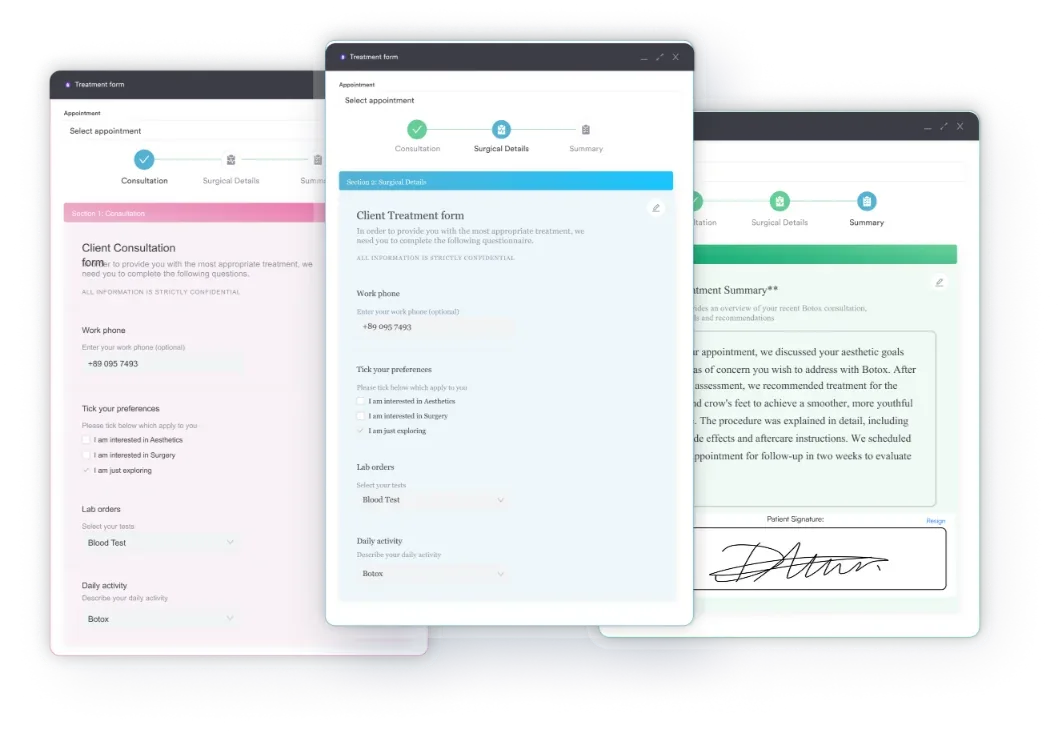
Pabau keeps that whole loop in one system. You send the questionnaire from the client record before the appointment. Both partners complete it on their own device, and the answers land straight in the file. Nothing gets retyped, and nothing sits waiting in a scanner tray.
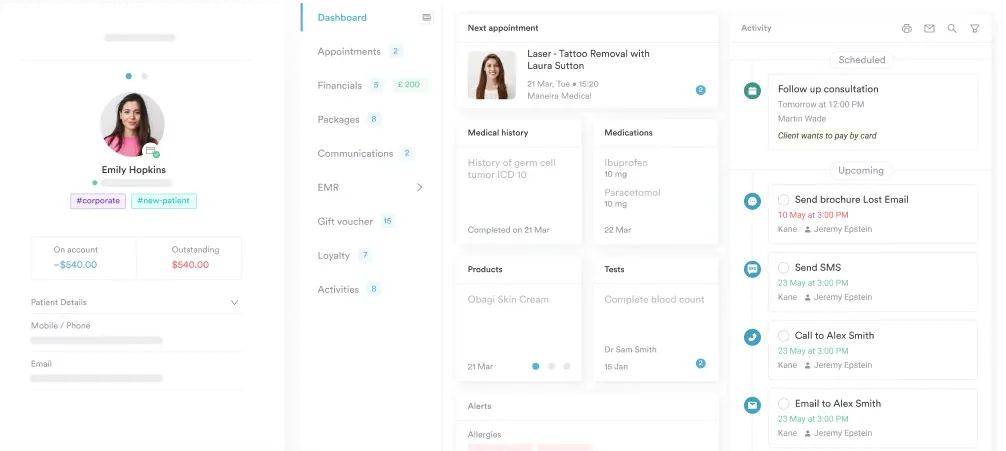
Because every score sits beside the appointment, the note, and the signed forms, you can see how passion scores moved alongside the work you did. Mental health practices can share those results with clients in the portal as well. Every subscription includes the forms, records, and reporting tools, so none of this is an add-on.

Pabau sends the Passionate Love Scale out before the session and files each score in the client record. Progress stays visible across the whole course of care.

This questionnaire earns its place because it separates two things couples routinely confuse. Passion fades on a fairly predictable curve. Commitment does not have to follow it down.
Use the published bands rather than your own cutoffs, and say out loud that a cool score is common at year 10. The number then works as a conversation starter instead of a verdict. Repeat it on a fixed schedule and it also becomes evidence that therapy is doing something.
One trade-off is worth remembering. The scale tells you about intensity, never about whether a relationship should continue, so keep that judgment with the couple. Book a demo to see how Pabau sends, scores, and stores client questionnaires like this one.

Need a wider read on a client’s social world? Social Connectedness Scale measures belonging outside the romantic relationship, which often explains why one partner feels isolated.
Working with a client on non-romantic bonds? Friendship Questionnaire gives you a structured way to assess closeness, reciprocity, and support outside the couple.
Supporting a couple who are separating? Parallel Parenting Plan sets out the boundaries and handover detail that keep co-parenting workable after the relationship ends.
Building a full intake from scratch? Comprehensive Assessment covers history, risk, and functioning, so brief measures like this one sit inside a complete picture.
The Passionate Love Scale (PLS) is a validated questionnaire from Elaine Hatfield and Susan Sprecher, published in 1986. It measures the cognitive, emotional, and behavioral intensity of passionate love. It comes in a 15-item and a 30-item version.
Add up all 15 responses, each rated 1 to 9, for a total between 15 and 135. The published bands read 15-44 (extremely cool), 45-65 (cool), 66-85 (average), 86-105 (passionate), and 106-135 (extremely passionate).
The 30-item full scale takes five to seven minutes and scores 30 to 270. The 15-item short form takes two to three minutes and scores 15 to 135. Both hold up psychometrically, and the short form is standard in practice.
Yes. Internal consistency runs from 0.90 to 0.94 (Cronbach’s alpha), and test-retest reliability over short intervals is stable. It has also been validated in North American, Middle Eastern, and Asian samples.
Therapists run it at intake to set a baseline, then repeat it quarterly to track change. Scores help normalize the natural decline in passion and flag mismatches between partners’ expectations.
Passionate love is the acute phase of preoccupation, idealization, and physical desire, and it usually peaks within two years. Companionate love is the secure attachment of commitment and deep knowledge, and it often strengthens over time. A low passion score with high satisfaction is healthy.
Yes. Use the download button above for the free 15-item PDF. Print it, or send it to clients through your intake portal.