HIPAA compliant texting: What you can send patients & how to communicate securely
HIPAA compliant texting is possible when a text holds no protected health inform...

Last Updated: Oct 16, 2026

An acupuncture consent form is a legally required document disclosing treatment nature, risks, benefits, and alternatives before needle insertion.
State acupuncture boards mandate specific consent elements: risks (bruising, soreness, infection, pneumothorax, nerve injury, retained needle fragments, and burns from moxibustion or cupping), patient rights, HIPAA acknowledgment, and practitioner credentials.
The form protects both patient safety (informed choice) and practitioners (liability defense, regulatory compliance per state board rules).
Digital consent workflows with practice management software like Pabau auto-send forms 48 hours before appointments, collect e-signatures, and store HIPAA-compliant records securely.
Acupuncture consent form template
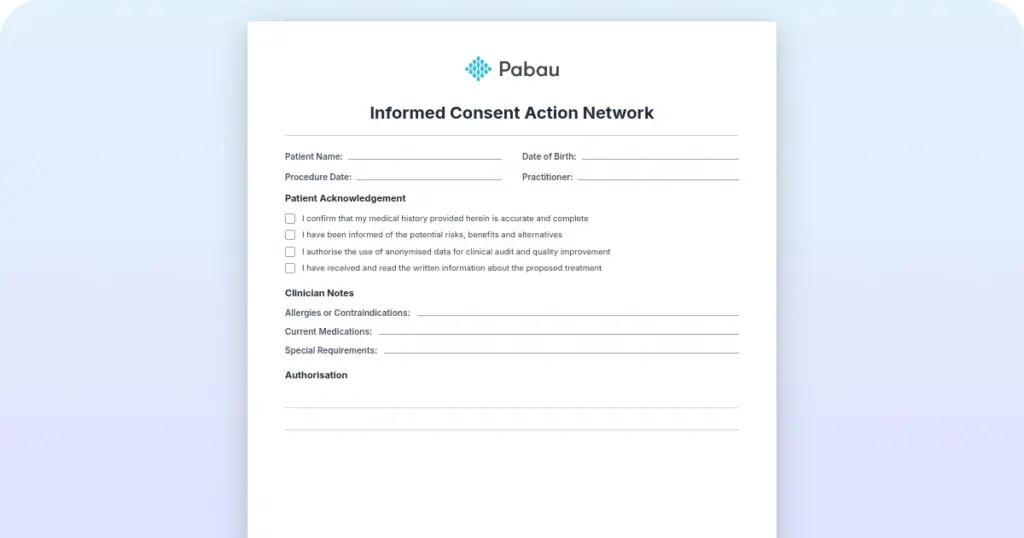
A ready-to-use informed consent form covering patient details, treatment description, risks and benefits, patient rights, HIPAA acknowledgment, and authorization signature blocks—fully editable for your practice name and state requirements.
Download templateEvery acupuncture treatment begins with a patient’s informed decision—and legally, that decision must be documented. An acupuncture consent form is the bridge between your clinical expertise and your patient’s right to understand what treatment entails, what risks exist, and what alternatives are available.
State acupuncture licensing boards require this form before needle insertion. It protects patient autonomy, establishes practice accountability, and provides you a documented record that informed consent was obtained. This guide covers what must be in the form, why each element matters, state-specific variations, and how to collect and store consent digitally.
We’ve also created a free, downloadable acupuncture consent form template above—ready to customize for your practice and patient population.
An acupuncture consent form is a written document that confirms a patient understands the nature of acupuncture treatment, agrees to proceed, and acknowledges the associated risks and benefits. It is a legal and ethical requirement in clinical practice across the United States.
The form serves three critical purposes:
State licensing boards (e.g., Georgia Medical Board, Arizona Acupuncture Board of Examiners) do not just recommend consent forms—they require them before acupuncture needles are inserted. Without documented informed consent, practitioners face regulatory findings, license suspension, and liability exposure. The form is not optional. It is foundational to safe, compliant acupuncture practice.
The downloadable Pabau acupuncture consent form template includes all required sections. Here are the five operational steps to implement it in your practice:
State boards and clinical best practice require the following elements on every acupuncture consent form. Missing any of these creates compliance risk:
Every acupuncture practice should include these eight elements as a baseline. The exact wording varies by state board requirement, but the substance is consistent across U.S. jurisdictions.
Software for chiropractic practices keeps exercise handouts and visit notes in the same record.
Acupuncture licensing boards are state-regulated bodies, and consent form requirements vary by jurisdiction. Before finalizing your form, verify your own state’s mandates. Two examples:
Your state acupuncture board website will publish a template or requirements document. Always consult your state board directly—do not rely on neighboring states’ rules. Requirements change annually as regulations evolve, so verify current requirements before publishing your form.
This form is essential for any licensed acupuncturist or integrative medicine practice offering needle-based acupuncture treatment. That includes:
In short: if you insert acupuncture needles, you need informed consent documented before treatment begins.
Regulatory compliance: State acupuncture boards audit practices for consent documentation. A standardized, board-aligned form demonstrates your practice follows regulatory expectations, reducing audit findings and license risk.
Patient safety: Informed consent ensures patients understand acupuncture’s nature, risks, and benefits before committing. This builds trust and reduces post-treatment complaints rooted in unmet expectations or misunderstood side effects.
Liability protection: A signed, dated acupuncture consent form is documentary evidence that the patient voluntarily agreed to treatment after receiving factual information. This protects your practice if a patient disputes whether consent was obtained or claims they were unaware of risks.
Operational consistency: A standardized template ensures every patient receives the same risk disclosure, eliminating inconsistency and strengthening the practice’s defense in any dispute. Multi-location practices benefit especially—one approved template across all locations ensures compliance uniformity.
Documentation clarity: A well-organized form with clear sections (nature, risks, benefits, rights, signature) makes it easy for staff to administer and for auditors to verify compliance. This reduces administrative errors and speeds regulatory reviews.
Some patient populations or treatment contexts require modified consent forms:
If you treat patients under age 18, consent must come from a parent or legal guardian. Your form must include:
State laws on the age of consent for acupuncture vary—verify your state’s minimum age before treating minors.
Younger patients treated under guardian consent often cannot describe soreness after needling. The FLACC pain scale scores face, legs, activity, cry and consolability in children aged 2 months to 7 years.
Facial acupuncture carries cosmetic considerations alongside clinical risks. Your consent form should highlight that facial acupuncture may cause visible bruising or marks (higher probability on the face than body), and that results vary by patient. Include a statement about post-treatment appearance and recovery timeline.
Paper consent forms work, but digital workflows increase compliance and patient experience. Digital forms enable you to:

Digital consent reduces friction, strengthens compliance, and frees your staff from printing, filing, and searching for paper forms.

Collect, store, and manage acupuncture consent forms digitally. Send automated reminders 48 hours before appointments, track e-signature status, and keep HIPAA-compliant records—all in one platform.

Audit your current consent form annually. State regulations evolve—what was compliant two years ago may miss new language requirements. Set a calendar reminder to check your state acupuncture board website each January for updated consent guidance.
An acupuncture consent form is not a formality—it is a regulatory requirement and a safeguard for patient autonomy and practice accountability. The form documents that you have informed your patient about treatment, disclosed risks and benefits, and obtained their voluntary agreement before needle insertion.
State licensing boards expect to see a signed consent form in every patient’s chart. Book a demo with Pabau to see how automated consent workflows save your team time while strengthening compliance and patient safety documentation.

Assessing medial elbow pain in a throwing athlete? milking maneuver guide covers the procedure, a positive or negative result, and sign-off fields for the record.
Need a template to assess fall risk? Mini BESTest template scores 14 balance items across four systems and interprets fall risk.
Need a simple scale to score patient pain? pain scale 1-10 explains what each score means, when to escalate, and includes a free pain chart.
An acupuncture consent form is a written document confirming that a patient understands the nature of acupuncture, agrees to treatment, and acknowledges risks and benefits before needle insertion. It is a legal requirement mandated by state acupuncture licensing boards across the United States.
Yes. Every U.S. state that regulates acupuncture requires written informed consent before treatment. Without documented consent, practitioners face regulatory findings, license suspension, and liability exposure.
The form must include: nature of treatment, risks and side effects (bruising, soreness, dizziness, infection, pneumothorax, nerve injury, retained needle fragments, and burns from moxibustion or cupping), potential benefits, patient rights (right to refuse or withdraw), alternatives to treatment, HIPAA privacy notice acknowledgment, practitioner credentials, and patient signature with date. Minor consent requires parent/guardian signature.
Yes, under the U.S. ESIGN Act (2000) and state Uniform Electronic Transactions Act (UETA), electronic signatures are legally binding on medical documents including consent forms. However, verify with your state acupuncture board—a few states have additional requirements for e-signature validity in healthcare.