HIPAA compliant texting: What you can send patients & how to communicate securely
HIPAA compliant texting is possible when a text holds no protected health inform...

Last Updated: Oct 16, 2026

A counseling contract is a written agreement between therapist and client covering boundaries, confidentiality, fees, and cancellation terms.
US practices must also give clients a Notice of Privacy Practices, which is a separate document from the contract.
UK practices need to state their data retention period and the client’s right to withdraw consent.
Essential clauses cover confidentiality limits, session fees, late-cancellation charges, informed consent, termination, and mandatory reporting exceptions.
Practice management software like Pabau sends the contract before the first session and files the signed copy in the client record.
A ready-to-use therapeutic agreement covering client details, confidentiality and its legal exceptions, session fees, cancellation terms, informed consent, and signature blocks. Written to work under both HIPAA and UK GDPR.
Download templateA counseling contract is a written agreement that sets the terms of the therapeutic relationship between a counselor and a client. It covers fees, session logistics, confidentiality limits, and consent. Sign it before the first session and both sides start from the same expectations.
Therapists working without one usually find out why it matters during a dispute. A client argues about a late-cancellation charge, or asks what you are obliged to report. This guide covers what the agreement must include, what makes it legally sound, and how to send it.
A counseling contract is a written agreement between a licensed therapist and a client. It sets out the terms, conditions, and expectations of the work you are about to do together.
It does three jobs. It documents consent, it fixes the boundaries around sessions and money, and it shows a regulator that you take duty of care seriously.
The contract is not a treatment plan, which changes as therapy progresses. Nor is it a liability waiver. It answers the questions a new client rarely asks out loud. What happens in a session? What does it cost? Can I cancel? What happens if I tell you something illegal?
A relationship contract is a different document, written by two partners for each other rather than between you and a client. Some therapists run one as an in-session exercise, but it never replaces the agreement that governs your work.
Unclear client boundaries are a common trigger for therapist burnout. One client disputes a missed-appointment fee. Another expects you to answer crisis calls at midnight. A third assumes confidentiality is absolute. A written contract heads off most of that on day one.
The contract protects the client too. It records that you explained your qualifications, your therapeutic approach, and the limits of confidentiality. It also confirms their right to withdraw consent whenever they choose.
Scope matters as much as content. This agreement covers clinical work only. If you also sell non-clinical packages, use a coaching contract and run those clients through coaching practice software instead. Mixing the two blurs where your clinical duty of care begins.
Seven clauses cover the whole relationship. Each one answers a question that otherwise surfaces at the worst possible moment.
Start with names, credentials, and contact details for both therapist and client. State your therapeutic approach, whether that is cognitive-behavioral therapy, person-centered work, or psychodynamic therapy. Add the general goals of the work.
Specialist services should be explicit about scope. An ADHD assessment service, for example, needs to say whether a written diagnostic report is included in the fee.
Give the session length, how often you meet, and the exact fee. Fifty minutes weekly is the common pattern for individual therapy. Name the payment methods you accept and say whether you bill insurance. Spell out how co-payments work. This is the clause that prevents surprise-billing arguments.
State the notice you require, usually 24 to 48 hours. State the charge for a late cancellation or a no-show, which is often the full session fee. Protecting the slot protects your income, and it encourages clients to treat the appointment seriously. Some therapists allow one free late cancellation per quarter.
Say that everything shared in session is confidential, then list the exceptions plainly. The standard ones are narrow and worth spelling out in the client’s own language.
Name the laws that apply where you practice. In the US that means HIPAA plus your state’s mandatory reporting statutes. In England it means the Data Protection Act 2018 and UK GDPR, alongside your local safeguarding duties.
US practices also hand every client a Notice of Privacy Practices, which is a separate document from this contract. Use a signed HIPAA authorization form when you release records to anyone outside the practice.
It also records who opened the file and when.
Include a statement that the client has read the contract and understands it. Confirm they had the chance to ask questions and agree to begin therapy on these terms. Add dated signature lines for both parties.
Set out how either side can end the work. A client might give one session’s notice. You might close the work if the client stops engaging with treatment, or if the relationship has stopped being useful. Naming this early makes an ending feel planned rather than personal.
State your license type, license number, and the body that registered you. Then name what you do not offer. If you provide no crisis cover, say so and give the client somewhere else to go. In the US that is the 988 Suicide and Crisis Lifeline. This clause tells clients where your responsibility ends.
Name what sits outside the approaches you offer. Keeping a counseling referral form on hand means the reason and urgency are documented when you hand the work over.
Therapists using therapy practice management software can send resources like this to clients between sessions.
Yes, for the most part. A counseling contract is enforceable once it meets the four basic tests of contract law. There must be an offer, which is your terms. There must be acceptance, which is the signature. There must be consideration, which is therapy in exchange for payment. And both parties must have the capacity to agree.
Capacity is where most problems start. A minor cannot sign for themselves.
Courts rarely force a client to finish treatment or pay damages for leaving early. Therapy is a personal relationship, and no judge will compel it. What the contract does is prove that consent was documented and expectations were clear. That is what protects you in a malpractice claim or a licensing complaint.
The template above already contains every clause. Five steps turn it into your document and put it into your intake workflow.
UK counselors need two extra layers in the contract. BACP sets the ethical expectations. UK GDPR and the Data Protection Act 2018 govern how you hold and retain client data.
Say how long you keep the signed contract after therapy ends. Six to ten years is the common range for adult clients, and longer for minors. Tell the client they can request a copy of their data, correct anything inaccurate, and withdraw consent for processing.
Give the contact details of your Data Protection Officer if you have one. Appointing a DPO is mandatory in only three situations under UK GDPR. Those are public authority status, large-scale systematic monitoring of individuals, and large-scale processing of special category data. There is no headcount threshold, and the ICO’s guidance explains where the line falls.
Include a line saying you work to the BACP Ethical Framework for the Counselling Professions. Clients can then read the standards you hold yourself to. Naming the framework also tells them where to go if something goes wrong.
Confirm that you receive clinical supervision, which BACP requires of practicing members. Add a line about your professional indemnity insurance and who it is with. Clients rarely ask about either, and seeing both stated builds confidence early.
The usual routine is to email the contract as an attachment, then chase the signature. The signed PDF ends up in someone’s mailbox, or in a folder only one person knows about. When a client asks for a copy two years later, somebody goes hunting for it.
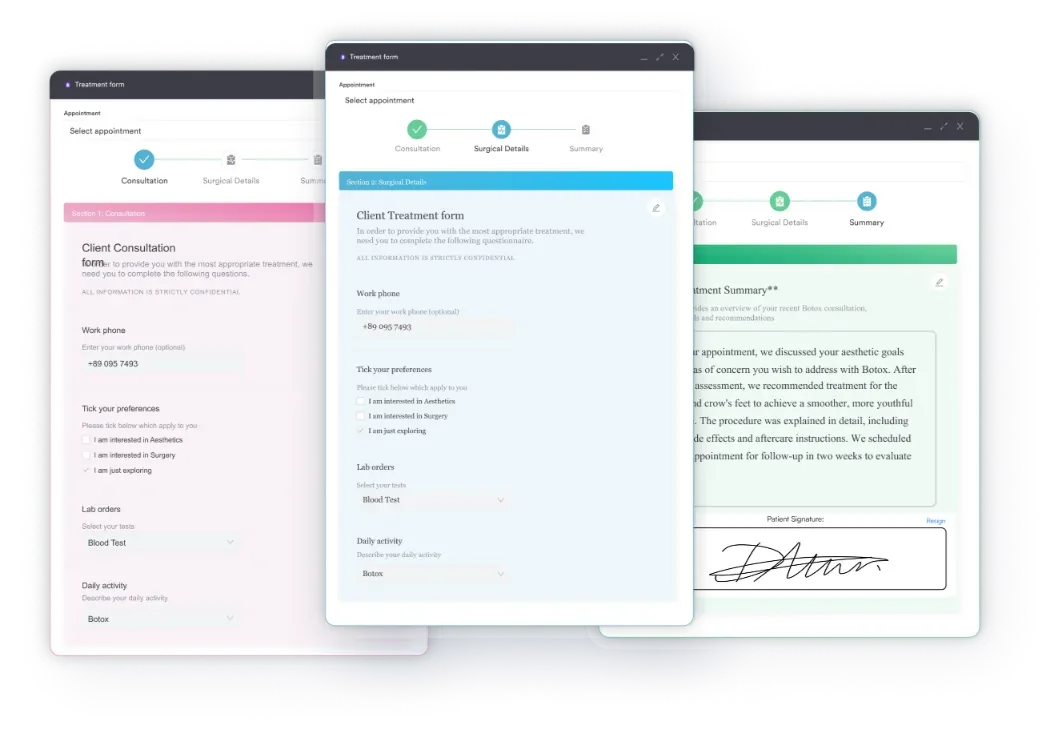
Pabau handles the whole sequence from the booking onwards. The contract goes out automatically when a client books their first session, and they sign it on their phone. The signed copy attaches to the client record.
Every signed agreement sits behind access controls with an audit trail, which is what HIPAA and UK GDPR expect of you. Retention is easier to manage as well, because you can see when each one was signed. Your front desk stops chasing paperwork, and the client record stays complete.

Pabau sends the agreement when a client books, collects the e-signature, and files the signed copy in their record. Your team stops chasing paperwork before session one.

A counseling contract earns its keep in the arguments you never have. Fifteen minutes of customizing now saves a fee dispute, a confidentiality misunderstanding, or an awkward conversation about endings later.
Take the template and adapt it to your license and your jurisdiction. Then make signing it part of booking rather than a task for the first session. A client who has read it before arriving asks sharper questions once they sit down.
Book a demo to see how Pabau sends contracts, collects signatures, and keeps every signed agreement in the client’s record.

Need the intake paperwork that goes with it? Adult counseling intake form gives you the history, risk, and consent fields to collect before session one.
Working with couples rather than individuals? Couples therapy worksheet covers the shared goals and communication exercises a joint contract should reference.
Need a baseline record at assessment? Mental status exam template structures the observations that support your treatment decisions and your notes.
Giving clients something to use between sessions? DBT journal helps clients track skills practice, which makes homework expectations easier to agree in writing.
Screening for impulse control concerns? Impulsivity test gives you a scored starting point for the risk questions your contract already covers.
A counseling contract is a written agreement between a therapist and client that sets the terms of therapy. It covers session frequency and fees, confidentiality and its legal limits, cancellation policy, informed consent, and the therapist’s qualifications. Signing it records that both parties understand and accept those conditions.
Yes, for payment terms and confidentiality obligations, provided it meets the tests of offer, acceptance, consideration, and capacity. A client cannot be compelled to continue therapy and may stop at any time. Its main value is proving that informed consent was documented, which reduces malpractice risk.
Start with your qualifications and credentials, the client’s name and contact details, and the session frequency, duration, and fee. Add the cancellation and no-show policy, and confidentiality with its legal exceptions. Then informed consent and signature blocks, termination terms, and your limits in a crisis. Jurisdiction rules sit on top. That means HIPAA in the US and UK GDPR in the UK.
Yes, with one addition. Add a clause covering platform security, the limits of online therapy, and the client’s responsibility to find a private space. Reduced emergency response is the limit worth naming. Say which video platform you use and get consent for it before sessions start.
Yes. This contract documents the client-therapist relationship only. Supervision agreements and independent contractor agreements are separate documents with different terms and protections. Practices that employ or supervise therapists should have legal counsel draft those.
Keep them in a HIPAA-compliant or GDPR-compliant practice management system, with encryption, access controls, backups, and an audit trail. Avoid generic cloud storage such as Google Drive or Dropbox unless it is properly encrypted. Printed copies belong in a locked cabinet, then get shredded once the retention period ends.