CPT Code 62284: Injection procedure for myelography
CPT Code 62284: official descriptor and procedure overview The American Medical ...

Last Updated: Oct 19, 2026
S5000 is the HCPCS Level II code for prescription drug, generic.
Let Pabau's smart automation suggest the right codes, reduce claim denials, and keep your practice compliant—effortlessly.
Automate repetitive tasks and focus on what matters most—your patients.
Reduce coding errors and ensure compliance with the latest regulations.
Clean claims, fewer denials, and faster reimbursements.
Powerful insights and reporting to help your practice thrive.
HIPAA compliant SOC 2 certified GDPR-compliant Trusted by 4,000+ clinics worldwide

HCPCS Code S5000 describes a prescription drug, generic – used by private payers and Medicaid programs, not Medicare.
S5000 is classified as a private payer S-code; Medicare Coverage Code I means it is not payable by Medicare under any circumstance.
Always pair S5000 with the corresponding NDC number when payers require it – omitting the NDC is the leading cause of S5000 claim denials.
Pabau’s claims management software helps practices track generic drug billing codes, attach supporting documentation, and reduce claim errors.
S5000 reports the dispensing of an FDA-approved generic drug – one that shares the same active ingredient, strength, dosage form, and route as its brand-name counterpart. CMS built the code for use outside Medicare, mainly by state Medicaid programs and private payers.
Practices report it most often for maintenance medications and for controlled-substance alternatives such as buprenorphine, billed directly on a professional claim rather than routed through a pharmacy benefit manager.
Before submitting any S5000 claim, coders need to confirm the code’s current properties. The table below captures the verified 2025/2026 data points.
Action Code N means CMS has made no modifications to S5000 since it was added in 2001. The code remains stable and is not under active review.
Medicare does not pay HCPCS Code S5000. Coverage Code I is an absolute disqualifier, not a conditional one. Submitting S5000 to Medicare Part B or Part D results in automatic denial regardless of documentation quality or medical necessity justification.
S-codes were never intended for Medicare billing. CMS maintains the S-code series specifically for private payer and Medicaid use. Practices that accidentally route S5000 to Medicare are usually dealing with a system configuration issue rather than a coding error – the payer field is populating incorrectly during claim generation.
For Medicare patients who receive a generic prescription, the appropriate path is either the Part D prescription drug benefit (billed through the pharmacy benefit manager, not via HCPCS codes on professional claims) or a specific J-code if the drug is administered in-office and has its own HCPCS drug code assigned.
Medicaid is where S5000 sees its primary use. States accepting S-codes in their Medicaid fee schedules can and do reimburse S5000 for generic drug dispensing. Acceptance is not universal – each state Medicaid program sets its own covered code list.
One documented example comes from Ohio. Under the CMS-approved Ohio Substance Use Disorder (SUD) Section 1115 Demonstration Waiver, the Medicaid.gov monitoring protocol explicitly requires that HCPCS codes S5000 and S5001 be used to bill buprenorphine or buprenorphine/naloxone dispensing by a Provider Type 95. This confirms the code carries billing weight in structured Medicaid programs. Practices that age their receivables weekly catch claims approaching a filing limit while an appeal is still possible.
S5000 rarely stands alone on these claims. Ohio’s waiver programs typically bill the treatment program itself under a per-diem code like H2036. Coders working SUD claims need all three code families lined up correctly, not just S5000.
Practices billing SUD treatment programs should review their specific state’s Medicaid billing manual and any active 1115 waiver addenda before assuming S5000 is accepted. Always verify with your state Medicaid authority or a billing specialist before submitting.
Commercial insurers have the widest and most variable acceptance of S5000. Some accept it for all generic drug dispensing billed by covered provider types. Others exclude it from their fee schedules entirely and require a different coding pathway. Check your payer contracts and eligibility responses before assuming coverage.
Using claims management software that lets you configure payer-specific code rules reduces the risk of routing S5000 to a payer that won’t accept it. When the system flags the mismatch at claim creation rather than post-denial, the correction happens before any payment delay occurs.
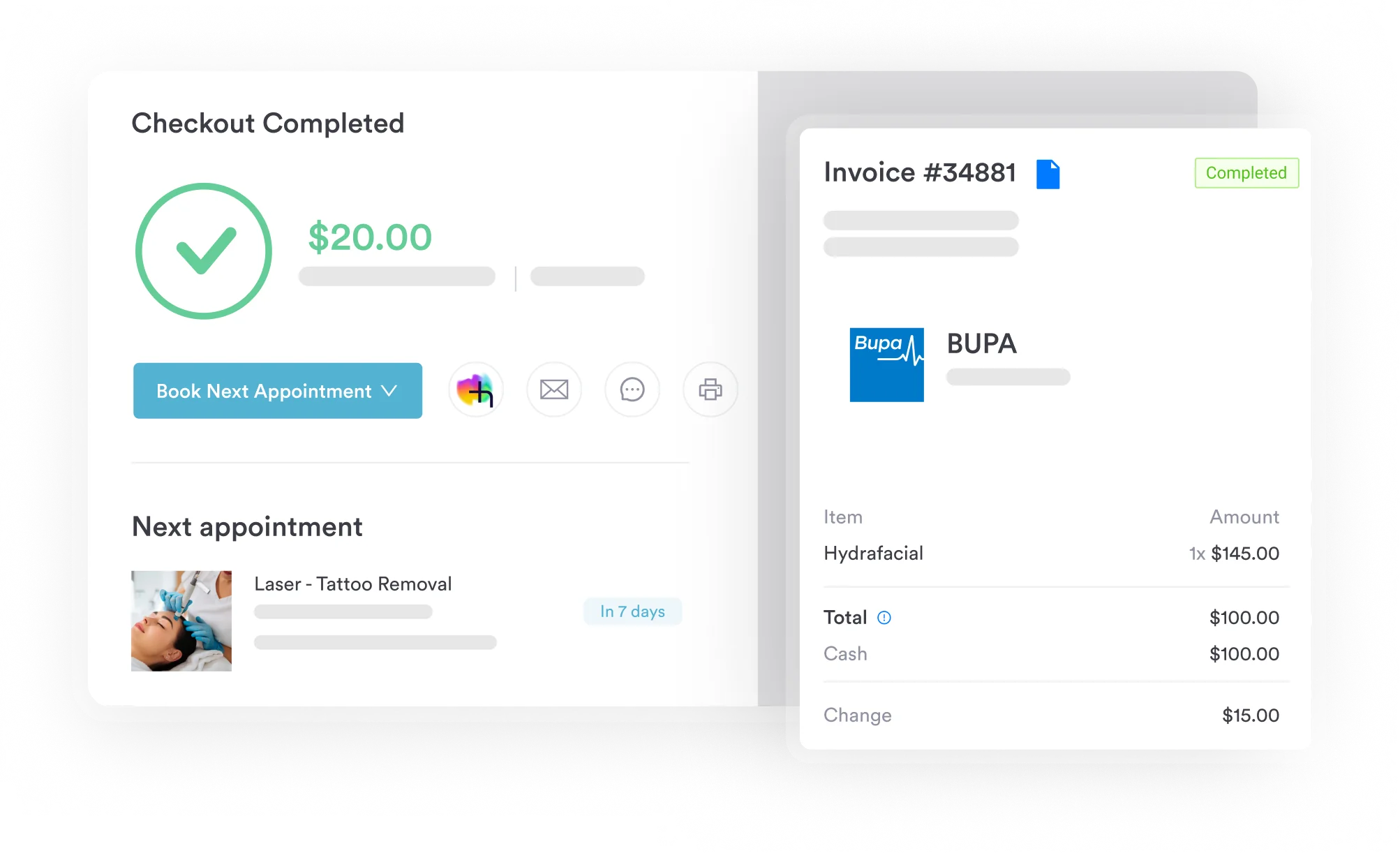
Before submitting S5000 to any Medicaid program, pull a copy of your state’s current Medicaid fee schedule and search for S5000 explicitly. If the code appears with a listed fee, you have confirmation of coverage. If it does not appear, the claim will deny – no exceptions. For private payers, call the provider relations line and request confirmation in writing.
The S5000/S5001 distinction is the most common coding decision point for practices dispensing prescription drugs. Getting it wrong in either direction creates billing risk.
The clinical record drives the code selection. If the prescriber authorized a generic substitution and a generic was dispensed, S5000 is the correct code. If the prescription was dispensed as brand only, whether because no generic exists or because the prescriber wrote “dispense as written,” S5001 applies.
For SUD programs specifically, the Ohio Medicaid protocol cited above requires using S5000 for buprenorphine and buprenorphine/naloxone generics. Using S5001 for a generic product in that context is an upcoding risk. Your prescription management software should capture the brand/generic dispensing status at the point of prescribing so coders can verify the record before claim submission.
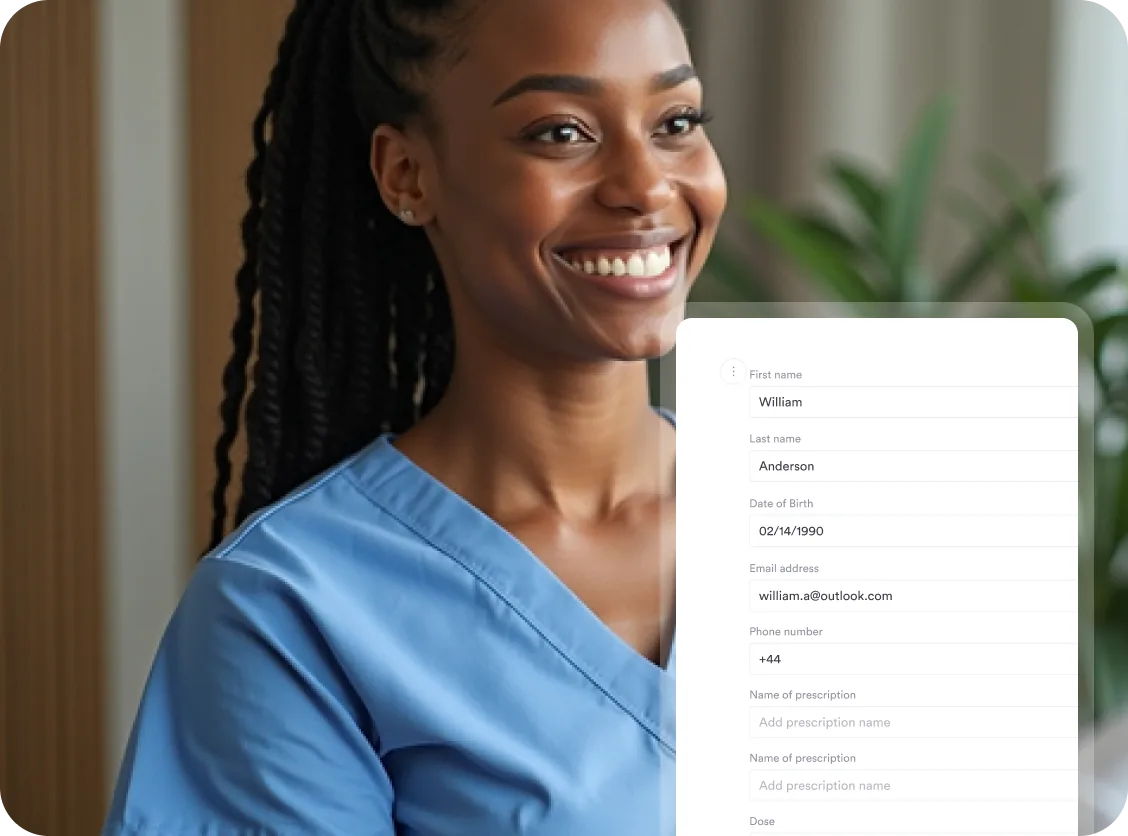

Pabau’s claims management tools let your team flag payer-specific code rules, attach required NDC documentation, and track generic drug dispensing records – so denials from S5000 submissions drop before they start.

S5000 is a catch-all generic drug code. It does not identify a specific drug, strength, or route. That specificity comes from the NDC number. Many payers require the NDC alongside S5000 to process the claim – without it, the claim lacks enough information to verify what was dispensed.
NDC reporting follows a standard format on professional claims (CMS-1500) and electronic 837P transactions. The NDC is reported in the shaded area of Box 24 on a paper CMS-1500, or in the appropriate NDC qualifier loop on the 837P. The format is the 11-digit NDC with qualifier N4 preceding it.
Three data points travel with the NDC: the code itself, the unit of measurement qualifier (F2 for international units, GR for grams, ML for milliliters, UN for units), and the quantity dispensed. All three must be accurate. A quantity mismatch between the NDC unit and what appears in the clinical note is a documentation audit flag.
Payers auditing S5000 claims look for a consistent documentation trail. Good HIPAA compliance documentation requirements practice means your clinical record should support every element of the claim. The core documentation set for an S5000 claim includes:
The same principle applies across billing more broadly: an E/M visit code like 99214 only holds up on audit if the note supports every billed element, the same standard S5000 claims are held to.
Practices using digital intake forms that capture medication history and current prescriptions at each encounter give billing staff what they need without asking the prescriber to reconstruct it later. When the structured data flows from the intake form into the patient record automatically, the prescriber doesn’t need to recreate it at billing time.
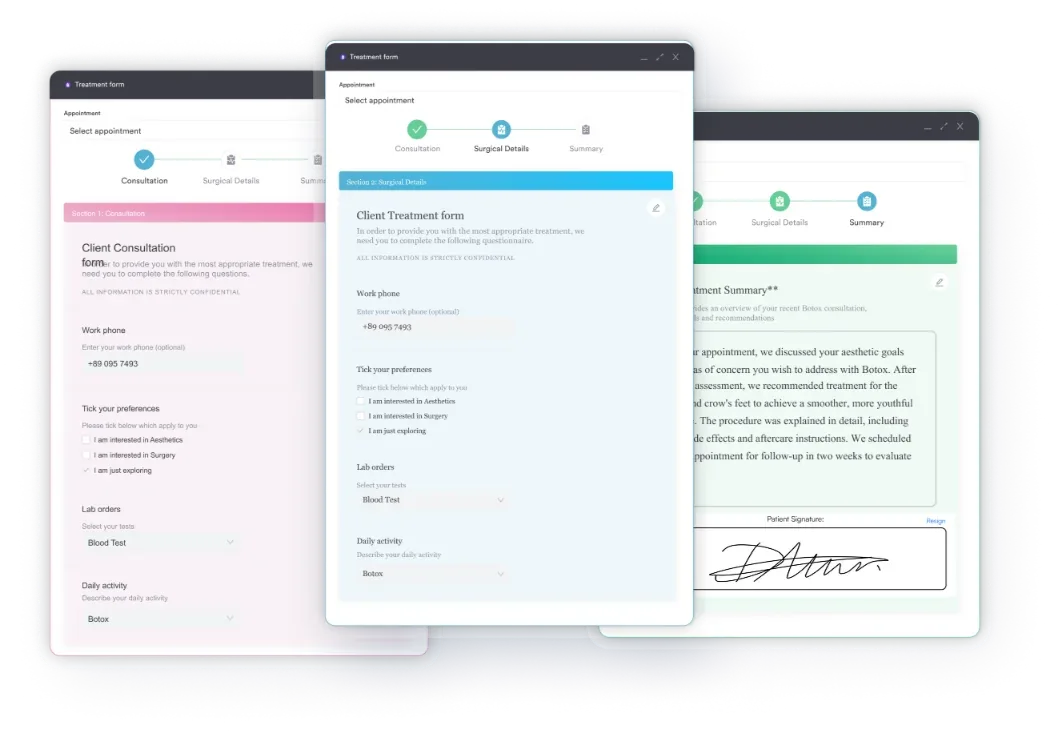
Set up an NDC validation step in your billing workflow – before any S5000 claim leaves your system, confirm the NDC qualifier, code, unit of measure, and quantity are all present and internally consistent. A missing NDC unit qualifier (F2, GR, ML, or UN) is treated identically to a missing NDC by most clearinghouses: the claim edits out before it reaches the payer. Catch it in-house with a HIPAA-compliant billing workflow before it costs you a denial cycle.
S5000 denials cluster around a predictable set of failure points. Understanding each one makes prevention straightforward.
Practices seeing recurring S5000 denials from the same payer should escalate to a contract review. If the payer’s fee schedule does not list S5000 with a payable fee, the denial is structural – no amount of documentation improvement will fix it. The solution is either a contract amendment or a different coding pathway agreed with that payer.
For substance use disorder treatment programs using mental health EMR software, the denial pattern often traces to PT 95 provider type requirements under Medicaid waiver programs. The prescribing provider’s NPI must be enrolled and credentialed under the correct provider type, or the claim rejects at the payer’s eligibility screen before a human reviewer sees it.
S5000 doesn’t operate in isolation. Coders billing prescription drugs routinely need to distinguish it from adjacent codes in the S-series and from other drug-billing pathways.
The J8499 code deserves particular attention. When a practice administers an oral generic drug in-office and no drug-specific J-code exists, coders sometimes consider J8499. Like S5000, J8499 is not payable by Medicare Part B – but it carries Coverage Code M (non-covered) rather than S5000’s Code I.
The distinction that matters for coders is route of administration and which drug-specific J-code, if any, should be used instead – not Medicare payability. Chemotherapy drugs follow a separate path entirely.
Consulting the AAPC HCPCS reference for full descriptor crosswalk guidance is recommended before switching between S5000 and J8499.
S5000 is a catch-all. When the generic drug dispensed has its own drug-specific HCPCS code, payers expect that code instead – not S5000. Common examples coders run into include:
Another catch-all worth knowing exists alongside S5000:
Good practice management software should allow your billing team to build crosswalk logic into the claim workflow. When a prescriber selects a drug in the clinical record, the system should flag whether S5000, S5001, or a specific J-code is the right billing pathway for the patient’s payer.
That kind of rule-based crosswalk reduces manual coding decisions and the errors that come with them. Maintaining a paperless, HIPAA-compliant practice also means your crosswalk logic and dispensing records stay auditable without physical paper trails.
HCPCS Code S5000 is a private payer and Medicaid code for generic drug dispensing – not payable by Medicare under any circumstances. The most common failure points are Medicare submission errors, missing NDC data, and payer contracts that don’t cover S-codes.
Pabau’s claims management software helps practices build the payer-specific rules, NDC documentation workflows, and brand/generic flags that eliminate the predictable S5000 denial patterns before claims leave your system. To see how Pabau handles prescription drug billing, book a demo with our team.

Managing pre-authorization for other procedure codes? Wrist procedure billing guide explains how to code, document, and submit this wrist procedure to avoid claim rejections.
Billing a UK orthopaedic ligament repair? Ligament repair billing guide details the CCSD code for prosthetic open repair of ligament and its documentation requirements.
Confusing bunionectomy with adjacent procedure codes? Bunionectomy billing guide clarifies the three adjacent hallux valgus codes insurers often confuse during claims review.
HCPCS Code S5000 is a HCPCS Level II private payer code used to bill for a prescription drug, generic. It is used by private insurers and state Medicaid programs to reimburse the dispensing of FDA-approved generic medications. It is not payable by Medicare under any circumstances, as Coverage Code I designates it as excluded from the Medicare fee schedule.
No. HCPCS S5000 carries Medicare Coverage Code I, which means it is not payable by Medicare. S-codes are maintained by CMS for private payer and Medicaid use only. Medicare patients receiving generic prescriptions should have those drugs billed through Part D (the pharmacy benefit), or through a specific drug J-code if the drug is administered in-office and has a CMS-assigned code.
S5000 describes a prescription drug, generic – meaning an FDA-approved equivalent to a brand-name product with the same active ingredient, strength, dosage form, and route. S5001 describes a prescription drug, brand name – the original proprietary formulation. Both carry Medicare Coverage Code I (not payable). For Medicaid SUD programs, the choice between S5000 and S5001 depends on what was dispensed; billing S5001 for a generic is an upcoding risk.
Private commercial insurers and state Medicaid programs are the primary payers for HCPCS S5000. Acceptance varies by payer and state – there is no universal list. Some commercial plans include S5000 in their drug fee schedules; others exclude all S-codes. Ohio Medicaid’s SUD 1115 waiver is one documented program that specifically requires S5000 for buprenorphine and buprenorphine/naloxone billing by credentialed provider types. Always verify with the specific payer before submitting.
Bill HCPCS S5000 for generic drug dispensing on a CMS-1500 or 837P claim. Include the 11-digit National Drug Code (NDC) with qualifier N4, the unit of measure qualifier (F2, GR, ML, or UN), and the quantity dispensed. Link the appropriate ICD-10-CM diagnosis code(s) for medical necessity, confirm payer acceptance of S-codes before submission, and obtain prior authorization if required. For Medicare patients, do not submit S5000 – route the drug benefit through Part D or a specific J-code.