CPT Code 62284: Injection procedure for myelography
CPT Code 62284: official descriptor and procedure overview The American Medical ...

Last Updated: Oct 19, 2026
J7324 is the HCPCS Level II code for hyaluronan or derivative, orthovisc, for intra-articular injection, per dose.
Let Pabau's smart automation suggest the right codes, reduce claim denials, and keep your practice compliant—effortlessly.
Automate repetitive tasks and focus on what matters most—your patients.
Reduce coding errors and ensure compliance with the latest regulations.
Clean claims, fewer denials, and faster reimbursements.
Powerful insights and reporting to help your practice thrive.
HIPAA compliant SOC 2 certified GDPR-compliant Trusted by 4,000+ clinics worldwide

HCPCS code J7324 describes hyaluronan or derivative, Orthovisc, for intra-articular injection, per dose – 1 billing unit equals 30 mg.
Medicare covers J7324 under Part B subject to LCD L30149 carrier judgment. A maximum of 4 units (doses) per knee every 180 days applies.
Bilateral injection billing requires listing J7324 with a unit of 2 on the claim form – not two separate line items per CMS LCD attachment guidance.
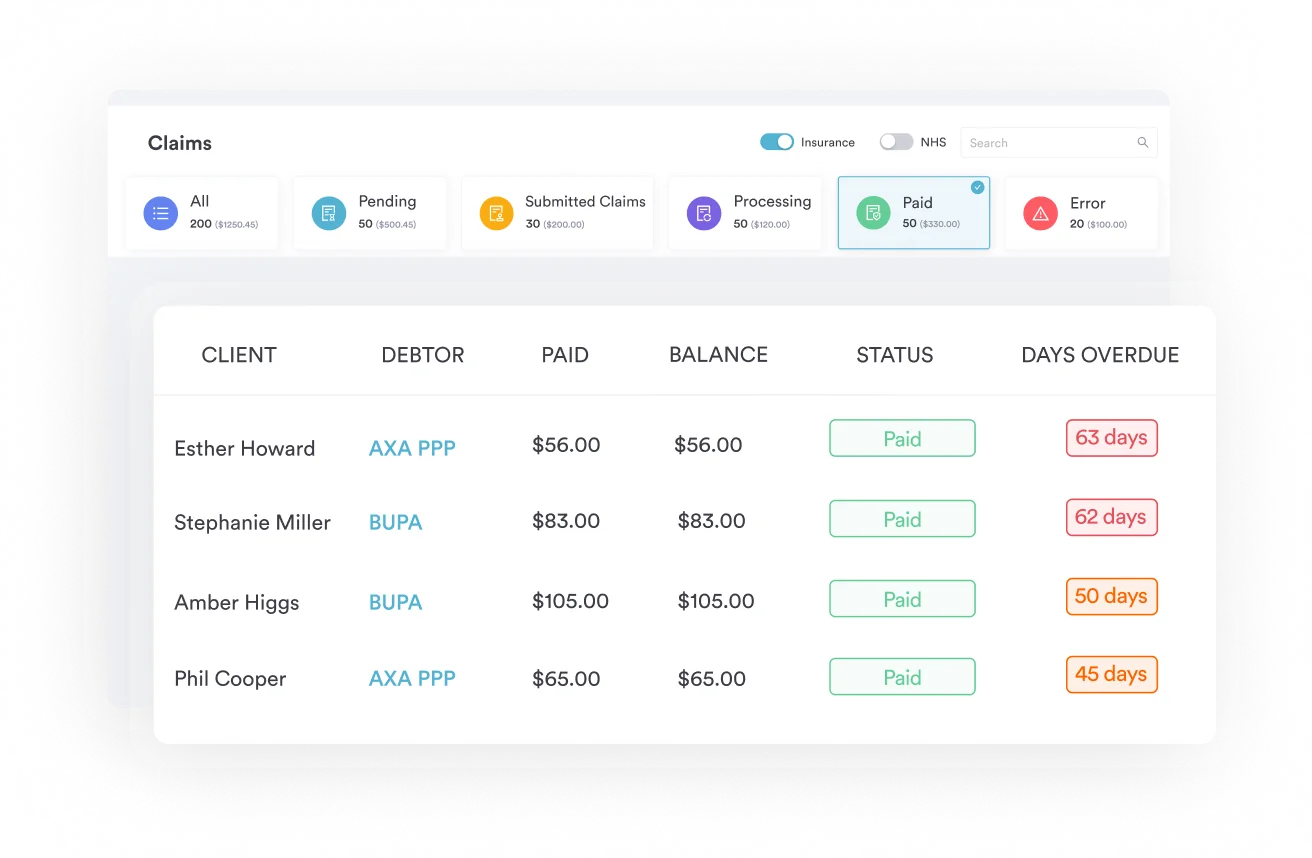
Pabau’s claims management software helps orthopedic and musculoskeletal practices track J-code billing units, payer rules, and prior authorization requirements in one place.
Most viscosupplementation claims are denied because of billing unit errors and missing documentation, not because Medicare or a commercial payer declines to cover the treatment. HCPCS code J7324 is one of the most commonly misqueued J-codes in this category, and getting the units right from the start makes a measurable difference.
The official descriptor for HCPCS code J7324 is: Hyaluronan or derivative, Orthovisc, for intra-articular injection, per dose. It is a Level II HCPCS J-code maintained by CMS and falls under the Miscellaneous Drugs category. The short descriptor used on claim forms is “Orthovisc inj per dose.”
Orthovisc is manufactured by Anika Therapeutics, Inc., and distributed and marketed by DePuy Synthes Mitek Sports Medicine, a Johnson & Johnson company. It is a high-molecular-weight hyaluronic acid product indicated for the treatment of pain in osteoarthritis of the knee in patients who have failed to respond adequately to conservative non-pharmacologic therapy and to simple analgesics. J7324 is the product-specific code for Orthovisc only. Other hyaluronic acid brands carry their own separate HCPCS codes.
The coverage code “C = Carrier judgment” means Medicare administrative contractors (MACs) apply their own local coverage determinations rather than a national coverage decision. For J7324, the governing LCD is L30149. Practices billing across multiple MAC jurisdictions should verify the active version of L30149 applicable to their region.
One billing unit of HCPCS code J7324 equals one 30 mg injection dose. Per FDA labeling, Orthovisc is administered as a series of intra-articular injections into the affected knee joint, dosed once weekly for a total of 3 or 4 doses.
Bill one unit of J7324 per injection visit. For a full course of 3 or 4 doses, one claim is submitted per visit. Do not combine multiple doses into a single claim line unless billing for bilateral injections (see bilateral billing rules below).
When Orthovisc is injected bilaterally (both knees at the same visit), CMS LCD attachment L30149 provides specific guidance. According to that document, for bilateral injections, list J7324 in item 24 of the CMS-1500 claim form (or the FAO-09 field electronically) with a unit count of 2, not as two separate line items.
This distinction matters for claim processing. Submitting two separate line items for bilateral injections may trigger NCCI (National Correct Coding Initiative) edits or duplicate-claim flags. Entering a unit of 2 on a single line correctly signals that both knees were treated in one visit.
Always document which knee(s) were injected in the clinical note. Medicare auditors reviewing J7324 claims look for laterality language in the documentation to support the billed units. A note that says only ‘knee injection’ without specifying left, right, or bilateral creates audit exposure.
An EMR built for IV therapy records the infusion, the units administered, and the J-code in one entry.
Medicare Part B covers viscosupplementation injections, including J7324, under the Part B drug benefit. Coverage is subject to carrier judgment under LCD L30149. Reimbursement follows the CMS Physician Fee Schedule and is calculated at ASP (Average Sales Price) plus 6% for office and practice settings.
LCD numbering for hyaluronan and viscosupplementation coverage varies by Medicare Administrative Contractor (MAC) jurisdiction, and it has been renumbered and updated over time. Some jurisdictions now govern this coverage under newer LCDs, such as L35427, L33767, or L39529 with related article A56157, rather than L30149. Confirm the current, active LCD for your specific MAC before submitting a claim rather than assuming L30149 applies nationwide.
ASP-based rates are updated quarterly by CMS. The specific reimbursement amount for J7324 changes with each quarterly update, so billing teams should confirm the current rate from the CMS HCPCS code files before each billing cycle rather than relying on prior-period figures.
For a J7324 claim to pass medical necessity review, documentation must support osteoarthritis of the knee and show that conservative therapies were tried and failed. Accepted supporting ICD-10-CM diagnosis codes include:
Off-label joint use (hip, shoulder, ankle) is generally not covered by Medicare for viscosupplementation. Claims listing a non-knee diagnosis code alongside J7324 will typically be denied. A diagnosis of M18.30, for example, reflects osteoarthritis in the thumb’s carpometacarpal joint rather than the knee, and would not support a J7324 claim. The clinical note must document the specific joint treated, the diagnosis, and the prior treatment history.
For practices managing clinical documentation workflows across multiple service lines, linking the diagnosis code selection to the treatment plan in the patient record from the start prevents the missing documentation that triggers LCD-based denials.
Billing teams sometimes encounter three different price references for J7324. Understanding which applies to reimbursement avoids confusion during revenue cycle reconciliation.
For Medicare claims, ASP is the only pricing basis that matters for J7324. Commercial contracts may reference AWP as a percentage (e.g. AWP minus 15%), so read each payer contract carefully when reconciling expected versus received reimbursement.

Pabau helps musculoskeletal and orthopedic practices track HCPCS billing units, payer-specific prior authorization requirements, and claim submission status in one place, reducing rework and improving first-pass approval rates.

Commercial coverage for HCPCS code J7324 varies significantly by payer. Unlike Medicare, commercial insurers set their own coverage criteria, frequency limits, and prior authorization requirements. Assuming Medicare rules apply to commercial plans is one of the most common J7324 billing errors in practice.
UnitedHealthcare classifies J7324 as a Commercial Medical Benefit Drug, effective January 1, 2026, meaning the drug is billed through the medical benefit rather than the pharmacy benefit. This routing determines claim form, reimbursement calculation, and prior authorization pathway. Practices should verify the current UHC provider policy document for Sodium Hyaluronate before submitting, as benefit routing can shift between plan years.
MDwise lists J7324 as requiring prior authorization under the pharmacy benefit. This contrasts with UHC’s medical benefit routing, illustrating why payer-specific verification is mandatory before each injection series. Submitting J7324 on a medical claim to a payer that routes it through pharmacy will result in denial.
Medi-Cal’s provider manual lists J7324 alongside other hyaluronic acid injection codes including J7326 (Gel-One) and J7327 (Monovisc). Medi-Cal coverage rules, frequency limits, and prior authorization requirements should be confirmed in the current version of the Medi-Cal Injections: Drugs H section of the provider manual, as these policies are updated regularly.
Building a payer-specific authorization tracking system inside practice management software prevents the common scenario where a J7324 injection series starts without confirmed authorization, only for a mid-series claim to be denied because the PA was not obtained or has lapsed.
Many payers require the NDC (National Drug Code) to be reported alongside HCPCS code J7324 on outpatient drug claims. The NDC identifies the specific product lot and package size dispensed and supports audit traceability. Practices using a buy-and-bill model for Orthovisc must capture the NDC from the product packaging at the time of administration.
The NDC commonly associated with Orthovisc is 59676-0360-01, though NDC numbers can vary by package configuration and are subject to manufacturer updates. Always verify the NDC against the actual product label and the FDA NDC database before submitting. Billing a historical NDC for a new product lot can create a mismatch that triggers a claim edit.
NDC reporting format on CMS-1500 claims follows an 11-digit format (5-4-2). The qualifier “N4” precedes the NDC in the shaded area of field 24 on the paper claim. Electronic claims use the appropriate 837P loop and segment. Billing staff who are unfamiliar with NDC reporting on the HIPAA-standard electronic claim format should review the payer-specific companion guide for the 837P transaction.
Cross-reference the NDC on the Orthovisc package against the HIPAA Space NDC-to-HCPCS crosswalk before each billing cycle. NDC-to-HCPCS mapping discrepancies are a frequent claim edit trigger for buy-and-bill injectables. Store the crosswalk confirmation in the patient record alongside the injection note.
Orthovisc is one of several branded hyaluronic acid products, each with its own product-specific HCPCS code. Using the wrong code for the product administered is an unbillable mismatch that generates a claim denial. The AAPC Codify HCPCS lookup provides current descriptors and crosswalk data for each code in the J7320-J7332 range.
A key distinction exists between J7324 (Orthovisc) and J7325 (Synvisc/Synvisc-One). Synvisc-One is a single-injection product, and its billing logic differs from multi-dose products like Orthovisc when administered bilaterally or unilaterally.
Per CMS LCD L30149, for Synvisc-One, the total number of milligrams is entered regardless of laterality, whereas for J7324, a unit of 2 is entered for bilateral treatment. Mixing up the billing rules between these two codes is a common source of claim edits on busy orthopedic practice schedules.
For practices that offer sports medicine or musculoskeletal injection services, keeping the full J-code series mapped to the specific products stocked in inventory is a foundational billing control. The prescription and drug management tools within a practice management system can link product dispensing directly to the correct HCPCS code, reducing manual lookup errors.
The same unit-per-dose logic applies across other injectable drug J-codes billed in a musculoskeletal or specialty practice.
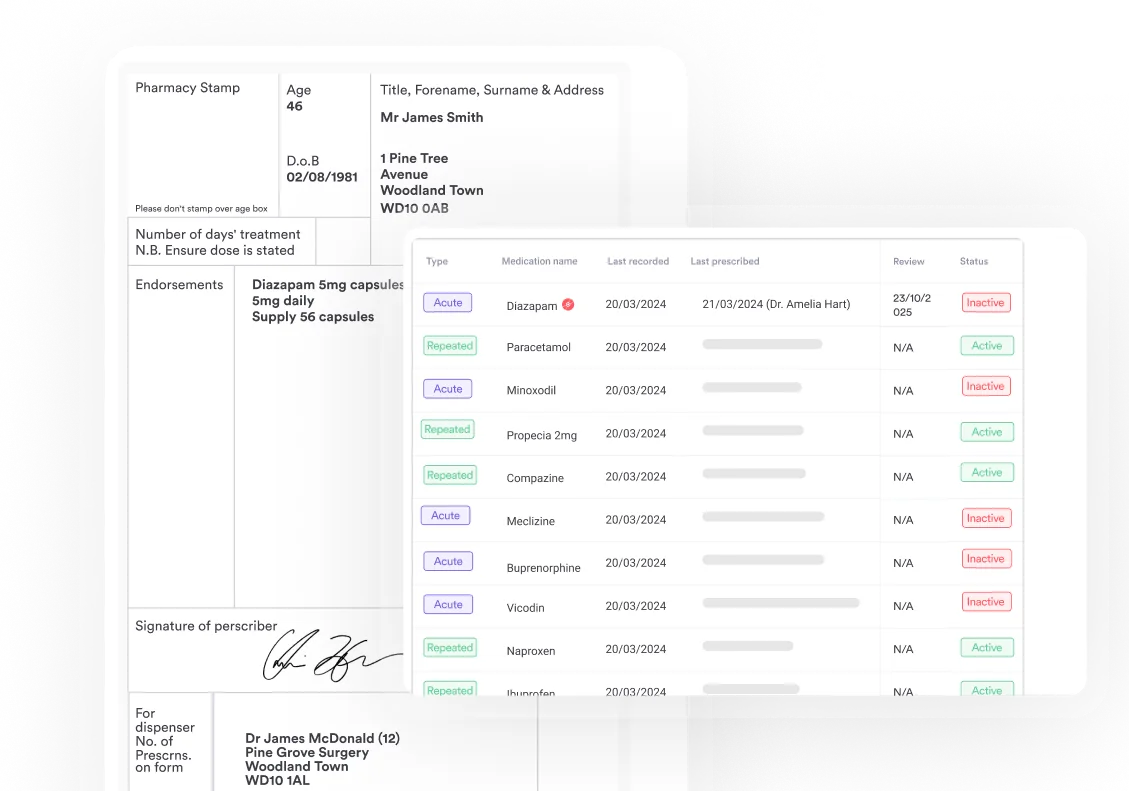
Documentation is the primary line of defense in a Medicare or commercial payer audit of J7324 claims. The CMS standard requires that every billed service be supported by a contemporaneous clinical note. For viscosupplementation claims, auditors specifically look for the elements below.
Practices offering sports medicine services can strengthen audit readiness by using sports medicine practice software that structures injection notes with required fields rather than relying on free-text narratives, which are easier to miss during a busy practice day. Structured note templates reduce the likelihood of an incomplete record at audit time.
For HIPAA compliance considerations when storing and transmitting injection documentation electronically.
Denied J7324 claims tend to cluster around a predictable set of root causes. Identifying which one applies to a denied claim determines the right corrective action before resubmission.
A frequency appeal is stronger when the note records what the repeat visit found. Coverage guidance for CPT code 92285 asks the record to show that a repeat service captured new information affecting the management decision.
Practices that log denial reasons systematically can track J7324 denial patterns over time. A recurring NDC mismatch across multiple claims, for example, points to a product inventory or purchasing workflow issue rather than a one-off coding error. The tools that simplify practice management workflows typically include reporting functions that surface denial trends by code and payer.
Accurate HCPCS code J7324 billing comes down to a few repeatable controls: correct unit count per dose, laterality documentation, payer-specific benefit routing verification, and NDC capture from the product label. Each of these has a direct claim outcome. Getting any one wrong results in a denial that costs staff time to work and delays reimbursement for a service already rendered.
Pabau’s patient documentation and compliance tracking tools help musculoskeletal and orthopedic practices keep injection records complete and audit-ready. To see how Pabau supports J-code billing workflows and clinical documentation in one place, book a demo with the team.

Coding a Type II physeal fracture? ICD-10 code S59.229A guide covers this initial encounter code for a Salter-Harris Type II radius fracture.
Billing a healed wrist contusion visit? ICD-10 Code S60.219S guide covers this sequela code for a wrist contusion once the original injury has healed.
Need another joint-injection procedure code that’s often billed alongside knee injections? CPT 27096 walks through billing rules for sacroiliac joint injections.
HCPCS code J7324 is the Level II code for hyaluronan or derivative, Orthovisc, for intra-articular injection, per dose. One billing unit equals a single 30 mg injection. It is used to bill for Orthovisc viscosupplementation injections administered in the knee joint for osteoarthritis.
Under Medicare LCD L30149, the maximum is 4 units (doses) per knee every 180 days. A full Orthovisc course is 3 or 4 weekly injections, each billed as 1 unit. Exceeding 4 units within a 180-day period will result in a frequency-based denial.
Per CMS LCD attachment L30149, bilateral injections are billed by entering J7324 on a single claim line with a unit count of 2 in item 24 of the CMS-1500. Do not submit two separate line items for bilateral treatment, as this may trigger NCCI edits or duplicate-claim flags.
Prior authorization requirements vary by payer. Medicare does not require PA for J7324 but applies LCD medical necessity criteria. UnitedHealthcare routes J7324 as a commercial medical benefit drug (effective 01/01/2026). MDwise (Indiana Medicaid) requires PA under the pharmacy benefit. Always verify authorization requirements with the specific payer before starting a viscosupplementation series.
The primary supporting diagnosis codes are M17.11 (primary osteoarthritis, right knee), M17.12 (primary osteoarthritis, left knee), M17.31 (unilateral post-traumatic osteoarthritis, right knee), and M17.32 (unilateral post-traumatic osteoarthritis, left knee). The clinical note must also document failed conservative therapy to support coverage under LCD L30149.
J7324 is Orthovisc (administered as 3 or 4 weekly 30 mg doses). J7325 is Synvisc or Synvisc-One. Synvisc-One is a single-injection product with different billing logic under the same LCD. For J7325 bilateral injections, the total milligrams are entered rather than a unit of 2. The two codes have distinct products, dose schedules, and claim-entry rules. Using them interchangeably results in claim errors.