CCSD code H4430: Examination of rectum under anaesthetic
CCSD code H4430 pays for the examination alone CCSD code H4430 is the UK private...

Last Updated: Oct 20, 2026
S0030 is the HCPCS Level II code for injection, metronidazole, 500 mg. CMS terminated it with effect from 30 June 2023, so it is no longer valid for claims after that date.
HCPCS code S0030 carries the official descriptor "Injection, metronidazole, 500 mg." It belongs to HCPCS Level II, administered by the Centers for Medicare and Medicaid Services (CMS). Level II covers supplies, drugs, and services that CPT codes do not capture. Within Level II, S0030 falls under the S-code section: temporary national codes established for use by state Medicaid programs and private payers.
S0030 is a deleted (terminated) code, retired from the active HCPCS Level II file effective June 30, 2023. Its replacement, J1836, took effect the next day. Providers who submit S0030 without checking its status risk automatic rejection. Before billing any S-code, confirm its standing in the current CMS HCPCS update file or ask your Medicare Administrative Contractor (MAC).
Let Pabau's smart automation suggest the right codes, reduce claim denials, and keep your practice compliant—effortlessly.
Automate repetitive tasks and focus on what matters most—your patients.
Reduce coding errors and ensure compliance with the latest regulations.
Clean claims, fewer denials, and faster reimbursements.
Powerful insights and reporting to help your practice thrive.
HIPAA compliant SOC 2 certified GDPR-compliant Trusted by 4,000+ clinics worldwide

HCPCS code S0030 describes injection of metronidazole, 500 mg, and is a deleted HCPCS Level II S-code
S codes are not recognized by Medicare Part B; S0030 was used by Medicaid and private payers only, and coverage varied by state
The current crosswalk is J1836 (Injection, metronidazole, 10 mg), or J3490 for unclassified drug claims when a payer requires it
J1836 bills per 10 mg, not per 500 mg, so a 500 mg dose is 50 units and a 1,000 mg dose is 100 units
Pabau’s claims management software helps IV therapy and infusion practices track drug billing codes, NDC numbers, and payer-specific requirements in one place
Metronidazole is an antibiotic and antiprotozoal agent used intravenously when oral administration is not appropriate. S0030 was built for the intravenous formulation at 500 mg per dose. That dose is common in hospital outpatient settings, infusion practices, and skilled nursing facilities.
Clinicians order IV metronidazole for a defined set of clinical scenarios, including anaerobic bacterial infections and certain protozoal infections. IV therapy clinic management protocols govern how each infusion is documented.
Per FDA labeling, approved indications for metronidazole IV include anaerobic bacterial infections and surgical prophylaxis for colorectal procedures. The labeled anaerobic sites are intra-abdominal, skin and skin structure, gynecologic, bone and joint, CNS, endocarditis, and septicemia. Labeling also covers trichomoniasis, giardiasis, and amebiasis when parenteral administration is clinically indicated. Coders should not extend clinical indications beyond FDA labeling when supporting medical necessity documentation.
S codes sit within HCPCS Level II but occupy a distinct policy space from J-codes and CPT codes. CMS established the S-code section as temporary national codes primarily for use by state Medicaid programs and Blue Cross Blue Shield plans. That classification has two practical consequences for billing staff. First, Medicare Part B does not recognize or reimburse S codes under any standard coverage policy. Second, Medicaid coverage varies by state, and private payer acceptance varies by contract.
J-codes, by contrast, are HCPCS Level II codes CMS maintains specifically for Medicare-covered injectable drugs and chemotherapy agents. When a drug has both an S-code and a J-code equivalent, Medicare-participating providers must use the J-code. This distinction prevents the most common billing error for codes like S0030. Submitting an S-code on a Medicare claim earns an automatic rejection. For a broader view of how these systems interact, the AAPC HCPCS code lookup provides context on Level II code sections and their payer applicability.
Medicare Part B does not reimburse HCPCS code S0030 or any other S-code. This is a structural policy, not a code-specific coverage determination. S codes as a category are excluded from Medicare Part B fee schedule reimbursement under CMS rules. Submitting S0030 on a Medicare claim will result in automatic denial regardless of the clinical indication or documentation provided. Running an insurance eligibility verification before treatment identifies the patient’s payer type. Billing teams can then pick the correct code set before a claim goes out.
Medicaid coverage is a different question. State Medicaid programs can, and often do, recognize S codes. Coverage for S0030 varied by state while the code was active: some state programs included it in their drug reimbursement schedules, others did not. Any Medicaid program that once covered S0030 has since updated its formulary to reflect the deletion. Providers submitting to state Medicaid should use J1836 and confirm acceptance with the state’s Medicaid billing authority.
Private payers follow their own coverage determinations. Some commercial fee schedules still reference S0030 by contract. Request a contract update, and submit using J1836 with a notation about the deletion. The CMS Physician Fee Schedule lookup tool confirms which HCPCS codes carry active Medicare reimbursement rates.
Yes. S0030 was deleted from the HCPCS Level II code set effective June 30, 2023, and every authoritative reference source now lists it as terminated. A deleted code has been officially removed from the active HCPCS Level II code file by CMS. No payer should accept the code as a valid billing identifier after its termination date, whatever its prior coverage history.
S0030 still turns up on older payer contracts, on an explanation of benefits (EOB), and on an electronic remittance advice. The right response depends on context. On a historical claim being reviewed for appeal, the code was valid for the service date in question and may still be referenced. On a new claim being prepared today, S0030 should not be used. Providers should flag the code during charge capture review and substitute J1836 before submission.
CMS issues quarterly HCPCS updates and an annual update effective each January 1. Billing teams working with drug injection codes should subscribe to their MAC’s provider bulletin service to receive notifications when codes are added, revised, or deleted. The CMS HCPCS Level II overview page provides links to the current annual code file and quarterly update files.
J1836 is the current replacement for S0030, and J3490 is the fallback when a payer demands an unclassified drug code. Choosing between them means matching the payer type and confirming the code’s status for the service date before submission.
J1836 (Injection, metronidazole, 10 mg) is the HCPCS Level II J-code that now carries IV metronidazole. It took effect on July 1, 2023, the day after S0030 was retired. Medicare Part B recognizes J-codes, and Medicaid programs and commercial payers generally accept them. That makes J1836 the appropriate crosswalk for every payer type. Verify its active status against the most recent CMS HCPCS update file before use.
This is the part of the crosswalk that costs practices money. S0030 was billed per 500 mg dose, so a standard infusion was one unit. J1836 is billed per 10 mg, so the same infusion is 50 units. Carrying the old habit onto a J1836 claim underbills the drug by a factor of 50.
Two habits protect the claim. Bill the units from the milligrams documented in the infusion record, never from the number of bags hung. Then check the payer’s medically unlikely edit (MUE) for J1836, because a three-digit unit count on a drug line often trips a manual review.
J3490 (Injection, drug, unclassified) is an active HCPCS code CMS maintains for injectable drugs that lack a specific code. Payers using it typically require the drug name, NDC, dose, and a copy of the invoice or drug acquisition cost documentation. Reach for it only when a payer instructs you to use an unclassified code, or when J1836 is not valid for the claim’s service date. Using J3490 for a drug that has its own J-code invites denial.
Document the crosswalk and its unit basis inside the billing system itself. That one step keeps revenue cycle management teams from billing the wrong code for a service date.
Whether billing under J1836, J3490, or responding to a legacy S0030 reference, the documentation requirements for metronidazole IV infusion follow the same core standards. Submitting a clean claim for an injectable drug requires specific fields that differ from standard office visit claims. Missing any of them is a leading cause of drug claim denials.
NDC reporting underpins the federal drug rebate program. State Medicaid programs therefore require it as a condition of paying a drug claim. The NDC must appear in the correct claim field with the unit-of-measure qualifier and quantity that match the product given. A premixed 100 mL bag is reported in ML, a vial in UN. Using the superbill as a structured documentation tool during the encounter helps billing staff capture NDC and dose information at point of care.
Audit your charge capture workflow for IV drug claims quarterly. Confirm that NDC fields are populated at point of care, not added manually by billing staff after the fact. Missing or incorrect NDCs on Medicaid drug claims are one of the top reasons for remittance adjustments and clawbacks in infusion billing.
Billing staff encounter five consistent error patterns with deleted codes like S0030. Each has a practical fix that reduces managing claim denials after the fact.
Systematic medical billing compliance reviews that include drug injection code audits help practices catch these patterns early. Left alone, they accumulate into a billing pattern that attracts payer audits. Reviewing remittance adjustment reason codes on denied drug claims reveals which of the above errors is occurring most frequently in a given billing cycle.
A recurring CO-4 (incorrect code) on drug injection claims is a reliable signal. It usually means a crosswalk or code status problem sits in charge capture. The guide to denial codes in medical billing explains how to read those rejections.
Because S0030 is a deleted code with no active fee schedule entry, no specific reimbursement rate applies to it under any current payer schedule. Reimbursement for IV metronidazole now follows J1836. For Medicare claims, payment follows the average sales price (ASP)-based rate for J1836. CMS publishes that rate in the Part B drug pricing file and the Physician Fee Schedule, and updates it quarterly. That rate is per 10 mg, so the allowed amount for a 500 mg dose is 50 times the published figure.
Medicaid reimbursement for metronidazole IV is state-determined. Most states base it on their own drug pricing methodology, typically a percentage of AWP, WAC, or ASP. Private payer rates vary by contract. Providers should not assume a prior S0030 rate carries over to J1836, since the two codes use different unit bases. Verify the fee schedule separately for each payer. The PGM Billing HCPCS lookup tool provides free access to CMS HCPCS data for confirming a code’s attributes before submission.
Infusion practices should also consider whether administration codes apply alongside the drug code. CPT codes for therapeutic drug infusion may be billed separately when metronidazole is infused rather than pushed. Code 96365 covers the initial hour of a non-chemotherapy drug infusion. The drug code and the infusion administration code together represent the complete service. Tracking both components in a structured billing workflow reduces the risk of undercoding the encounter.
In most practices the crosswalk lives in someone’s head or in a spreadsheet on a shared drive. A code is deleted in June, the replacement bills on a different unit basis, and nobody updates the charge template. The denials arrive weeks later, and the underpaid claims never surface at all.
Practice management software like Pabau puts the codes where the charge is captured. Pabau’s claims management software supports multi-line drug and administration billing. One infusion claim carries the drug code, its unit count, and the administration CPT code together. NDC and dose are recorded during the treatment note rather than reconstructed afterward.
The outcome is fewer corrected claims and fewer underbilled drug lines. Your billing team works the exceptions instead of retyping the routine ones.
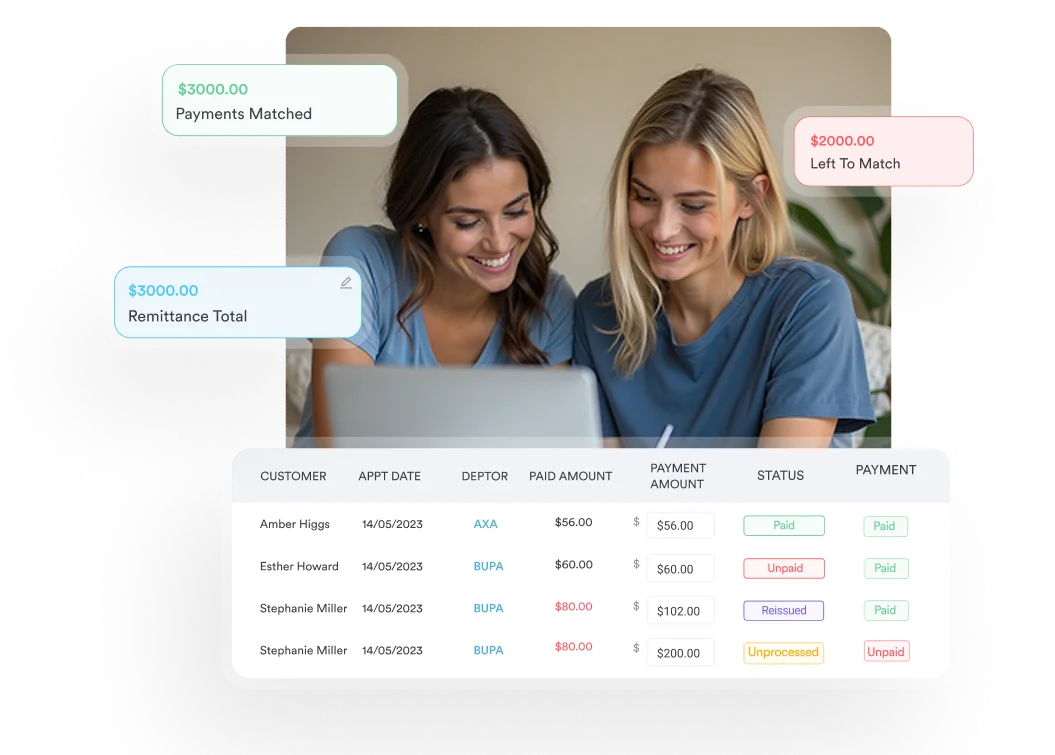

Pabau’s claims management tools help infusion and IV therapy practices track drug codes, NDC numbers, and payer-specific billing requirements in one place. Billing staff spend less time correcting claims and more time on patient care.

HCPCS code S0030 is a deleted temporary national code for metronidazole 500 mg injection, retired on June 30, 2023. Billing staff who meet it on an older contract or remittance should substitute J1836, the current crosswalk for every payer type. J3490 applies only when a payer explicitly requires an unclassified drug code.
The unit basis is the trap. J1836 pays per 10 mg where S0030 paid per 500 mg, so a standard 500 mg infusion is 50 units rather than one. Medicare covers no S-code at all, and Medicaid coverage still needs state-level verification of the replacement code.
Infusion and IV therapy practices run a high volume of drug injection claims. Keeping crosswalks current and tracking NDC requirements by payer carries a real administrative cost. Pabau’s medical billing software integrates charge capture, drug coding, and payer-specific requirements, so billing teams can manage billing workflows without switching between reference systems.
To see how Pabau handles drug injection billing for outpatient and infusion practices, book a demo.

Need to understand how billing denials happen? Denial codes in medical billing explains the most common remittance adjustment reason codes and how to respond to each one.
Managing infusion and IV therapy claims at scale? Best EMR for IV therapy reviews the features that matter most for IV therapy clinic billing and documentation workflows.
Want to reduce claim errors before submission? Submitting a clean claim outlines the documentation and coding steps that reduce first-pass denial rates for drug injection claims.
HCPCS code S0030 is a deleted HCPCS Level II temporary national code with the official descriptor “Injection, metronidazole, 500 mg.” State Medicaid programs and private payers used it to bill intravenous metronidazole infusions given in outpatient settings. The code was retired on June 30, 2023, and should not appear on current claims.
No. Medicare Part B does not cover HCPCS code S0030 or any other S-code. S codes are excluded from the Medicare Part B fee schedule by CMS policy. Providers billing Medicare for IV metronidazole should use J1836, the current J-code, after confirming its active status.
J1836 (Injection, metronidazole, 10 mg) replaced S0030 and took effect on July 1, 2023. It is recognized by Medicare, Medicaid, and most commercial payers. Note the different unit basis: J1836 pays per 10 mg, not per 500 mg. When a payer requires an unclassified drug code instead, J3490 may apply with invoice documentation.
Fifty units. J1836 is defined per 10 mg, so a 500 mg infusion is billed as 50 units and a 1,000 mg dose as 100 units. The legacy S0030 code was billed as one unit per 500 mg dose. Reporting one unit on a J1836 claim underbills the drug line by a factor of 50.
Not under the S0030 code itself, since it has been deleted. State Medicaid programs that previously covered S0030 have updated their drug fee schedules to the current replacement code. Submit metronidazole IV claims to Medicaid using J1836, and verify acceptance and unit rules with the specific state Medicaid authority first.
J3490 (Injection, drug, unclassified) is an active HCPCS code for injectable drugs that lack a specific billing code. It should not replace S0030 while J1836 is available and appropriate. J3490 applies only when a payer explicitly requires an unclassified code, or when no specific J-code exists for the drug given. Using J3490 unnecessarily triggers extra documentation review and may delay reimbursement.
Required documentation includes a signed physician order specifying drug name, dose, route and frequency, plus the NDC number for the product administered. The units billed must match the milligrams given, at 10 mg per unit of J1836. You also need ICD-10-CM diagnosis codes supporting medical necessity and the place of service. Medicaid claims additionally require the NDC unit qualifier and quantity in the designated claim field.