GLP-1 diet plan
A GLP-1 diet plan is a structured eating framework for patients taking semagluti...

1
Last Updated: Oct 13, 2026

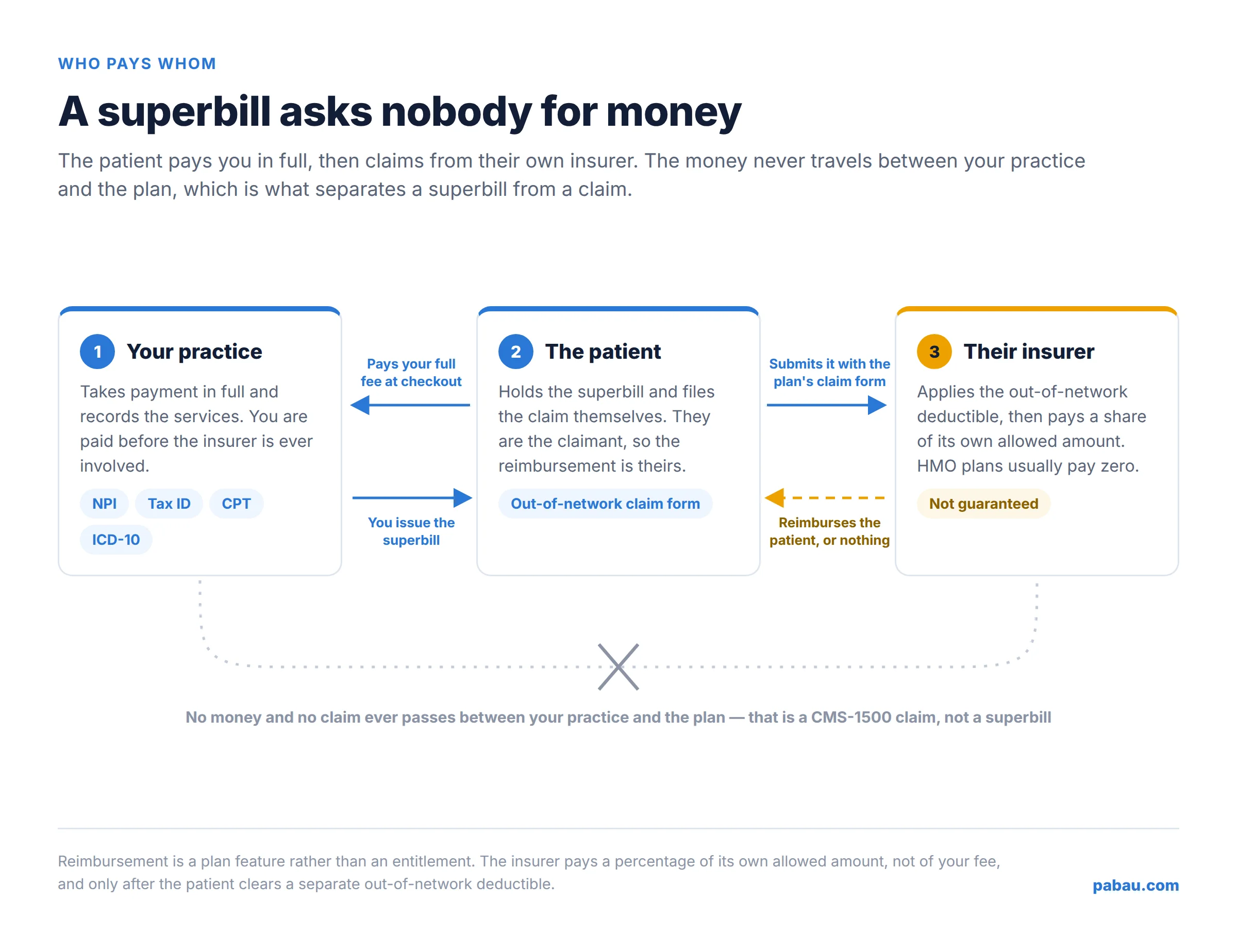
A superbill is an itemized receipt of care you give a patient, not a bill and not an insurance claim.
The patient submits it to their insurer, and any reimbursement is paid to the patient rather than to your practice.
Reimbursement only happens when the plan has out-of-network benefits, so most HMO members get nothing back.
Every superbill needs your NPI, tax ID, license number, dates of service, CPT codes, ICD-10 codes, and itemized fees.
Practice management software can build the document straight from a finished appointment, so nobody retypes codes by hand.
A superbill is an itemized receipt a healthcare provider gives a patient so the patient can claim reimbursement from their insurer for out-of-network care. Despite the name, nobody owes anything on it. It records care that has already been paid for, written in the codes an insurer can read. Solo practitioners who hand out superbills can use software for the cash-pay side too, something our med spa software guide compares.
If you run a cash-pay practice, you have heard the question already. A patient settles up in full, then asks whether you can give them something for their insurance. The superbill is that something.
Handing one over costs you a few minutes. What happens next is between the patient and their plan, and it doesn’t always end in money.
A superbill lets an out-of-network patient recover part of what they paid you, directly from their own insurer. Three parties touch one document, and the money moves in a straight line.
That last point is the whole appeal for a private pay practice. You collect your full fee on the day. There are no payer contracts to sign, no claims to chase, and no adjudication to wait out. Your patient still feels their insurance is doing something for them.
Even when the insurer pays nothing, the superbill can push the visit toward the patient’s out-of-network deductible. Many plans also accept it as documentation for a health savings account or flexible spending account claim.
A single surgical episode moves that deductible far faster than office visits do. A patient who pays out of pocket for CPT 29888 will see the difference on their next explanation of benefits.
A superbill carries enough detail for an insurer to price the visit as though a claim had been filed. Insurers routinely reject documents missing any of these fields.
Leave one of these out and the patient’s claim stalls. That usually means a phone call to your front desk rather than to their insurer.
Pairing matters as much as completeness. A procedure line reading CPT 29876 is worthless to an insurer without the diagnosis code sitting beside it.
Common examples include CPT code 00400 for anesthesia, CPT code 10005 for a needle biopsy, and CPT code 80053 for a metabolic panel.
A superbill works in five steps, and only the first two involve your practice.
That last step is where expectations need managing. Insurers reimburse against their own allowed amount, not against your fee. Charge $250 for a visit the plan values at $150, and a 60% out-of-network rate pays your patient $90.
The gap widens as the fee climbs. On a surgical line like CPT 29880, the difference between your charge and the plan’s allowed amount stops being a rounding error.
Plenty of patients get nothing at all. Out-of-network benefits are a plan feature, not an entitlement. Most HMO plans cover out-of-network care only in an emergency, so a superbill from a routine visit pays zero.
PPO and POS plans usually do reimburse. Even then, the patient has to clear a separate out-of-network deductible first, and that figure often runs into the thousands. Say this out loud before a patient gets their hopes up. The explanation of benefits their insurer sends afterward will show exactly how the math landed.
Ask patients to check their benefits before a procedure, not after. Anyone scheduling CPT 29916 should know in advance whether their plan pays out-of-network at all.
The difference between these three documents is who is being asked for money. A bill asks the patient to pay. A superbill asks nobody to pay, because the patient already has. A CMS-1500 claim asks the insurer to pay your practice.
| Document | Who submits it | Who gets paid | When to use it |
|---|---|---|---|
| Invoice or bill | Your practice, to the patient | Your practice | The patient still owes you money for a visit |
| Superbill | The patient, to their insurer | The patient | The patient paid in full and wants to claim out-of-network |
| CMS-1500 claim | Your practice, to the insurer | Your practice | You are in-network, or you bill out-of-network for the patient |
Filed electronically, that same data travels as an 837P file through a clearinghouse. The paper form and the electronic file carry identical information.
Modifiers are part of that identical information. A modifier attached to CPT 29882 has to appear on the superbill exactly as it would on the electronic claim.
Superbills stop being enough at a fairly predictable point. Patients start picking practices that take their insurance directly, or the share of your services that insurers cover grows.
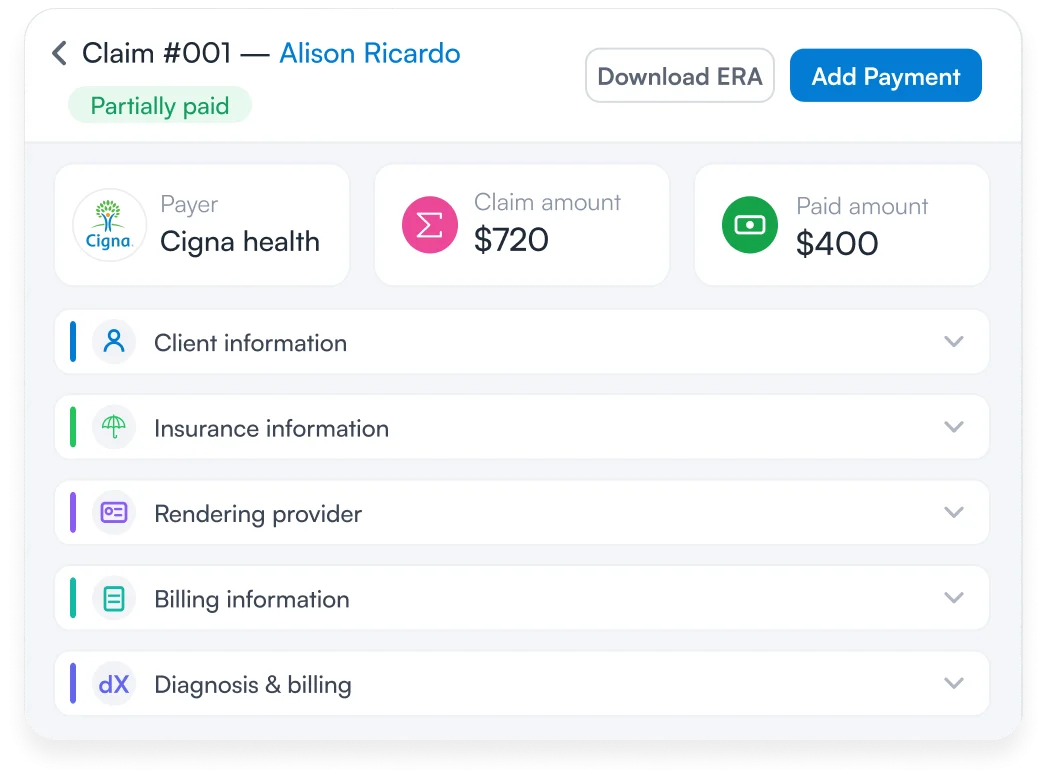
At that stage you credential with the payers who matter to you and file claims yourself. Our guide to medical billing covers what that shift involves. Superbills stay useful for the plans you never join.
Nothing changes about the coding when you make that switch. CPT 29877 occupies box 24D on a CMS-1500 exactly as it occupied a line on the superbill.
Superbills come from practices that treat insured patients without joining insurance networks. Therapists and psychologists issue the most by volume. Dietitians, chiropractors, physical therapists, acupuncturists, and out-of-network specialists account for most of the rest.
Out-of-network surgeons work the same way. A practice performing CPT 29848 on a private-pay basis issues a superbill for the same reason a therapist does.
All of them deliver medically necessary care on a private-pay basis. Med spas and wellness practices are arriving at the same place from a different direction.
Medical weight management, hormone care, and women’s health have moved into territory insurers will sometimes cover. Clients who once paid without a second thought now ask whether they can claim the visit back.
A booking app can’t answer that. A superbill needs a diagnosis, a procedure code, and an NPI on one document, and a beauty-focused system holds none of them.
Be straight with clients about where the line sits. Medical necessity is what insurers reimburse, and documentation is what proves it. A coded nutrition counseling visit against a documented obesity diagnosis can qualify. So can treatment for hypothyroidism.
Purely cosmetic work never will, and no coding choice changes that. Botulinum toxin for frown lines, dermal filler, and laser resurfacing are elective. Coding them as medical to help a client claim is fraud, not a favor.
Mixed procedures are where judgment gets hard. CPT 30420 combines two kinds of work in one code, so your documentation has to show what drove the visit.
Mental health claims lean on precise coding, and unspecified anxiety disorder is among the codes these practices bill most often.
Most practices assemble superbills by hand. Someone opens a superbill template, copies the patient’s details across, looks up the codes, and retypes the fees. Do that 30 times a month and it becomes a job.
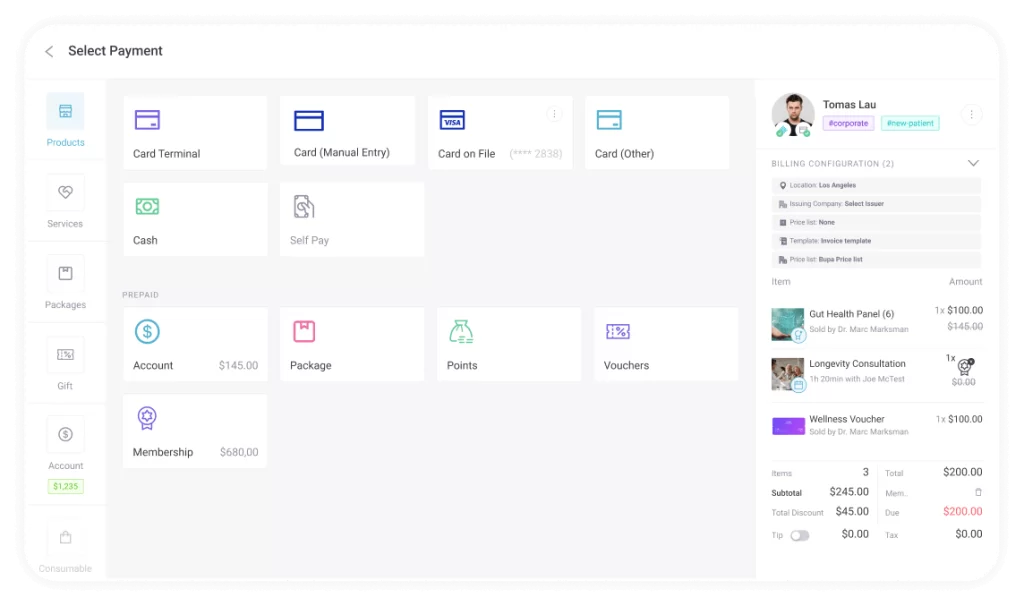
Practice management software like Pabau builds the document out of the appointment that already happened. CPT and ICD-10 codes come from built-in catalogs, so nobody hunts through a PDF to find one. Diagnoses populate from the client’s active Problems, which keeps the clinical record and the superbill saying the same thing. Correct coding is one half of getting paid; claims management software handles submission through remittance.
You then print or export a patient-facing superbill in one step, so your front desk stops rebuilding the same document every week.
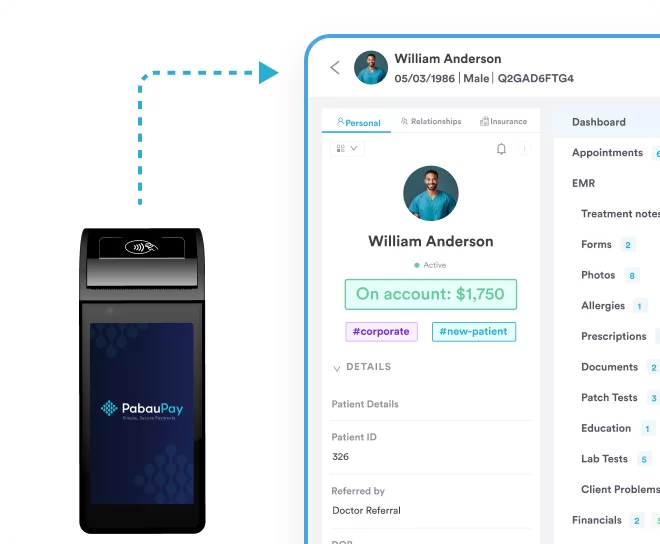
The same setup carries you forward if the practice ever goes in-network. That invoice submits as a real claim to thousands of US payers through the Claim.MD integration. Superbills and insurance claims live in one system, so nothing gets rekeyed.

Pabau builds patient-facing superbills from the appointment record, with CPT and ICD-10 codes from built-in catalogs and diagnoses pulled from the client’s active Problems. When you go in-network, the same invoice files a real insurance claim.

The superbill is the cheapest bridge there is between a cash-pay practice and insurance money. No contracts, no credentialing, no adjudication. Just a complete receipt handed over at checkout.
Its limit is that you control the document and nothing else. Whether your patient sees a dollar back depends on their plan, their deductible, and their insurer’s allowed amount. The practices that handle this well set that expectation on day one, then make the document itself flawless.
So get the fields right, and stop building them by hand. Book a demo to see how Pabau generates superbills and files insurance claims from the same patient record.

Coding erythema from another condition? Erythema coding guide explains why L54 is a manifestation code sequenced after the underlying diagnosis.
Wondering where superbills sit in the wider money flow? Revenue cycle management maps every stage between booking an appointment and banking the payment.
Billing nutrition or weight management visits? CPT code 97802 covers the initial medical nutrition therapy assessment, one of the codes wellness practices put on superbills most often.
Coding an acanthosis nigricans diagnosis? Acanthosis nigricans coding guide covers the etiology, site, and sequencing details that keep this claim from being denied.
Billing insurance for the first time? Medical billing compliance covers the documentation standard a superbill has to meet.
Sometimes, and only when the patient’s plan includes out-of-network benefits. PPO and POS plans usually reimburse a percentage of their allowed amount, once the out-of-network deductible is met. Most HMO plans pay nothing for routine out-of-network care.
A bill asks the patient for money, and a superbill asks nobody for money. The patient has already paid in full. The superbill is the coded receipt they send to their insurer to claim part of it back.
Start from the completed visit record. Add your NPI, tax ID, license number, date and place of service, CPT codes, ICD-10 diagnoses, itemized fees, and proof of payment. Practice management software can generate the whole document from the appointment, which removes the retyping and the transcription errors.
In therapy it means the same thing it means anywhere else, and this is the most common use for it. Out-of-network therapists give clients a coded receipt after each session, or a monthly summary. The client then claims reimbursement from their own plan.