

HCPCS code E0198: Water pressure pad billing guide
HCPCS code E0198 is a water pad for a standard mattress HCPCS code E0198 is the ...

Last Updated: Oct 13, 2026
Q5123 is the HCPCS Level II code for injection, rituximab-arrx, biosimilar, (riabni), 10 mg.
Let Pabau's smart automation suggest the right codes, reduce claim denials, and keep your practice compliant—effortlessly.
Automate repetitive tasks and focus on what matters most—your patients.
Reduce coding errors and ensure compliance with the latest regulations.
Clean claims, fewer denials, and faster reimbursements.
Powerful insights and reporting to help your practice thrive.
HIPAA compliant SOC 2 certified GDPR-compliant Trusted by 4,000+ clinics worldwide

HCPCS code Q5123 describes injection, rituximab-arrx, biosimilar, (Riabni), 10 mg – effective July 1, 2021, and valid for 2026 billing
Each billing unit equals 10 mg; a 500 mg infusion dose requires 50 units – under-reporting units is one of the most common claim errors
Q5123 is subject to mandatory CMS JW/JZ modifier policy for drug waste reporting on multi-dose vials
Pabau’s claims management software helps infusion centers track Q5123 unit calculations, modifier flags, and prior authorization status in one place
HCPCS code Q5123 is the Level II code for injection, rituximab-arrx, biosimilar, (Riabni), 10 mg. It bills by the 10 mg unit, and infusion doses commonly run to 500 mg or 1,000 mg per session.
The Centers for Medicare and Medicaid Services (CMS) established the code effective July 1, 2021, following FDA approval of Riabni as a biosimilar to reference rituximab (Rituxan). It’s valid for 2026 billing under the CMS category Cancer, Vision and Other Associated Drugs.
Before billing, confirm these verified code attributes against the current-year CMS HCPCS file. Coverage code C (Carrier judgment) means local Medicare Administrative Contractors (MACs) determine coverage based on individual clinical circumstances rather than a national coverage determination.
Riabni (rituximab-arrx) is a CD20-directed monoclonal antibody. It binds to the CD20 antigen expressed on the surface of B-lymphocytes and triggers cell death. The same mechanism that makes reference rituximab effective in treating B-cell malignancies and autoimmune conditions applies to Riabni as a biosimilar.
FDA-approved indications that support medical necessity for Q5123 billing include the following conditions. Coders should select the most specific ICD-10-CM code available and document which indication drove the treatment decision.
Off-label use exists for several conditions, but claims billed against non-approved indications face higher scrutiny and prior authorization denial rates. Local Coverage Determinations (LCDs) from individual MACs govern which diagnoses qualify under their respective jurisdictions. CMS maintains the annual list of CPT/HCPCS codes covered under Medicare Part B.
Maintaining thorough clinical documentation forms for each infusion encounter is essential. The physician’s order must include the indication, dose, route, and frequency. Without this, even a correctly coded claim can be denied on audit.
Check your MAC’s LCD for rituximab biosimilars before billing. Some MACs publish indication-specific coverage articles (like CMS A56380) that list exactly which ICD-10 diagnosis codes they accept as supporting medical necessity for J9312, Q5115, Q5119, and Q5123. Bookmark that article and cross-reference it every time you code a Riabni infusion.
Q5123 bills per 10 mg of rituximab-arrx administered. Rituximab dosing is weight-based for some indications and fixed-dose for others, so the number of units billed changes with each patient and each cycle. Getting this right is where many infusion billing teams lose money or face compliance exposure.
Round up to the nearest whole unit when the calculated dose does not divide evenly by 10 mg, per CMS billing rules (Medicare Claims Processing Manual, Pub. 100-04, Ch. 17). For example, a 10 mg descriptor with 47 mg administered bills as 5 units, not 4.
Bill only for the dose documented as administered, never for the full vial content unless every milligram was used.
Accurate unit tracking is one of the areas where claims management workflows within practice management software provide the most direct financial return. When unit counts are calculated manually and transcribed into the claim, transcription errors are common and often go undetected until a payer audit.
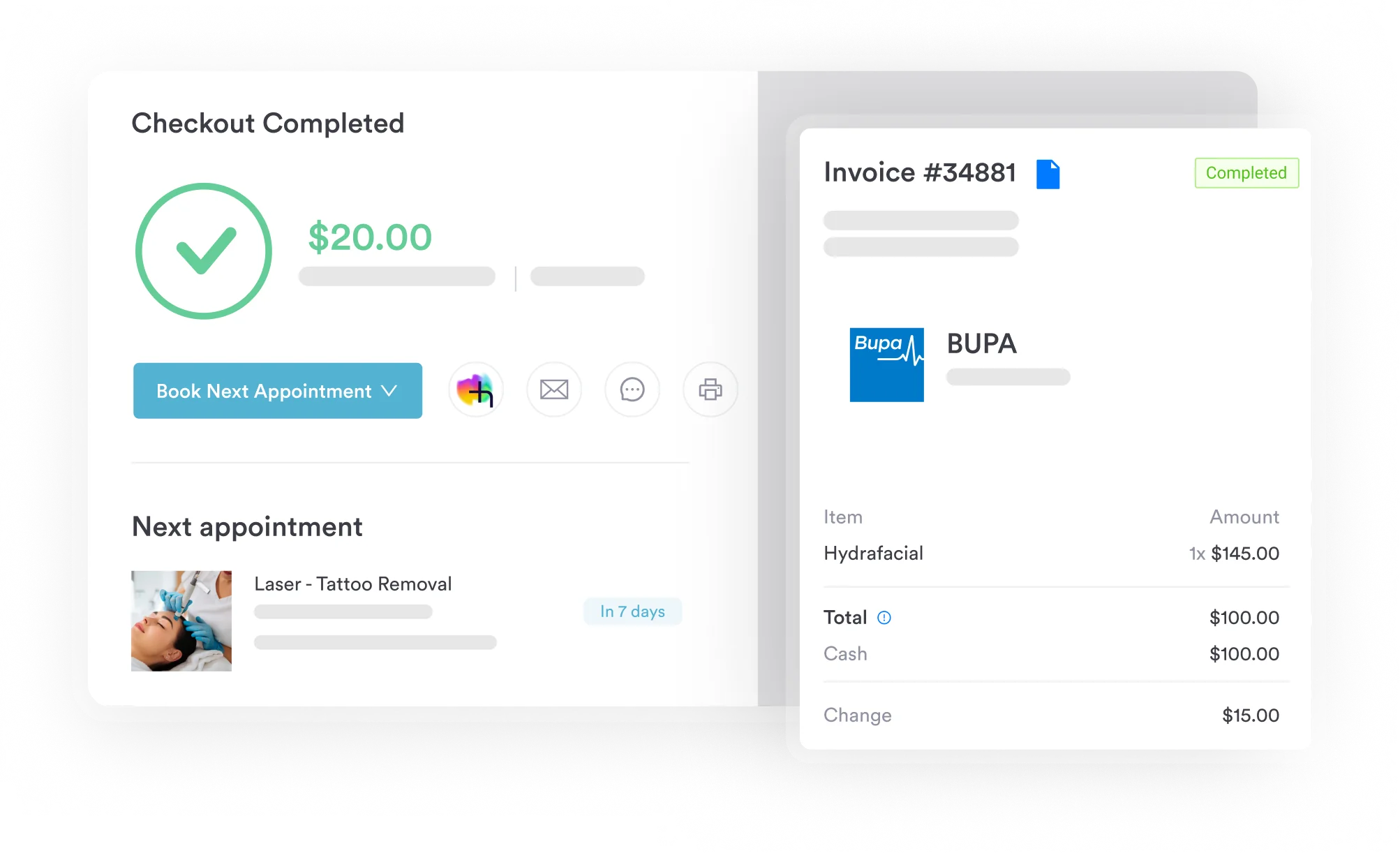
Medicare Part B reimburses Q5123 under the Average Sales Price (ASP) methodology at ASP + 6%. CMS updates ASP-based reimbursement rates quarterly, so the rate applicable in Q1 2026 differs from Q2 2026. Always verify the current payment amount using the CMS Physician Fee Schedule lookup tool before submitting claims, rather than relying on rates from a prior quarter.
The ASP + 6% rate applies to the units administered and billed. Coverage code C means individual MACs exercise judgment on whether a given clinical scenario qualifies.
Rheumatology and oncology practices billing Q5123 under a buy-and-bill model typically receive the Part B drug payment directly. Practices using specialty pharmacy arrangements may have different reimbursement flows depending on the payer contract.
For infusion therapy EMR software integrations, confirming that drug payment amounts are pulled quarterly is a key audit readiness step. Stale reimbursement data in your billing system causes underpayment reconciliation problems that compound over time.

Track Q5123 unit calculations, modifier flags, and prior authorization status without spreadsheets. See how Pabau keeps your infusion billing clean and audit-ready.

Two modifier categories apply to Q5123 claims: the mandatory CMS drug waste modifiers and situational modifiers that reflect specific billing circumstances. Submitting without the required waste modifier is a compliance risk and triggers claim-level edits at many MACs.
CMS requires the JW or JZ modifier on all single-dose vial (SDV) and multi-dose vial (MDV) drug claims under Medicare Part B. Q5123 is listed in the CMS JW/JZ Modifier Policy HCPCS Codes document, making compliance mandatory, not optional.
Example: A patient receives a 500 mg dose. Riabni is supplied in 500 mg/50 mL (10 mg/mL) vials. If the provider opens one vial and uses all 500 mg, bill 50 units of Q5123 with modifier JZ.
If the dose leaves 50 mg unused, bill 45 units of Q5123 without a modifier on the paid line, then bill 5 units of Q5123 with modifier JW on a separate line at $0.
For practices managing infusion clinic best practices, building a modifier decision tree into your pre-billing workflow prevents the most common Q5123 claim edits.
Document drug waste at the point of care on the infusion record, not retrospectively. The JW modifier line requires concurrent documentation: the dose drawn, the dose administered, and the amount discarded. A nursing note that captures these three data points in real time is your strongest audit defense.
Q5123 is one of four HCPCS codes covering rituximab and its biosimilars. Each code maps to a distinct biosimilar product, and billing the wrong code for the product administered is a misrepresentation risk.
Verify the NDC on the drug label against the correct HCPCS code before claim submission. CMS’s published NDC-HCPCS crosswalk files and the AAPC Codify HCPCS lookup both provide current NDC crosswalk data for biosimilar Q-codes.
Q5123 covers only the drug itself, so bill the infusion administration separately. Oncology indications typically pair it with CPT 96413 (chemotherapy IV infusion, initial hour).
Other infused biologics that follow a similar drug-plus-administration billing pattern include HCPCS J2323 (natalizumab) and HCPCS S9379 for home infusion therapy arrangements.
Use J3590 (unclassified biologic) only when a rituximab biosimilar product does not yet have an assigned Q-code. As of 2026, all four products above have specific codes; J3590 submission for any of them is incorrect and increases denial probability.
Louisiana Medicaid applies specific dosing frequency limits across all four codes. Per Louisiana Department of Health policy, Q5123 (along with J9312, Q5115, and Q5119) is limited to no more than 100 units every two weeks for the initial dose when billed with a diagnosis of rheumatoid arthritis or pemphigus vulgaris.
Practices billing Louisiana Medicaid for patient compliance documentation under those indications must track cumulative units against this frequency threshold.
Q5123 claims require documentation that establishes medical necessity for each infusion encounter. Carrier judgment coverage means the MAC evaluates records when a claim is selected for review, so complete records from day one are essential.
Prior authorization requirements for Q5123 vary by payer, indication, and whether buy-and-bill or specialty pharmacy is used. Medicare Fee-for-Service does not require prior authorization for Part B drugs, but Medicare Advantage plans frequently do. UnitedHealthcare’s commercial medical drug policy for rituximab products (including Q5123) requires authorization for most indications and specifies step therapy requirements. Patients paying up front and claiming later need a superbill, which itemizes the service, the code and the charge.
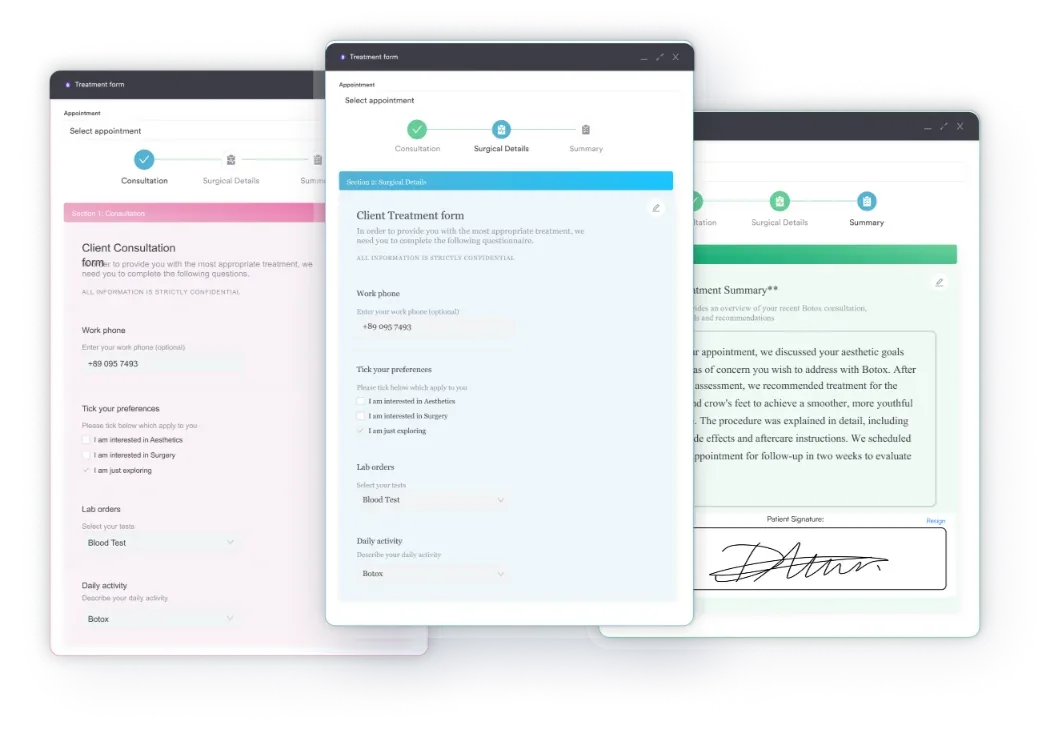
Using digital intake and consent forms to capture the patient’s prior treatment history at the point of intake reduces the back-and-forth when submitting prior authorization requests. Payers typically require this information as part of the clinical criteria review.
For EHR integration for infusion centers, connecting your practice management system to your pharmacy benefits manager portal helps flag which patients require authorization before the infusion date, not after.
Rituximab biosimilar claims sit in a higher-scrutiny segment of Medicare Part B drug billing. The ASP-based methodology, mandatory waste reporting, and indication-specific coverage rules create multiple compliance checkpoints that billing teams must navigate on every claim.
Key compliance risks for Q5123 billing include: billing J9312 when Riabni was administered (product mismatch), billing more units than the dose administered supports (overbilling), failing to append JW/JZ modifiers (mandatory policy violation), and submitting without a matching NDC on the claim when required by the payer.
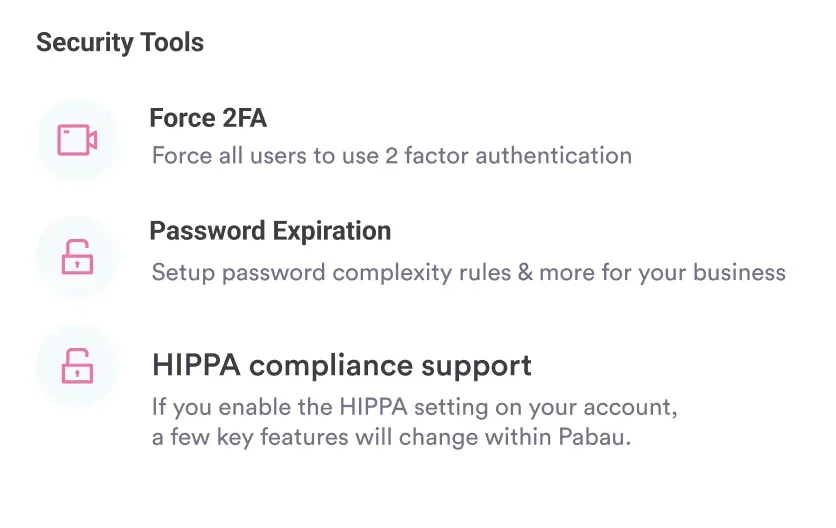
Practices operating under HIPAA-compliant medical billing standards should treat Q5123 as a code that warrants periodic internal audit. Pull a sample of claims every quarter, verify unit counts against the administration records, confirm modifier usage, and reconcile reimbursement received against ASP rates for that quarter.
Building compliance management checkpoints into your billing workflow, rather than relying on retrospective audits, is the most effective way to prevent the pattern of errors that triggers payer audits.
HCPCS code Q5123 is a high-value, high-scrutiny code. Getting the unit calculation right, applying JW or JZ modifiers correctly, matching the NDC to the specific biosimilar administered, and maintaining indication-specific documentation are the four pillars of clean Q5123 claim submission. Errors in any one of these areas trigger denials, demand letters, and audit exposure.
Pabau’s integrated practice management software gives infusion and oncology billing teams the workflow infrastructure to track drug administration, automate modifier prompts, and maintain documentation that satisfies MAC review. To see how Pabau can tighten your Q5123 billing workflow, book a demo with the team.

Treating four or more skin lesions? skin lesion removal billing guide explains how CCSD code S0820 applies when four or more lesions are treated in one session.
Treating up to three skin lesions? CCSD code S1110 guide covers billing for curettage or cryotherapy when up to three skin lesions are treated.
HCPCS code Q5123 is the Level II billing code for injection, rituximab-arrx, biosimilar, (Riabni), 10 mg. It is a CMS-assigned code effective July 1, 2021, used to bill Medicare and other payers for infusions of the Riabni biosimilar across oncology and autoimmune indications.
Bill 100 units. Q5123 is priced per 10 mg, so a 1,000 mg dose divides to 100 billable units. Always document the exact dose administered in the infusion record and reconcile that against the units submitted on the claim.
J9312 is the code for reference rituximab (Rituxan), while Q5123 is specifically for rituximab-arrx (Riabni), an FDA-approved biosimilar. Bill the code that matches the actual product administered. Billing J9312 when Riabni was given, or vice versa, is a product mismatch that constitutes a billing error.
Yes. Q5123 is listed in the CMS JW/JZ Modifier Policy HCPCS Codes document. Append JZ when no drug was wasted and append JW (on a separate $0 line) for any discarded drug. Failure to use one of these modifiers on Medicare Part B claims is a compliance violation.
Common ICD-10-CM codes used with Q5123 include C83 series (non-Hodgkin lymphoma), C91.1 (chronic lymphocytic leukemia), M05 series (seropositive rheumatoid arthritis), M31.30/M31.31 (Wegener’s granulomatosis), M31.7 (microscopic polyangiitis), and L10.0 (pemphigus vulgaris). Always verify against your MAC’s LCD for the current accepted code list.
Traditional Medicare Fee-for-Service does not require prior authorization for Q5123 under Part B. Medicare Advantage plans and commercial payers typically do require authorization, often with step therapy documentation showing prior TNF inhibitor failure for rheumatoid arthritis indications. Verify requirements with each payer before the infusion date.
No. Riabni (rituximab-arrx) does not have a J-code. It is billed under the HCPCS Q-code Q5123, priced per 10 mg. The J-code J9312 belongs to the reference product, Rituxan (rituximab), not to the biosimilar. So if a payer form or online search points you toward a J code or CPT code for Riabni, the correct code to report is Q5123.
Rituximab-arrx (Riabni) is a CD20-directed monoclonal antibody, classed as immunotherapy in the SEER CanMED system. It is a biosimilar to reference rituximab (Rituxan) and works by binding the CD20 antigen on B-lymphocytes to trigger cell death, which is why it treats several B-cell malignancies and autoimmune conditions.
Under Medicare Part B, Q5123 is reimbursed on the Average Sales Price methodology at ASP plus 6 percent, and CMS refreshes that rate every quarter, so pull the current amount from the CMS fee schedule before you bill. The drug carries a high per-vial list price, but eligible patients may qualify for the manufacturer’s patient assistance and copay support programs, which billing teams often flag during intake.



