

HCPCS code E0198: Water pressure pad billing guide
HCPCS code E0198 is a water pad for a standard mattress HCPCS code E0198 is the ...

Last Updated: Oct 13, 2026
L3660 is the HCPCS Level II code for shoulder orthosis, figure of eight design abduction restrainer, canvas and webbing, prefabricated, off-the-shelf.
Let Pabau's smart automation suggest the right codes, reduce claim denials, and keep your practice compliant—effortlessly.
Automate repetitive tasks and focus on what matters most—your patients.
Reduce coding errors and ensure compliance with the latest regulations.
Clean claims, fewer denials, and faster reimbursements.
Powerful insights and reporting to help your practice thrive.
HIPAA compliant SOC 2 certified GDPR-compliant Trusted by 4,000+ clinics worldwide

HCPCS code L3660 describes a shoulder orthosis, figure-of-eight design abduction restrainer, canvas and webbing, prefabricated and off-the-shelf
L3660 is billed under Medicare Part B as durable medical equipment (DME), and suppliers must hold DMEPOS accreditation
Common coding errors include missing the KX modifier, using L3660 for custom orthoses, and insufficient medical necessity documentation
Practice management software like Pabau helps DME suppliers structure orthotic billing records and maintain audit-ready documentation
HCPCS code L3660 is the correct billing code for a shoulder orthosis (SO), figure-of-eight design abduction restrainer, constructed of canvas and webbing, prefabricated and off-the-shelf. The code sits within the HCPCS Level II L-code range.
The device itself wraps around both shoulders in a crossover pattern, applying gentle posterior compression to stabilize the clavicle and acromioclavicular joint. Its canvas-and-webbing construction distinguishes it from rigid or semi-rigid orthoses, which fall under different L-codes.
Because L3660 is classified as prefabricated and off-the-shelf, it does not require individual customization before dispensing. That classification matters for billing: it places L3660 in a separate coverage and modifier category from custom-fabricated shoulder orthoses. The L-code range covers other prefabricated orthoses built the same way.
According to the Centers for Medicare and Medicaid Services (CMS), HCPCS code L3660 is covered under Medicare Part B as durable medical equipment when medical necessity is documented. Several eligibility requirements apply before a claim can be submitted.
Prior authorization requirements for L3660 vary by DME MAC jurisdiction and individual payer policy. Providers should confirm requirements with their applicable DME MAC before dispensing high-volume orders.
Medical necessity for HCPCS code L3660 must be supported by a diagnosis that clinically justifies use of a figure-of-eight shoulder abduction restrainer. Clavicle fractures and AC joint separations are common in sports medicine and orthopedic practices, and both are frequently billed with L3660.
The following ICD-10-CM codes are commonly accepted, though coverage ultimately depends on the applicable Local Coverage Determination (LCD) from the DME MAC. Always cross-reference the current LCD before submitting a claim.
Listing a diagnosis is necessary but not sufficient. The clinical record must also document the functional limitation the diagnosis causes and why a shoulder orthosis is the appropriate intervention.
Vague notes like “shoulder pain, orthosis dispensed” will not satisfy a DME MAC audit. Structured medical records management that capture clinical justification at the point of care reduce denial risk significantly.
Check the applicable DME MAC’s LCD before dispensing. Not every ICD-10 code associated with shoulder pathology will satisfy medical necessity criteria for L3660. The LCD lists acceptable diagnoses specifically, and billing an unlisted code without documentation of an exceptional circumstance is a common audit trigger.
Practices fitting orthotics alongside manual therapy often run the whole caseload in osteopathy practice software.
CMS publishes annual DMEPOS fee schedules that set the Medicare allowable amounts for HCPCS code L3660. The fee schedule amounts are region-specific.
The exact 2026 figures for your jurisdiction must be pulled directly from the CMS fee schedule lookup tool. Publishing specific dollar amounts here would risk inaccuracy as rates change annually and vary by geographic area.
Key points about DMEPOS reimbursement for L3660:
Documentation failures are the leading cause of L3660 claim denials and post-payment audit recoveries. The DME MAC expects a complete paper trail that independently supports the medical necessity decision, the dispensing event, and the supplier’s compliance with coverage criteria. Maintaining structured patient compliance records as part of each DME encounter makes audit response faster and less stressful.
Required documentation elements for L3660 claims include:
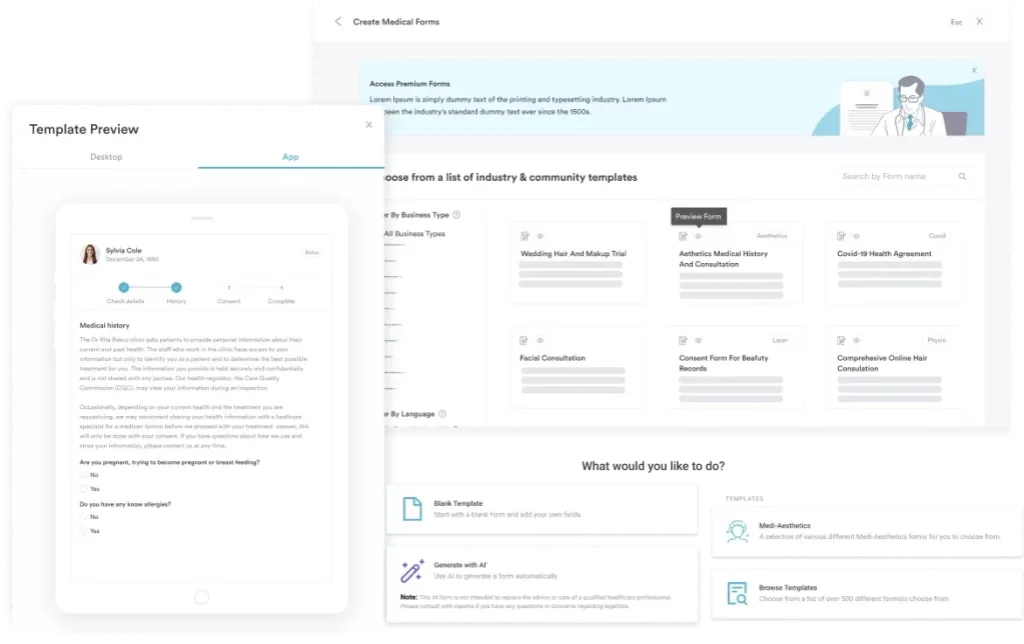
Using digital forms for dispensing records and delivery receipts creates timestamped, tamper-evident entries that hold up better in DME MAC audit reviews than handwritten or scanned paper records.
Billing HCPCS code L3660 correctly requires using the right claim form, modifiers, and submission pathway. Errors at any step can trigger an automatic denial or a prepayment review. Here is the standard billing workflow for DME suppliers submitting L3660 to Medicare.
L3660 covers only the device itself, not the fitting or management encounter. A separately billed fitting or management service uses CPT code 97763 instead.
Integrated claims management software can link the physician order, clinical notes, and delivery record to the claim before submission, reducing the manual verification step that most DME billing teams flag as their biggest time drain.
Solid EHR integration ensures that modifiers and diagnosis codes flow from the clinical record to the claim without re-entry errors.
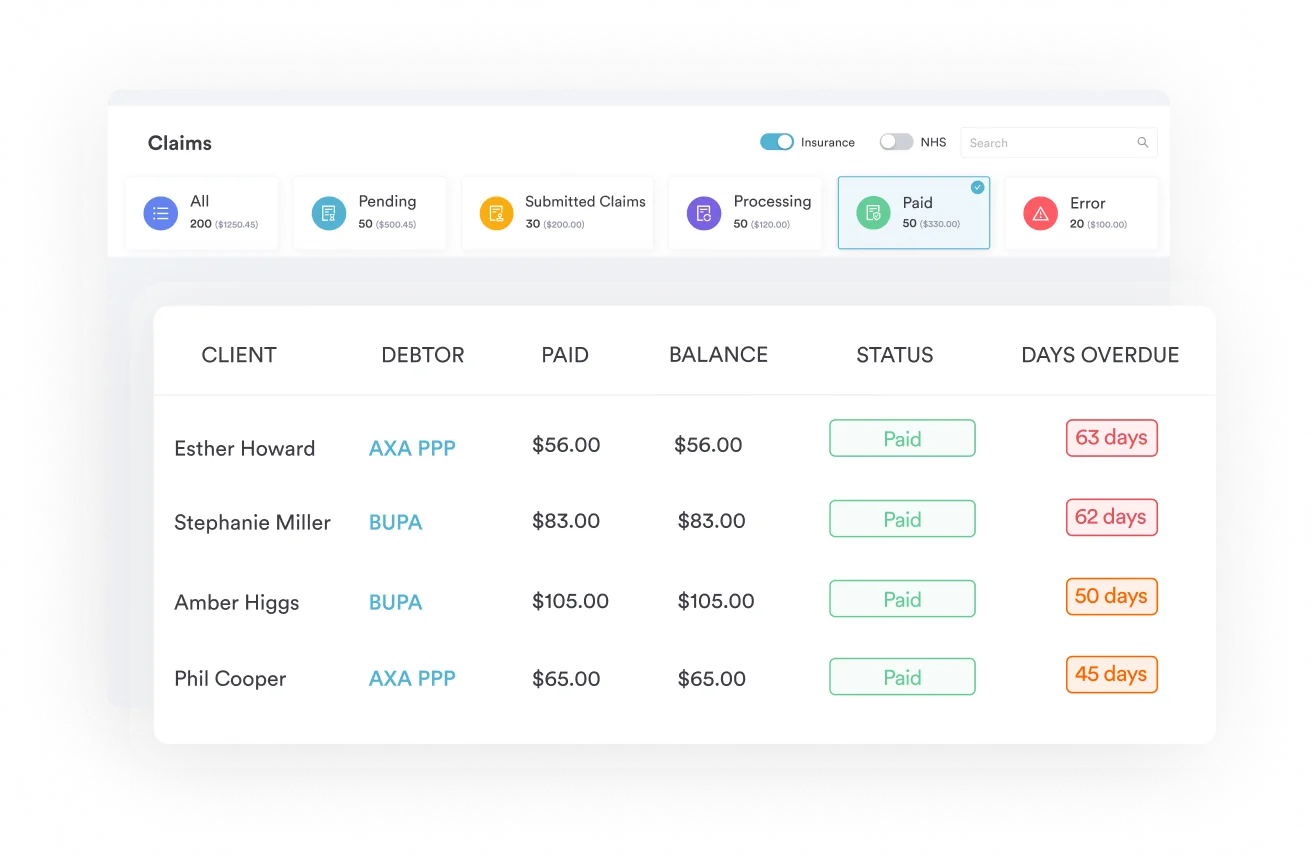

Pabau connects clinical records, physician orders, and claim submissions in one platform. Reduce denials, maintain audit-ready documentation, and bill orthotic codes accurately without chasing paper.

Choosing HCPCS code L3660 over an adjacent code is a clinical and billing accuracy decision, not an arbitrary one. The table below shows the key distinctions between the most commonly confused shoulder orthosis L-codes. Billing the wrong code, even with clean documentation, results in an automatic denial and potential overpayment recovery if caught on audit.
The L3650 vs. L3660 distinction is the most commonly misapplied. Both codes describe a prefabricated, off-the-shelf figure-of-eight abduction restrainer. L3660 specifies canvas-and-webbing construction. L3650’s descriptor does not name a material, so confirm the dispensed device’s construction before choosing between the two, rather than assuming canvas and webbing by default.
L3670 causes a different kind of confusion. The code names an acromio/clavicular (AC-type) orthosis, a different device family entirely, rather than a custom-fabricated figure-of-eight device. If a supplier dispenses a custom-fabricated figure-of-eight restrainer, the correct code is L3671, not L3670.
Reviewing your practice management software workflows to flag which code was selected and what device was supplied helps catch these mismatches before claim submission.
L3660 claims generate a predictable pattern of denials. Understanding these errors before submission is cheaper than appealing them after. Coders and suppliers who bill orthotic devices regularly should also review physiotherapy compliance requirements for broader documentation context. The filing deadline runs from the date of service, not the date the practice noticed the claim was unpaid.
Audit your L3660 claims quarterly. Pull all submitted claims, confirm the KX modifier is present where documentation supports it, and verify that the dispensed product’s material (canvas and webbing, not elastic) is documented in the patient file. A 30-minute internal review cycle catches most denial patterns before a DME MAC identifies them first.
Billing HCPCS code L3660 accurately comes down to three disciplines: choosing the right L-code for the device actually dispensed, documenting medical necessity in a way that would survive a DME MAC audit, and appending the correct modifiers at claim submission. Suppliers who treat these as connected workflow steps, rather than isolated coding decisions, see fewer denials and lower audit exposure.
Pabau’s claims management software connects clinical documentation, physician orders, and billing records in one structured workflow, so the information a DME MAC asks for in an audit is already organized and retrievable. To see how Pabau supports compliant orthotic billing documentation, book a demo.

Billing other prefabricated braces alongside L3660? HCPCS code L2050 covers hip-knee-ankle-foot orthosis billing, with the same off-the-shelf versus custom-fabricated distinctions.
Documenting a musculoskeletal diagnosis to support medical necessity? ICD-10 code M60.9 explains how myositis is coded when it is the underlying indication.
Billing DME beyond orthoses? HCPCS code E0745 covers neuromuscular stimulator billing under the same DME benefit as L3660.
HCPCS code L3660 is used to bill for a shoulder orthosis, figure-of-eight design abduction restrainer, made of canvas and webbing, that is prefabricated and dispensed off-the-shelf. It is billed under Medicare Part B as durable medical equipment by enrolled DMEPOS suppliers.
L3650 and L3660 both describe a prefabricated, off-the-shelf figure-of-eight abduction restrainer. L3660 specifies canvas-and-webbing construction, while L3650’s descriptor doesn’t name a material. L3670 is a different device altogether, an acromio/clavicular (AC-type) orthosis, not a custom-fabricated figure-of-eight restrainer. The custom-fabricated figure-of-eight device is billed under L3671. Confirm the dispensed device’s exact design and construction before selecting a code.
Commonly accepted diagnoses include clavicle fractures (such as S42.002A), acromioclavicular joint dislocation (S43.102A), and glenohumeral instability (M25.311, M25.312). The clinical record must document the specific diagnosis, the functional limitation it causes, and the rationale for the figure-of-eight orthosis. Always verify accepted diagnoses against the applicable DME MAC LCD before submitting.
Yes, L3660 is covered under Medicare Part B as a durable medical equipment (DME) benefit when medical necessity is documented. The supplier must be an enrolled and accredited DMEPOS supplier, the claim must be submitted to the appropriate DME MAC, and the KX modifier must be appended when documentation confirms LCD criteria are met.
Required documentation includes a written physician order specifying the device and diagnosis, clinical notes documenting medical necessity and functional limitation, a product description confirming the dispensed item meets the L3660 descriptor (canvas and webbing, prefabricated, off-the-shelf), and a signed proof of delivery. KX modifier claims must have all supporting documentation on file for audit review.
Yes, if the brace is made of canvas and webbing, is prefabricated, and is dispensed off-the-shelf, L3660 is the correct HCPCS code. If the device is a vest-type restrainer rather than a figure-of-eight design, L3675 applies instead. If the device is custom-fabricated to the patient rather than off-the-shelf, L3671 is the correct code.



