









HCPCS code G0127: Trimming of dystrophic nails billing guide
HCPCS code G0127 covers the trimming of dystrophic nails, any number, on a Medic...

Last Updated: August 14, 2026


HCPCS code J1559 describes injection, immune globulin (Hizentra), 100 mg, a subcutaneous immunoglobulin used for primary immunodeficiency and CIDP.
J1559 is classified by CMS as a single-dose container code, making JW and JZ wastage modifiers applicable when reporting drug waste or confirming no waste.
Medicare coverage for J1559 is governed by CMS Article A57778; providers must link the claim to a supported ICD-10-CM diagnosis with documentation meeting LCD requirements.
Pabau’s claims management software connects J1559 charge capture to clinical documentation, reducing modifier errors and supporting audit-ready records for infusion practices.
HCPCS code J1559 describes injection, immune globulin (Hizentra), 100 mg. It is a Level II HCPCS code maintained by CMS under “Drugs Administered Other than Oral Method,” billed for Hizentra, a 20% subcutaneous immunoglobulin (SCIg) product manufactured by CSL Behring.
This guide covers the JW/JZ modifier rules, NDC crosswalk, Medicare coverage criteria, and documentation standards that determine whether a J1559 claim is paid, along with how the code differs from related immune globulin J-codes when a patient moves between IV and subcutaneous therapy.
Clinically, Hizentra carries FDA approval for two primary indications. The first is primary immunodeficiency (PI), covering conditions such as common variable immunodeficiency (CVID), X-linked agammaglobulinemia, and combined immunodeficiencies. The second is chronic inflammatory demyelinating polyneuropathy (CIDP), where subcutaneous immunoglobulin maintenance therapy has demonstrated efficacy in preventing relapse following intravenous induction.
Hizentra is administered via subcutaneous infusion, typically by the patient at home or in a clinical infusion setting. When a home infusion provider bills separately for the nursing visit rather than only the drug, that per-diem service is reported under HCPCS code S9500 (home infusion therapy service), distinct from the drug charge captured by J1559.
Practices running an integrated claims management platform that ties charge capture to drug administration records have a structural advantage here. When the administered dose, diagnosis code, and HCPCS code all flow from the same clinical encounter record, the risk of mismatched claim data drops substantially.
| Code detail | Value |
|---|---|
| HCPCS code | J1559 |
| Full descriptor | Injection, immune globulin (Hizentra), 100 mg |
| Drug brand | Hizentra (CSL Behring) |
| Route of administration | Subcutaneous infusion |
| HCPCS category | Drugs Administered Other than Oral Method |
| Container type (CMS) | Single-dose container |
| Modifier applicability | JW and JZ required |
| CMS billing article | A57778 |
The billing unit for J1559 is 100 mg. For a patient who receives 1,200 mg in a weekly subcutaneous session, the claim would report 12 units of J1559. Dose verification against the patient’s weight-based prescription is a standard audit target, so chart documentation of the prescribed and administered dose must be explicit.
Medicare Part B covers Hizentra (J1559) when billed incident to a physician’s service or under the buy-and-bill model for infusion administered in a clinical setting. Reimbursement follows the Medicare Part B drug payment methodology, which uses the Average Sales Price (ASP) plus 6% for most covered drugs.
Practices relying on IV therapy clinic management platforms that pull current ASP data reduce the risk of billing below actual acquisition cost.
CMS updates ASP-based payment limits quarterly. The CMS Physician Fee Schedule lookup tool provides the current payment amounts for J1559 by MAC jurisdiction. Because rates change each quarter, coders should verify current amounts before finalizing fee schedules for infusion services, rather than relying on cached figures from prior quarters.
Coverage authority for immune globulin products including J1559 falls under CMS Medicare Coverage Database Article A57778. This article governs billing and coding for both subcutaneous and intravenous immune globulin formulations under Medicare Part B.
A key provision: it is the provider’s responsibility to select codes to the highest level of specificity from the ICD-10-CM code book appropriate to the year in which the service is rendered.
Local Coverage Determinations (LCDs) issued by Medicare Administrative Contractors (MACs) such as Novitas Solutions also apply. These LCDs specify which ICD-10-CM diagnosis codes support medical necessity for immune globulin therapy. Claims submitted without a covered diagnosis code, or where the medical record does not substantiate the diagnosis, are the primary driver of J1559 denials.
For commercial payers and Medicaid, reimbursement rates and coverage criteria vary by plan and state. Blanket assumptions about Medicare Part B rules should never be applied to commercial claims without verifying the specific payer’s drug coverage policy.
Before billing J1559 for a new patient, pull the relevant MAC LCD and identify the exact ICD-10-CM codes the contractor has listed as supported. Build that list into your clinical intake workflow so that diagnosis coding and claim submission are aligned from day one, not corrected after a denial.
CMS has formally designated J1559 (Hizentra) as a single-dose container product. That classification triggers specific wastage reporting rules that apply whenever the full contents of a single-dose container – vial or prefilled syringe – are not administered. Getting these modifiers wrong is one of the fastest routes to a billing compliance issue.
The CMS HCPCS Level II coding system sets out these rules, and CMS has published a dedicated JW Modifier and JZ Modifier Policy HCPCS Codes document that lists J1559 explicitly as a code to which both modifiers apply.
Here is how the two modifiers function in practice for J1559 claims:
A common scenario: a patient is prescribed 800 mg of Hizentra per weekly dose. CSL Behring discontinued single-dose vial packaging for the US market by the end of September 2024, so Hizentra is now supplied exclusively as prefilled syringes in 1g, 2g, 4g, and 10g sizes. The practice uses a 1g (1,000 mg) prefilled syringe.
Eight units of J1559 (800 mg) are administered, and the remaining 200 mg (2 units) are discarded. The claim reports 8 units of J1559 on one line – JZ would be incorrect here, since waste occurred – plus 2 units of J1559 appended with the JW modifier for the discarded amount.
Practices running mobile IV therapy business operations or in-practice infusion services should ensure their billing platform can capture waste amounts at the point of administration, not as a retrospective calculation. The documentation supporting the JW modifier must include the administered dose, the container size used, and explicit notation of the discarded volume.
Many payers and pharmacy benefit managers require the National Drug Code (NDC) to be reported alongside J1559. The NDC identifies the specific Hizentra product and package size dispensed.
CSL Behring discontinued single-dose vial packaging for the US market in September 2024; Hizentra is now supplied as prefilled syringes in four sizes – 1g, 2g, 4g, and 10g – each carrying a distinct NDC number.
The NDC must be reported in the correct format on the claim: 11-digit format, units in metric decimal quantity, and unit qualifier GR (grams) or ML (milliliters) as required by the specific payer.
Crosswalk verification tools can match the specific Hizentra NDC to J1559, but the mapping should be verified against current NDC data because product NDCs can change with packaging updates or manufacturer revisions.
For practices using prescription management workflows integrated with their billing platform, NDC capture at the point of drug dispensing feeds directly into the claim, reducing manual transcription errors that commonly trigger NDC-related denials.


Pabau helps infusion and immunology practices capture drug administration data, apply the correct HCPCS codes, and submit audit-ready claims without manual rework between the clinical and billing teams.

Weak documentation is the underlying cause of most J1559 claim denials at audit. The clinical record must support the diagnosis, the medical necessity of subcutaneous immune globulin therapy, the specific product and lot number, the dose administered, and any drug waste. That is not a short list, and each element serves a distinct audit function.
Practices following IV therapy clinic best practices typically structure their administration records to capture all of these elements at the point of care. Retrofitting documentation after a denial notice is both time-consuming and, in audit situations, insufficient if the contemporaneous record is thin.
The key documentation elements for a defensible J1559 claim are:
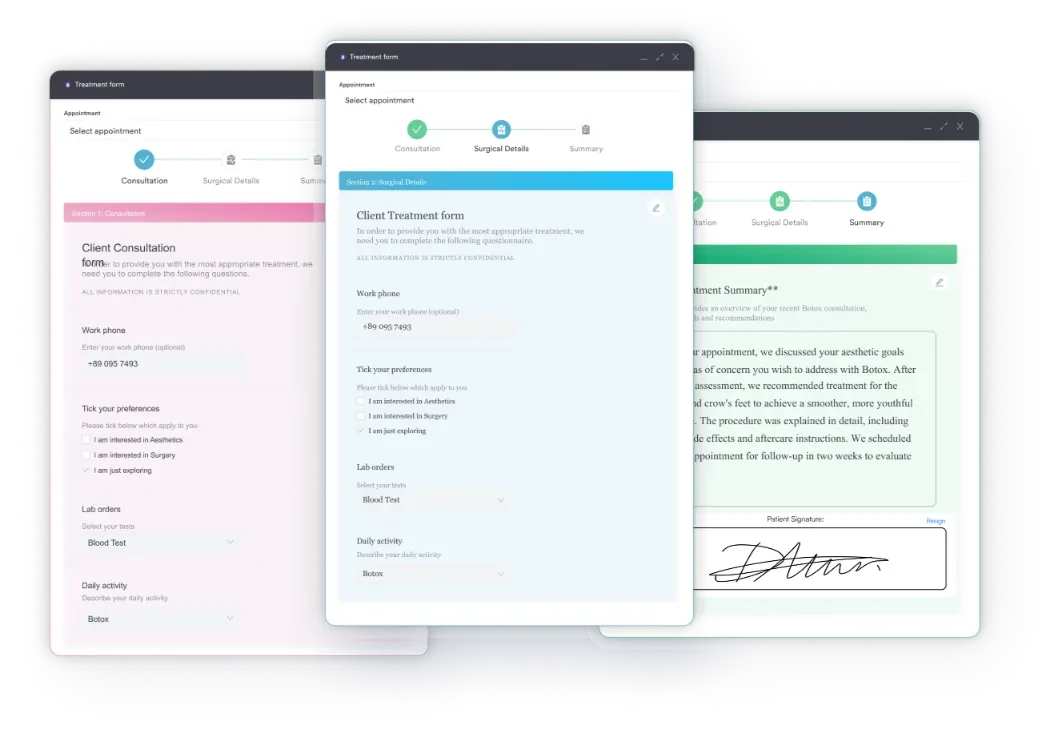
Using digital intake forms that capture immune globulin-specific clinical data at the start of therapy creates a structured baseline record. As therapy progresses, each administration session adds to that baseline. At audit, the complete longitudinal record makes it straightforward to demonstrate that every J1559 claim was supported by contemporaneous clinical documentation.
Run a quarterly internal audit on a sample of J1559 claims. For each claim, pull the clinical record and verify that the ICD-10-CM code, administered dose, container documentation, and JW or JZ modifier all align. Discrepancies found internally are far less costly than those found during a MAC or OIG audit.
J1559 is one of several HCPCS J-codes covering immune globulin products. Selecting the wrong code is a common error when a practice transitions a patient from intravenous to subcutaneous therapy, or when a formulary change substitutes one product for another. Each code is product-specific and not interchangeable.
For practices handling setting up an infusion clinic that administers multiple immune globulin products, maintaining a product-to-code mapping within the billing system prevents cross-code errors. A chart in the EHR or billing platform listing each stocked product alongside its HCPCS code and unit size reduces the risk at the point of charge entry.
| HCPCS code | Product | Route | Unit |
|---|---|---|---|
| J1559 | Hizentra (CSL Behring) | Subcutaneous | 100 mg |
| J1558 | Xembify (Grifols) | Subcutaneous | 100 mg |
| J1561 | Gamunex/Gamunex-C/Gammaked | Intravenous | 500 mg |
| J1568 | Octagam | Intravenous | 500 mg |
| J1569 | Gammagard Liquid | Intravenous | 500 mg |
| J1566 | IVIG lyophilized (NOS) | Intravenous | 500 mg |
| J1459 | Privigen | Intravenous | 500 mg |
The intravenous formulations in this table carry FDA-approved indications beyond primary immunodeficiency and CIDP. Gamunex-C/Gammaked (J1561) and Privigen (J1459) are also approved for chronic immune thrombocytopenic purpura (ICD-10 D69.3), which is not an approved use for subcutaneous Hizentra.
Other immune globulin products carry their own dedicated codes outside this core table, including Gammaplex (HCPCS code J1557). When a newer or reformulated product doesn’t yet have a permanent J-code, HCPCS code J3590 (unclassified biologics) can serve as a temporary placeholder, though payers typically require additional documentation to support pricing on that code.
The unit size difference between J1559 (100 mg per unit) and the intravenous codes (500 mg per unit) is a frequent source of billing errors during product transitions, and gram-for-gram unit math is not the only conversion at issue when a patient switches from IVIG to Hizentra.
Hizentra’s FDA-approved prescribing information requires a dose-adjustment factor for that switch: the initial subcutaneous dose equals the previous IGIV dose in grams multiplied by 1.37, to offset lower bioavailability with subcutaneous dosing.
A patient switching from 25g of IVIG billed as 50 units of J1561 (50 x 500 mg) would need an initial Hizentra dose of approximately 34.25g (25g x 1.37) – roughly 342 to 343 units of J1559 (100 mg each), not the 250 units a straight gram-for-gram conversion would suggest.
Applying the wrong conversion factor when transitioning a patient from IVIG to SCIg therapy creates a mismatch between the prescribed dose and the billed amount, which is exactly the kind of discrepancy a payer’s claims system is built to flag.
Referencing IV therapy intake forms that record the specific product stocked and used for each patient, rather than generic “immune globulin” references, creates a clean audit trail that supports product-to-code accuracy. For further HCPCS code lookup support, the AAPC Codify HCPCS lookup tool provides searchable access to current code descriptors and crosswalk data.
Clean J1559 billing follows a predictable sequence. Each step in the workflow is a potential failure point, and practices that document each step systematically have significantly lower denial rates than those handling each element ad hoc.
Practices administering Hizentra through home infusion and specialty drug administration services should map their J1559 billing process against this sequence, assigning clear ownership for diagnosis verification, NDC capture, and modifier application at each step.
For verification of current HCPCS code properties, the CMS HCPCS Level II code set (linked above) provides the authoritative code descriptions and annual update files, and the CMS Physician Fee Schedule (also linked above) provides current quarterly payment amounts for J1559 by geographic location.
Billing HCPCS code J1559 accurately depends on three things working together: the right product-to-code mapping, correct JW or JZ modifier application, and documentation that supports every element of the claim. Practices that treat these as separate concerns, rather than connected steps in a single workflow, generate the denials and audit risk that should have been preventable.
Pabau’s integrated clinical and billing platform gives infusion practices a structured way to connect drug administration records, charge capture, and claim submission in one place, reducing the manual handoffs where J1559 billing errors typically occur. To see how Pabau supports IV therapy practice growth through integrated billing and documentation, book a demo with the team.

Coding an intravenous immune globulin product? The HCPCS code J1561 (Gamunex/Gammaked) guide covers the 500 mg IVIG unit and the conversion math that matters when a patient transitions to subcutaneous Hizentra.
Tightening up your infusion documentation? IV therapy clinic best practices walks through capturing dose, lot number, and waste at the point of care so J1559 claims stay audit-ready.
Choosing a platform for an infusion practice? Our roundup of the best EMR for IV therapy compares systems that link charge capture, ASP pricing, and clinical records in one workflow.
HCPCS code J1559 is used to bill for injection, immune globulin (Hizentra), 100 mg, a subcutaneous immunoglobulin product indicated for primary immunodeficiency disorders and chronic inflammatory demyelinating polyneuropathy (CIDP). Each unit represents 100 mg of Hizentra administered via subcutaneous infusion.
J1559 covers Hizentra, a 20% subcutaneous immunoglobulin product manufactured by CSL Behring. It is not interchangeable with codes for intravenous immune globulin products (J1561, J1568, J1569) or other subcutaneous formulations such as Xembify (J1558).
JW is required when drug from a single-dose Hizentra container is drawn but not fully administered, creating waste that must be reported separately. JZ is required when the full container’s content was administered with no waste. CMS has designated J1559 as a single-dose container code, making both modifiers applicable.
Medicare Part B reimburses J1559 under the Average Sales Price (ASP) plus 6% methodology, updated quarterly by CMS. The specific payment amount varies by quarter and geographic pricing locality. Current rates can be verified using the CMS Physician Fee Schedule lookup tool.
Multiple NDC numbers map to J1559, corresponding to the Hizentra prefilled syringe sizes (1g, 2g, 4g, and 10g) that CSL Behring currently supplies in the US market, after discontinuing single-dose vial packaging in September 2024. The correct NDC to report is the one on the specific container used during the patient’s administration session. Crosswalk the administered product’s NDC label against current HCPCS-to-NDC mapping data before claim submission.
J1559 is product-specific to Hizentra (subcutaneous, 100 mg unit) and cannot be used for intravenous immune globulin products, which carry their own codes (J1561, J1568, J1569, J1459) with 500 mg billing units. Selecting the wrong code is a common error when transitioning patients from IVIG to SCIg therapy.