

HCPCS code E0198: Water pressure pad billing guide
HCPCS code E0198 is a water pad for a standard mattress HCPCS code E0198 is the ...

Last Updated: Oct 13, 2026
J1568 is the HCPCS Level II code for injection, immune globulin, (octagam), intravenous, non-lyophilized (e.g., liquid), 500 mg.
Let Pabau's smart automation suggest the right codes, reduce claim denials, and keep your practice compliant—effortlessly.
Automate repetitive tasks and focus on what matters most—your patients.
Reduce coding errors and ensure compliance with the latest regulations.
Clean claims, fewer denials, and faster reimbursements.
Powerful insights and reporting to help your practice thrive.
HIPAA compliant SOC 2 certified GDPR-compliant Trusted by 4,000+ clinics worldwide

HCPCS code J1568 reports one 500 mg unit of Octagam (immune globulin, intravenous, non-lyophilized) under Medicare Part B and most commercial payers.
CMS has designated Octagam as a single-dose container product, making JW or JZ modifier reporting mandatory on every J1568 claim since July 2023.
J1568 claims require supporting ICD-10-CM diagnosis codes that establish medical necessity; coverage follows LCD L35891 and CMS Article A57778.
Pabau’s claims management software links HCPCS codes, modifier logic, and clinical documentation in one workflow, reducing manual billing steps for infusion practices.
HCPCS code J1568 is the billing code for Octagam (immune globulin, intravenous, non-lyophilized), one of the most commonly billed IVIg products in outpatient and infusion settings. Every 500 mg of Octagam administered equals one billable unit of J1568.
Getting that unit count right before claim submission prevents underpayment and rework for billing teams at IV therapy practices and beyond. For another non-oral drug billing guide.
The official 2026 descriptor reads: Injection, immune globulin, (Octagam), intravenous, non-lyophilized (e.g., liquid), 500 mg. Octagam is manufactured by Octapharma and is supplied as a ready-to-use liquid, which is why the descriptor specifies “non-lyophilized.” Unlike powdered formulations that require reconstitution, Octagam does not need to be mixed before infusion, and that distinction matters for both clinical handling and billing documentation.
HCPCS code J1568 sits within HCPCS Level II, the code set maintained by the Centers for Medicare and Medicaid Services (CMS) to describe drugs, supplies, and services not covered by standard CPT codes. J-codes specifically cover drugs administered by routes other than oral method, spanning the range J0013 through J8999. J1568 is valid for the current 2026 HCPCS code set.
Code-set year matters on the diagnosis side too. Practices should confirm an injury-chapter code such as T32.99 against the fiscal year in effect for the date of service.
| Property | Value |
|---|---|
| HCPCS code | J1568 |
| Code category | Drugs Administered Other than Oral Method (J0013-J8999) |
| Billing unit | 500 mg per unit |
| Drug name | Octagam (immune globulin, IVIg) |
| Formulation | Non-lyophilized (liquid), intravenous |
| Manufacturer | Octapharma |
| Container type | Single-dose (CMS designation) |
| JW/JZ modifier | Mandatory (single-dose container) |
| 2026 status | Active and billable |
Medicare Part B covers IVIg when medical necessity is established through appropriate diagnosis coding. Coverage for J1568 follows MAC-specific LCDs (for example, Novitas LCD L35891) and is further governed by CMS Article A57778, Billing and Coding: Immune Globulin. Providers bear responsibility for selecting ICD-10-CM codes at the highest level of specificity for the year in which the service is rendered.
IVIg is typically covered under Medicare Part B for a defined list of FDA-approved indications, including primary immune deficiency disorders, immune thrombocytopenic purpura (ITP), chronic inflammatory demyelinating polyneuropathy (CIDP), and multifocal motor neuropathy (MMN). Off-label use.
Practices meeting IV hydration business requirements in their state still need to satisfy federal Medicare medical necessity standards separately. Transplant-related immunodeficiency diagnoses that may support IVIg use include ICD-10 code T86.10: unspecified issues of kidney transplant and ICD-10 code T86.31: heart-lung transplant rejection.
Detail level drives code choice in the injury chapter as well. Billers weighing T32.90 answer the question Medicare asks here, whether the record supports anything more precise.
The ICD-10-CM diagnosis code on the claim must directly support the use of Octagam. Submit codes to the highest level of specificity available. Common pairings include:
CMS requires that the submitted medical record support every ICD-10-CM code billed. The FCSO Medicare provider bulletin for J1568 states explicitly that the CPT/HCPCS code must describe the service performed and the ICD-10-CM codes must be supported by the medical record. Insufficient diagnosis-level documentation is a leading cause of J1568 denials on Medicare audits.
CMS has designated Octagam as a single-dose container drug. Since July 1, 2023, every J1568 claim submitted to Medicare must include either the JW or JZ modifier. Omitting the modifier causes claim rejection.
The CMS JW/JZ Modifier Policy lists J1568 by name. For related modifier and supply billing context. Build this modifier logic into your claim preparation workflow before submission to avoid correction loops later.
Use the JW modifier when medication is drawn from a single-dose vial but some portion is unused and discarded. The administered dose is billed on one line with the quantity of units given. The wasted amount is billed on a separate line with the JW modifier appended to J1568 and the quantity representing the discarded portion.
For example: a patient receives 2,500 mg of Octagam from a 3,000 mg single-dose vial. Bill 5 units of J1568 for the administered dose. Bill 1 unit of J1568-JW for the 500 mg wasted. Both lines require supporting documentation in the medical record, including the vial size, the dose administered, and a notation that the remainder was discarded.
Use the JZ modifier when the entire contents of the single-dose vial are administered with no waste. This certifies to the payer that no discardable drug existed. The JZ modifier appears on the single administered-dose claim line; there is no separate wastage line.
Selecting the correct modifier requires knowing the exact vial size used and the exact dose administered. Infusion nurses and clinical staff should document both figures in the treatment record at the time of service.
Practices that use an IV therapy intake form with a drug administration section can capture vial size and administered dose fields at the point of care, making modifier selection straightforward during the billing review.
Audit your J1568 claims from the past 90 days for missing JW/JZ modifiers before the next billing cycle. Claims submitted without a modifier on a CMS-designated single-dose container drug will reject. Separating administered-dose lines from wastage lines in your billing system prevents the manual correction loop that consumes coding time.
With integrated stock control, each administered dose is deducted automatically, keeping billed units aligned with used units.
J1568 reports the drug only. The infusion administration service is billed separately using CPT codes for intravenous infusion therapy. These two billing components appear on the same claim but on distinct lines. Coding sits in the middle of the revenue cycle, between patient registration and payment posting.
Both the drug and the administration code require place-of-service and referring provider information. For hospital outpatient departments, modifier APC rules may apply. Freestanding infusion centers and physician offices billing under the Physician Fee Schedule use the standard drug-plus-administration structure without APC bundling concerns.
Diagnosis pointers on the CMS-1500 tie each line back to the codes in box 21. Claims carrying a corrosion code such as T32.97 use that same pointer logic across drug and administration lines.
Pabau’s claims management software allows infusion practices to associate HCPCS codes, modifiers, and administration CPT codes with treatment records and submit them as a linked claim, reducing the manual code-entry step between clinical documentation and the billing queue.
Practices running a mobile IV therapy business benefit from having that claim structure available without needing a separate billing platform. For other infused and injectable Part B drug billing guides.
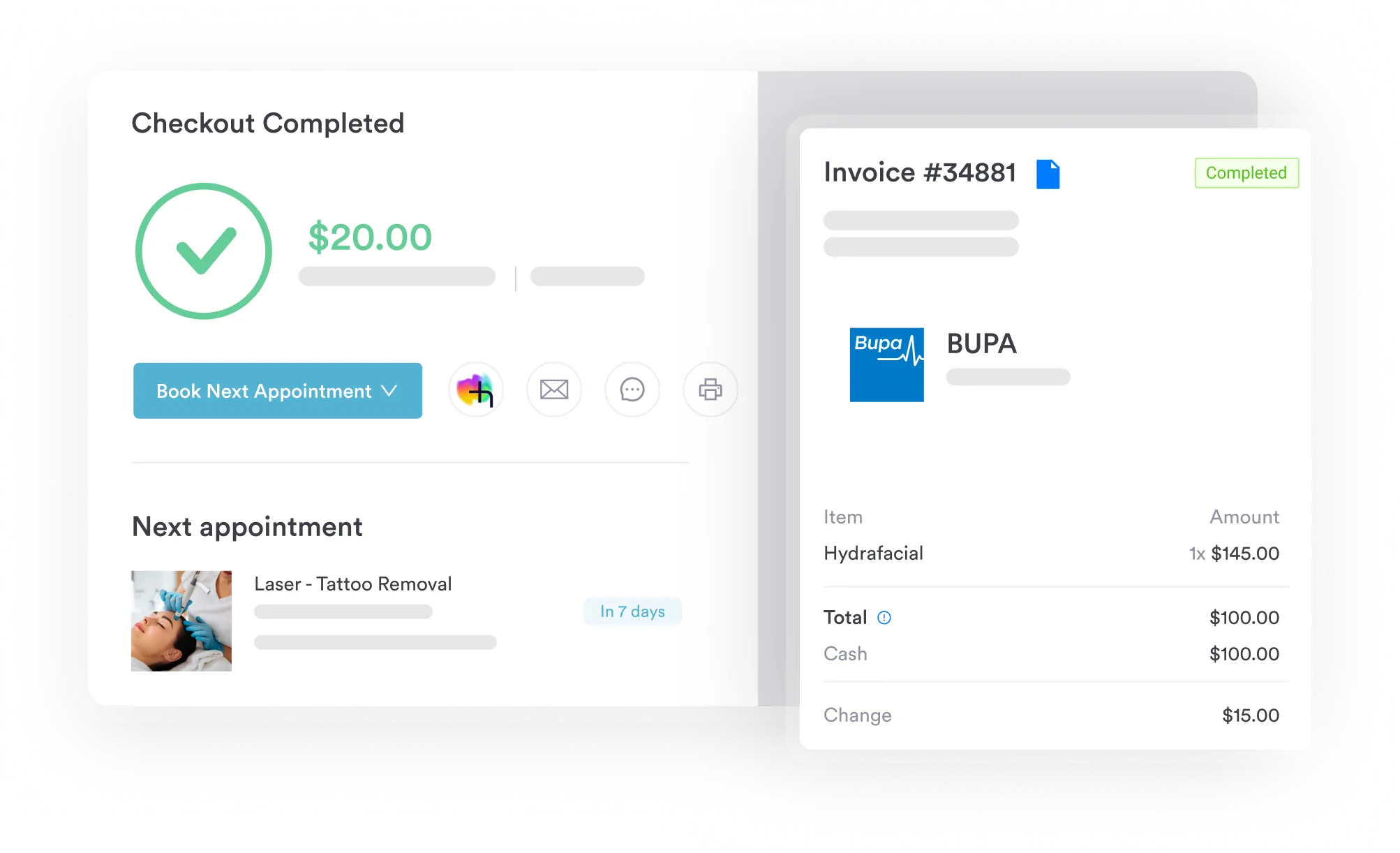

Pabau links HCPCS codes, modifier logic, and clinical documentation in one place, so your team spends less time on manual claim preparation and more time on patient care.

Medicare reimburses most Part B drugs under the Average Sales Price (ASP) + 6% methodology. CMS updates ASP-based reimbursement rates quarterly, so the rate in effect for a J1568 claim depends on the date of service, not the date of billing.
Always verify the current quarter’s rate using the CMS Physician Fee Schedule lookup tool before estimating patient out-of-pocket liability or confirming coverage with the patient.
Commercial payers may reimburse Octagam at contracted rates, AWP-based percentages, or via a specialty pharmacy carve-out. Practices using the buy-and-bill model purchase the drug directly and bill the payer after administration.
Those using a specialty pharmacy dispense arrangement bill only the administration code and receive drug reimbursement through the pharmacy channel separately. Understand which model applies for each payer before calculating expected margin on IVIg administration.
Prior authorization requirements for J1568 vary by MAC, commercial plan, and diagnosis. Medicare Advantage plans often add prior authorization requirements beyond traditional Medicare. Commercial insurers may require step therapy (demonstrating failure of less expensive IVIg products) before approving Octagam specifically.
Practices should verify authorization requirements at the plan level before the first infusion, as unauthorized drug administration is typically not retroactively covered. Staff responsible for who can administer IV vitamin therapy decisions also need to coordinate auth status before scheduling. Step therapy may require documenting a failed trial of a lower-cost brand first, such as Gammaplex .
Authorization requests carry a diagnosis, and payers compare it against the code billed later. Poisoning and underdosing codes such as T40.496S get the same scrutiny when they appear on a request.
Check whether your MAC (Novitas, FCSO, or other) has issued a specific Local Coverage Determination or billing article for IVIg. The Novitas IVIg Documentation Checklist covers HCPCS codes J1459, J1561, J1566, J1568, J1569, and J1572, and outlines exactly what documentation elements auditors look for on medical records requests. Having this checklist on file reduces post-payment audit exposure.
Octagam is one of several IVIg brand products, each with its own HCPCS code. Billing the wrong code for the product administered is a compliance error. The Novitas IVIg Documentation Checklist groups these six codes together because auditors review them as a family. The brand name on the vial label determines the correct code.
| HCPCS code | Brand name | Formulation | Billing unit |
|---|---|---|---|
| J1459 | Privigen | Non-lyophilized, IV | 500 mg |
| J1561 | Gamunex-C | Non-lyophilized, IV | 500 mg |
| J1566 | Carimune NF / Gammagard S/D (NOS) | Lyophilized (powder), IV | 500 mg |
| J1568 | Octagam | Non-lyophilized, IV | 500 mg |
| J1569 | Gammagard Liquid | Non-lyophilized, IV | 500 mg |
| J1572 | Flebogamma | Non-lyophilized, IV | 500 mg |
All six codes share the same 500 mg per unit billing structure. A 10 g dose of any of these products bills as 20 units of the corresponding code. The distinction lies in the drug name.
Substituting one IVIg HCPCS code for another because the brand is unavailable that day is not an acceptable billing practice; the claim must reflect what was actually administered. Practices building formulary protocols should confirm current code descriptors before switching products by reviewing resources such as the HCPCS unclassified biologics billing guide.
Auditors sample by code family, and the diagnosis chapters are no exception. Corrosion entries such as T32.93 sit beside close neighbors, so the chart note decides which one survives review.
Practices offering a range of infusion therapies benefit from having these code relationships mapped in their billing reference materials. When infusion nurses document the product name and billers know which code maps to that product, modifier selection and claim preparation require no manual lookup each visit.
Practices developing their referral pipeline can also find relevant context in the IV therapy marketing guide. For another commonly billed infusion-adjacent J-code, see the HCPCS code J1642: heparin sodium lock flush billing guide.
CMS Article A57778 and MAC-level LCDs require the medical record to support both the diagnosis and the drug administration event. Missing documentation is the primary driver of J1568 claim denials and post-payment audit findings. Practices using digital forms for infusion intake and treatment records can capture required fields consistently, reducing the risk of incomplete documentation at audit.
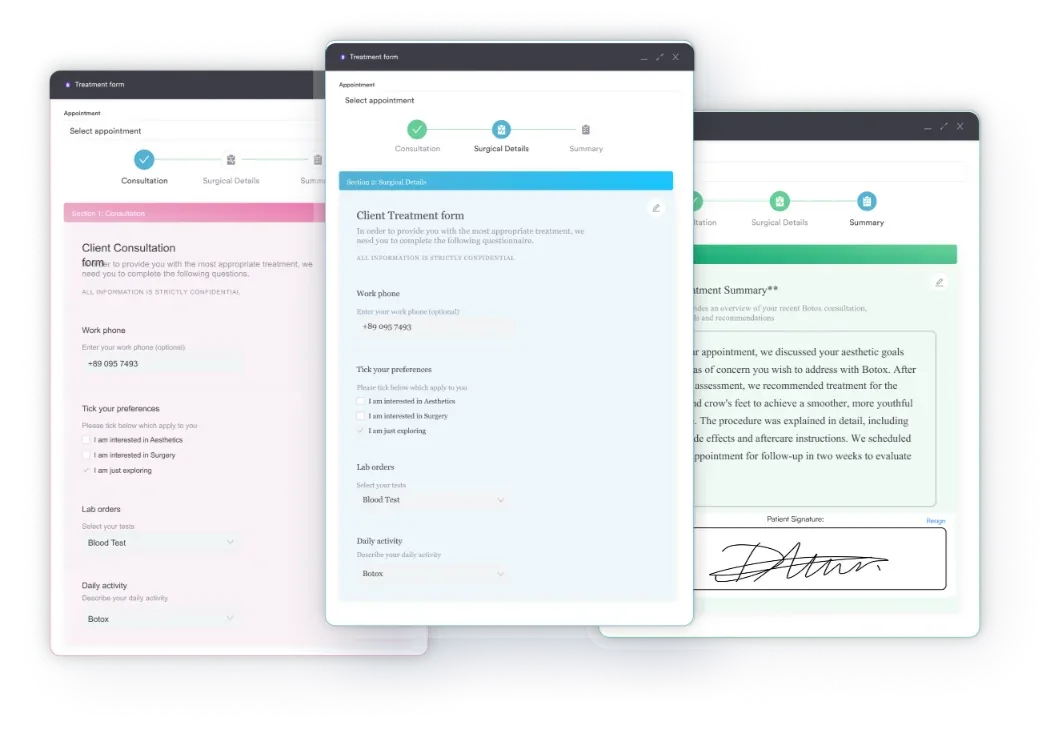
A complete J1568 documentation set typically includes:
The NDC (National Drug Code) must match the Octagam lot actually used. Some MACs require NDC reporting on the claim line in addition to the HCPCS code — check your MAC’s billing instructions, as requirements vary between Novitas, FCSO, and other contractors.
Seventh characters make injury claims a template problem. Intake forms that capture encounter type keep a code like T33.539A accurate from the first visit onward.
The best EMR for IV therapy comparison covers documentation requirements alongside system features for practices evaluating their workflow tools. For a related injectable drug billing reference.
Accurate J1568 billing requires four elements: correct unit count, the right JW or JZ modifier, supporting ICD-10-CM diagnosis codes, and a complete drug administration record. Any one of these missing will cause a claim rejection or create audit exposure.
Pabau’s IV therapy EMR software connects clinical documentation directly to claim preparation, so the product name, dose, vial size, and modifier decision flow into the billing queue from the treatment record rather than requiring a manual transfer.
For compounded or unclassified drug billing that sometimes arises alongside IVIg. To see how Pabau handles J-code billing workflows for infusion practices, book a demo.

Coding upper cervical ankylosing spondylitis? ICD-10 code M45.1 It explains when this code applies to the specific occipito-atlanto-axial joint region.
Coding thoracolumbar ankylosing spondylitis? ICD-10 code M45.5 It covers this code for the T12-L1 junction and confirms it is valid for FY2026.
Evaluating practice management tools for infusion billing? Best EMR for IV therapy compares platforms on documentation depth, HCPCS code support, and infusion-specific workflow features.
HCPCS code J1568 is the billing code for Injection, immune globulin, (Octagam), intravenous, non-lyophilized (e.g., liquid), 500 mg. It is used to report each 500 mg unit of Octagam administered intravenously and falls under the HCPCS Level II J-code category for drugs administered other than by oral method.
Yes, either the JW modifier (drug wastage present) or the JZ modifier (no drug wastage) is required on every J1568 claim submitted to Medicare, effective July 1, 2023. CMS has designated Octagam as a single-dose container drug, which triggers mandatory modifier reporting for that entire product category.
Bill 20 units. J1568 represents 500 mg per unit, and 10 g equals 10,000 mg. Divide the total dose in milligrams by 500 to calculate the correct unit count: 10,000 divided by 500 equals 20 units.
J1568 is specific to Octagam (manufactured by Octapharma), while J1569 covers Gammagard Liquid (manufactured by Takeda). Both are intravenous, non-lyophilized immune globulin products billed at 500 mg per unit, but each code is tied to a specific brand. Billing the code that matches the product actually administered is a compliance requirement, not a preference.
Traditional Medicare Part B does not universally require prior authorization for J1568, but coverage depends on whether the diagnosis meets LCD L35891 medical necessity criteria. Medicare Advantage plans and commercial payers often impose their own prior authorization requirements. Verify with the specific plan before the first infusion, as retrospective authorization is rarely granted.



