

HCPCS code E0198: Water pressure pad billing guide
HCPCS code E0198 is a water pad for a standard mattress HCPCS code E0198 is the ...

Last Updated: Oct 13, 2026
J3590 is the HCPCS Level II code for unclassified biologics.
Let Pabau's smart automation suggest the right codes, reduce claim denials, and keep your practice compliant—effortlessly.
Automate repetitive tasks and focus on what matters most—your patients.
Reduce coding errors and ensure compliance with the latest regulations.
Clean claims, fewer denials, and faster reimbursements.
Powerful insights and reporting to help your practice thrive.
HIPAA compliant SOC 2 certified GDPR-compliant Trusted by 4,000+ clinics worldwide

HCPCS code J3590 covers unclassified biologics – physician-administered biological products with no specific HCPCS J-code on the date of service.
J3590 differs from J3490 by drug type: J3490 covers non-biological unclassified drugs, while J3590 is exclusively for biologics such as biosimilars and monoclonal antibodies.
Always bill J3590 alongside a matching CPT administration code (e.g., 96372 for injection, 96413 for chemotherapy infusion) or the claim will deny.
Pabau’s claims management software helps practices track prior authorizations, attach NDC numbers, and submit J3590 claims accurately without manual workarounds.
HCPCS code J3590 is the Level II code maintained by CMS for unclassified biologics. Its official descriptor is simply “Unclassified biologics,” and it belongs to the J-code range covering drugs administered by injection.
A biologic is defined as a medicinal preparation made from living organisms or their products, including serums, vaccines, antigens, antitoxins, biosimilars, and monoclonal antibodies. The code is “unclassified” for one reason: no specific HCPCS J-code exists for the product being administered on the date of service.
J3590 is a Not Otherwise Classified (NOC) code. NOC codes are intentionally broad. They exist so providers can bill for drugs that have received FDA approval or are otherwise payable but have not yet been assigned a permanent, product-specific HCPCS code. Once a dedicated code is established, J3590 should no longer be used for that drug.
| Property | Detail |
|---|---|
| Code | J3590 |
| Descriptor | Unclassified biologics |
| Code set | HCPCS Level II |
| Code type | NOC (Not Otherwise Classified) |
| Drug category | Biological products (Biologics) |
| Route | Injection or intravenous infusion |
| CMS effective date | January 1, 1990 (code still valid for 2026) |
| Maintained by | CMS HCPCS Workgroup |
Three NOC codes cover unclassified drug and biologic billing. Choosing the wrong one is a common denial trigger, and payers do distinguish between them.
J3490 covers unclassified drugs that are not biologics. Think small-molecule medications, traditional chemical compounds, or off-label drugs that lack a specific J-code. According to guidance addressed to NHIC Corp, the distinction is product type: if the administered drug is a biologic, use J3590. If it is a conventional drug, use J3490.
C9399 is used within hospital outpatient settings under the Outpatient Prospective Payment System (OPPS). Per CMS coverage guidance, C-codes are assigned to new drugs and biologicals and generally expire or are replaced after approximately one year. Once a drug’s C-code lapses and no permanent code has been issued, the drug moves to J3590 for continued billing.
J9999 is a separate NOC code specifically for antineoplastic (Cancer-fighting) drugs that lack a dedicated Q or J code. Once an antineoplastic receives its own code – as nivolumab did with HCPCS code J9299 – J9999 should no longer be used for it. The American Academy of Ophthalmology’s coding guidance for injectable drugs notes that NOC codes including J3490, J3590, and J7999 should only be reported when no valid specific HCPCS code describes the drug being administered. The same principle applies to J9999.
J3590 is a transitional placeholder. Any biologic that receives FDA approval but has not yet been assigned a permanent HCPCS J-code will be billed under J3590 until CMS issues a dedicated code. The list changes year to year as permanent codes are assigned or as new biologics enter the market.
Recent documented examples include the following biologics billed under J3590:
Washington State’s Health Care Authority maintains a published list of drugs billed under miscellaneous HCPCS codes including J3490, J3590, J9999, and C9399 that require prior authorization. Checking your state Medicaid program’s equivalent resource before billing is a practical first step for any newly approved biologic.
Check the HCPCS Workgroup’s quarterly update files when a new biologic is approved. If a permanent J-code has been assigned but your team is still using J3590, the claim will deny for incorrect code selection. Set a calendar reminder every January, April, July, and October to audit your J3590 drug list.
Billing J3590 correctly requires more documentation than most specific J-codes. Because the code is unclassified, payers cannot identify the drug from the code alone. Everything below must be addressed before the claim is submitted.
Before using J3590, verify that no product-specific code covers the drug for the date of service. Search a current HCPCS lookup tool by drug name to confirm nothing more specific applies. Billing J3590 when a specific code is available is an incorrect billing practice and triggers denials.
Every J3590 claim must include the drug’s full generic name, brand name, dosage administered, and route of administration. This goes in Box 19 on a CMS-1500 paper claim or in the claim note (NTE) segment on an electronic 837P transaction. Submitting J3590 without a drug name is the single most common denial reason for this code.
The National Drug Code (NDC) is an 11-digit identifier assigned by the FDA to every drug product. Most commercial payers and many state Medicaid programs require the NDC alongside J3590. The NDC must match the specific product administered, not just the generic molecule.
For electronic claims, the NDC is reported in the drug identification (LIN) segment of the service line (loop 2410). For paper claims, it goes in Box 19 with the qualifier “N4” before the 11-digit number, followed by the unit qualifier (F2 for International Unit, UN for each unit, ML for milliliter, GR for gram).
J3590 describes the drug only. It does not describe how the drug was given. A matching CPT administration code must appear on the same claim. Common pairings include the ones below. Your billing team should confirm with the specific payer which administration codes are accepted alongside J3590.
Most payers require prior authorization (PA) for biologics billed under J3590. PA requirements vary by payer and drug. For HIPAA compliance in medical offices, PA documentation must be retained in the patient record alongside the clinical indication and the prescribing provider’s order. Include the PA reference number on the claim in Box 23 of the CMS-1500 or in the loop 2300 REF segment (qualifier G1) on the 837P.
When a biologic billed under J3590 comes from a single-dose vial or package, CMS drug-wastage modifiers come into play. Which one you append depends on whether any drug was discarded, and eligibility is tied to the product’s FDA-approved labeling – so confirm the vial is single-dose before using either modifier.
One limit catches billers out: JW is not permitted when the dose administered is less than a single billing unit. If one billing unit covers both the dose given and the small remainder, bill a single unit with JZ instead of splitting the line. The modifiers do not apply to multiple-dose vials or to drugs that are not separately payable, and any discarded amount must be recorded in the patient’s medical record.
Medical necessity documentation is non-negotiable for J3590. Because payers cannot verify the drug from the code alone, they rely on chart documentation to confirm the claim is legitimate. Purpose-built clinical documentation software makes these elements easier to capture consistently. Inadequate documentation leads to claim denials and, in audit situations, repayment demands.
Required documentation elements for a J3590 claim:

Pabau’s claims management tools help practices attach NDC numbers, track prior authorizations, and submit J3590 claims with the documentation payers require – reducing denials before they happen.

Payer rules for J3590 vary more than for most HCPCS codes. There is no single national fee schedule rate for unclassified biologics under Medicare Part B because reimbursement depends on the specific drug billed. Practices billing biologics through multiple payer channels need a system to track those differences as part of their broader revenue cycle management.
Medicare reimburses physician-administered biologics at Average Sales Price (ASP) plus 6%. Because J3590 has no fixed ASP, Medicare contractors require the drug name and NDC to determine the applicable ASP rate. Reimbursement is looked up via the CMS Physician Fee Schedule and the quarterly ASP drug pricing files. Claims submitted without sufficient drug identification will be denied for lack of required information.
State Medicaid programs set their own coverage policies for drugs billed under J3590. North Carolina Medicaid, for example, published specific billing instructions for each newly approved biologic – including Briumvi, Rolvedon, Enjaymo, and Riabni – as those drugs entered the PADP. Practices working with IV therapy EMR software or infusion-heavy workflows need to check each state’s Medicaid coverage bulletin before billing a new biologic under J3590.
Commercial plans often have the strictest PA requirements for J3590 biologics. Some require step therapy documentation showing the patient tried and failed a lower-cost alternative first.
Blue Cross Blue Shield of Michigan, for instance, issued a provider alert in June 2024 specifically instructing providers to use J3590 for off-label intravitreal Avastin for commercial members. Payer-specific alerts like this are binding – billing a different code under the same plan will result in a denial. For med spa compliance workflows that include physician-administered biologics, maintaining a payer-alert log is a practical audit safeguard.
Request a copy of each payer’s medical policy for the specific biologic you are administering before the first treatment date. Policies for unclassified biologics can differ substantially between commercial plans – PA criteria, step therapy requirements, and approved indications may all vary. File the policy with the patient chart for audit protection.
J3590 claims have a higher denial rate than specific J-codes because of how much payers depend on biller-submitted information. The most preventable errors follow predictable patterns.
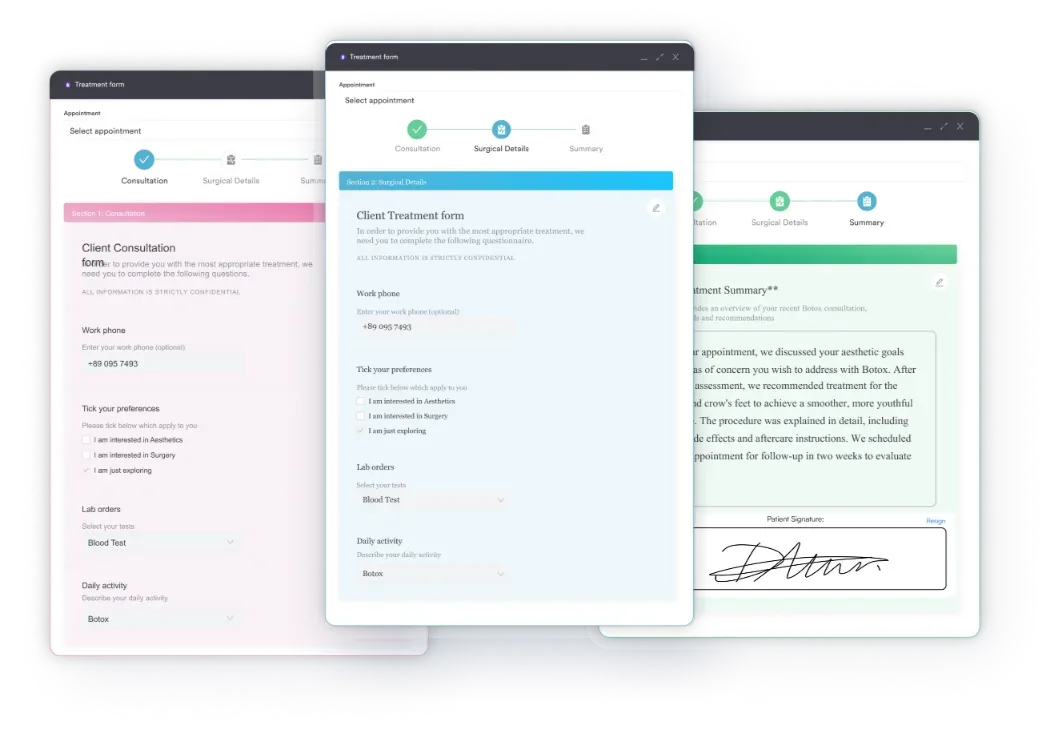
Practices that use digital intake and consent forms to capture drug administration details at the point of care reduce transcription errors and ensure the clinical record contains the information needed for claim submission. Structured forms can be built to prompt for NDC, lot number, dosage administered, and administration start and stop times.
The transition from J3590 to a permanent HCPCS code is not automatic. When CMS assigns a dedicated code to a previously unclassified biologic, the new code’s effective date determines when J3590 stops being valid for that drug. Claims submitted after the effective date using J3590 will be denied.
CMS publishes HCPCS quarterly updates in January, April, July, and October. The update files list newly assigned codes, effective dates, and the drugs they cover. Billers should cross-reference these updates against their active J3590 drug list each quarter. Documentation practices that include structured audit trails for code changes help practices demonstrate that transitions were managed correctly in the event of a payer audit.
The transition process typically works as follows:
For practices using functional medicine software that administers a rotating formulary of biologics, setting a workflow reminder for each quarterly HCPCS update cycle is a practical precaution.
HCPCS code J3590 provides a billing path for biologics that have FDA approval but no permanent HCPCS code yet, allowing practices to submit those claims. The challenge is not eligibility – it is documentation. Claims that omit the drug name, NDC, or administration code pairing will deny regardless of whether the drug is covered.
Pabau’s claims management software gives practices the tools to structure J3590 submissions correctly the first time – tracking prior authorizations, capturing NDC details at point of care, and flagging when a permanent HCPCS code has replaced an unclassified biologic code. To see how it fits your billing workflow, book a demo.

Coding a follow-up artery laceration? Artery laceration coding guide covers S25.111D and how the 7th character D affects DRG assignment and denials.
Coding a late-effect flank injury? Flank injury coding guide covers S30.9AXS and the two mistakes that drive most denials on this code.
Coding a follow-up genital laceration? Genital laceration coding guide covers S31.41XD for a vaginal or vulvar laceration with no foreign body.
HCPCS code J3590 is the Level II code for unclassified biologics – biological drug products administered by injection or infusion that have no specific HCPCS J-code assigned for the date of service. It is maintained by CMS and used across Medicare Part B, Medicaid, and commercial payer programs for newly approved biologics, biosimilars, and off-label biologic uses pending a permanent code assignment.
J3490 covers unclassified drugs that are not biologics, such as conventional small-molecule medications. J3590 is exclusively for biologics – products derived from living organisms including monoclonal antibodies, biosimilars, serums, and vaccines. Selecting the wrong code based on drug type will result in a denial.
Yes, in most cases. Prior authorization requirements for J3590 vary by payer and by the specific biologic being administered. Most commercial plans and state Medicaid programs require PA before the first date of service. The PA reference number must be included on the claim, and PA documentation must be retained in the patient chart.
NDC reporting is required by most commercial payers and many state Medicaid programs when billing J3590. The NDC must reflect the specific product administered, reported with unit qualifier (F2, UN, ML, or GR) in Box 19 on paper claims or in the LIN/ZA segment on electronic 837P claims. Medicare contractors use the NDC to determine the applicable ASP reimbursement rate.
Stop using J3590 for a drug as soon as CMS assigns a permanent HCPCS J-code with an effective date that covers the date of service. CMS releases HCPCS quarterly updates in January, April, July, and October. Review the update files each quarter and update your billing system before administering the drug under the new code.
Bill J3590 on the same claim as the appropriate CPT administration code: 96372 for subcutaneous or intramuscular injection, 96365 for the initial hour of IV infusion, 96413 for chemotherapy administration by infusion, or 67028 for intravitreal injection. J3590 alone without an administration code will deny as an incomplete claim.
It can. When the biologic billed under J3590 comes from a single-dose vial or package that is separately payable under Medicare Part B, CMS requires a drug-wastage modifier – JW on a separate line for any discarded amount, or JZ to attest that none was discarded. Multiple-dose vials are exempt, so confirm single-dose status from the product’s FDA labeling.



