

HCPCS code E0198: Water pressure pad billing guide
HCPCS code E0198 is a water pad for a standard mattress HCPCS code E0198 is the ...

Last Updated: Oct 13, 2026
A4311 is the HCPCS Level II code for insertion tray without drainage bag with indwelling catheter, foley type, two-way latex with coating (teflon, silicone, silicone elastomer or hydrophilic, etc.).
The official long description reads: "Insertion tray without drainage bag with indwelling catheter, Foley type, two-way, latex with coating (Teflon, silicone, silicone elastomer, or hydrophilic, etc.)." That description contains three critical billing variables: no drainage bag, two-way configuration, and latex catheter with a specified coating type.
The coating distinction is not cosmetic. Latex catheters with specialty coatings (silicone, Teflon, hydrophilic) are clinically distinct from uncoated latex devices, and Medicare's coverage criteria reflect that distinction. Selecting A4311 for a silicone-only catheter (no latex) or a three-way device would be an incorrect code assignment.
Let Pabau's smart automation suggest the right codes, reduce claim denials, and keep your practice compliant—effortlessly.
Automate repetitive tasks and focus on what matters most—your patients.
Reduce coding errors and ensure compliance with the latest regulations.
Clean claims, fewer denials, and faster reimbursements.
Powerful insights and reporting to help your practice thrive.
HIPAA compliant SOC 2 certified GDPR-compliant Trusted by 4,000+ clinics worldwide

HCPCS Code A4311 describes an insertion tray without drainage bag, Foley type, two-way latex catheter with coating (Teflon, silicone, silicone elastomer, or hydrophilic) billed under Medicare Part B.
Only enrolled DMEPOS suppliers can bill A4311; claims must be supported by a physician order and documentation of medical necessity per LCD L33803.
A4311 covers two-way latex catheters without a drainage bag. Choosing the wrong code from A4311-A4316 (wrong configuration, bag inclusion, or coating type) is one of the most common denial triggers.
Practice management software like Pabau includes claims-management tools that validate claim details, track claim status, and reconcile payments for private-practice and aesthetic/wellness billing, a different workflow than Medicare DMEPOS billing.
A4311 applies to patients who require an indwelling Foley catheter as part of ongoing urological management, a need that spans general practice, home health. The insertion tray component includes the sterile supplies needed for catheter placement, excluding a separate drainage bag.
Common clinical scenarios that support A4311 billing under LCD L33803 include:
Medical necessity must be established in the clinical record before A4311 is billed. A4311 is not appropriate for intermittent self-catheterization. Those patients use different A-series codes. Maintaining accurate patient records for each catheterization episode is essential for supporting the claim.
Medicare Part B covers A4311 under the DME benefit when coverage criteria in Local Coverage Determination LCD L33803 (Urological Supplies) are met. Coverage is not automatic. The supplier must establish that the device is medically necessary for the specific beneficiary.
Only enrolled and accredited DMEPOS suppliers may bill A4311. Suppliers must hold current DMEPOS accreditation from a CMS-approved accrediting organization and must be enrolled in the Medicare Provider Enrollment, Chain, and Ownership System (PECOS).
Billing A4311 without active DMEPOS enrollment results in automatic claim denial. Verify enrollment status before submitting any urological supply claims.
LCD L33803 defines which diagnoses and clinical circumstances support coverage. Key conditions include:
Suppliers should monitor patient compliance documentation and update physician orders when a patient’s condition changes. An outdated order is a leading cause of retrospective claim denial during audits. Practices that also bill private insurers for other services can use practice management software like Pabau to validate claim details and reduce the risk of incomplete submissions before those claims reach the payer.
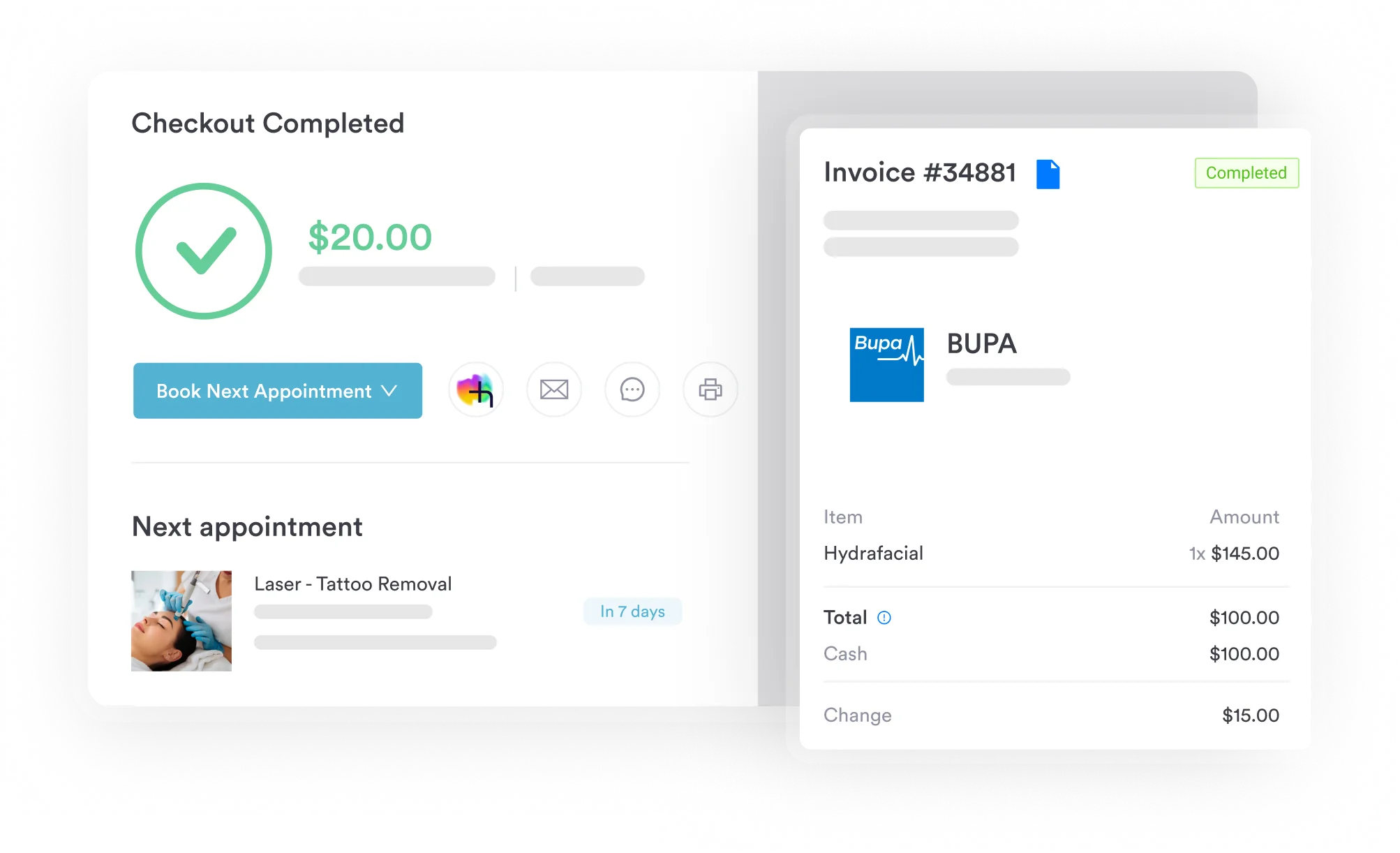

Pabau’s claims management software validates claim details, tracks status from submission to payment, and reconciles payments automatically, helping aesthetic, wellness, and private-practice teams reduce denials and get paid faster. See how it works for your practice.

Medicare allowed amounts for A4311 vary by MAC jurisdiction. There is no single national fee schedule amount that applies universally. Rates are set through the DMEPOS fee schedule, which CMS updates annually. Regional variation reflects differences in labor costs and local pricing adjustments applied by each Medicare Administrative Contractor.
To find current allowed amounts for A4311 in your jurisdiction, use the CMS fee schedule search tool and filter by HCPCS code A4311. Always verify rates before the start of each calendar year, as CMS typically publishes the updated DMEPOS fee schedule in the final months of the preceding year.
Confirm the code’s active status too, since HCPCS codes are periodically deleted and replaced.
Key reimbursement facts to note:
Good practice management software for medical practices turns supplies used in a visit into billed line items automatically.
Inadequate documentation is the single most preventable reason A4311 claims are denied or recouped during post-payment review. Every claim for HCPCS Code A4311 should be supported by a clear, auditable documentation trail.
The same documentation discipline applies to other DME codes.
Keeping patient records up to date is not just good clinical practice. It directly determines whether a claim survives audit.
Run a documentation checklist before submitting any A4311 claim. Confirm you have: a signed physician order, chart notes linking the diagnosis to catheter necessity, ICD-10 codes that match LCD L33803 indications, and proof of delivery. Claims that clear this checklist internally have a substantially lower audit exposure than those submitted without pre-submission review.
The ICD-10 diagnosis code on the claim must reflect the condition that makes the indwelling catheter medically necessary. The codes below are commonly associated with A4311 claims. This list is illustrative, not exhaustive. Verify each pairing against the current version of LCD L33803 and the CDC ICD-10-CM tool for the current fiscal year.
Always code to the highest level of specificity available in the patient record. “Retention of urine, unspecified” (R33.9) is appropriate when the record does not specify the cause. Where the underlying etiology is documented (such as benign prostatic hyperplasia or diabetic neuropathy), use the more specific ICD-10 code instead.
Selecting the correct code from the A431x series is where most billing errors occur. Each code represents a distinct catheter configuration. Using A4311 for a device with a drainage bag (A4314 or A4316) or for a three-way catheter (A4313 or A4315) constitutes incorrect code assignment and may trigger a false-claims concern in audit.
Reviewing EHR integration workflows for your DME ordering process can reduce selection errors at the point of order entry. Other bundled DME supply codes.
Decision rule: Does the supply kit include a drainage bag? If yes, use A4314, A4315, or A4316. If no, use A4311, A4312, or A4313. Then: is the catheter two-way or three-way? Three-way goes to A4313 (no bag) or A4316 (with bag). Finally: is the catheter material latex with coating, or all-silicone/silicone elastomer? That final step determines whether A4311 or A4312 is correct for a two-way no-bag tray.
When no code in the A431x series matches the supply dispensed, billing falls to A9999, the miscellaneous DME supply code. Reserve it for urological supplies that no specific HCPCS code describes.
This section addresses the specific errors that generate denials and audit exposure for urological supply claims.
Billing A4311 when the actual supply included a drainage bag (which would require A4314) is the most common A431x error. Auditors compare the code billed to the product description on the delivery confirmation and the physician order.
Mismatches create overpayment liability. Train order entry staff on the bag/no-bag distinction before any A431x claim is submitted.
Medicare requires a valid physician order before each supply is dispensed. Orders must reflect the current prescribed device. A 2024 order for a latex two-way catheter does not cover a silicone catheter dispensed in 2026.
Update orders when the dispensed product changes.
Policy Article A52521 sets monthly quantity limits for urological supplies. Billing above those limits without documented medical justification for the additional quantity generates automatic review. The excess units will be denied. If a patient’s clinical situation genuinely requires more frequent catheter changes, that justification must be in the chart before the claim is submitted, not added during the appeal.
Suppliers must maintain continuous DMEPOS accreditation. A lapsed accreditation renders all claims submitted during the lapse period non-payable and creates recoupment exposure for amounts already paid. Set calendar reminders for accreditation renewal deadlines. CMS PECOS reflects current enrollment status. Verify your enrollment record before each billing cycle.
A4311 is a bundled code covering the insertion tray and the catheter together as a single supply kit. Billing the catheter and the tray separately under different codes when supplied together as a kit constitutes unbundling. CMS edits catch this during claims processing. Use A4311 when the tray and catheter are provided as a single packaged kit.
Flag every A4311 claim for a pre-submission review against four checkpoints: (1) bag/no-bag confirmed against the actual supply, (2) physician order dated within the required timeframe, (3) quantity within LCD L33803 limits or excess quantity documented, (4) DMEPOS accreditation current. A four-point internal check catches most denials before the claim leaves the practice.
Practices that bill private insurers alongside providing clinical care manage high documentation volumes: membership numbers, authorization codes, itemized invoices, and claim status across multiple payers. That administrative burden compounds for practices operating across multiple locations.
Practice management software like Pabau’s claims management software validates claim details, such as membership numbers and authorization codes, before submission, then tracks each claim’s status from submitted through paid.
Digital intake tools capture patient information without paper chasing, and payments are automatically reconciled with invoices and patient records once insurers pay. For practices managing multiple locations, billing oversight across sites stays consistent rather than fragmented.
HCPCS Code A4311 is a precise code. Its three defining variables, no drainage bag, two-way configuration, and latex with coating, each have billing consequences when selected incorrectly. Most A4311 denials trace back to wrong code selection within the A431x series or inadequate medical necessity documentation, both of which are fixable with clear internal workflows.
For practices that also bill private insurers, practice management software like Pabau validates claim details and tracks status from submission through payment, reducing denials before they happen rather than managing them after the fact. To see how it works for your practice, book a demo with the Pabau team.

HCPCS Code A4311 covers an insertion tray without a drainage bag, containing a Foley-type two-way indwelling catheter made of latex with a coating (Teflon, silicone, silicone elastomer, or hydrophilic). The code represents the complete sterile supply kit for catheter insertion, excluding a separate drainage bag. It is billed under Medicare Part B as a durable medical equipment supply.
A4314 includes a drainage bag with the insertion tray and catheter; A4311 does not. Both codes describe a two-way latex Foley catheter with coating, so the only billing distinction is whether a drainage bag is part of the kit supplied. Using A4311 when a drainage bag was also dispensed constitutes incorrect code selection and creates overpayment risk.
Commonly paired ICD-10 codes include R33.9 (retention of urine, unspecified), N31.9 (neuromuscular dysfunction of bladder, unspecified), N31.2 (flaccid neuropathic bladder), R32 (unspecified urinary incontinence), and G35 (multiple sclerosis) when bladder dysfunction is present. Always verify pairings against the current LCD L33803 covered diagnoses list using the CDC ICD-10-CM tool.
Submit A4311 on a CMS-1450 (UB-04) or CMS-1500 form through an enrolled and accredited DMEPOS supplier. The claim must include supporting ICD-10 diagnosis codes, a valid physician order, and documentation of medical necessity. Quantity billed must not exceed LCD L33803 limits without documented clinical justification. Verify DMEPOS accreditation is current before submitting.
Required documentation includes: a signed physician order specifying catheter type, size, and change frequency; clinical chart notes establishing medical necessity for an indwelling catheter; supporting ICD-10 diagnosis codes aligned with LCD L33803; proof of delivery signed by the beneficiary; and quantity justification if billing above standard monthly limits.
Medicare allowed amounts for A4311 vary by MAC jurisdiction and are updated annually. There is no single national rate. Use the CMS fee schedule search to look up current allowed amounts for A4311 in your specific jurisdiction. Medicare typically covers 80% of the allowed amount; the beneficiary owes the remaining 20% coinsurance.
Only suppliers enrolled in Medicare and holding current DMEPOS accreditation from a CMS-approved accrediting organization may bill A4311. Suppliers must also be actively enrolled in CMS PECOS. Billing A4311 without current DMEPOS accreditation results in automatic claim denial for all claims submitted during any accreditation lapse period.



