HCPCS code E0198: Water pressure pad billing guide
HCPCS code E0198 is a water pad for a standard mattress HCPCS code E0198 is the ...

Last Updated: Oct 13, 2026
S0189 is the HCPCS Level II code for testosterone pellet, 75 mg. CMS terminated it with effect from 31 December 2025, so it is no longer valid for claims after that date.
HCPCS code S0189, the standard code for a 75 mg testosterone pellet, was deleted effective December 31, 2025. CMS has given this cycle no grace period: any claim dated January 1, 2026 or later that still lists S0189 will be rejected outright, not adjusted.
Let Pabau's smart automation suggest the right codes, reduce claim denials, and keep your practice compliant—effortlessly.
Automate repetitive tasks and focus on what matters most—your patients.
Reduce coding errors and ensure compliance with the latest regulations.
Clean claims, fewer denials, and faster reimbursements.
Powerful insights and reporting to help your practice thrive.
HIPAA compliant SOC 2 certified GDPR-compliant Trusted by 4,000+ clinics worldwide

HCPCS code S0189 (testosterone pellet, 75 mg) was deleted effective December 31, 2025, and replaced by new HCPCS code J1073 (testosterone pellet, implant, 75 mg), effective January 1, 2026.
There is no grace period this cycle: any claim with a date of service on or after January 1, 2026 that still lists S0189 will be rejected outright – rebill it as J1073.
Bill one unit of J1073 per 75 mg pellet implanted, paired with CPT code 11980 (subcutaneous hormone pellet implantation) for the implantation procedure – not CPT code 11981, which covers insertion of a different type of drug-delivery implant, not the hormone pellet implantation described by 11980.
Pabau’s claims management software links ICD-10 diagnosis codes to HCPCS supply codes automatically, helping practices catch an outdated code like S0189 before a claim ever leaves the practice.
HCPCS code S0189 described “testosterone pellet, 75 mg” under HCPCS Level II, the coding system maintained by the Centers for Medicare and Medicaid Services (CMS) to cover drugs, supplies, and services not captured by CPT.
S-codes are a non-Medicare category within HCPCS Level II, created primarily for use by commercial payers rather than Medicare. That’s part of why CMS retired S0189 in the 2026 HCPCS Level II update and replaced it with a standard J-code instead.
The descriptor was precise: one unit of S0189 equalled exactly one 75 mg testosterone pellet, and that logic carries straight over to its replacement.
That one-to-one unit basis does not carry across every S-code crosswalk. S0114 for injectable treprostinil crosswalks to J3285 at half the units, since J3285 is priced per 1 mg.
A standard testosterone pellet therapy session typically involves implanting six to 12 pellets at once, and each pellet is billed as a separate unit, whether the code on the claim is S0189 (for dates of service through December 31, 2025) or J1073 (from January 1, 2026 onward).
This used to be a genuine source of confusion in coder forums, with different references showing conflicting statuses for S0189. That conflict is resolved now: AAPC’s HCPCS code reference confirms S0189 as a deleted code, effective December 31, 2025.
The replacement is J1073 (testosterone pellet, implant, 75 mg), effective January 1, 2026, listed under Find-A-Code’s HCPCS reference. Unlike S0189, which was an S-code reserved mainly for non-Medicare payers, J1073 sits in the standard J-code series for drugs administered by injection, the same family CMS uses for Average Sales Price (ASP) drug pricing.
Payers are already moving on this: UnitedHealthcare’s testosterone replacement therapy drug policy, for example, added J1073 and removed S0189 effective January 1, 2026.
CMS has also eliminated the usual grace period for this cycle’s deleted codes. A claim for a date of service on or after January 1, 2026 that still lists S0189 will be rejected, not adjusted – there is no cushion for catching up.
If you have claims still working through appeals for dates of service in 2025 or earlier, S0189 remains the correct historical code for those. Anything from 2026 forward goes on J1073.
Not every deleted S-code offers a crosswalk this clean. S0112 was retired in 2004 with no descriptor on file, so the correct drug code has to be traced from the drug itself.
Update your charge master, superbill templates, and EHR code sets to replace S0189 with J1073 before your next testosterone pellet session in 2026. Do not wait for a denial to catch a code your system is still defaulting to – a five-minute template check now avoids a resubmission cycle later.
For dates of service in 2026 and beyond, J1073 is the primary answer for testosterone pellet supply billing. Two other codes still show up around this claim, and it helps to know when, if ever, they apply: J3490 (unclassified drug) and J1071 (testosterone cypionate injection).
If a payer does route a testosterone pellet claim through J3490, increasingly rare now that J1073 exists but still possible during a payer’s transition period, include the drug’s National Drug Code (NDC) on the claim along with an invoice showing the drug cost per unit.
Payers require this to adjudicate unclassified drug claims. Without the NDC, expect an automatic denial.
HCPCS code J1073 covers only the drug supply. The implantation procedure itself requires a separate CPT code: CPT code 11980 (subcutaneous hormone pellet implantation – implantation of estradiol and/or testosterone pellets beneath the skin).
Bill CPT code 11980 once per session. It covers the implantation procedure regardless of how many pellets are inserted. J1073 units capture the drug quantity separately.
The American Medical Association maintains the CPT code set, and CPT code 11980 falls under the Surgery section for introduction or removal procedures on the integumentary system.
It is also the procedure code CMS’s own Local Coverage Article A55057 (Billing and Coding: Testopel Coverage) references for testosterone pellet implantation, so it is the code to build into your charge capture template alongside J1073.
Every claim for HCPCS code J1073 must include an ICD-10 diagnosis code establishing medical necessity – this requirement carries over unchanged from S0189. Payers audit testosterone pellet claims closely. A claim without a supporting hypogonadism or androgen deficiency diagnosis will deny. The following ICD-10 codes are commonly paired with J1073:
Always code to the highest level of specificity. Payers, especially commercial plans requiring prior authorization for testosterone pellets, will deny claims coded only to E34.9 when a more specific hypogonadism code is clearly supported by lab values in the chart.
Pair the primary diagnosis with a claims management workflow that auto-links the ICD-10 code to the HCPCS supply code at the charge-capture step.
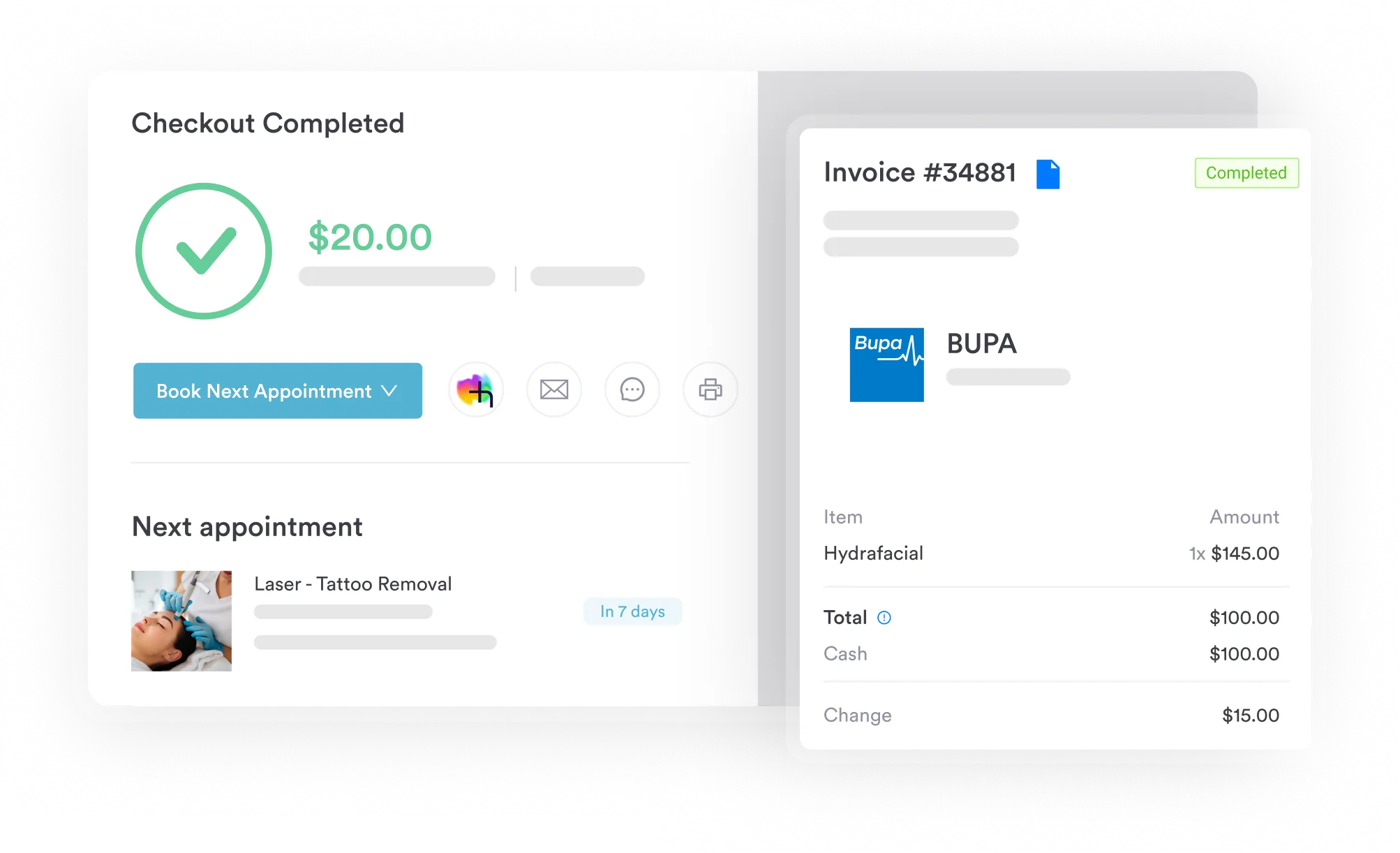

Pabau’s claims management software links diagnosis codes to HCPCS supply codes automatically, flags an outdated or deleted code like S0189 before submission, and helps HRT and men’s health practices bill J1073 correctly from day one.

Reimbursement for testosterone pellet supply looks different under J1073 than it did under S0189. S0189 was an S-code, so CMS never published a national Medicare fee schedule rate for it, and non-Medicare payers set their own rates independently.
J1073 is a standard J-code in the “drugs administered by injection” series, the same family CMS prices through the Average Sales Price (ASP) methodology. That means a Medicare Part B payment limit can now be published for J1073, where none existed for S0189.
Check the CMS Medicare Part B Drug Payment Limit File (the renamed ASP pricing file) each quarter, since CMS does not guarantee a published limit for every new code from day one.
Commercial contracted rates for testosterone pellet supply continue to vary by payer, geography, and negotiated fee schedule, and that part of the picture has not changed.
Confirm your contracted per-unit rate directly with each payer rather than assuming it carries over from what you were paid under S0189. The code on the claim line has changed, and some payers reprice a service when the underlying code changes.
Track reimbursement by code with Pabau’s reporting and analytics, built into every subscription, to catch a rate that did not carry over correctly during the transition.
Standard HCPCS modifiers may apply depending on the payer and service setting. Modifiers JW (drug amount discarded) and JZ (zero drug amount discarded) generally do not apply here: CMS’s JW/JZ Modifier Policy list, which limits those modifiers to drugs supplied in single-dose containers, does not include J1073.
Modifier 51 (multiple procedures) does not typically apply to drug supply codes. Confirm modifier requirements with each payer’s billing manual before submitting, since commercial policies can still differ from Medicare’s approach.
Medicare coverage for testosterone pellet implants is limited to specific FDA-approved indications for hypogonadism, set out in CMS’s Local Coverage Article A55057 (Billing and Coding: Testopel Coverage). That coverage logic has not changed with the code switch, but how the supply code interacts with Medicare’s payment system has.
S0189, as an S-code, was never on Medicare’s radar for payment at all. J1073, as a J-code, can now appear on Medicare’s ASP-based Part B fee schedule once a payment limit is published and the A55057 criteria are met.
Practices operating primarily with commercial payer populations will still see more predictable reimbursement on testosterone pellet claims than those with a large Medicare or Medicaid caseload. Verify each payer’s current coverage policy and code acceptance at the start of the year, not at claim submission.
Many commercial payers require prior authorization for testosterone pellet therapy before J1073 will be reimbursed – this requirement carries over from S0189 unchanged. Requirements vary: some plans require PA for the initial course only, others for every repeat session. The documentation typically required to support a prior authorization request includes: Denial codes in medical billing group the reasons a payer refuses, and the group decides the fix.
Contact each payer’s provider line before the patient’s first pellet session in 2026 to confirm PA requirements under the new code. A PA approved against the old S0189 code does not automatically transfer to J1073 with every payer.
Submitting J1073 without a required PA will result in a denial that is difficult to appeal retroactively. Use compliance management workflows to track PA status per patient and per payer before scheduling implantation.
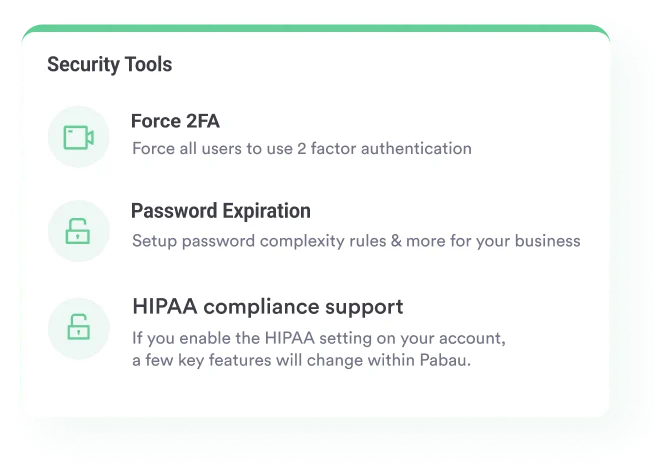
Set up a PA tracking checklist in your practice management system before you book the first testosterone pellet patient of 2026. Re-verify PA status under J1073, even for existing patients whose prior authorization was originally approved against S0189. Verify at scheduling, not at the point of service.
Getting testosterone pellet billing right in 2026 requires attention to the code switch itself, plus the usual unit count, code pairing, and payer-specific requirements. These are the most common billing errors practices make:
Use the AAPC HCPCS code lookup to confirm the current status of both S0189 and J1073, and cross-reference each payer’s fee schedule before your next billing cycle.
Code churn like this is not unique to testosterone pellets. Recent HCPCS updates have also revised drug codes like J0640 and supply codes like A6010, which is exactly why an annual code-status check belongs on every practice’s billing calendar, not just a reaction to a denial.
Documentation is your primary defense in a payer audit for testosterone pellet claims. Clinical notes must substantiate both the diagnosis and the medical necessity of the pellet formulation specifically. Keep the following in every patient chart where J1073 is billed:
Pabau’s digital forms capture lab values, consent, and clinical notes within the same patient record, giving coders direct access to supporting documentation at charge entry. This reduces the time spent pulling documentation for pre-billing review or retrospective audits.
HIPAA requires standardized electronic claims submission.

Testosterone pellet billing requires three code types to work in sync: the HCPCS supply code (J1073, or S0189 only on historical claims for dates of service through 2025), the CPT procedure code (11980), and the ICD-10 diagnosis code (E29.1 or equivalent).
A missed link between any of the three produces a denial, and a code switch like the one from S0189 to J1073 is exactly the kind of change that trips up a manual process.
Pabau’s claims management software automates the pairing of HCPCS codes with diagnosis codes at charge capture, flags missing documentation before the claim leaves the practice, and tracks PA status by patient.
For men’s health and HRT practices billing high volumes of testosterone pellet sessions, this removes the manual reconciliation step that accounts for most underbillings and denials, including a deleted code slipping through on a claim.
Pabau also centralizes prescription and dispensing records, which matters when a payer audits the NDC submission on a J3490 claim.
Practice managers can monitor denial rates by HCPCS code and payer, catching systematic billing errors, including outdated code usage, before they compound across multiple claims. For a closer look at how this fits into a broader billing workflow, book a demo to see the claims management tools in action.
HCPCS code S0189 is gone – deleted effective December 31, 2025, and replaced by J1073 for any testosterone pellet claim dated January 1, 2026 or later.
The costly mistakes now are the same shape as always, just with a new trigger: billing the deleted code out of habit, missing a unit count, or submitting to a payer without confirming their PA and fee schedule have caught up with the switch.
Pabau’s claims management software builds the HCPCS-to-ICD-10 link into the charge capture workflow and flags a deleted code like S0189 before it ever leaves the practice, so coders are not relying on memory to catch a mid-cycle code change.
If your practice bills testosterone pellet therapy and has not fully transitioned to J1073 yet, see how Pabau handles this in a live demo.

Billing for a diaphragm repair? Diaphragm repair billing guide covers billing for repair of a ruptured diaphragm, a procedure spanning thoracic and general surgery.
Need the fallback code when a hypogonadism workup is not yet fully specified? E29.9 covers testicular dysfunction, unspecified, for those borderline cases.
Have a testicular dysfunction diagnosis that does not fit the common codes? E29.8 is the code for other, specified testicular dysfunction.
HCPCS code S0189 was a Level II code used to bill the supply of a single 75 mg testosterone pellet for subcutaneous implantation. It was an S-code, meaning it was used primarily by commercial payers rather than Medicare. S0189 was deleted effective December 31, 2025, and replaced by HCPCS code J1073 for any date of service from January 1, 2026 onward.
S0189 is deleted, effective December 31, 2025, as part of CMS’s 2026 HCPCS Level II update. It has been replaced by J1073 (testosterone pellet, implant, 75 mg), effective January 1, 2026. There is no grace period this cycle – a claim with a date of service on or after January 1, 2026 that still lists S0189 will be rejected.
HCPCS code J1073 (testosterone pellet, implant, 75 mg) replaced S0189, effective January 1, 2026. J1073 is the code to bill for the testosterone pellet supply going forward. S0189 remains valid only for historical claims with dates of service through December 31, 2025.
S0189 was deleted effective December 31, 2025, and J1073 became effective the next day, January 1, 2026. Any claim for testosterone pellet supply with a date of service on or after January 1, 2026 must use J1073 – CMS has not allowed a grace period for deleted HCPCS codes this cycle.
CPT code 11980 (subcutaneous hormone pellet implantation – implantation of estradiol and/or testosterone pellets beneath the skin) is the standard procedure code for testosterone pellet implantation, and the code referenced in CMS’s Local Coverage Article A55057 (Billing and Coding: Testopel Coverage). Bill CPT code 11980 once per session for the implantation procedure, and bill J1073 per 75 mg pellet for the drug supply. Both codes should appear on the same claim.
Medicare may cover testosterone pellet implants when the patient meets the FDA-approved indications for hypogonadism outlined in CMS Article A55057. Coverage depends on a published Medicare Part B payment limit for J1073 and clinical documentation supporting medical necessity – a meaningful shift from S0189, which was a non-Medicare S-code with no Medicare pricing at all.
Bill one unit of J1073 for each 75 mg pellet implanted. If eight pellets are inserted in a single session, submit eight units. Billing one unit per session rather than per pellet is the most common underbilling error on testosterone pellet claims, and it carried over unchanged from the old S0189 code.
Prior authorization requirements for J1073 vary by commercial payer and plan, carrying over largely unchanged from S0189. Many payers require PA for the initial testosterone pellet therapy course, and some require it for each repeat session. Contact your payer’s provider line before the patient’s first implantation session in 2026 to confirm requirements under the new code.