HCPCS code P9058: Red blood cells, leukocytes reduced, CMV-negative, irradiated
HCPCS code P9058: Official descriptor and key attributes HCPCS code P9058 report...

Last Updated: Oct 26, 2026

CPT code 97140 covers manual therapy techniques (mobilization, manipulation, manual lymphatic drainage, manual traction) billed in 15-minute units.
It is a time-based code subject to the CMS 8-minute rule: you must provide at least 8 minutes of direct, skilled manual therapy per unit.
Modifier 59 is commonly required when billing 97140 alongside 97530 on the same date of service to avoid NCCI bundling edits.
Pabau’s claims management software helps physical therapists and chiropractors track timed units, apply modifiers correctly, and reduce claim denials.
CPT code 97140 bills manual therapy techniques — joint or soft-tissue mobilization, manipulation, manual lymphatic drainage, and manual traction — applied to one or more regions in timed 15-minute units. Most denials trace to just two errors: the wrong unit count under the 8-minute rule or a missing modifier.
According to the American Medical Association (AMA), the official definition of CPT code 97140 is: Manual therapy techniques (e.g., mobilization/manipulation, manual lymphatic drainage, manual traction), one or more regions, each 15 minutes. It sits within the Physical Medicine and Rehabilitation Therapeutic Procedures section of the CPT code set. Providers bill it in 15-minute increments for skilled, hands-on interventions applied to one or more body regions during a single treatment session. This article covers how to apply CPT code 97140 accurately, from unit calculation through documentation and common denial prevention, for physical therapists, occupational therapists.
CPT code 97140 is not a single technique. It covers several separate hands-on treatments, provided the technique is skilled and requires clinician judgment:
The common thread is direct, skilled clinician contact. Passive modalities applied without ongoing clinician skill judgment do not belong under CPT code 97140.
Incorrect unit counts are the leading cause of CPT code 97140 underbilling and overbilling. The Centers for Medicare and Medicaid Services (CMS) 8-minute rule governs how timed codes like 97140 convert minutes of treatment into billable units – anesthesia services such as CPT code 00752 (Anesthesia for ventral hernia repair) are likewise time-based, though they count ASA base units plus time instead of applying the 8-minute rule, while other Medicare-covered therapies use their own increments entirely.
| Minutes of treatment | Billable units |
|---|---|
| 8-22 minutes | 1 unit |
| 23-37 minutes | 2 units |
| 38-52 minutes | 3 units |
| 53-67 minutes | 4 units |
The rule requires at least 8 minutes of direct treatment to bill even a single unit. Anything less than 8 minutes is unbillable under Medicare. For sessions running across multiple timed codes (for example, 97140 plus 97110), the total timed minutes are divided using the “remainder minutes” method: remaining minutes after full 15-minute blocks are allocated to the code with the most remaining minutes first.
Unit math works differently outside the timed-therapy family. A complete blood count reported under 85027 pays once per specimen no matter how long the analyzer runs, so minutes never enter the calculation.
A physical therapist performs 20 minutes of manual therapy (97140) and 15 minutes of therapeutic exercise (97110) in one session: 35 total timed minutes. That yields 2 full 15-minute units with 5 remaining minutes. Those 5 minutes attach to 97140 (the code with greater remaining minutes), giving 97140 two units and 97110 one unit. Documentation must reflect the actual time spent on each intervention.
Private payers often follow CMS rules but are not required to. Always verify individual payer policies, particularly for Aetna, BCBS, and UnitedHealthcare, which publish their own manipulative therapy coverage policies. Practices using claims management software can flag time-based code mismatches before submission, reducing the manual review burden significantly.
Modifier selection for CPT code 97140 determines whether your claim pays or denies. Three modifiers appear most frequently in manual therapy billing.
Medicare requires a discipline modifier on all outpatient therapy claims. The correct modifier depends on who performed the service:
Appending the wrong discipline modifier is a common error in multi-discipline clinics where physical therapists and occupational therapists treat the same patient. Missing it entirely will trigger an automatic Medicare denial.
The National Correct Coding Initiative (NCCI) bundles CPT code 97140 with several other therapeutic procedure codes. When a bundled pair is medically justified and performed separately, modifier 59 signals that the services are distinct. The most common pairing requiring modifier 59 is 97140 billed alongside 97530 (Therapeutic Activities).
Key conditions that justify modifier 59 for the 97140/97530 pair:
CMS has expanded modifier 59 into X-modifiers (XE, XS, XP, XU) for greater specificity. Some payers now require XS (separate structure) or XE (separate encounter) rather than the generic 59. Confirm current payer requirements before defaulting to 59. Always verify against current NCCI edits, which update quarterly, before submitting bundled code pairs.
Collecting the specimen and running the assay are separate lines on a lab claim. Venipuncture is reported apart from the test itself, so a quantitative hCG billed under 84702 does not absorb the draw. Manual therapy carries no equivalent split, since the hands-on time is the billed service.
Run a quarterly NCCI edit review in your billing workflow. NCCI edit pairs change every January, April, July, and October. A pair that billed cleanly last quarter may now require a modifier. Build this check into your physiotherapy clinic billing calendar to avoid denial spikes.
Practices running virtual consultations can deliver education, counseling, and follow-up services remotely while billing correctly.
Reimbursement for CPT code 97140 varies by payer, geographic locality, and contract tier. The Medicare Physician Fee Schedule provides the national benchmark, though contracted rates with commercial payers will differ. For the most current 2026 figures, use the CMS Physician Fee Schedule lookup tool, which allows searches by code, year, and geographic pricing locality.
As a general reference, CPT code 97140 carries a work RVU of approximately 0.45. The total non-facility payment per unit typically falls in the range of $20-$35 under Medicare, depending on geographic adjustment. Facility rates are lower. For exact current figures by locality, the FastRVU 2026 RVU lookup provides free access to current CMS RVU data with geographic conversion factors applied.
Commercial payers often reimburse above Medicare rates. Practices billing primarily commercial insurance should track their contracted rate per unit and compare it against their actual cost per unit of treatment time to ensure 97140 services remain financially viable in the treatment mix.

Pabau’s claims management tools help physical therapy, chiropractic, and occupational therapy practices track timed units accurately, apply modifiers automatically, and catch denials before they happen. See how it works for your clinic.

Documentation for CPT code 97140 must satisfy both medical necessity and time-based billing requirements. Incomplete notes are the second most common reason for denial after modifier errors.
Every CPT code 97140 claim requires a progress note that supports skilled care. The following elements must be present:
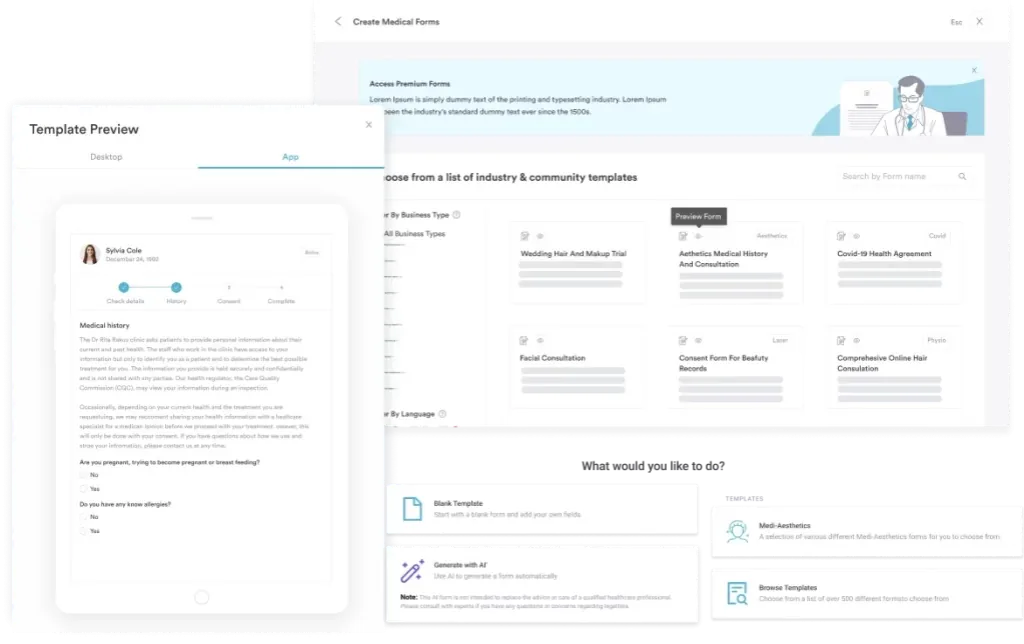
Practices using digital clinical documentation forms can build these required elements directly into procedure-specific note templates, reducing the risk of missing fields under time pressure. Structured templates also make audits faster and less disruptive to clinical operations.
Anticoagulation status is worth recording in the note when a patient on warfarin receives joint mobilization. The monitoring labs carry their own codes: a prothrombin time bills as 85610 and a partial thromboplastin time as 85730. Neither is reported by the therapy practice, and neither affects the 97140 unit count.
Under Medicare Part B, CPT code 97140 is a covered service only when medically necessary. CMS requires that the plan of care be established by a physician or non-physician practitioner and that therapy notes demonstrate skilled care that could not safely be performed by an unskilled person. Progress notes should be completed at a minimum every 10 visits or 30 days, whichever comes first.
For Medicare patients, documentation must also reflect that the treating therapist is supervising the care at the required level (direct, general, or general personal supervision depending on setting).
Audit 10 random CPT code 97140 claims per month across your billing team. Check that each note includes start/stop times, technique specifics, patient response, and a clear medical necessity rationale. Reviewing physical therapy treatment protocols can help standardize your documentation approach across clinicians.
The most practical billing challenge with CPT code 97140 is knowing when it can be reported alongside other therapeutic procedure codes and what each combination requires.
CPT code 97140 and CPT 97110 (Therapeutic Exercise) are commonly performed in the same session and are generally billable together without an NCCI bundling conflict. Both are timed codes, so apply the 8-minute rule to each. Document the time spent on each intervention separately. Physical therapists working in chiropractic practice software-integrated workflows should ensure that both codes appear with their individual time logs in the claim. The same holds for CPT code 97112 (neuromuscular re-education), another timed code frequently paired with 97140 in the same session: it is generally billable alongside 97140 without an NCCI conflict, so apply the 8-minute rule and log the minutes for each code separately. The Medicare Benefits Schedule sets its own item structure, so a US code has no direct Australian counterpart. Where a payer still requires a paper claim, the practice needs the current revision of the form.
This is the high-risk combination. NCCI edits bundle 97140 with 97530 because both involve active, clinician-guided functional tasks. To bill them together, append modifier 59 (or the applicable X-modifier) to one of the codes. Document that the services were distinct in purpose, technique, and ideally timing within the session.
Without modifier 59, the claim will likely deny with an NCCI bundling edit. Resubmission with the modifier and supporting documentation is possible but adds weeks of accounts receivable delay. Getting it right on the first submission is always faster. Refer to the AAPC Codify CPT lookup tool to verify current NCCI edit status for any code pair before submitting.
CPT code 97124 covers massage therapy. A frequent billing error, particularly in chiropractic billing, is substituting 97124 for 97140 when skilled manual techniques were actually performed. The distinction matters because 97124 is not covered by Medicare as a standalone service, while CPT code 97140 is covered when medically necessary.
Use 97140 when the clinician applies skilled manual techniques requiring clinical judgment. Use 97124 only when the service is strictly massage without skilled clinical assessment or modification. For chiropractors billing alongside chiropractic manipulative treatment (CMT) codes such as 98940, CPT code 97140 can be reported for manual therapy performed on a region separate from the spinal manipulation region, typically with modifier 59. This is where the documentation of specific regions treated is critical.
Coverage turns on the diagnosis attached to the line as much as on the code chosen. A C-reactive protein test billed as 86140 denies when the linked diagnosis shows no inflammatory indication, and manual therapy denies on the same logic.
CPT code 97140 can generally be billed by physical therapists, occupational therapists, and chiropractors, subject to state scope-of-practice laws and payer credentialing requirements. Coverage and rules differ by provider type.
Physical therapists are the most common billers of CPT code 97140. In outpatient settings under Medicare, the service must be billed under an established plan of care and with modifier GP appended. Practices serving musculoskeletal, post-surgical, and neurological rehabilitation populations will use this code frequently. Physical therapists building practices can review opening a physical therapy clinic guidance for relevant operational considerations.
Occupational therapists may bill CPT code 97140 for manual therapy techniques within their scope of practice, appending modifier GO for Medicare claims. The most common OT use cases are hand therapy, upper extremity rehabilitation, and lymphedema management. State OT practice acts vary in how they define the scope for joint mobilization, so confirm before billing.
Chiropractic billing of CPT code 97140 is permitted but requires careful separation from CMT codes. Medicare generally restricts chiropractors to billing CMT codes (98940-98942) for spinal manipulation. CPT code 97140 may be billable separately for manual therapy applied to a different region or for a different clinical purpose than the CMT. Most commercial payers allow this but require clear documentation and modifier 59 on the 97140 line when billed alongside a CMT code.
Some payers have specific chiropractic billing policies that limit or exclude 97140. Chiropractors operating in chiropractic-specific practice management systems may find that their billing module does not flag these payer-specific rules automatically, creating a gap that general-purpose billing software can address.
Denials for CPT code 97140 cluster around three root causes. Addressing them ahead of time in your billing workflow will have a real impact on first-pass claim acceptance rates.
Practices with high volumes of CPT code 97140 claims should consider a dedicated denial tracking report by denial code. This helps tell apart widespread issues (e.g., a payer policy change) from individual documentation gaps.
Quantity billing trips up other code families too. Allergen-specific IgE testing under 86003 is reported once per allergen tested, and payers cap the number of allergens per date of service. Unit counts on both code families are a standing audit target.
CPT code 97140 is one of the highest-volume therapeutic procedure codes in outpatient rehabilitation, and its billing complexity is easy to overlook. Getting timed units right, selecting modifiers accurately, and documenting skilled care clearly are the three variables that separate a clean claim from a denial queue.
Pabau’s claims management software helps physical therapy, chiropractic, and occupational therapy practices build these checks directly into the billing workflow, so errors are caught before submission rather than after. If you want to see how it handles timed code billing and modifier logic for your clinic type, book a demo and see it in action.

Need the code for a urinary device? female external catheter billing guide covers the meatal cup device and the modifier errors that cause most denials.
Looking up another incontinence supply code? incontinence supply billing guide covers why most claims under this code are miscoded and how to fix that.
Need another male catheter billing guide? disposable external catheter billing guide covers the documentation Medicare requires to support a male external catheter diagnosis.
Billing for an intermittent catheter? intermittent catheter billing guide covers billing rules for a straight-tip intermittent urinary catheter under Medicare Part B.
CPT code 97140 is used to bill for manual therapy techniques — including joint mobilization, soft tissue mobilization, manual lymphatic drainage, and manual traction — applied to one or more body regions, billed in 15-minute units.
Yes. Medicare claims require a discipline modifier: GP (physical therapy), GO (occupational therapy), or GN (speech-language pathology). Modifier 59 is also required when billing alongside NCCI-bundled codes such as 97530.
Yes, but modifier 59 is required because NCCI edits bundle the two codes. Document the services as distinct in technique, purpose, and timing, or the secondary code will likely deny.
There is no hard cap, but each unit requires at least 8 minutes of direct treatment. Most sessions support one to three units; verify payer-specific limits before routinely billing more than two.
The CMS 8-minute rule requires at least 8 minutes of treatment to bill one unit of a timed code. Each additional full 15 minutes earns one more unit; in mixed-code sessions, remaining minutes go to the code with the most leftover time.
Medicare non-facility rates typically fall between $20 and $35 per unit, varying by geographic locality. Use the CMS PFS search tool or FastRVU for current rates in your area.
Yes. The two codes are generally not bundled by NCCI edits and can be billed together without a modifier. Document time spent on each intervention separately to support the unit count for each code.
Yes. Chiropractors can bill it for skilled manual therapy performed on a region separate from a spinal manipulation. When it is reported on the same day as a chiropractic manipulative treatment (CMT) code such as 98940, append modifier 59 and document the distinct region treated. Some payers restrict this pairing, so confirm the policy first.