CPT code 21011: Excision of soft tissue tumor of the face
CPT code 21011: Official descriptor and procedure overview CPT code 21011, as pu...

Last Updated: Oct 8, 2026
G0277 is the HCPCS Level II code for hyperbaric oxygen under pressure, full body chamber, per 30 minute interval.
Let Pabau's smart automation suggest the right codes, reduce claim denials, and keep your practice compliant—effortlessly.
Automate repetitive tasks and focus on what matters most—your patients.
Reduce coding errors and ensure compliance with the latest regulations.
Clean claims, fewer denials, and faster reimbursements.
Powerful insights and reporting to help your practice thrive.
HIPAA compliant SOC 2 certified GDPR-compliant Trusted by 4,000+ clinics worldwide

HCPCS code G0277 describes hyperbaric oxygen under pressure in a full body chamber, billed per 30-minute interval, replacing the discontinued C1300 code effective January 1, 2015.
Outpatient hospital facilities report G0277 for the facility charge; the supervising physician bills CPT 99183 separately for their professional service.
Only CMS-approved diagnoses under National Coverage Determination 20.29 qualify for Medicare reimbursement; off-label indications are non-covered and a leading audit trigger.
Pabau’s claims management software helps wound care programs track HBO session units, attach documentation, and reduce G0277 claim denials.
HCPCS code G0277 is the facility billing code for hyperbaric oxygen therapy (HBOT) delivered under pressure in a full-body chamber, reported per 30-minute interval on the UB-04 claim. Outpatient hospitals and hospital-based wound care programs report it for the technical component of each session. Claims management software built for outpatient facilities helps coders track those intervals and attach supporting documentation before submission.
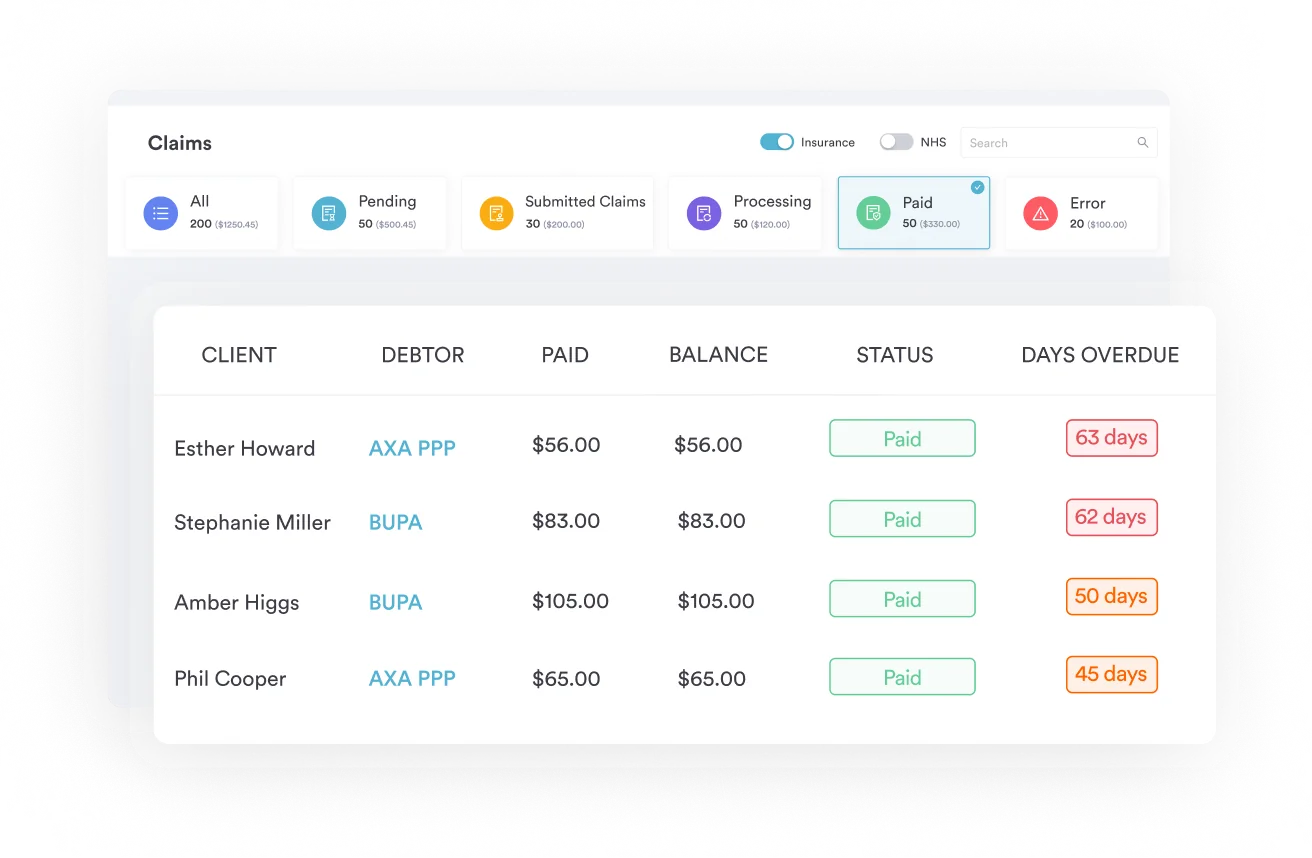
The Centers for Medicare and Medicaid Services (CMS) maintains G0277 under HCPCS Level II and governs its coverage through National Coverage Determination (NCD) 20.29. Because CMS maintains it as a facility code, it sits outside the AMA’s CPT set even though it appears next to CPT codes on most billing worklists.
Effective January 1, 2015, CMS discontinued the predecessor code C1300 and replaced it with G0277, which carries an identical descriptor. This transition was formalized through CMS transmittal R3280CP and has been confirmed by multiple MAC billing guidance documents. Any claim still referencing C1300 for services rendered after that date will reject at the payer level.
The official descriptor for HCPCS code G0277 is: Hyperbaric oxygen under pressure, full body chamber, per 30-minute interval.
Billing time for G0277 starts at the beginning of chamber pressurization and ends when depressurization is complete. A typical HBO session runs 90 minutes, which equals 3 units of G0277. Under Medicare’s mid-point convention, an additional 30-minute unit is billable only when more than 15 minutes of that increment is documented, so per AAPC guidance a session of 106 to 135 minutes is reported as 4 units.
CMS assigns G0277 a Medically Unlikely Edit (MUE) of 5 units per day, which caps a single date of service at 150 minutes of chamber time. Claims that exceed that cap are denied automatically, and billing more units than the documented session length supports is a known probe audit trigger, particularly in Palmetto GBA Jurisdiction J.
G0277 is a HCPCS Level II code, not a CPT code, even though coders and billing tools routinely label it “CPT code G0277.” Anyone searching for a G0277 CPT code description lands on the same HCPCS descriptor shown above, because the AMA’s CPT set contains no G-code for hyperbaric oxygen. CPT codes cover professional services billed by the clinician; HCPCS Level II codes like G0277 cover the facility service and belong on the UB-04, paired with revenue code 0413. The clearinghouse validates structure before the payer validates content, which is why an electronic claim can fail twice. When a claim on this code comes back unpaid, the denial reason codes on the remittance name the cause.
G0277 is a facility code. Outpatient hospitals and hospital-based wound care programs report it on UB-04 claims under Medicare Part A. The supervising physician does not use G0277; instead, they separately bill CPT 99183 for the professional component of physician supervision during hyperbaric oxygen therapy.
This facility-versus-professional split matters because submitting both codes on the same claim type, or billing G0277 on a professional CMS-1500 form, will generate a split-billing error. Review your medical documentation workflows to confirm each claim form routes the correct code to the correct payer.
Place of service (POS) coding tracks the facility type: outpatient hospital departments bill under POS 22, ambulatory surgical centers under POS 24, and office-based or freestanding settings under POS 11. A POS value that contradicts the facility type on the claim is a common front-end rejection, so confirm it maps to where the chamber physically sits before submission.
Check your MAC’s local coverage determination (LCD) before billing G0277 in any facility type outside a hospital outpatient department. Palmetto GBA, Noridian, and other MACs publish individual HBO LCDs that can layer additional requirements on top of NCD 20.29.
Medicare covers HCPCS code G0277 only for diagnoses explicitly approved under CMS NCD 20.29. Billing G0277 against a non-covered diagnosis is a medical necessity failure and one of the top reasons HBO claims are denied during Palmetto GBA probe audits.
The covered indications include conditions where tissue hypoxia is the documented clinical driver. A complete, downloadable ICD-10 list is available from CMS under Change Request 9252. Commonly covered diagnoses include:
Off-label indications, including autism spectrum disorder, chronic Lyme disease, cerebral palsy, and multiple sclerosis, are not covered under Medicare NCD 20.29. Submitting G0277 with these diagnoses will generate a medical necessity denial and may trigger a post-payment audit.

Pabau helps outpatient wound care programs document hyperbaric oxygen sessions accurately, attach supporting clinical records, and streamline claims submissions so your team spends less time on rework.

Coders new to HBO billing frequently confuse HCPCS code G0277 and CPT 99183. These codes describe different parts of the same service and are never interchangeable.
Both codes can be billed for the same session without constituting duplicate billing because they represent separate, distinct services. The facility bills for the use of equipment and staff; the physician bills for direct oversight. For a comparison of procedure code billing across different service types, the CPT coding framework offers a useful reference point.
When a physician performs a wound care procedure during the same visit as HBO therapy, bill any surgical wound care CPT code separately using revenue code 761 alongside G0277. Do not bundle the wound care procedure into the HBO session units.
Palmetto GBA’s post-payment probe audits for G0277 consistently identify incomplete documentation as the primary denial driver. Your patient compliance documentation must establish medical necessity at each session, not just at the initial order. Three areas receive the most scrutiny:
The medical record must include a physician order for HBO therapy, a baseline wound assessment documenting the diagnosis and wound grade or classification, and a statement of why the wound meets NCD 20.29 criteria. For diabetic wounds, this means documenting Wagner Grade III or higher and confirming adequate arterial supply. For pressure-related wounds.
Each session must have a dated treatment note recording the start and end time of pressurization, the pressure used (typically 2.0-2.4 ATA), the patient’s condition during and after treatment, and the total number of billable 30-minute intervals. Missing start or end times are the single most common documentation error found in audit reviews.
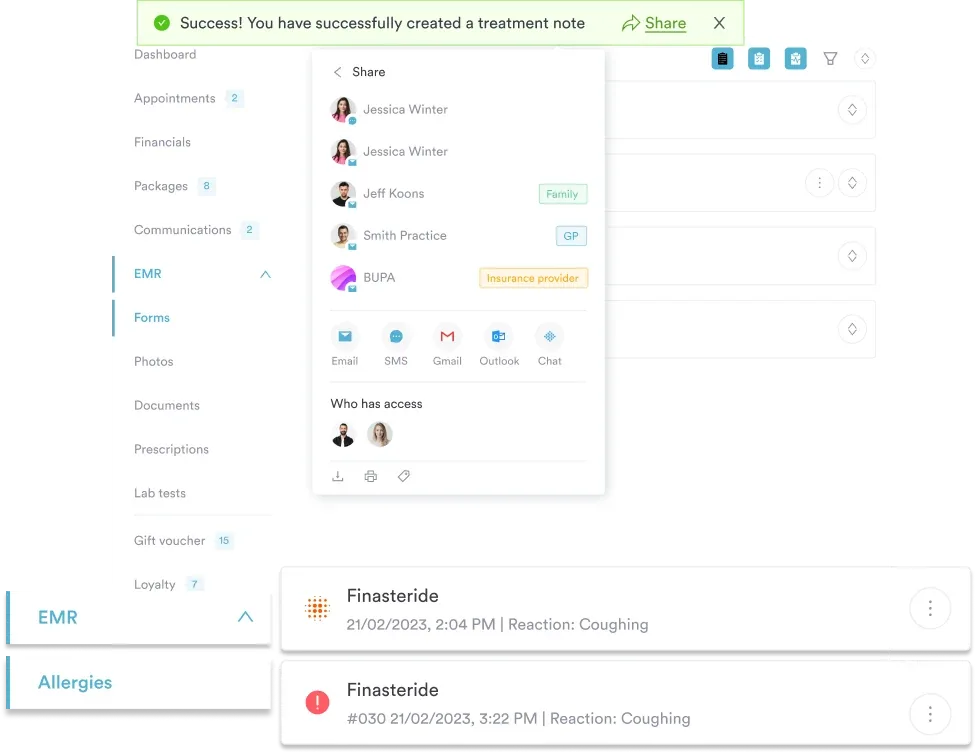
Medicare requires periodic physician reassessment to confirm continued medical necessity. Reassessments typically occur after every 30 sessions and must document measurable wound response. A plateau in healing without a documented clinical rationale for continuing HBO therapy is grounds for prospective denial. Maintain these reassessments in a format that supports HIPAA compliance requirements for protected health information.
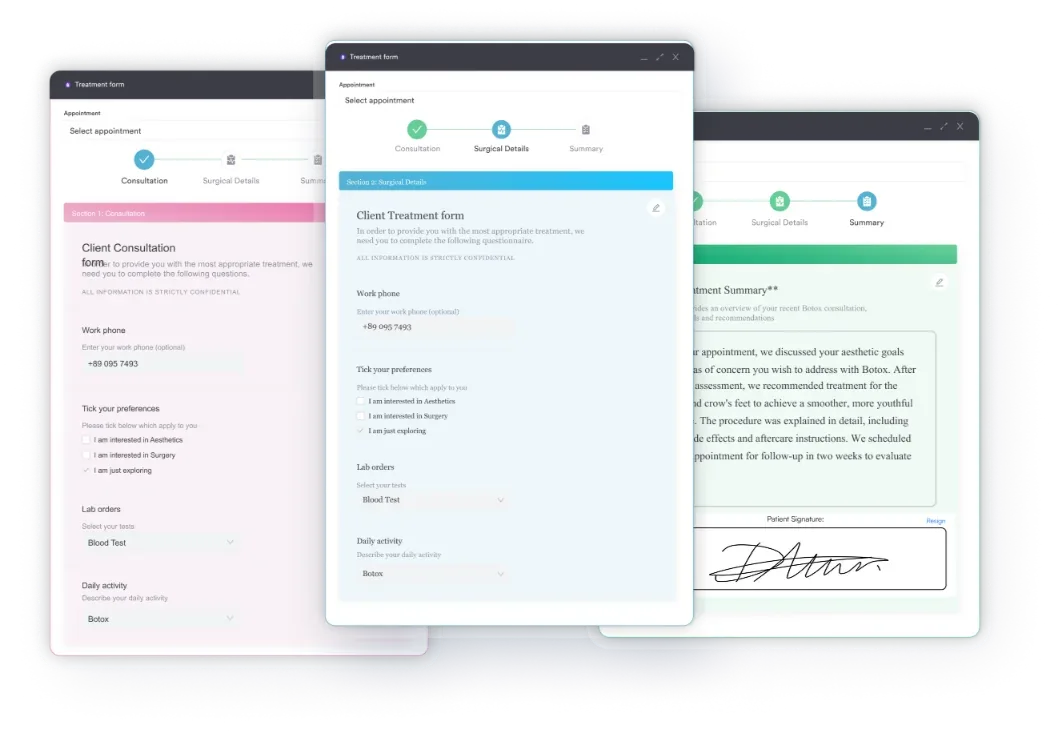
Use digital intake forms and structured clinical note templates to standardize what gets captured at each session visit, reducing the variability that triggers auditor attention.
HBO claims have a disproportionately high denial rate compared to most outpatient facility services. These are the errors that appear most frequently in MAC probe audit findings:
Setting up automated billing workflows that flag missing session documentation before claim submission prevents the most common of these errors before they reach the payer.
CMS reimburses HCPCS code G0277 under the Outpatient Prospective Payment System (OPPS) through an Ambulatory Payment Classification (APC) assignment. Rates are updated in the annual OPPS final rule, so any specific dollar figure published in a billing guide reflects a single point in time.
For current payment rates, use the CMS Physician Fee Schedule lookup tool on cms.gov, or the AAPC Codify HCPCS lookup for the current APC assignment. The PGM Billing HCPCS lookup tool also provides CMS-sourced fee data at no cost.
Key payment considerations:
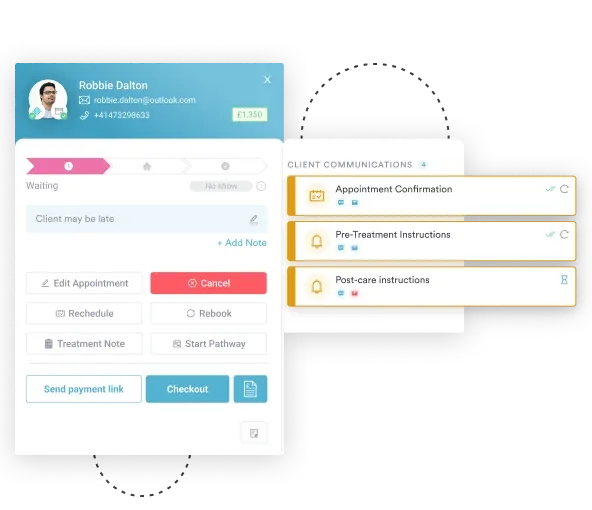
An effective billing workflow for HCPCS code G0277 follows a consistent sequence from patient arrival to claim adjudication. Review your medical documentation workflows against this framework to identify gaps before your next MAC audit.
Using integrated claims management that surfaces these workflow steps in sequence cuts the time wound care coders spend on manual pre-submission checks.
HCPCS code G0277 is straightforward in concept but demanding in execution. Every billing error, from a missing revenue code to an off-label diagnosis, translates directly into a denial, a repayment demand, or an audit finding. Getting the units right, matching the ICD-10 to an approved NCD 20.29 indication, and maintaining per-session documentation are the three non-negotiable requirements.
Pabau’s claims management software helps outpatient wound care programs build G0277 billing accuracy into their session workflows rather than chasing errors after the fact. Book a demo to see how Pabau handles HBO session tracking and claim submission.

Billing a VYEPTI migraine infusion? Eptinezumab injection billing guide covers the per-mg unit rule for this quarterly migraine prevention infusion.
Still billing urokinase after 2026? Urokinase injection code guide explains why the code was deleted and what a 2026 claim carrying it now faces.
Billing zoledronic acid on a deleted code? Zoledronic acid billing guide shows the crosswalk to J3489 and the per-mg unit rule for a clean claim.
HCPCS code G0277 is the facility billing code for hyperbaric oxygen therapy (HBOT) delivered under pressure in a full-body chamber, reported in 30-minute intervals by outpatient hospital facilities on UB-04 claims under Medicare Part A.
A 90-minute session equals 3 units of G0277. Sessions between 106 and 135 minutes are reported as 4 units. Billing time runs from the start of chamber pressurization to the end of depressurization.
G0277 is the facility charge billed by the outpatient hospital on a UB-04 form under Medicare Part A. CPT 99183 is the professional charge billed separately by the supervising physician on a CMS-1500 form under Medicare Part B. Both can be billed for the same session without constituting duplicate billing.
Covered diagnoses are defined in CMS National Coverage Determination 20.29 and include diabetic lower extremity wounds (Wagner Grade III or higher), osteomyelitis, gas gangrene, radiation tissue damage, carbon monoxide poisoning, crush injuries, and arterial gas embolism, among others. Off-label indications are non-covered.
CMS discontinued HCPCS code C1300 and replaced it with G0277 effective January 1, 2015, under CMS transmittal R3280CP. The two codes share an identical descriptor; G0277 is the only valid code for facility-side HBO billing from that date forward.
It is a HCPCS Level II code maintained by CMS, though billing systems often mislabel it as a CPT entry. The AMA’s procedural code set has no G-code for hyperbaric oxygen, so the facility service is always reported with the HCPCS descriptor on the UB-04.
CMS applies a Medically Unlikely Edit of 5 units per date of service, which caps a single day at 150 minutes of chamber time. Sessions beyond that limit are denied automatically unless supported by documented medical necessity and, where required, a payer appeal.