CPT code 93503: Swan-Ganz catheter billing and modifiers
CPT code 93503: Official descriptor and procedure overview In the AMA CPT code s...

Last Updated: Oct 23, 2026

CPT Code 00872 describes anesthesia services for extracorporeal shock wave lithotripsy (ESWL) performed with a water bath, used during non-invasive kidney stone destruction procedures.
The code carries 7.0 base units per the VA/DOL national anesthesia base unit table, compared to 5.0 base units for CPT 00873 (without water bath).
Modifiers AA, QK, QX, QY, QZ, and QS affect reimbursement and must reflect the actual clinical relationship between the anesthesiologist and CRNA.
Practice management software like Pabau equips anesthesia billing teams with structured documentation and claims tracking, helping them submit clean claims and reduce denials for ESWL cases.
CPT Code 00872 is defined as: Anesthesia for lithotripsy, extracorporeal shock wave; with water bath. It falls within the CPT anesthesia section covering procedures on the lower abdomen, spanning the range 00800 to 00882. This code applies specifically when a qualified anesthesia provider delivers anesthesia services during an ESWL procedure that uses a water bath delivery mechanism.
Extracorporeal shock wave lithotripsy is a non-invasive technique for breaking up kidney stones (nephrolithiasis or urolithiasis). High-energy sound waves are directed at the stone from outside the body, fragmenting it into pieces small enough to pass through the urinary tract.
In the water bath variant, the patient’s flank or relevant anatomy is immersed in water, which acts as a coupling medium for shock wave transmission.
This setup defined first-generation lithotripters like the Dornier HM3, where the patient was lowered into a tub of water. Most modern second- and third-generation machines replaced the tub with a water-filled cushion or drum sealed by a silicone membrane, which counts as dry contact rather than a true water bath.
Because the equipment determines the code, confirm which system your facility uses before choosing an ESWL CPT code. A case run on a cushion system is billed as 00873, not 00872.
The complexity of positioning, immersion, and monitoring in a water bath setup is reflected in the higher base unit assignment compared to dry ESWL. The same base-unit logic applies across the rest of the lower abdomen range.
Anesthesia for lithotripsy ranges from monitored anesthesia care (MAC) to general anesthesia, and the choice drives both the clinical plan and the modifier you bill. MAC suits many stable patients, while general anesthesia is chosen when airway control or complete immobility matters.
Water bath cases lean toward deeper sedation more often than dry ESWL, because immersion, positioning, and continuous monitoring add complexity the provider manages throughout the session.
Document the technique precisely. When the service is MAC, append modifier QS so the payer sees the level of care delivered. When patient factors push the case to general anesthesia, the record should show why. The base unit value stays 7.0 either way, but the anesthesia type shapes the modifiers and the supporting documentation a clean claim needs.
Every anesthesia code is assigned a base unit value that reflects the typical intensity of the service. On the professional anesthesia base units table published by the U.S. Department of Labor’s Office of Workers’ Compensation Programs (OWCP), CPT Code 00872 carries 7.0 base units. This is the starting point for every reimbursement calculation under the anesthesia billing formula.
Anesthesia billing uses the B+T+M formula: base units plus time units plus modifying units. Time units are calculated by dividing total anesthesia time (in minutes) by 15, rounding to the nearest unit per the American Society of Anesthesiologists (ASA) convention.
Modifying units reflect physical status classifications (P1 through P6). The total unit count is then multiplied by the applicable conversion factor, which varies by payer and geography.
Example calculation: a 60-minute ESWL procedure with water bath, billed under CPT Code 00872, yields 7.0 base units plus 4.0 time units (60 min divided by 15) for a subtotal of 11.0 units before physical status modifiers. At a hypothetical conversion factor of $80 per unit, the pre-modifier fee would be $880.
Conversion factors vary significantly by payer, geographic region, and contract. Always verify your applicable conversion factor against your payer contract or the CMS fee schedule lookup before submitting claims.
Base unit values vary widely across the anesthesia section depending on procedure complexity. Thoracic anesthesia billed under 00620 and percutaneous liver biopsy anesthesia under 00702 both carry different base units than the lithotripsy codes covered here.
Modifier selection for anesthesia claims depends on the provider relationship and supervision arrangement. Using the wrong modifier is one of the most common denial triggers for CPT Code 00872 claims. These are the modifiers that apply:
Physical status modifiers (P1 through P6) are appended to reflect patient health status. P1 represents a normal healthy patient; P6 is a declared brain-dead patient. Medicare does not pay extra for any ASA physical status modifier: its anesthesia formula uses only base units plus time units, multiplied by the conversion factor.
Some commercial payers add units for higher physical status (P3 through P5), but that’s payer-specific and must be verified in the contract. Checking the AAPC Codify CPT reference alongside your payer contract is a good starting point for modifier validation.
Run a modifier audit on your 00872 claims quarterly. Pull all claims with QK and QX modifiers and verify the anesthesiologist documentation confirms they met all seven CMS requirements for medical direction during that specific procedure. Missing even one requirement reclassifies the case from medical direction to medical supervision, billed with modifier AD at a fixed rate of about 3 base units (plus a possible 4th unit for presence at induction) and no time units.
Anesthesia claims for CPT Code 00872 require documentation that supports both the procedure performed and the anesthesia services provided. Incomplete records are the second most common denial trigger after incorrect modifier use.
The anesthesia record must capture the following elements to satisfy payer and compliance requirements. Practices using digital intake forms can pre-structure these fields to ensure nothing is omitted at point of care.
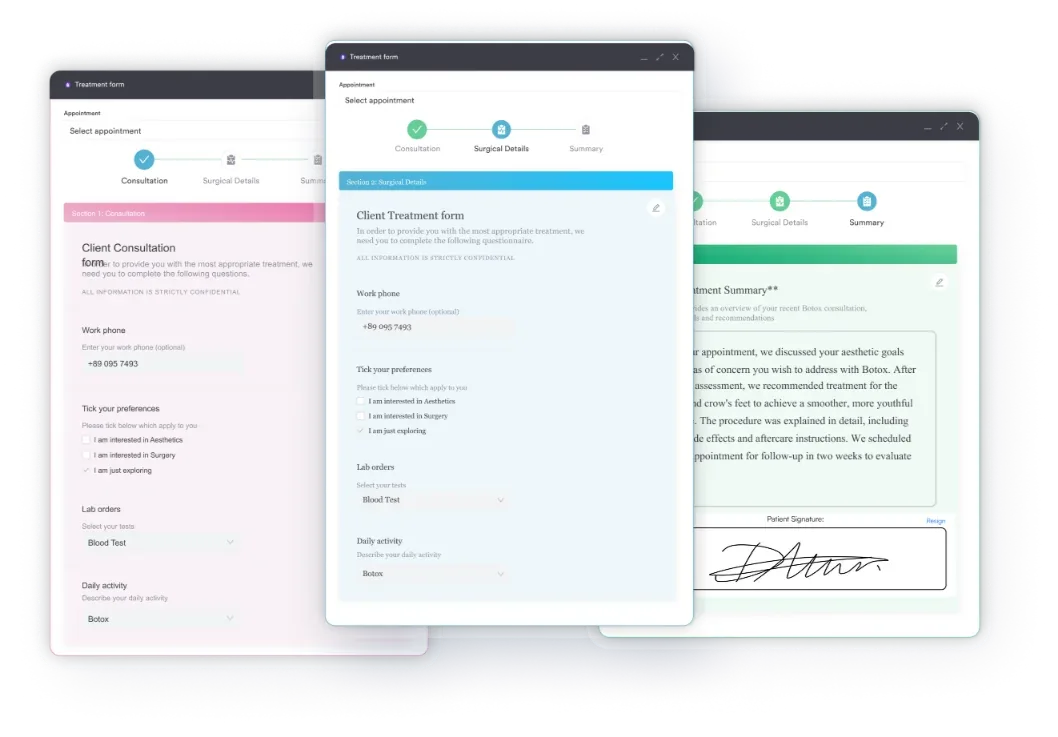
Maintaining HIPAA-compliant documentation practices for anesthesia records is both a legal requirement and a key defense against payer audits. Each element listed above should be retrievable on demand.
Practices that separate pre-op documentation from intraoperative anesthesia records often find missing elements during audits that a unified workflow would have caught. A compliance checklist for practices can help anesthesia teams systematically verify their documentation process covers all payer requirements.

Pabau’s claims management tools give anesthesia billing teams structured documentation and claims tracking, so you can submit clean claims and reduce denials. See how it works for your practice.

Reimbursement for CPT Code 00872 is not a fixed dollar amount. It is calculated by multiplying total anesthesia units (base plus time plus physical status) by a conversion factor that varies by payer, geographic locality, and the provider’s contract terms.
Medicare: The Centers for Medicare and Medicaid Services (CMS) reimburses anesthesia services using the anesthesia conversion factor published annually in the Medicare Physician Fee Schedule (MPFS). The 2025 conversion factor was approximately $20.32 to $20.93 per unit, depending on the legislative correction applied and the geographic practice cost index (GPCI) for the locality.
Anesthesiologists billing AA modifier receive 100% of the allowed amount; those billing QK receive 50%; CRNAs billing QX also receive 50%. Use the FastRVU lookup tool to check current national and locality-adjusted values for this code.
Medicaid: Coverage and reimbursement for CPT Code 00872 under Medicaid varies significantly by state. New York Medicaid, for example, covers this code per the emedny.org provider manual. Other states may have different coverage determinations, fee schedules, or prior authorization requirements. Verify with your state Medicaid program directly before assuming coverage.
Commercial insurers: Most major commercial plans cover ESWL anesthesia when the underlying lithotripsy procedure is medically necessary and prior authorized. Pre-authorization requirements differ by plan and by the referring urologist’s documentation of stone size, location, and failed conservative management. Some plans apply step-therapy requirements before authorizing ESWL at all, which can affect authorization for the anesthesia component. Denial rate by code shows which services are worth a process fix and which are one-off errors. Downcoding is as common as upcoding, and both trace back to how the decision-making level was recorded.
Place of service: CPT Code 00872 can be performed in a hospital outpatient department (POS 22), ambulatory surgical center (POS 24), or inpatient hospital (POS 21). The place of service code affects the applicable fee schedule and whether a facility or non-facility rate applies for any professional component.
Anesthesia professional fees are generally not reduced by facility status the way E/M codes are, but some payers set separate contract rates by setting, so confirm with each payer. Reviewing how revenue cycle management ties prior authorization, billing, and payer follow-up together shows the same multi-payer variability pattern across specialties.
Before your first 00872 claim submission with a new commercial payer, request a copy of their anesthesia fee schedule and pre-authorization policy in writing. Commercial anesthesia rates often differ substantially from the Medicare conversion factor, and knowing your contracted rate per unit prevents revenue cycle surprises after service delivery.
Understanding where CPT Code 00872 sits among the related anesthesia CPT codes prevents miscoding and supports accurate crosswalk documentation. The lower abdomen range includes several commonly confused codes, and choosing the right lithotripsy CPT code usually comes down to the water bath distinction.
CPT code 00873 is the direct counterpart to CPT Code 00872. It applies when ESWL is performed without a water bath, using dry-contact shock wave delivery.
Modern lithotripsy equipment predominantly uses dry ESWL, making 00873 the more frequently billed of the two codes in most current clinical environments. The base unit value is 5.0, two units lower than 00872, reflecting the reduced monitoring complexity of the dry procedure setup.
The clinical record must clearly specify which type of ESWL was performed. Coders relying only on the procedure name “ESWL” without reading the operative note risk selecting the wrong code. The same documentation-driven logic applies to other anesthesia codes.
CPT 00880 applies to anesthesia for procedures on major lower abdominal vascular structures when no more specific code exists. With 15.0 base units, it carries significantly higher reimbursement than the lithotripsy codes, and it is not interchangeable with 00872.
Urologists and anesthesiologists performing vascular surgery in the same anatomical region sometimes generate crosswalk confusion, but the operative intent and surgical approach determine the correct anesthesia code, not anatomy alone.
CPT 00882 is specific to anesthesia for inferior vena cava (IVC) ligation procedures, carrying 10.0 base units. Like 00880, it applies to vascular intervention in the lower abdomen, not lithotripsy. Billing 00882 for an ESWL case would be incorrect and is a red flag in payer audits, given the very different clinical profiles of IVC ligation versus kidney stone destruction.
Clean claim submission for CPT Code 00872 depends on a sequential workflow that connects the clinical record to the billing system. Anesthesia practices that use claims management software with built-in anesthesia unit calculation logic reduce manual entry errors and catch modifier mismatches before submission.
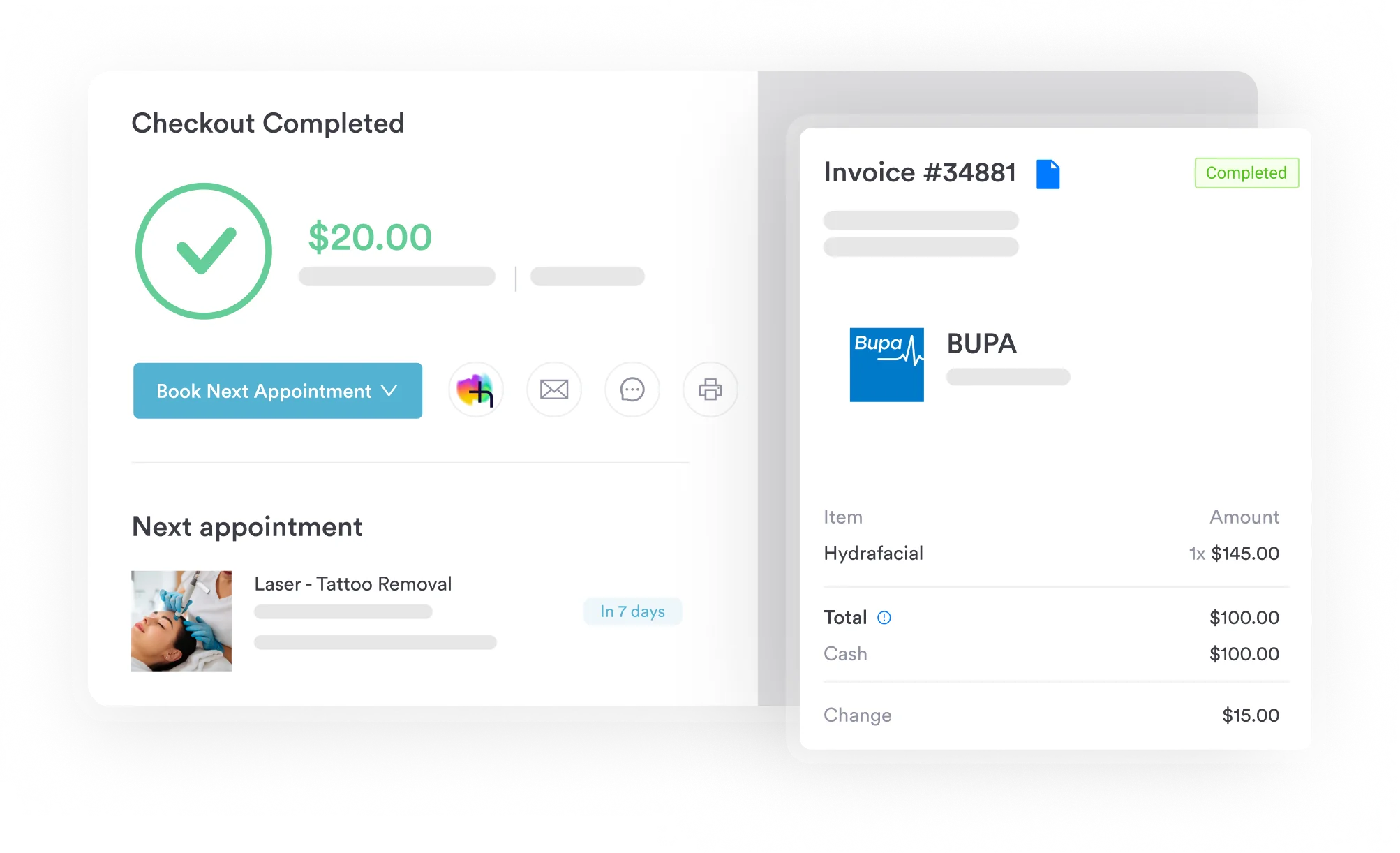
Practices using automated billing workflows can configure rule-based checks that flag 00872 claims missing physical status modifiers or submitted without a confirmed authorization number, catching errors before they reach the payer.
Linking your EHR integration to your practice management system also reduces the double-entry burden that creates transcription errors between the anesthesia record and the claim form. For a broader comparison of platforms.
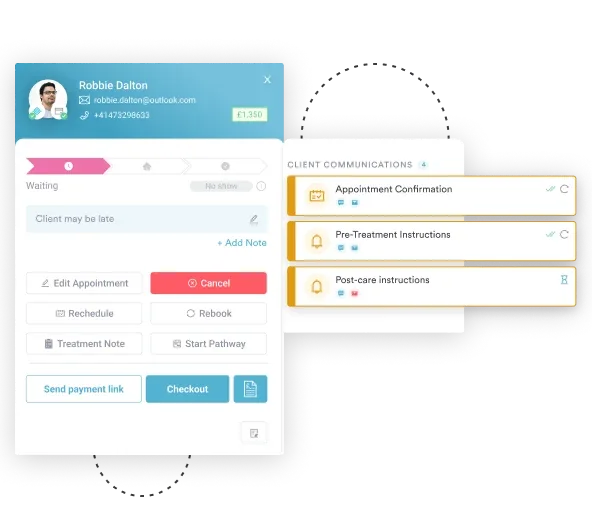
CPT Code 00872 applies specifically to water bath ESWL, carries 7.0 base units, and requires modifier and documentation accuracy to protect reimbursement. The two-unit difference between 00872 and its companion code 00873 adds up across a billing cycle, and choosing the wrong code costs practices either through underpayment or audit exposure.
Pabau gives anesthesia and urology billing teams structured documentation and claims tracking in one place, without switching between disconnected tools. To see how it fits your billing workflow, book a demo with the Pabau team.

Billing for corrective tattooing procedures? Corrective tattooing billing guide covers micropigmentation used to correct skin color defects across 6.1 to 20.0 square centimeters, distinct from tattoo removal.
Need the tattooing add-on code? Tattooing add-on billing guide explains the add-on code billed for each additional 200 square centimeters of pigment treatment beyond the primary area.
CPT Code 00872 is used to bill anesthesia services provided during extracorporeal shock wave lithotripsy (ESWL) procedures that use a water bath delivery mechanism for kidney stone destruction. It applies when a qualified anesthesia provider personally performs or directs anesthesia care during a water bath ESWL session.
CPT 00872 covers anesthesia for ESWL with a water bath setup (7.0 base units); CPT 00873 covers ESWL without a water bath, also called dry lithotripsy (5.0 base units). The operative note must explicitly document which technique was used, because the codes are not interchangeable and carry different reimbursement values.
CPT Code 00872 has 7.0 base units, as published in the U.S. Department of Labor OWCP national anesthesia base unit table. Time units are added by dividing total anesthesia time in minutes by 15, then the sum is multiplied by the applicable conversion factor to calculate the reimbursable amount.
Medicare covers CPT Code 00872 when the underlying ESWL procedure is medically necessary and documentation supports the anesthesia service provided. Reimbursement is calculated using the annual Medicare anesthesia conversion factor, which was approximately $20.32 to $20.93 per unit in 2025 depending on the legislative correction and locality, adjusted by geographic practice cost index. Verify current rates using the CMS Physician Fee Schedule lookup before submitting claims.
The most common modifiers are AA (personally performed by an anesthesiologist), QK (medical direction of 2-4 CRNAs), QX (CRNA under medical direction), QY (medical direction of one CRNA), QZ (CRNA independently), and QS (monitored anesthesia care). Physical status modifiers P1 through P6 are also appended to reflect patient health classification.
The anesthesia record must document start and stop times, physical status classification, type of anesthesia administered, supervising provider identity (for QK or QY billing), and explicit confirmation that water bath ESWL was performed. The operative note must state “with water bath” to distinguish this from a CPT 00873 case. Missing any of these elements creates denial risk.