

HCPCS Code E0272: Foam rubber mattress billing guide
HCPCS Code E0272: official descriptor and code overview HCPCS Code E0272 is the ...

Last Updated: Nov 6, 2026
L5960 is the CCSD code for femoro-distal calf bypass using vein. It covers open surgery that routes a vein graft from the femoral artery to a tibial or peroneal artery in the calf. Two details settle the code: the conduit is vein, and the graft ends below the popliteal artery. UK private medical insurers use it to identify this operation on a surgical claim.
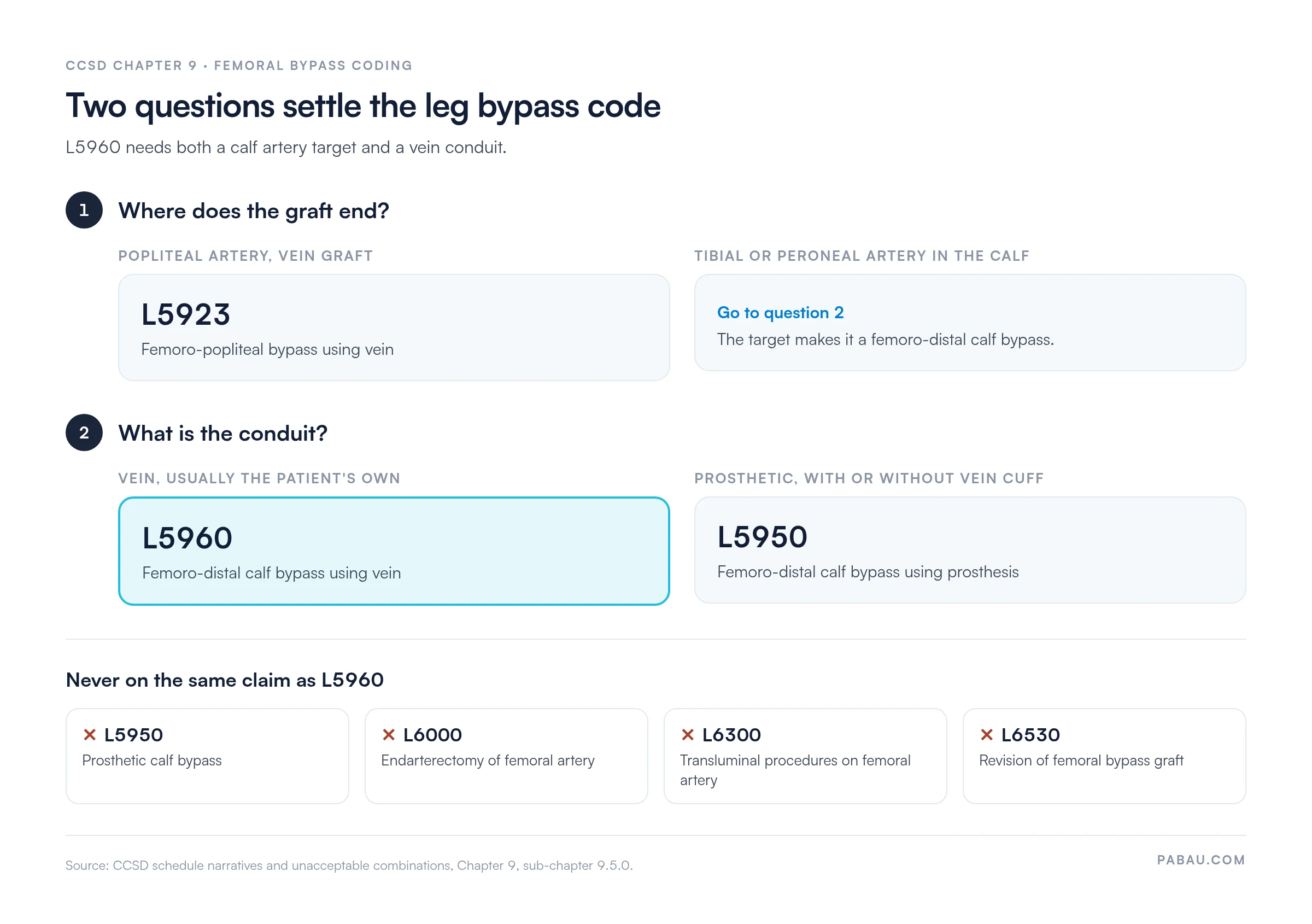
The code sits in Chapter 9 of the CCSD schedule, Vascular system, under sub-chapter 9.5.0 Ileo-femoral Vessels. CCSD lists L5950, L6000, L6300 and L6530 as unacceptable combinations. So a prosthetic calf bypass, a femoral endarterectomy, femoral transluminal work or a graft revision cannot share the claim.
Let Pabau's smart automation suggest the right codes, reduce claim denials, and keep your practice compliant—effortlessly.
Automate repetitive tasks and focus on what matters most—your patients.
Reduce coding errors and ensure compliance with the latest regulations.
Clean claims, fewer denials, and faster reimbursements.
Powerful insights and reporting to help your practice thrive.
HIPAA compliant SOC 2 certified GDPR-compliant Trusted by 4,000+ clinics worldwide

CCSD code L5960 is femoro-distal calf bypass using vein, a vascular surgery code in Chapter 9 of the CCSD schedule.
The graft must use vein and reach a calf artery, otherwise L5923 or L5950 is the better fit.
CCSD lists L5950, L6000, L6300 and L6530 as unacceptable combinations with L5960 on the same claim.
The operation note should name the vein, the inflow site, the distal target and the indication.
Confirm pre-authorization with the patient’s insurer before a planned bypass, because each insurer sets its own rules and fees.
CCSD code L5960 is femoro-distal calf bypass using vein. Surgeons use it when a vein graft carries blood from the femoral artery to an artery in the calf.
The entry sits in Chapter 9, Vascular system, under sub-chapter 9.5.0 Ileo-femoral Vessels. Its schedule date is 20 January 2010.
Two words in the narrative do most of the work. “Calf” means the graft ends beyond the popliteal artery, on a tibial or peroneal vessel. “Vein” means the conduit is vein, usually the patient’s own, rather than a prosthetic tube.
The CCSD Group, short for Clinical Coding and Schedule Development, maintains the codes and their narratives. Its members include Aviva, AXA Health, Bupa and Vitality. Here is the entry at a glance.
Knowing the operation makes the operation note easier to check. A femoro-distal vein bypass usually runs in five stages.
Surgeons may use the vein reversed, non-reversed or in situ. The narrative does not mention that choice, but the note should still record it.
Most patients reach this operation with chronic limb-threatening ischemia. Rest pain, a non-healing ulcer or gangrene are the usual triggers.
Five neighboring CCSD codes come up when coding a leg bypass. Four of them can never share a claim with L5960.
Two questions settle the choice between the bypass codes. Where does the graft end, and what is it made of?
Watch for a lookup trap as well. In the US HCPCS system, L5960 and L5950 are prosthetic limb additions, not bypass grafts.
So if a search returns hip-disarticulation prosthesis parts, it has left the CCSD schedule. Go back to the CCSD entry, or our CCSD codes reference, before you code.
The vein graft ends on the below-knee popliteal artery. Is that L5960?
No. A popliteal target points to L5923, femoro-popliteal bypass using vein. L5960 needs a calf artery as the target.
The surgeon used a prosthetic graft with a vein cuff. Which code fits?
L5950. Its narrative covers a prosthetic calf bypass with or without a vein cuff or patch.
The surgeon also ballooned the femoral artery in the same sitting. Can both go on the claim?
Not alongside L5960. CCSD lists L6300 as an unacceptable combination, so talk to the insurer before you submit.
This is a redo on a failed graft. Does L5960 still apply?
Reworking the old graft is L6530, revision of femoral bypass graft. A brand-new vein graft to the calf is L5960. The two cannot share a claim.
The surgeon repaired a torn calf artery rather than bypassing it. Which CCSD code fits?
L6800. It covers open repair of an existing limb artery, by direct suture or a patch. L5960 needs a new vein conduit running to a calf artery.
Here is how a straightforward case comes together. The patient below is invented for illustration.
Now change one detail. Swap the vein for a prosthetic graft, and the claim becomes L5950. Add a femoral endarterectomy, coded L6000, and CCSD flags the pairing as unacceptable.
Insurers turn to the operation note when they query a claim. Make sure yours answers these points without a follow-up call.
Consent belongs in the record too. A signed form that names the bypass and the vein harvest closes off an easy query.
When the bypass is planned, use the time before admission to secure authorization. Each insurer adopts CCSD codes on its own terms, so cover and benefit limits depend on the policy.
Urgent limb-salvage cases don’t always allow that order. In those cases, follow the insurer’s process for urgent admissions and notify it as early as you can.
If the surgeon may switch from vein to a prosthetic graft on the day, ask the insurer how to handle the change. A poor-quality vein can force that switch, and it moves the claim from L5960 to L5950.
Most queries on this code trace back to a handful of slips. Each one is easy to catch before submission.
Run through this list once the operation note is signed. Each point closes off one of the queries above.
Vascular claims tend to stall on paperwork rather than surgery. The consent sits in one place, the operation note in another, and the authorization number in an email.
Pabau, the practice management platform we build, keeps those pieces on one patient record. Its Healthcode integration sends CCSD-coded claims straight from that record.
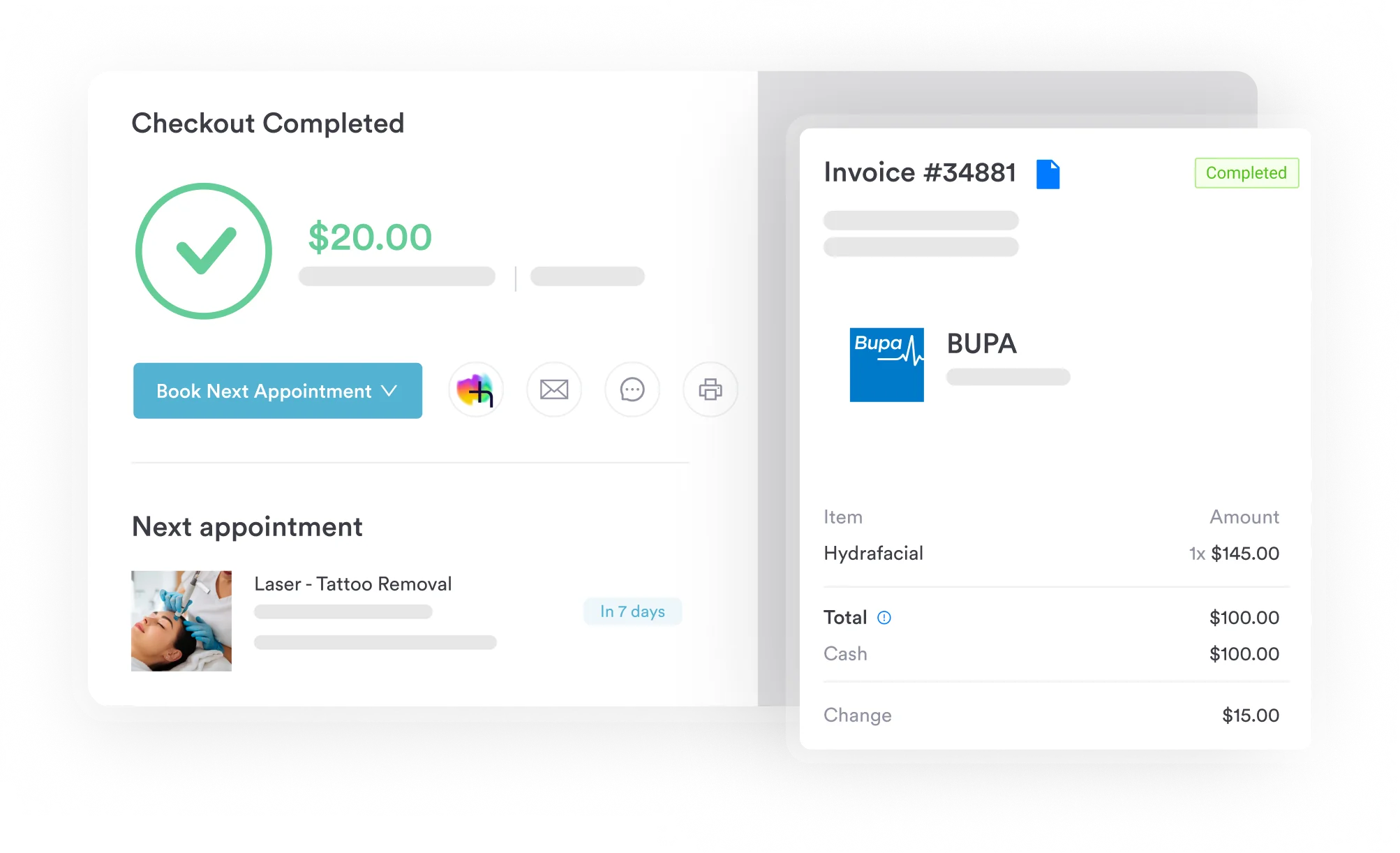
Before a claim leaves, Pabau checks that required fields, such as membership and authorization numbers, are filled in. Afterward, your team can track its status and reconcile the payment.
Claims management and digital forms share that record. So the consent signed at pre-assessment is already there when the insurer asks.
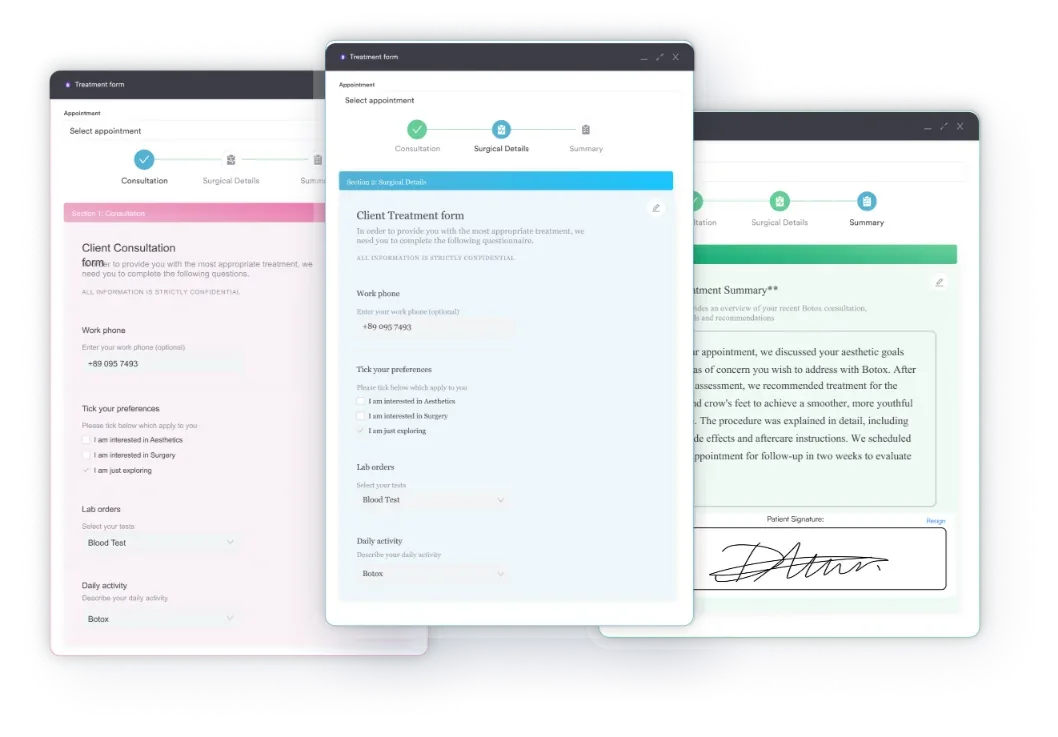

Pabau keeps consent, clinical notes and authorization numbers on one patient record, then sends CCSD-coded claims through Healthcode. Your team spends less time answering insurer queries.

L5960 is a narrow code, and that works in your favor. Confirm a vein conduit and a calf target, and the code choice is settled.
The harder work happens around the code. Keep L5950, L6000, L6300 and L6530 off the same claim, and make the operation note answer the obvious questions first.
Secure the authorization number before admission whenever the case allows it. Book a demo to see how Pabau keeps consent, notes and CCSD claims together for private vascular practices.

Billing Bupa patients across specialties? Pabau’s Bupa CCSD codes guide explains how Bupa uses CCSD codes on private medical claims.
Coding a femoral endarterectomy instead? CCSD code L6000 covers endarterectomy of the femoral artery and its own combination rules.
Did the surgeon balloon the femoral artery? CCSD code L6300 covers transluminal procedures on the femoral artery.
Coding an extra-anatomic bypass? CCSD code L1620 explains how axillo-unifemoral bypass is billed.
No. L5960 is a vascular surgery code for femoro-distal calf bypass using vein. It sits in the vascular chapter of the schedule run by the Clinical Coding and Schedule Development group.
Each insurer sets its own. The CCSD Group maintains codes and narratives but does not determine reimbursement or fees. Check the patient’s insurer for the current benefit before treatment.
Not for NHS activity, which is recorded in OPCS-4. CCSD codes identify procedures on claims to private medical insurers, including private patients treated in NHS private patient units.
The full CCSD schedule search needs a login on the CCSD website. Many insurers also publish their own code search, such as Bupa’s, showing how that insurer handles the code.
The end point of the graft. A femoro-popliteal bypass ends on the popliteal artery behind the knee. A femoro-distal bypass runs further, to a tibial or peroneal artery in the calf.




