HCPCS code K0552: Infusion pump supplies billing guide
HCPCS code K0552: Official description and code category HCPCS code K0552 belong...

Last Updated: Nov 23, 2026
X0930 is the CCSD code for amputation of leg above knee, the operation also called a transfemoral or above-knee amputation. The surgeon divides the femur above the knee joint and shapes a stump. UK private medical insurers use the code to pay the surgeon and the anesthetist.
The level of the cut decides the code. A below-knee amputation is X0950, and a hindquarter amputation is X0910.
Let Pabau's smart automation suggest the right codes, reduce claim denials, and keep your practice compliant—effortlessly.
Automate repetitive tasks and focus on what matters most—your patients.
Reduce coding errors and ensure compliance with the latest regulations.
Clean claims, fewer denials, and faster reimbursements.
Powerful insights and reporting to help your practice thrive.
HIPAA compliant SOC 2 certified GDPR-compliant Trusted by 4,000+ clinics worldwide

CCSD code X0930 covers amputation of the leg above the knee, also called a transfemoral amputation.
The level of the cut decides the code, with X0910 for hindquarter, X0950 for below knee and X1110 for a toe.
National Friendly rates X0930 as Major with a £713 fee, and every other insurer sets its own figure.
The operative note should name the level, the side and the reason, because those three details carry the claim.
Get authorization before planned surgery, and call the insurer on the next working day after an emergency.
CCSD code X0930 is the schedule entry for amputation of leg above knee, often called a transfemoral or above-knee amputation. UK private medical insurers use it to settle the surgeon’s and anesthetist’s fees. National Friendly’s schedule of fees lists X0930 under that exact descriptor.
The surgeon divides the femur and shapes a stump that can later take a prosthesis. Common reasons are severe peripheral arterial disease, spreading diabetic foot infection, major trauma or a bone tumor.
X0930 sits in chapter 16 of the CCSD schedule, Bones, joints and connective tissue/tendon, within its amputation section. Our CCSD codes reference collects the other schedule entries we cover.
The Clinical Coding and Schedule Development Group sets the codes, while each insurer sets its own fee. Our Bupa CCSD codes guide explains how those fees are organized.
The descriptor is short, so one detail does most of the work when you choose the code. That detail is the level of the cut.
Amputation codes in the schedule follow the level, not the reason for surgery. Match the operative note to the row below before you settle on X0930.
Two levels need extra care. A disarticulation through the hip or through the knee joint isn’t an above-knee amputation. Look up its own schedule entry rather than defaulting to X0930.
Billing a US case instead? CPT uses a different code set, where the matching thigh amputation is CPT code 27590.
There’s no single X0930 fee. Each insurer prices the code against its own schedule, and the figure can change each year.
National Friendly’s October 2025 schedule rates X0930 as Major, with a procedure fee of £713. Other insurers publish their own bands and figures.
Here’s how that plays out. Say the surgeon charges £900 for an above-knee amputation, and the patient is insured with National Friendly. The benefit covers £713, which leaves a £187 shortfall.
Unless the surgeon has agreed to work within that insurer’s fees, the patient pays the balance. Put the figure in writing before surgery, not after the invoice lands.
For Bupa members, check the live figure on the Bupa code search before you quote. Our Bupa procedure codes fee schedule guide explains how its fee bands work.
An X0930 claim starts before the first incision and ends when the insurer pays. The six stages below run in order, and each one feeds the next.
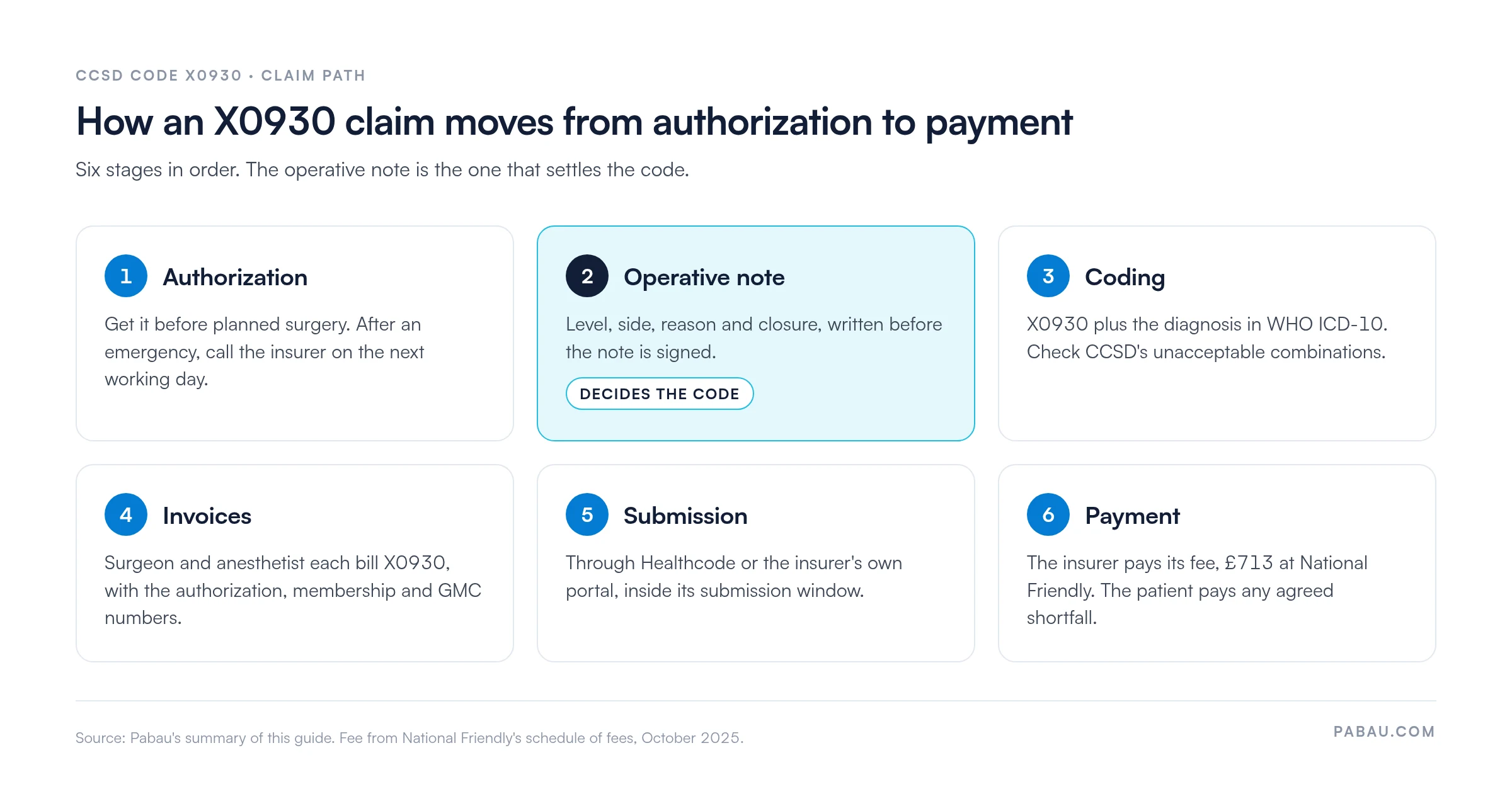
Two stages carry the most weight. The operative note sets the code, and the invoice carries the numbers the insurer matches against its records.
Insurers read the note against the descriptor, so the level of the cut matters most. Before the note is signed, confirm it covers four details.
A staged operation needs a separate note for each stage. Ask the insurer how it wants the second stage shown, since rules vary. Add the surgeon’s GMC number to the invoice as well, because insurers match it against their recognition records.
Amputations rarely arrive as a single tidy procedure. Three questions come up again and again.
The anesthetist was there too. Which code do they use? X0930, on their own invoice. Insurers pay anesthetists against the procedure code, often on a separate anesthetic fee scale. Check the insurer’s rules.
The wound was debrided in the same session. Can that go on the claim? Check first. CCSD publishes unacceptable code combinations behind its member login, so review X0930’s list before adding debridement or a skin flap.
Both legs were amputated. Is that one code or two? Ask the insurer before you submit. Rules for bilateral procedures differ between insurers, so confirm how the second side should appear.
For an emergency amputation, phone the insurer on the next working day for authorization. Write the reference, the date and the name of the person you spoke to straight into the patient record.
Amputations are often urgent, so the paperwork tends to trail the surgery. A quick check catches the loose ends before the insurer does.
Many insurers take electronic claims through Healthcode, while some prefer their own portal. Check each insurer’s route, then save the submission reference in the patient record for any chase or appeal.
Each slip below can get an X0930 claim queried, and each has a quick fix. Most sit in the code or the diagnosis, not the surgery itself.
Amputation cases rarely run to a neat timetable. The note gets written after a long list, the authorization arrives by phone, and someone retypes both days later.
Pabau connects to Healthcode and builds the claim from the patient record instead. With error-checked claims management, the CCSD code, membership number and authorization reference carry across. Required fields are checked before the claim can be sent.
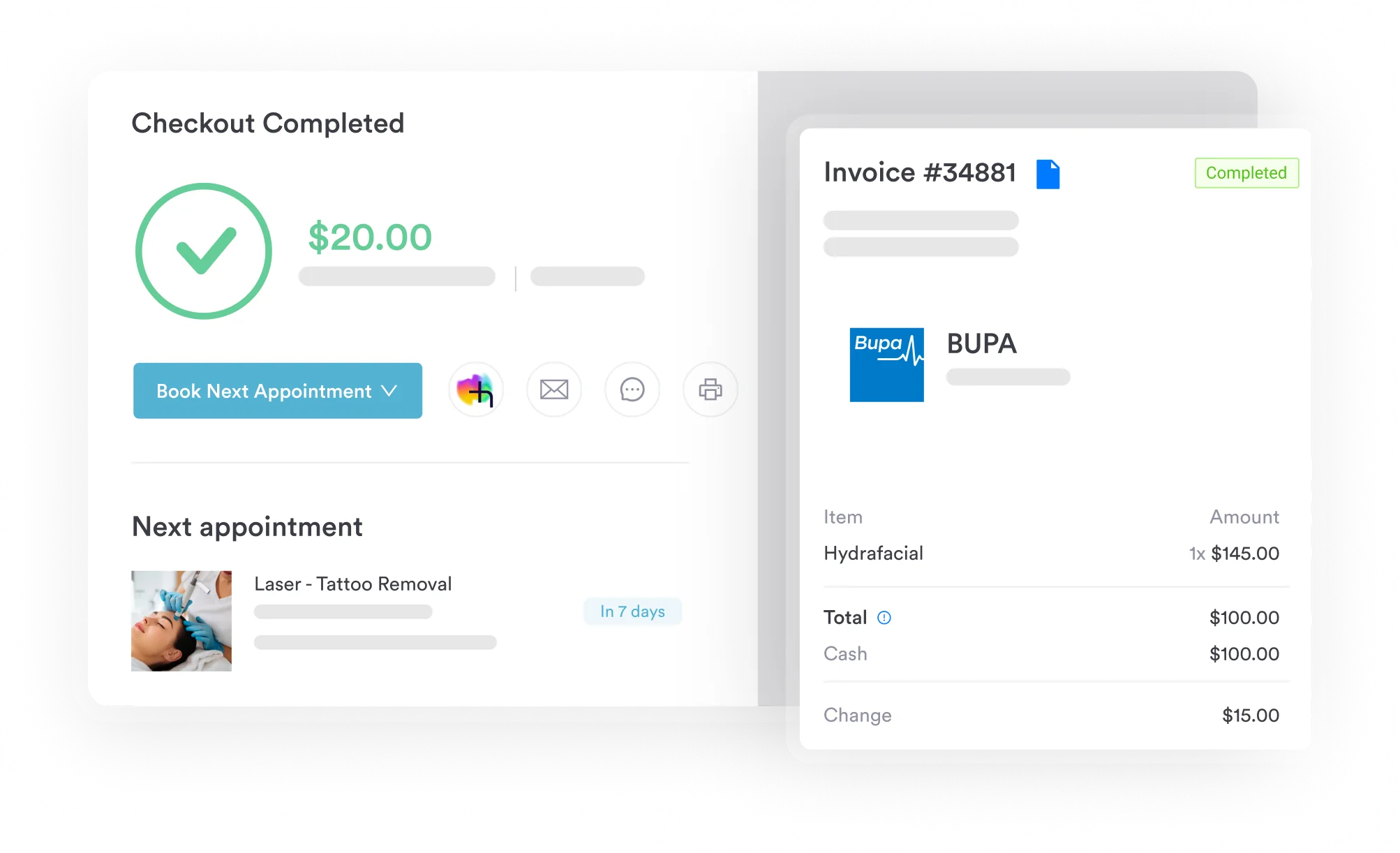
Your team then follows each claim’s status and payment in one place. A missing authorization number gets caught before the insurer sees it, not after a rejection.

Pabau builds CCSD claims like X0930 from the patient record and checks required fields before submission. Then you can track each claim’s status in one place.

X0930 is one of the easier codes to pick once the level is clear. The risk sits in the paperwork around it, because amputations are often urgent and the note gets written last.
Make the level, the side and the reason the first three lines of the operative note. When they’re there, the code choice settles itself and the insurer has little left to query.
Book a demo to see how Pabau carries an X0930 claim from the operative note to the insurer without retyping.

Billing the same operation in the US? CPT code 27590 covers above-knee amputation under the CPT code set.
Coding a complication after surgery? ICD-10-CM code T87.54 (US) covers necrosis of an amputation stump of the left lower extremity. UK insurers use WHO ICD-10 T87.5.
Want every Bupa code in one place? Bupa CCSD procedure codes sets out the schedule and its fee categories.
Comparing fees across procedures? Bupa procedure codes fee schedule shows how chapter groupings shape what each code pays.
X09.3, amputation of leg above knee. NHS hospitals record the operation in OPCS-4, while private insurers pay against the CCSD code X0930.
Yes. AKA, transfemoral amputation and above-knee amputation all describe the operation X0930 covers. The schedule’s own wording is amputation of leg above knee.
No. X0930 pays for the operation only. Prosthetic fitting and limb-fitting rehabilitation are separate, and cover for them depends on the patient’s policy.
Not usually. Revising an existing stump is a different operation from the first amputation. Look up the revision entry in the CCSD schedule and confirm it with the insurer.
No. Rehabilitation is billed by the therapy provider under its own codes. X0930 covers the surgery and the anesthetist’s fee for it.